Baking & Pastry
Pie Plate (Assiette à Tarte)
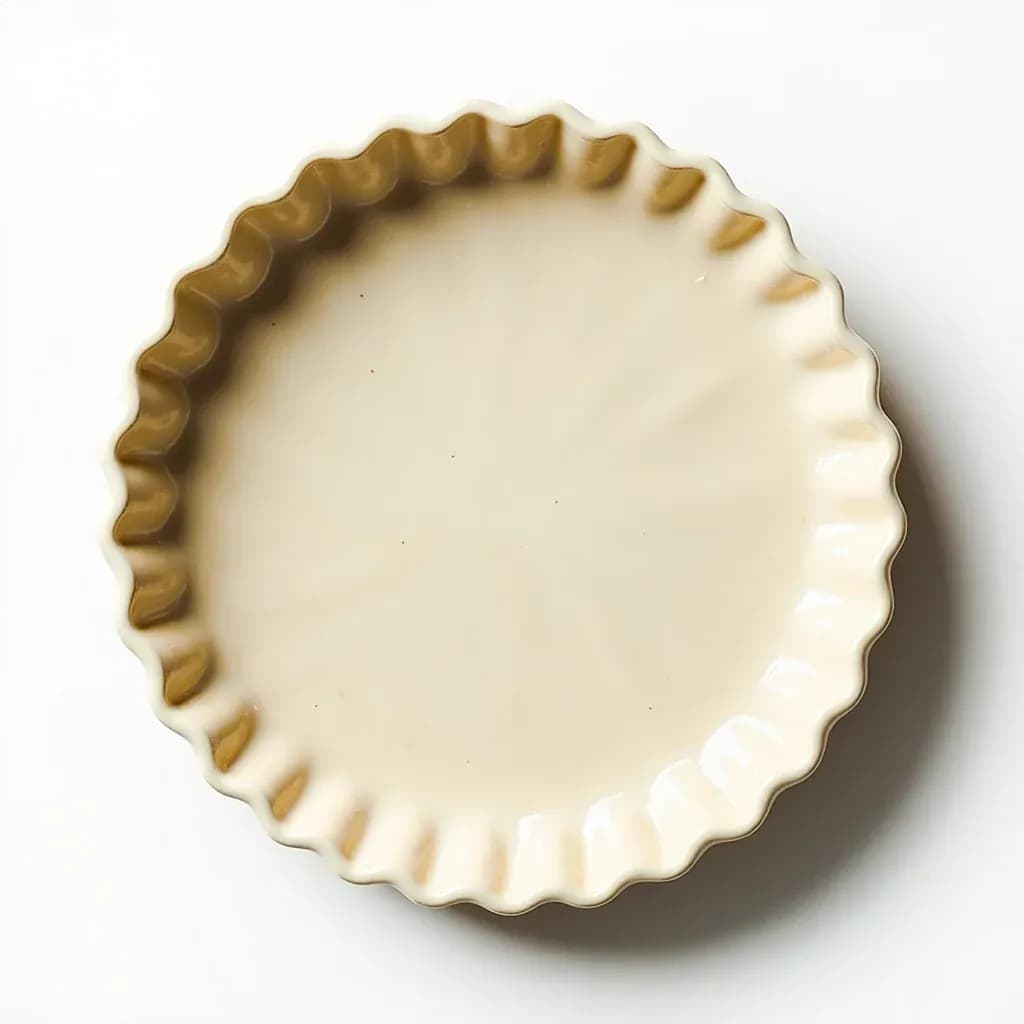
A shallow round dish with sloped sides for baking single-crust and double-crust pies and tarts.
A pie plate is a wide, shallow baking dish with gently flared sides, made of glass, ceramic, or metal, sized to hold a rolled crust and filling. The sloped rim supports a crimped pastry edge while the broad base bakes the bottom crust through. Glass and ceramic plates show browning and hold heat for custard pies, while metal conducts heat fast for crisp fruit-pie bottoms.
A pie plate is a round, shallow baking dish whose defining feature is geometry: gently sloped sides, a flat bottom, and a rim wide enough to crimp or seal. That slope lets a knife reach the center of each wedge, gives a crimped crust a graceful flare, and eases unmolding. The American pie plate descends from English pie dishes of the 18th and 19th centuries, while the French moule à tarte (or assiette à tarte) runs shallower and is often ceramic. The crucial distinction to keep straight is with the tart pan: a pie plate has sloped walls, while a tart pan has straight, usually fluted walls and a removable bottom. Mixing them up is the most common reason pies slump or quiches refuse to unmold cleanly.
The plate you choose is a genuine baking variable, not just a container. Glass and stoneware heat slowly and hold that heat, which is gentle on custards and yields a paler, more even browning — useful for pumpkin, custard, or pecan pies where scorching is the enemy. Bare aluminum and tin-plated steel conduct heat quickly, producing a crisper, browner bottom crust that fruit-pie bakers prize. Dark or thin metal over-bakes, which is why most recipes tell you to drop the oven by 25°F (about 15°C) or tent the rim when using a dark pan. A glass plate adds the bonus of being translucent, so you can actually watch the bottom crust brown.
A standard 9-inch plate holds roughly 4 to 6 cups of filling at 1 to 1¼ inches deep — the dimension most American recipes assume. Deep-dish plates (1½ to 2 inches) buy you room for a generous apple or cherry pie but require more dough and a longer bake. Individual 4- to 5-inch plates are useful for pot pies and portion control. The pie plate is the workhorse of the pastry kitchen, equally at home with a free-form double-crust apple pie, a blind-baked shell waiting for lemon curd, or a savory pot pie under a blanket of puff pastry.
Alternatives
Types & varieties
Translucent, so you can monitor browning on the bottom; heats gently; vulnerable to thermal shock — never put a cold plate into a hot oven or onto a wet surface.
Heats slowly but retains heat well; good for custards and slow-baked fillings; often the prettiest for table service.
Heats quickly and evenly; gives a browner, crisper bottom crust; lightweight and inexpensive. Anodized or lined versions are safer for very acidic fillings like lemon or tomato.
Traditional choice in French and English bakeries; excellent heat conduction for short-crust pastry; needs careful drying after washing to prevent rust.
Single-use; thin metal over-browns and buckles easily; fine for casual or transport purposes but a poor choice for a centerpiece pie.
Flexible, non-stick, and easy to release; heats unevenly with a pale crust; not ideal when you want browning.
Heats evenly and deeply; can go stovetop to oven; heavy but rewarding for fruit pies and deep-dish work.
1½ to 2 inches deep for generous fruit fillings such as apple or cherry; requires more dough and a longer bake.
Typically 4 to 5 inches across; suited to personal portions, pot pies, and hand pies; shorten bake time.
Straight or gently sloped sides with a broad flanged rim; designed to seal and support top crusts, often with a pie funnel or vent.
Usually shallower than American pie plates, often ceramic and sometimes tin; used for both sweet tarts and savory quiches in classic French pastry work.
Material and Browning Behavior
Different materials bake pies in meaningfully different ways, so the plate you reach for is part of the recipe. Think of it on a spectrum from gentle to aggressive.
- Glass and stoneware: slow to heat, slow to release that heat. Produces paler, more even browning — ideal for custards (pumpkin, pecan, custard) where scorching is the risk. The translucence of glass also lets you peek at the bottom crust.
- Bare aluminum and tin-plated steel: fast, even heat conduction. Produces a noticeably crisper, browner bottom crust — what most fruit-pie bakers prefer. Bare aluminum can react with very acidic fillings; choose anodized or lined versions for lemon meringue, tomato pies, and the like.
- Dark metal (including disposable foil pans): runs hot and over-bakes. Drop the oven temperature by about 25°F (15°C) or tent the crust rim with foil to prevent scorched edges.
- Silicone: a pale, somewhat steamy bake. Convenient for release but not a tool for browning; reserve for chilled or no-bake fillings.
- Enameled cast iron: deep, even heat and a handsome table presentation; excellent for fruit pies that benefit from a hot, steady bake.
Common uses
Tips & pitfalls
- If using a glass or stoneware plate and you want a browner bottom crust, preheat a baking stone or steel on the rack and set the plate on it for the first 15 to 20 minutes of baking.
- Avoid thermal shock with glass: never put a cold or frozen glass plate into a hot oven, and never set a hot glass plate on a wet, cool, or stone countertop.
- For dark or thin metal plates, lower the oven temperature by 25°F (about 15°C) or tent the crust edges with foil to prevent over-browning.
- Do not grease the plate for most pies — a dry surface helps the bottom crust stay put and crisp rather than sliding or shrinking.
- When blind baking, prick the chilled dough all over with a fork, line with parchment, and fill with pie weights or dried beans to at least two-thirds depth.
- Let a glass or ceramic plate cool for 10 to 15 minutes before cutting; the residual heat finishes setting custards and reduces the risk of a soggy slice.
- To remove a slice cleanly, dip a thin knife in hot water and wipe between cuts; a flexible metal or nylon spatula works better than a fork.
- Hand-wash glass and tin-plated pie plates; dishwasher cycles and prolonged water contact can cloud glass and rust tin.
- If the crust shrinks during blind baking, patch gaps with a thin strip of dough before adding filling rather than wrestling it back into place.
- Match plate size to recipe: downsizing from a 9-inch to an 8-inch raises the depth of the filling and lengthens bake time; upsizing thins it and risks a watery crust.
Good to know
- Standard diameter
- 9 inches (≈23 cm) is the most common U.S. size; 8-inch and 10-inch are widely sold.
- Typical depth
- 1 to 1¼ inches (2.5–3 cm) for standard plates; 1½–2 inches (4–5 cm) for deep-dish versions.
- Side profile
- Sloped (flared) sides, distinguishing it from a tart pan (straight, fluted, removable bottom).
- Capacity
- Roughly 4 to 6 cups (1 to 1.5 L) of filling in a 9-inch plate.
- Common materials
- Soda-lime glass, stoneware or ceramic, aluminum (bare or anodized), tin-plated steel, silicone, and enameled cast iron.
- Glass milestone
- Pyrex borosilicate bakeware was introduced by Corning in 1915; soda-lime glass replaced it in U.S. consumer Pyrex in the 1990s.
- Fluted vs. plain rim
- Fluted or scalloped rims aid crimping; plain-rimmed 'pie dishes' (British style) have a wide lip for sealing and venting.
- Weight (9-inch glass)
- Approximately 0.9 to 1.1 kg (2 to 2.5 lb) for a typical soda-lime glass plate.
Also called
pie dish · pie pan · assiette a tarte · tart plate
Related

Muffin Pan
Multi-cup pan for muffins, cupcakes, and egg bites

Bundt Pan
Fluted ring mold for showstopping cakes with a center hole

Springform Pan
Latch-release pan that frees delicate cakes without flipping

Pie Dish
Sloped round dish for crisp-bottomed pies and quiches

Tart Pan
Fluted pan with a pop-out base for clean-edged tarts

Rolling Pin
Rolls dough into even sheets for pastry and bread

Pastry Brush
Brushes on egg wash, glaze, butter, and marinades

Bench Scraper
Flat blade that divides dough and clears your work surface