Baking & Pastry
Piping Bag
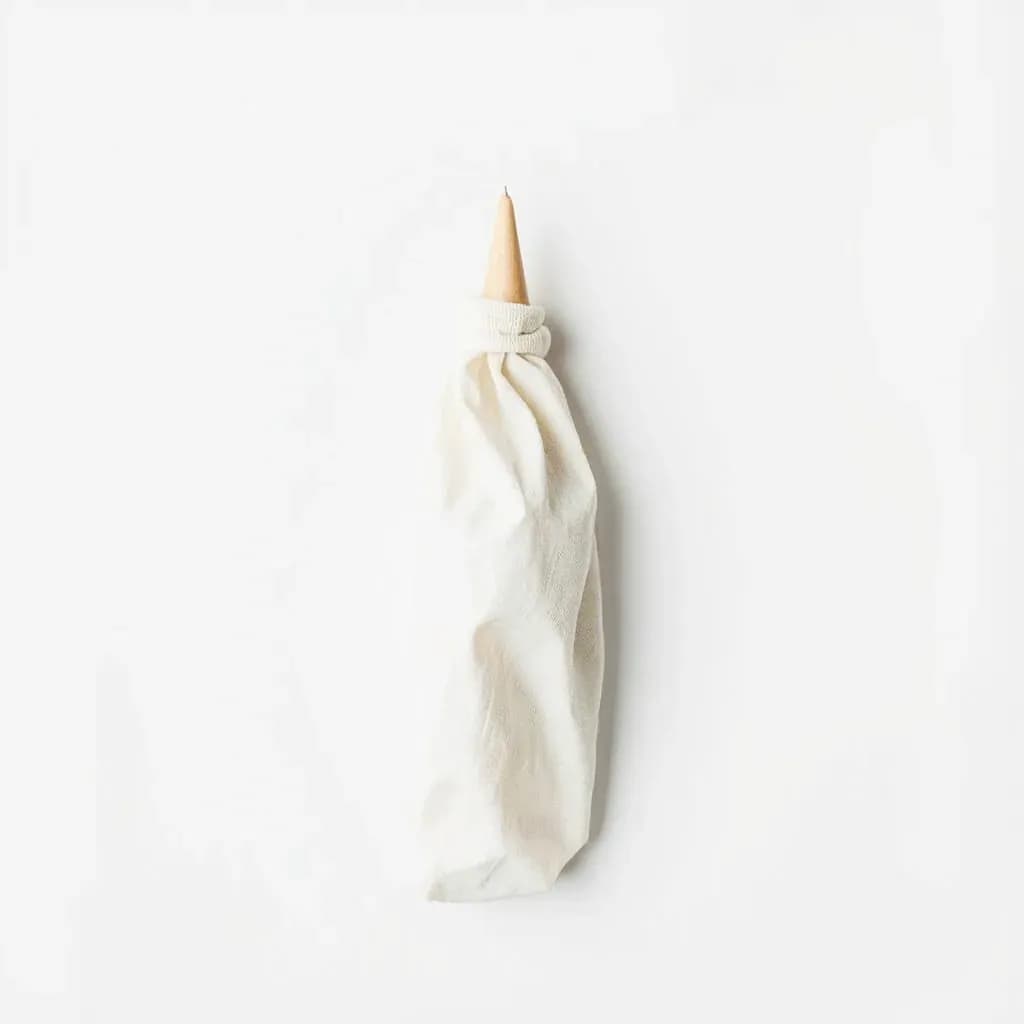
A cone-shaped bag fitted with a nozzle that pipes batter, frosting, or dough into precise shapes.
A piping bag is a flexible cone you fill with a soft mixture and squeeze through a metal or plastic tip to control shape and flow. Bakers use it to pipe buttercream rosettes, fill éclairs and doughnuts, and portion choux or macaron batter, while savory cooks pipe mashed potato and deviled-egg filling. Disposable bags are convenient, while reusable cloth or silicone bags pair with interchangeable tips for varied patterns; pressed extruders like a sev or murukku press serve the same shaping role for dough.
A piping bag — also called a pastry bag in the United States and a forcing bag in older British usage — is a flexible, cone-shaped vessel that converts hand pressure into a controlled stream of food through a shaped opening. The bag itself does only one job: it holds and delivers; the tip (nozzle, tube, or decorating tip) is what determines the line, dot, ridge, or flower. Mastering even pressure is the whole skill, and once a cook has it, every rosette, choux bun, and ravioli comes out the same size — the uniformity that separates professional output from homemade variation.
Piping bags are not only for pastry work. Sweet kitchens use them for buttercream, royal icing, ganache, choux, and macaron batter; savory kitchens use them for ravioli filling, deviled eggs, duchess potatoes, plated dots of purée, and quenelles; butchers use heavy-duty versions for injecting brine and marinade into meat. The principle is identical across uses: a sealed, flexible reservoir, a shaped exit, and steady top-down pressure. The most common professional sizes are 14 and 16 inches (roughly 35–40 cm), with a 12-inch coated nylon bag being a sensible starting point for home cooks.
The modern canvas bag was patented in the United States in 1874 by Ezra W. Knapp and W. H. Erwin, but piped decoration itself dates back to sixteenth- and seventeenth-century European court confectionery and reached its classical form in early nineteenth-century France under chefs such as Antonin Carême. What has changed since then is mostly material: today's options run from sturdy cotton canvas with waterproof linings to disposable polyethylene for hygienic or single-color work, and the threaded coupler — a small two-piece ring and base — has made it possible to swap tips without emptying the bag.
Alternatives
Types & varieties
Sturdy, reusable, grippy in the hand; the professional standard. Usually lined with polyurethane to prevent seepage.
Lightweight reusable, easier to wash than canvas, slightly slicker grip — a good first bag for home cooks.
Single-use and hygienic; ideal for raw foods, allergens, or fast color changes. The corner can be snipped to substitute for a plain round tip.
Modern, fully dishwasher-safe, leak-proof, but less tactile feedback and more expensive.
Tapered from wide mouth to point — the most common form, well-suited to hand pressure and even flow.
Straight sides with a flat bottom so the bag stands upright; favored in production bakeries for fast filling.
The default system: a threaded coupler locks round, star, petal, and leaf tips onto one bag, allowing tip changes without emptying it.
A triangle of parchment or plastic rolled into a cone and snipped at the point — used for very fine work, chocolate writing, or thin liquids.
Filling and Holding the Bag
How you fill and grip a piping bag matters as much as the tip you choose. The bag should never be more than two-thirds full; an overstuffed bag is the single most common cause of blowouts at the seam or back-of-the-tip. Always push the contents down toward the tip with a bench scraper or spatula before twisting the top — trapped air pockets cause sputters and broken lines once you begin piping. Twist firmly just above the food line and treat the twisted portion as a hinge: all of your squeezing force should come from the top down, never from the middle of the bag, which forces the contents back up into the twist.
- Fit the tip and coupler before filling so you don't have to thread a loaded bag.
- Cuff the top of the bag over your hand like a sleeve, spoon or scoop in the filling, then unfold.
- Stand a filled bag upright in a tall glass or jug while you prep — keeps hands cool with hot mixtures like choux or mashed potato.
Couplers and Changing Tips
A coupler is the small but transformative accessory that turns one bag into a complete decorating kit: a notched plastic or metal base that drops inside the bag, an outer ring that screws down over the tip, and the tip itself sandwiched between. To use one, drop the base into the bag with the narrow end pointing out, push the tip over it from outside, then screw the ring down to lock everything in place. With a coupler fitted you can swap a round for a star for a leaf without emptying the bag — unscrew the ring, swap the tip, and re-tighten.
- Couplers are sold in sizes matched to tip families (small couplers for fine round and small star tips, large couplers for bigger specialty tips).
- For very stiff mixtures (royal icing, stiff cookie dough) skip the coupler and push the tip directly into the bag — fewer leak points under heavy pressure.
- Mark bags with painter's tape and a permanent marker to flag contents, color, or allergen status in a busy kitchen.
Care, Cleaning, and Storage
A good bag should last years if it is rinsed the moment it is empty. Soak in hot water to loosen buttercream or ganache, then wash in hot soapy water; canvas and coated nylon can run through a dishwasher on the sanitize cycle. Turn bags inside out to dry fully — moisture trapped in a seam is what rots canvas and grows mildew. Never reuse a disposable polyethylene bag that has touched raw meat, raw egg, or a known allergen; single-use is the entire point.
- Silicone bags tolerate boiling water and are the easiest to sanitize.
- Store dry bags rolled, not folded, to protect the seam.
- Keep a small stock of disposable bags on hand for fast color changes and for piping raw or allergen-sensitive mixtures.
Common uses
Tips & pitfalls
- Fill only one-half to two-thirds full — overfilling causes blowouts at the seam and back-of-the-tip.
- Squeeze from the top down with the twist as a hinge; never press from the middle, which forces food back into the twist.
- Push out air pockets before piping; trapped air sputters and breaks the line.
- Hold the bag perpendicular (90°) to the surface for dots and rosettes, and at 45° for lines, shells, and borders.
- Stop pressure before pulling away to avoid peaks and tails on the finished shape.
- In a warm kitchen, chill a filled buttercream bag for 10–15 minutes so the fat firms up and piped lines hold their shape.
- Match tip to viscosity: stiff royal icing needs a small round or fine star; soft buttercream needs a larger open tip.
- Don't reuse disposable bags that have touched raw meat, raw egg, or allergens.
Good to know
- Also known as
- Pastry bag (US); forcing bag (older British term)
- Modern bag patented
- US, 1874, by Ezra W. Knapp and W. H. Erwin
- Earliest piping
- 16th–17th century European court confectionery; classical royal icing work in early 19th-century France under chefs such as Carême
- Typical lengths
- 10, 12, 14, 16, 18, and 24 inches (25–60 cm); 12–14 in. is the home-cook workhorse, 14–16 in. the pro standard
- Common materials
- Cotton canvas (often polyurethane-lined), coated nylon, food-grade polyethylene (disposable), silicone
- Capacity
- A 12-in. bag holds roughly 1.5–2 cups (350–475 ml); a 16-in. bag holds 2.5–3.5 cups
- Coupler standard
- Most reusable bags accept a plastic or metal coupler that lets tips be swapped without emptying the bag
- Hygiene note
- Disposable polyethylene is preferred for raw-meat stuffing, allergen-free work, and HACCP kitchens
- Skill level
- Beginner-friendly; competent piping takes only a few hours of practice
Also called
Sev/Murukku Press (Sancha) · Sev Press · Pastry Bag · Icing Bag
Related

Muffin Pan
Multi-cup pan for muffins, cupcakes, and egg bites

Bundt Pan
Fluted ring mold for showstopping cakes with a center hole

Springform Pan
Latch-release pan that frees delicate cakes without flipping

Pie Dish
Sloped round dish for crisp-bottomed pies and quiches

Tart Pan
Fluted pan with a pop-out base for clean-edged tarts

Rolling Pin
Rolls dough into even sheets for pastry and bread

Pastry Brush
Brushes on egg wash, glaze, butter, and marinades

Bench Scraper
Flat blade that divides dough and clears your work surface