Baking & Pastry
Pizza Steel
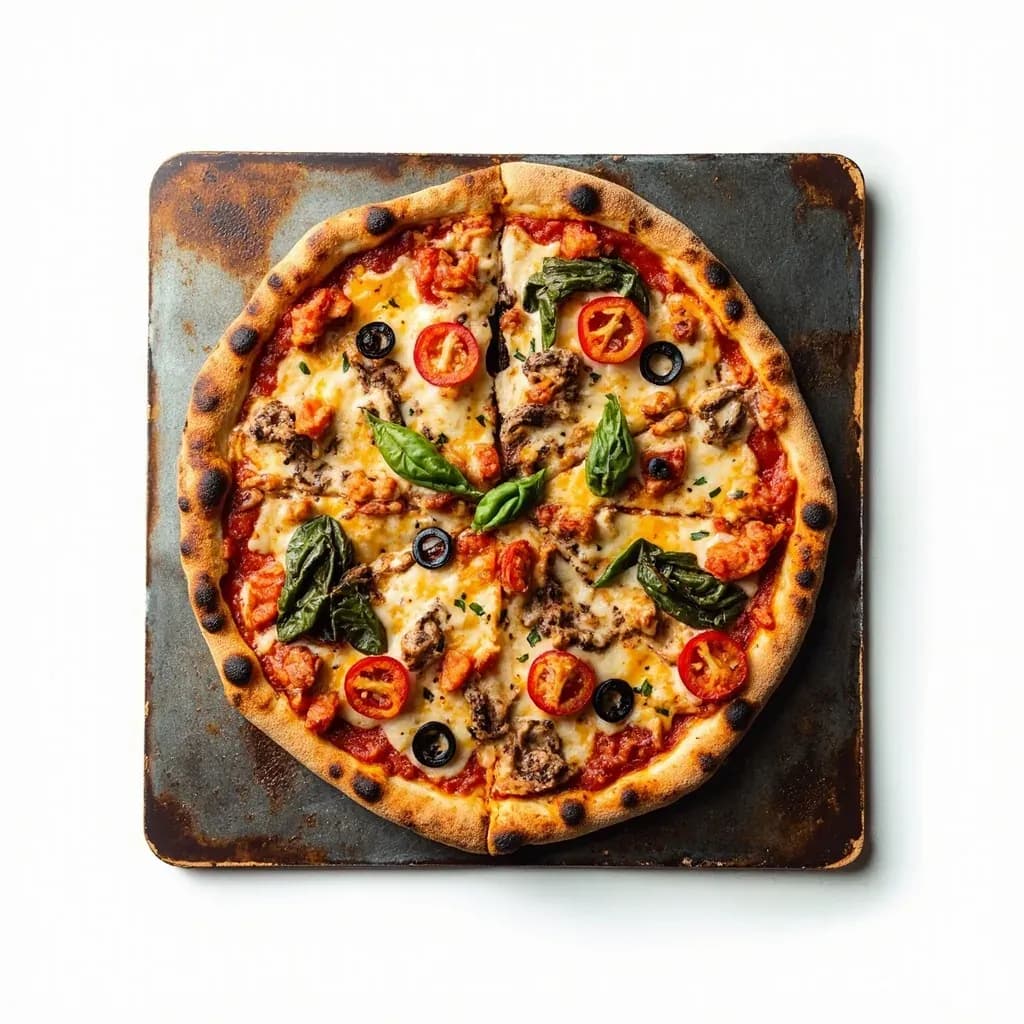
A thick steel plate that stores intense oven heat to bake pizza crusts fast with a deep char.
A pizza steel is a heavy slab of solid steel preheated in the oven to act as a thermal-mass cooking surface. Because steel conducts heat far faster than stone, it blasts the dough on contact, producing a crisp, blistered crust and quick rise in a home oven. Cooks slide pizza, flatbread, or even bread onto the screaming-hot steel with a peel.
A pizza steel is a thick slab of milled steel—almost always A36 low-carbon plate—that sits on an oven rack and acts as both a thermal reservoir and a high-conductivity cooking surface. Where a cordierite stone stores heat and releases it relatively slowly, a steel actively dumps stored energy into the dough on contact, producing the blistered, lightly charred underside of a deck-oven pizza even in a standard home oven. The underlying physics is the same as a cast-iron skillet, only scaled up to fill a rack and run at 500 °F and beyond.
The real advantage is heat, and a lot of it. A 1/2 in steel plate stores roughly four to five times more usable heat than a cordierite stone of the same footprint, and conducts that energy into the base of the pizza in seconds rather than minutes. That is why a steel produces a crisp, leoparded bottom in four to seven minutes at 500–550 °F, where a stone often leaves the center pale and soft under identical conditions. The trade-offs are weight (a 1/2 in 16 x 16 plate can top 25 lb), longer preheat, and the need to manage heat more carefully with thin or low-hydration doughs.
In everyday use a pizza steel is cared for like cast iron rather than like bakeware. Season it once, keep it dry, never run it under cold water while hot, and it will outlast any stone in the kitchen because it cannot crack from thermal shock.
Alternatives
Types & varieties
Entry-level thickness; lighter and faster to preheat, noticeably crisper than a stone but with less thermal mass than thicker plates
The sweet spot for most home bakers; gets close to deck-oven heat for 60–90 second Neapolitan-style bakes
Maximum thermal mass for a home oven; the most forgiving of door-opening temperature loss; can approach true 800 °F+ deck performance
Factory-baked oil coating for immediate use and rust resistance; convenient for first-time owners
Mill finish that the user seasons with repeated thin coats of neutral oil baked at high heat
Resists rust without seasoning; slightly lower conductivity than mild steel; uncommon and pricier
Most common shape; maximizes surface area and matches a half-sheet footprint
Sized for 14–16 in round pizzas and round pizza ovens; wastes some corner space on a square rack
Welded or removable handles and a bottom stand for safer transfer and tabletop griddle use
Steel vs. Stone: Why the Steel Wins on Crust
A cordierite pizza stone works by absorbing heat slowly and transferring it into the dough at a modest rate. That gentleness is fine for long bakes but leaves the bottom of a 500 °F pizza pale and underdone in the four-to-six-minute window most home ovens offer. A steel flips that relationship: it stores a great deal more heat, and because steel conducts roughly fifteen times faster than cordierite, that heat moves into the dough almost on contact. The result is the fast, intense bake that produces an even, crackly, lightly leopard-spotted bottom—the signature of a proper deck-oven pizza. The steel also wins on durability: it will not crack from a cold dough landing on a hot surface, where stones frequently do.
Care, Seasoning, and Rust
Treat a pizza steel like cast iron, not like a baking sheet. A bare steel plate should be seasoned once before first use—a thin wipe of neutral oil, baked at top oven temperature for 45 minutes, repeated once or twice until the surface turns a deep brown. After that, every cook adds another microscopic layer of seasoning. The single biggest mistake is leaving the steel wet: water on warm steel flashes to rust within hours, and rust is the most common reason a steel is retired. Wipe the plate with a damp cloth while it is still warm, dry it on the residual oven heat, and recoat lightly with oil if the surface has gone grey.
Common uses
Tips & pitfalls
- Preheat for at least 45 minutes at the oven's top temperature; thicker plates need 60+ minutes for the core to fully saturate, and a half-preheated steel will simply under-brown the bottom.
- Lower the oven temperature 25–50 °F compared with a stone recipe—the steel transfers heat much more aggressively and will scorch pale, low-hydration dough fast.
- Set the steel on the middle or lower-middle rack; if your model allows, placing it directly on the oven floor gives the closest thing to a true deck bake.
- Never put cold or frozen dough on a fully preheated steel. The thermal shock can warp a thin plate and will toughen the dough surface.
- Use parchment or a semolina-dusted peel to launch pizzas. Wet dough dropped straight onto a 500 °F steel will steam, stick, and tear.
- Rotate the pizza halfway through the bake with a turning peel—the front edge facing the door almost always runs cooler than the back.
- Dry the steel immediately after any contact with water and store it in a dry spot. Rust, not warping, is the most common failure mode for mild-steel plates.
- Lift a hot steel onto a sheet-pan cooling rack rather than directly onto a granite or quartz counter. Trapped steam under a hot plate can crack stone surfaces.
Good to know
- Material
- Low-carbon A36 steel plate is standard; some makers offer 304 stainless or higher-carbon steels
- Common thicknesses
- 1/4 in (6 mm) entry-level; 3/8 in (10 mm) home sweet spot; 1/2 in (13 mm) or thicker for deck-oven-tier performance
- Thermal advantage
- Roughly 15× the thermal conductivity of cordierite and stores several times more usable heat per volume
- Preheat time
- 45–60 minutes at top oven temperature; 1/2 in plates need 60–75 minutes for the core to saturate
- Weight
- Roughly 9 lb for a 1/4 in 14 x 16 plate; a 1/2 in 15 x 15 runs about 22 lb and a 1/2 in 16 x 16 can exceed 25 lb
- Max oven temperature
- Safe to 500–600 °F in normal use; most home steels rated to roughly 900 °F
- Origin in home kitchens
- Commercial bakers have used steel decks for decades; the modern home version was popularized by Modernist Cuisine (2011) and Kenji López-Alt's Serious Eats testing in the early 2010s
- Compatible ovens
- Standard and convection home ovens and indoor pizza ovens; not suited to glass cooktops or microwaves
Also called
baking steel · pizza baking steel · steel baking plate
Related

Muffin Pan
Multi-cup pan for muffins, cupcakes, and egg bites

Bundt Pan
Fluted ring mold for showstopping cakes with a center hole

Springform Pan
Latch-release pan that frees delicate cakes without flipping

Pie Dish
Sloped round dish for crisp-bottomed pies and quiches

Tart Pan
Fluted pan with a pop-out base for clean-edged tarts

Rolling Pin
Rolls dough into even sheets for pastry and bread

Pastry Brush
Brushes on egg wash, glaze, butter, and marinades

Bench Scraper
Flat blade that divides dough and clears your work surface