Cookware
Poffertjes Pan
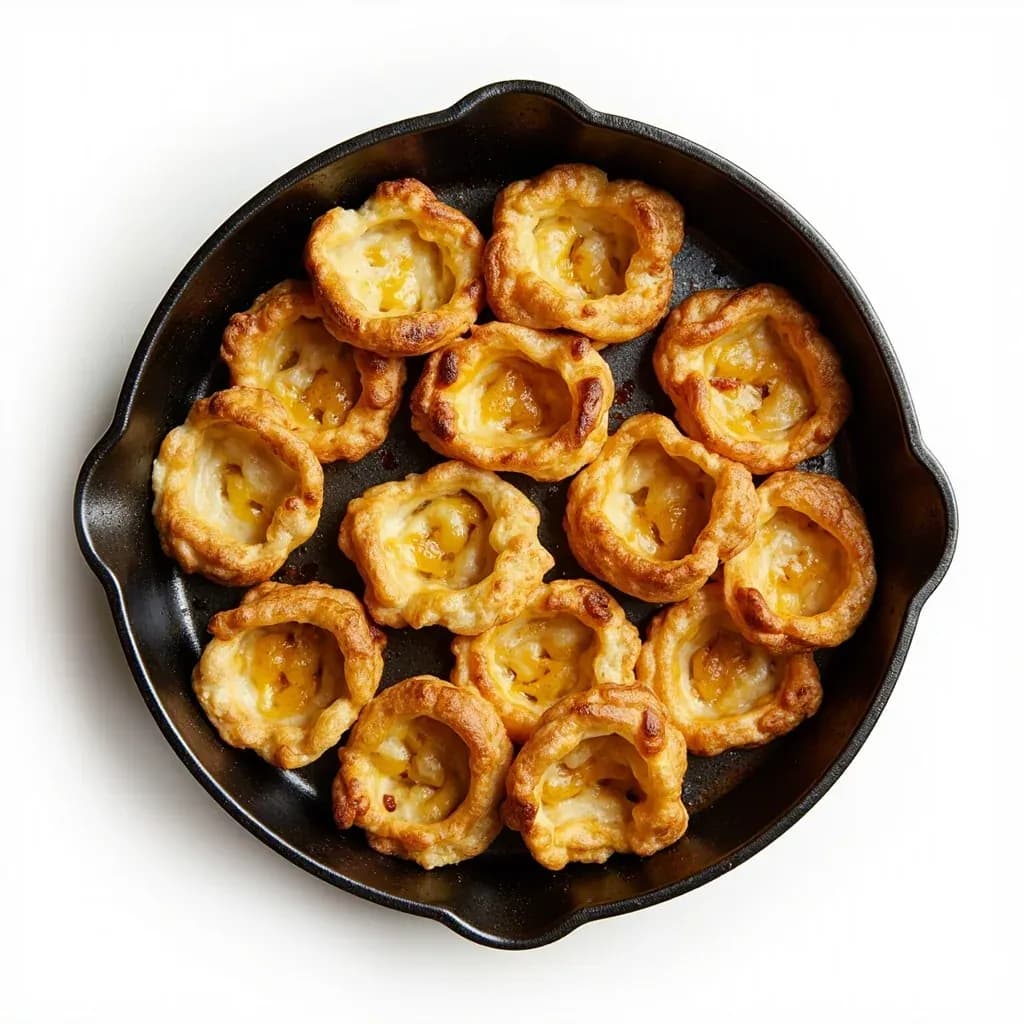
A cast-iron pan dimpled with small round wells for cooking Dutch mini pancakes.
A poffertjes pan is a heavy cast-iron or nonstick pan whose surface is pocked with many shallow round indentations, each the size of a small coin. Batter poured into the wells puffs into the spongy, fluffy little Dutch pancakes called poffertjes, which are flipped with a skewer or fork to brown both sides. It is a specialty griddle for this single treat, usually served dusted with powdered sugar and butter.
The poffertjes pan is a heavy, dimpled griddle purpose-built in the Netherlands for one job: cooking dozens of small, round, yeast-leavened mini pancakes at once. Its defining feature is a grid of shallow, flat-bottomed wells — roughly 3 to 4 cm across and only about 1 cm deep — pressed into a single solid plate. That shallow geometry is what distinguishes it from an aebleskiver pan (deeper, half-spherical wells for filled Danish pancake balls) or a takoyaki pan (smaller, deeper, hemispherical wells for Japanese octopus balls). A poffertjes pan cooks each cake as a small disc with a tender interior and a lightly crisped base, never as a ball.
The traditional form is bare cast iron, prized for the way it holds and distributes heat evenly across all the wells once properly warmed. A well-seasoned surface becomes naturally slick and releases the delicate little pancakes cleanly without greasing them to the point of sogginess. Modern cast-aluminum versions with non-stick coatings trade some heat retention and longevity for lighter handling and easier release. For cooks who already own a cast-iron skillet or Dutch oven, the poffertjes pan slots naturally into the same care routine — and rewards that routine with pancakes that brown the same way every time.
Alternatives
Types & varieties
The traditional form. Excellent heat retention, and a well-seasoned surface gives the classic poffertjes crust. Heavier and slower to preheat, but the choice for purists.
Lighter, heats faster, and more forgiving for beginners. Less durable than cast iron and not suitable for metal utensils.
Cast iron body with a porcelain enamel coating, so no seasoning is required. Heavier and more expensive, but virtually maintenance-free.
A countertop appliance with a built-in poffertjes plate, lid, and thermostat. Common in Dutch hotel breakfast buffets and event catering.
For one or two people; heats quickly and stores easily in a small kitchen.
The typical home size; feeds a family of four in two or three batches.
For street vendors, fairs, and large gatherings; usually sits over two burners or a dedicated heat source.
How It Differs from Similar Pans
The pan is most often confused with the Danish aebleskiver pan and the Japanese takoyaki pan, but the differences are functional, not cosmetic. Aebleskiver wells are deeper and more rounded so the batter climbs up the sides as it sets, leaving a cavity that can be filled with jam, chocolate, or savory fillings; a takoyaki pan has the deepest, smallest hemispherical wells of the three because each ball is turned repeatedly to cook a thick, almost custardy interior. A poffertjes pan is the shallowest of the three because the goal is a small, even disc — not a ball — with a flat top and bottom and a soft, yeasted crumb. Substituting one pan for another is possible in a pinch, but the result will look and eat quite differently: aebleskiver batter run in a poffertjes pan makes small, dense rounds; poffertjes batter run in a takoyaki pan cannot turn properly because the wells are too deep and narrow.
- Poffertjes pan: shallow, flat-bottomed wells, ~3–4 cm wide, ~1 cm deep — produces small pancakes.
- Aebleskiver pan: deeper, half-spherical wells — produces filled pancake balls.
- Takoyaki pan: smallest, deepest, hemispherical wells — produces dense filled balls cooked by repeated turning.
- Batter type matters as much as pan shape: traditional poffertjes batter is yeast-leavened with buckwheat flour, which a poffertjes pan is specifically designed to set gently.
Seasoning and Care
A bare cast-iron poffertjes pan behaves exactly like any other cast-iron pan: it seasons with use and rewards a small amount of regular attention. Season it before first use by rubbing a thin film of neutral oil over the surface and baking it upside down in a moderate oven for an hour, then repeating once or twice until the surface darkens and turns slick. From then on, the routine is the same as for a skillet — dry it on the burner after rinsing, wipe with a light coat of oil, and never let it sit wet. Because the wells are small and shallow, sticking is more visible than on a flat griddle, so a properly seasoned surface is worth pursuing. Enameled and non-stick versions skip the seasoning step entirely and tolerate a wipe with a soft sponge and a drop of dish soap, though they should still avoid the dishwasher.
- Season bare cast iron with multiple thin layers of oil baked in, not one thick coat, which stays gummy.
- Dry the pan over heat after every wash to evaporate any trapped moisture in the wells.
- If a poffertje sticks persistently, the pan usually needs reseasoning rather than more butter.
- Store with the lid off or loosely covered so air circulates; sealed storage traps humidity and rusts the surface.
Common uses
Tips & pitfalls
- Preheat the pan slowly over medium-low heat for 5 to 10 minutes so every well reaches the same temperature; hot spots are the most common cause of uneven browning.
- Brush each well lightly with melted butter — traditionally applied with a sprig of rosemary or a feather — rather than pouring oil in; excess fat pools around the edges and fries the poffertjes unevenly.
- Use a thin, pourable batter; a thick batter will dome above the rim and refuse to flip cleanly, often tearing at the edges.
- Fill each well about two-thirds full so the batter sits just below the rim; this keeps the poffertjes neat and uniform on the flip.
- Flip with a thin wooden skewer, a cocktail stick, or a dedicated poffertjes fork — never a spatula, which crushes the shape, and never a metal fork in a non-stick pan.
- Turn when bubbles have nearly stopped forming on the surface and the edges look set; overcooking the first side dries the interior before the second side browns.
- Keep finished poffertjes warm in a covered dish or a low oven (around 80°C / 175°F) while you cook subsequent batches — they stay soft for 10 to 15 minutes.
- Resist the urge to crank the heat to speed things up; the shallow wells scorch long before the center is set, leaving a bitter base.
Good to know
- Origin
- Netherlands; the pan is purpose-built for poffertjes, a traditional Dutch street-food treat sold at markets and fairs.
- Primary material
- Bare cast iron (traditional); modern versions in cast aluminum with non-stick coating are also widely sold.
- Typical well count
- Around 30 wells on a standard home pan; small pans around 15; catering pans 50 or more.
- Well dimensions
- Roughly 3–4 cm in diameter and about 1 cm deep — notably shallower than aebleskiver or takoyaki pans.
- Heat source
- Gas, electric, and induction (cast iron works on all). Dedicated electric poffertjes makers exist for buffet service.
- Cook time
- About 2–3 minutes per side once the pan is properly preheated.
- Seasoning
- Required for bare cast iron; enameled and non-stick versions need only a light oil wipe.
- Cleaning
- Rinse with hot water, scrub gently, dry immediately over heat, and re-oil lightly. No dishwasher, no prolonged soaking.
Also called
poffertjes-pan · Dutch mini pancake pan · poffertjes griddle
Related

Steamer
Gentle moist heat that keeps vegetables, fish, and dumplings tender

Frying Pan
Shallow sloped pan for frying, sautéing, and quick sears

Saucepan
Tall, straight-sided pot for sauces, grains, and small batches

Sauté Pan
Wide straight-sided pan with room to brown and braise

Dutch Oven
Heavy lidded pot that turns tough cuts tender over hours

Stock Pot
Tall, roomy pot for stocks, pasta, and big-batch cooking

Wok
High-sided bowl pan built for blistering-hot stir-fries

Griddle
Flat, broad surface for pancakes, smash burgers, and breakfast