Cookware
Copper Polenta Pot (Paiolo)
A round-bottomed copper pot for cooking and continuously stirring polenta.
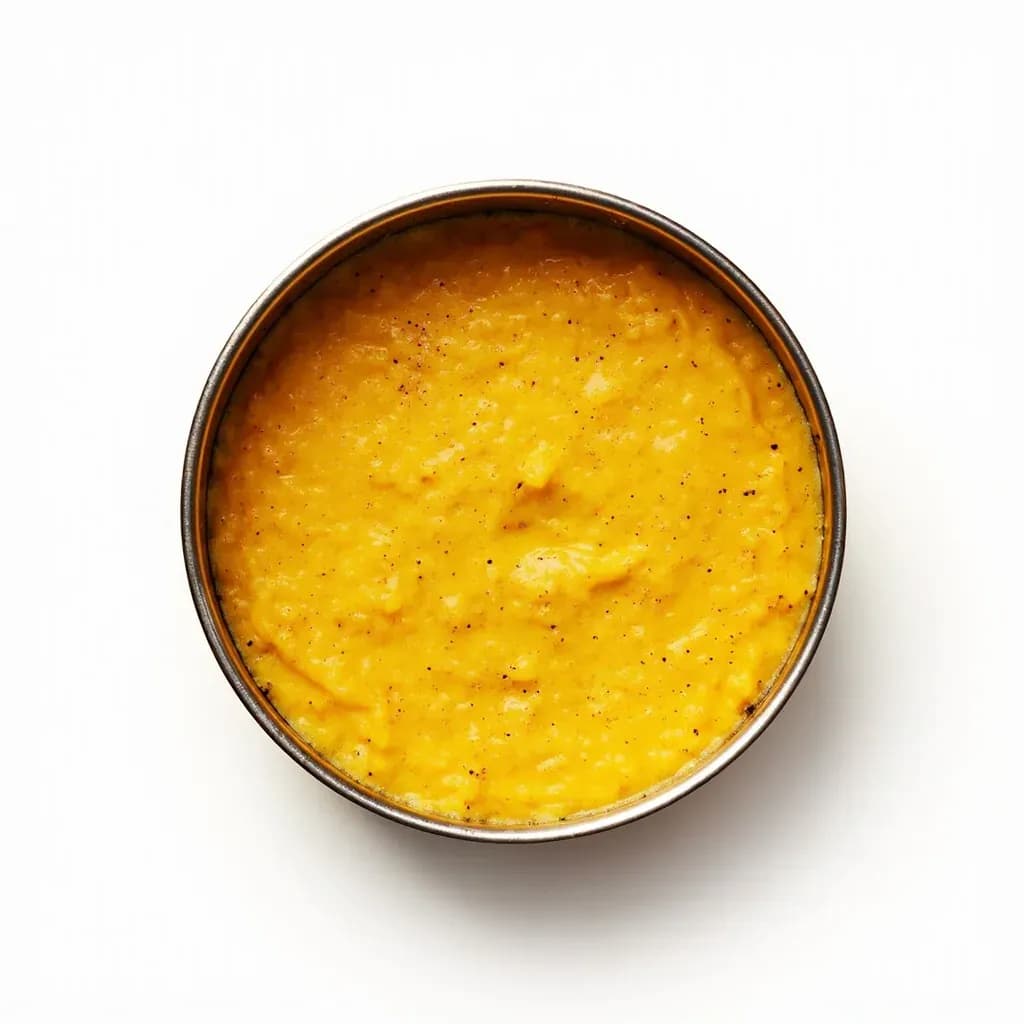
A paiolo is the traditional unlined or tinned copper pot from northern Italy used to cook polenta. Its rounded bottom lets a wooden stick or whisk reach every part as the cornmeal is stirred steadily to a smooth, lump-free porridge. Copper's even heat keeps the polenta from catching and scorching during the long cook.
The paiolo — Italian for cauldron, and the proper name for the round-bottomed copper pot in which northern Italians have cooked polenta since maize became a staple of the Po Valley in the sixteenth and seventeenth centuries. The shape and the material are not decorative choices. Copper's very high thermal conductivity spreads heat evenly across the curved base and up the sides, so a thick starchy slurry does not catch and scorch in one spot during the forty to sixty minutes of constant stirring a proper polenta demands. The round bottom eliminates corners where meal can lodge and clump, and the single long handle lets a cook stand to one side of an open hearth, stirring with a long wooden paddle without leaning over the flames.
What surprises most cooks the first time they use a paiolo is how forgiving the pot feels — and how quickly it punishes inattention. The same conductivity that keeps the polenta moving evenly means the base will scorch within seconds if the flame climbs too high or the stirring slows. Modern adaptations (a flat bottom, sometimes a stainless-clad base for induction) preserve the cooking physics while letting the pot sit on a domestic range. A well-made tinned-copper paiolo is also a multi-generation object: many northern Italian families have cooked in the same pot for a century, sending it to a coppersmith every decade or two to be re-tinned.
Alternatives
Types & varieties
The classic form; sits in an iron tripod, designed for hearth cooking over wood.
Modern adaptation for gas, electric, and induction cooktops; sometimes stainless-clad.
Artisan-made with visible hammer marks; thicker, more durable, considerably more expensive.
Lighter, thinner, and cheaper; more prone to denting and warping over open flame.
Interior coated with tin — the most traditional and food-friendly finish for dairy and grain work.
Modern alternative; tougher lining, slightly slower heat response, induction-compatible.
20–60+ L vessels used in village polenta festivals across northern Italy.
A narrower variant sometimes called a conico, favored in parts of Veneto and Friuli.
The mescola: why the wooden paddle matters
A paiolo without its mescola is half a tool. The mescola (also called paiolino) is a long, flat-bladed wooden paddle — traditionally beech, chestnut, or pear wood — sized so the cook can reach the bottom of the pot and push the thickening polenta in wide, sweeping arcs. Three details are worth knowing: the blade should curve slightly to match the round bottom, the handle should be long enough that the cook's hand stays well clear of the rising steam, and the wood must remain untreated — no oil, no varnish — because it will sit in near-boiling maize for the better part of an hour. Soak a new mescola in cold water for an hour before first use so it does not splinter, and replace it when the blade wears thin or splinters; a metal whisk or spoon used in its place will strip the tin lining within a single cooking.
The cavalletto: a tripod is not optional over a hearth
A round-bottomed paiolo cannot sit on a flat grate; it needs a three-legged wrought-iron stand, the cavalletto or trespolo, whose legs straddle the flames and whose upper ring cradles the curve of the pot. The best cavalletti are height-adjustable so the cook can drop the pot closer to or further from the fire as the polenta thickens. For home cooks without a hearth, a sturdy BBQ grate set over a gas burner is an acceptable substitute for the tripod, but the round-bottomed paiolo still needs something to hold it steady — never try to balance it on a flat surface, where it will rock and tip the moment you apply pressure with the paddle.
Choosing and living with a copper paiolo
If you are buying new, look for a heavy pot — lift it before you commit; a quality 1.5–2.5 mm copper paiolo should feel substantial for its size. Antique paioli from the nineteenth and early twentieth centuries remain widely available through Italian copper dealers and at country markets; they are usually a better buy than modern spun copper at the same price, though they will almost certainly need re-tinning. Plan to send the pot to a coppersmith for retinning roughly every ten years (sooner if you see bright copper patches showing through).
- Lift before you buy: a quality paiolo is heavier than it looks.
- Antique hammered pieces often outperform new spun ones at the same price.
- Re-tin every 10–20 years, or as soon as copper shows through the lining.
- Never use the tin-lined interior over high flame — medium is plenty.
Common uses
Tips & pitfalls
- Stir only with the mescola — a metal whisk will strip the tin lining in a single session.
- Never cook acidic foods (tomato sauces, wine reductions, lemon) in a tinned paiolo; the acid dissolves tin and gives the food a metallic taste.
- Fill to two-thirds capacity at most; polenta foams and can boil over violently during a long cook.
- Bring salted water to a full boil BEFORE whisking in the meal — adding meal to cold water guarantees lumps.
- Whisk the meal in a thin, steady rain while stirring constantly; dump it in and you will fight clumps for an hour.
- Keep the flame low to medium: copper conducts so well that high heat scorches the base long before the top of the polenta is done.
- Always dry the pot by hand immediately after washing to prevent water spots and verdigris on the copper.
- Heat the pot gradually, especially thin spun copper — sudden flame will warp the bottom.
- Polish the outside only when the pot is empty and cool, and never use abrasive pads on the tin interior.
Good to know
- Italian name
- Paiolo (also spelled paiuolo)
- Origin
- Northern Italy — Lombardy, Veneto, Piedmont — documented since at least the 16th century
- Material
- Copper, traditionally hand-hammered; best pieces are 1.5–2.5 mm thick
- Interior lining
- Tin, the traditional choice; stainless steel in modern or induction-ready versions
- Shape
- Round-bottomed bowl with a single side handle; modern flat-bottomed versions exist
- Standard sizes
- 2 L (serves 3–4) up to 10–15 L for family use; festival paioli can exceed 50 L
- Stand
- Paired with a wrought-iron or brass tripod (cavalletto or trespolo) for hearth cooking
- Stirring tool
- Long wooden paddle called a mescola or paiolino
- Capacity rule
- Fill no more than two-thirds full — polenta expands and foams during a long cook
- Care
- Hand wash only, dry immediately; re-tin interior every 10–20 years as needed
Also called
polenta-copper-pot · Paiolo · copper polenta cauldron
Related

Steamer
Gentle moist heat that keeps vegetables, fish, and dumplings tender

Frying Pan
Shallow sloped pan for frying, sautéing, and quick sears

Saucepan
Tall, straight-sided pot for sauces, grains, and small batches

Sauté Pan
Wide straight-sided pan with room to brown and braise

Dutch Oven
Heavy lidded pot that turns tough cuts tender over hours

Stock Pot
Tall, roomy pot for stocks, pasta, and big-batch cooking

Wok
High-sided bowl pan built for blistering-hot stir-fries

Griddle
Flat, broad surface for pancakes, smash burgers, and breakfast