Cookware
Pressure Canner
A heavy sealed pot that reaches above-boiling temperatures to safely can low-acid foods.
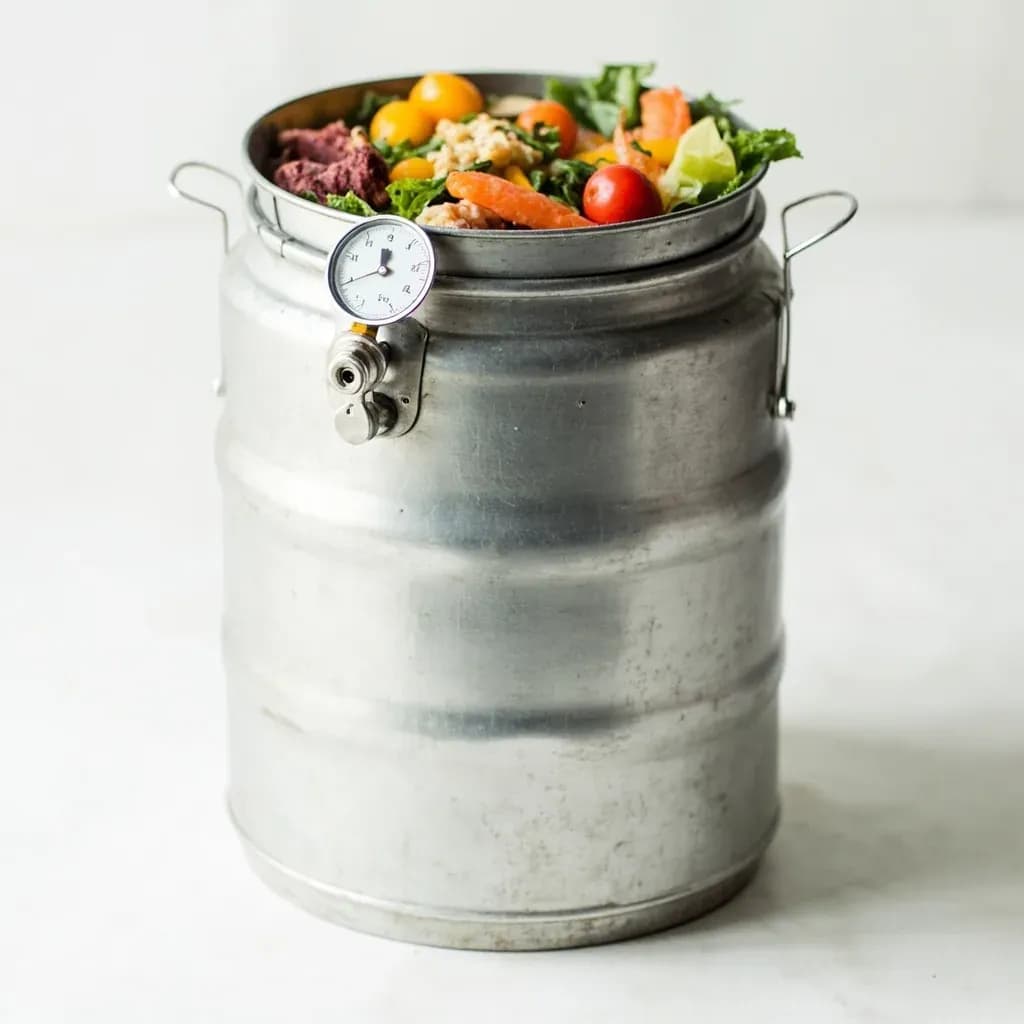
A pressure canner is a thick-walled pot with a locking lid and pressure gauge that raises the internal temperature past the boiling point of water. That extra heat is required to destroy spores in low-acid foods such as vegetables, meats, beans, and soups for shelf-stable storage. It differs from an ordinary pressure cooker in its capacity and its calibrated pressure control needed for safe preservation.
A pressure canner is the only piece of home-scale equipment validated for putting low-acid food on the pantry shelf. It is a heavy, lidded pot built to hold steam under regulated pressure, which pushes the internal temperature well above the 212 °F ceiling of a boiling-water bath — typically to 240–250 °F. That extra heat is not a luxury; it is the only reliable way to destroy the spores of Clostridium botulinum, the bacterium responsible for botulism, which thrive in anything above pH 4.6 (vegetables, meats, seafood, soups, beans, and most stocks).
In practice, the canner heats water to produce a sealed atmosphere of pure steam, regulated by a weighted rocker or a dial gauge to a target of 10–15 PSI depending on altitude. Jars sit on a rack so circulating steam contacts every surface, and the cook times a precise processing window that has been laboratory-validated for each food. Once the timer ends, the canner cools, the vacuum seals the lids with that satisfying metallic ping, and the jars are shelf-stable for a year or longer.
It is distinct from — and not interchangeable with — a stovetop pressure cooker, an Instant Pot, or any electric multi-cooker. Those appliances cook food under pressure but have not been validated for the sustained, even heat delivery required to make low-acid canned goods safe.
Alternatives
Types & varieties
Regulates pressure with a small weighted rocker that hisses at the target PSI; readings are unaffected by altitude or lid position and the regulator cannot drift out of calibration.
Uses a mechanical dial to display exact pressure; can lose accuracy over time and should be tested annually at a county extension office.
Carries both a dial and a weighted regulator so the user can cross-check pressure during a load.
All American–style design with no rubber gasket; the lid clamps onto a metal seat. Heavier and pricier, but the seal cannot degrade from a dried-out ring.
Countertop models such as the Presto Precise with built-in temperature and pressure controls; UL-listed for canning when used with the manufacturer's tested recipes.
Uses a separate replaceable rubber ring (such as Tattler) instead of a fixed molded gasket, which extends service life and reduces waste.
Why the Extra Heat Matters
Botulism spores are remarkably heat-tolerant. In a boiling-water bath at 212 °F they can survive for hours, which is why low-acid foods processed that way have caused fatal outbreaks. Pure steam at 240 °F or higher denatures those spores in the validated times published by the USDA and the National Center for Home Food Preservation. The canner is, in essence, a simplified autoclave — and the recipe times you follow exist because researchers confirmed that they kill the spores, not just the vegetative bacteria that a pressure cooker is designed to defeat.
- Low-acid foods (pH above 4.6) include almost all vegetables, meats, seafood, and mixed-ingredient soups and stocks
- Acidification with lemon juice or citric acid moves some foods (notably tomatoes) below the 4.6 threshold so a water-bath canner is sufficient
- Pure steam, not just pressurized air, is what conducts the heat into the jars — that is why a tight seal and clear vent pipe matter
Choosing a Canner
Three decisions shape a good purchase: gauge type, gasket style, and material. Weighted-gauge canners are generally favored by experienced preservers because they self-regulate and never need calibration; dial gauges are precise on day one but must be checked yearly. A metal-to-metal seal eliminates the one part that most often needs replacement, while aluminum heats quickly and stainless steel is more durable and non-reactive. Most canners also double as a water-bath canner when run with the lid off, which means one pot covers all of a home canner's needs.
- Aluminum: lighter, heats fast, can darken or react with acidic foods (less of a concern in a pressure canner since the food is sealed in jars)
- Stainless steel: heavier, more durable, non-reactive, often pricier
- Capacity: 23-quart models hold seven quart jars or roughly twice that in pints — a comfortable size for most households
- Check that replacement parts (gaskets, overpressure plugs, gauges) are readily available for the brand you choose
Common uses
Tips & pitfalls
- Never substitute a stovetop pressure cooker, Instant Pot, or electric multi-cooker for a validated pressure canner — they have not been proven safe for low-acid canning.
- Use only up-to-date, tested recipes from Ball, the USDA Complete Guide to Home Canning, or the National Center for Home Food Preservation; do not improvise processing times.
- Before every load, confirm the vent pipe is clear and the gasket is pliable, seated, and free of nicks — a dried-out or cracked ring is a leading cause of failed seals.
- At altitudes above 1,000 ft, raise the PSI following the published altitude table for your elevation.
- Let the canner depressurize naturally for 10 minutes before releasing any remaining pressure, and never force-cool it under running water — sudden temperature drops can cause liquid to siphon out of the jars.
- Keep jars covered by 1–3 inches of water throughout processing, and never let the canner boil dry, which can scorch the pot and damage the base of the jars.
- Have a dial gauge tested each year at a county extension office and replace rubber overpressure plugs that show cracking, hardening, or wear.
- Remove the rubber gasket from the lid after the canner cools and store it loose so it does not compress out of shape, extending its service life considerably.
Good to know
- Operating temperature
- 240–250 °F (116–121 °C), depending on PSI
- Operating pressure
- 10–15 PSI (69–103 kPa) of pure steam
- Typical capacity
- 16–23 quarts for home use; 30+ quarts in jumbo models
- Construction
- Heavy-gauge cast aluminum or stamped stainless steel with a locking lid and vent pipe
- Pressure regulation
- Weighted-gauge (jiggler) or dial-gauge; some models offer both
- Gasket type
- Rubber sealing ring on most models; metal-to-metal seat on All American–style canners
- pH threshold
- Required for any food with pH above 4.6 — essentially all vegetables, meats, seafood, and most soups
- Altitude adjustment
- PSI must rise with elevation (11 PSI at 1,001–2,000 ft; 15 PSI above 4,000 ft)
Also called
pressure canning pot · steam pressure canner
Related

Steamer
Gentle moist heat that keeps vegetables, fish, and dumplings tender

Frying Pan
Shallow sloped pan for frying, sautéing, and quick sears

Saucepan
Tall, straight-sided pot for sauces, grains, and small batches

Sauté Pan
Wide straight-sided pan with room to brown and braise

Dutch Oven
Heavy lidded pot that turns tough cuts tender over hours

Stock Pot
Tall, roomy pot for stocks, pasta, and big-batch cooking

Wok
High-sided bowl pan built for blistering-hot stir-fries

Griddle
Flat, broad surface for pancakes, smash burgers, and breakfast