Cookware
Rondeau (Brazier)
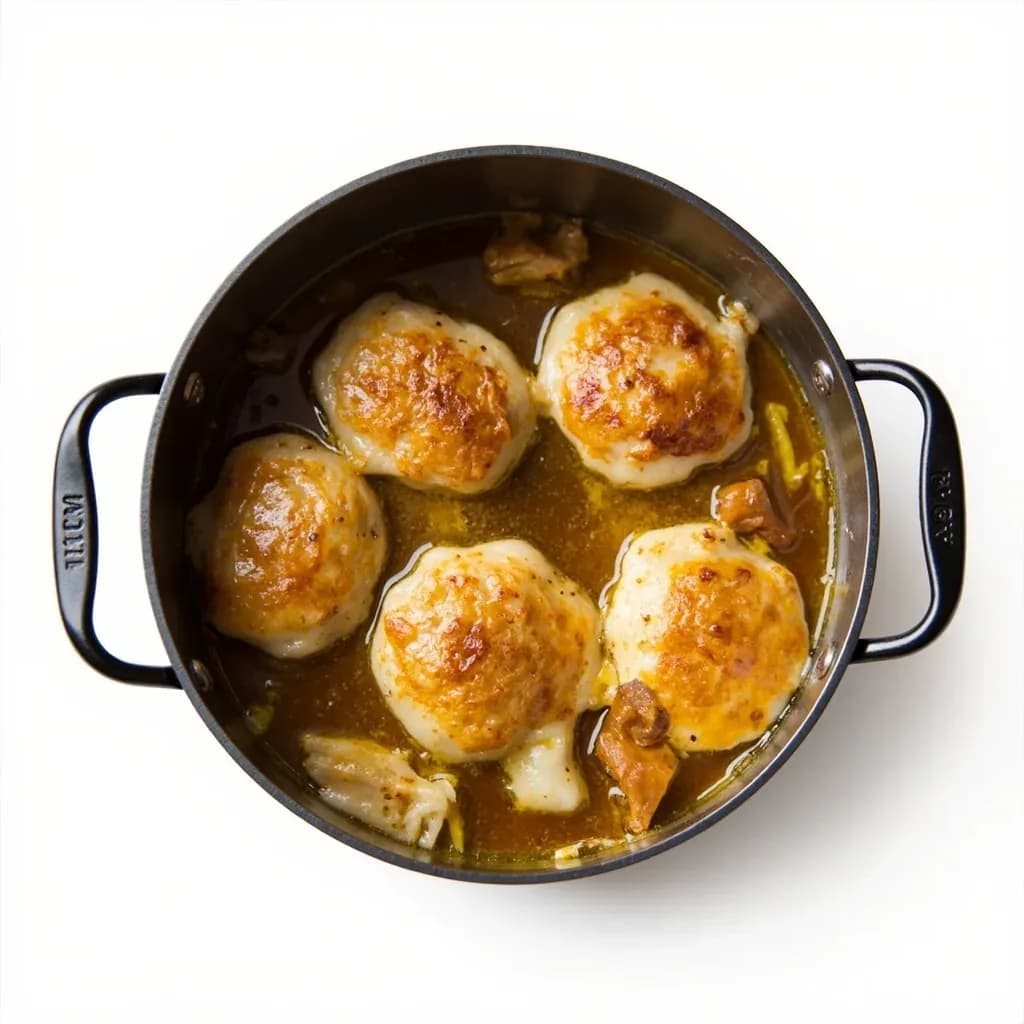
Wide, shallow heavy pot with two loop handles for braising and searing large cuts.
A rondeau, also called a brazier, is a broad, shallow pot with straight sides, two loop handles, and a tight lid. Its wide base gives plenty of surface for searing meat and vegetables, while the depth holds enough liquid to braise, stew, and finish in the oven. It bridges the gap between a saute pan and a stockpot for batch cooking.
A rondeau — interchangeably called a brazier or braisière — is the wide, shallow, heavy-bottomed pot that quietly runs the back of every serious kitchen. Its defining geometry is unmistakable: a broad flat base, straight or barely sloped walls only four to six inches tall, and a pair of loop handles set opposite each other so two hands can carry it. The name comes from the French *rond* (round), and the older term *brazier* from *braise*, the hot embers over which these vessels once sat for long, low cooking. In modern stoves, that original use survives in the vessel's chief virtue: a surface-to-volume ratio that lets a cook brown a whole short rib across the bottom without crowding, and then reduce its braising liquid with ferocious speed once the lid comes off.
What separates a rondeau from its close relatives is exactly that ratio. A stockpot is tall and narrow, ideal for simmering but slow to give up moisture. A sauté pan is small and sloped, perfect for a single portion but cramped for a braise. A rondeau is the in-between: big enough to hold a chicken, a rack of ribs, or ten pounds of onions, and shallow enough that the heat from the burner reaches food quickly and that steam escapes readily when you want a glaze. In French brigade kitchens the saucier is nicknamed *le rondeau* for this reason — the pot is where sauces and stocks are won or lost.
For the home cook, a 12- to 16-inch version is a versatile second pot: it braises a pork shoulder for six, simmers a large pot of beans, blanches vegetables by the colander-full, and boils pasta without the constant stirring a stockpot demands. The trade-off is cabinet space — a wide, low pan does not nest neatly — and weight, since the heavy base that gives it even heat also makes it awkward to lift one-handed.
Alternatives
Types & varieties
The professional workhorse — fast, even heating at a modest price, but it dents, discolors, and reacts with acidic foods unless coated.
Stainless interior with an aluminum core; durable, induction-capable, non-reactive, and the most common choice for a serious home kitchen.
Traditional French bistro cookware with the most responsive heat control; expensive, and tin-lined versions need periodic retinning.
A closely related cousin with thicker walls and a slightly more decorative profile; excels at low, steady oven braises and goes to the table handsomely.
Historically a touch deeper than the flat rondeau, originally set on coals; in modern catalogs the two names are used for the same shape.
Why the wide base changes the cooking
The single most useful thing to understand about a rondeau is how the same pot behaves very differently from a stockpot, even when both are simmering. A 12-quart rondeau and a 12-quart stockpot hold the same volume, but the rondeau exposes roughly twice as much liquid to the air. That means a stock that needs four hours in a stockpot to reduce by half will do the same job in two hours in a rondeau, with the bonus that the wider surface skims more cleanly and concentrates flavor faster. It also means the pan is unforgiving of inattention: liquids climb the shallow walls and boil over far more readily than in a tall pot.
- Use a rondeau when reduction is the goal; reach for a stockpot when you want to hold liquid at a gentle simmer for hours.
- The wide base also browns more evenly across a full layer of meat, because each piece sits in direct contact with hot metal rather than resting on a pile.
Choosing the right size
Rondeaus scale up quickly, and a pan that is too large for the burner underneath is a common and expensive mistake. A 22-inch round base is far wider than most residential burners can heat evenly, so the rim stays cool while the center scorches.
- Home cooks: a 12- or 14-inch rondeau handles most family braises and stock reductions.
- Serious home cooks and small kitchens: a 16-inch is the sweet spot for batch pasta, chili, and large chicken braises.
- Professional kitchens: 18-, 20-, and 22-inch versions for stock work and catering; reserve these for burners that can cover their bases.
- Match lid, colander, and steamer insert to the same diameter — a lid that rattles lets steam escape and slows a braise.
Care and maintenance
Care varies by material, but a few rules hold for all rondeaus. The flat base that makes the pan so useful also shows every scorch and stain, so cleanup matters.
- Aluminum: wash by hand with a non-abrasive pad; alkaline dishwasher detergent will darken the surface but does not affect performance.
- Stainless: a paste of baking soda and water or Bar Keepers Friend removes heat tint and stuck-on fond without scratching.
- Copper (tin-lined): avoid metal utensils on the tin lining, and have the tin retinned every few years if it wears through.
- Enameled cast iron: avoid thermal shock — do not run a hot pan under cold water, or the enamel can craze.
Common uses
Tips & pitfalls
- Don't fill past two-thirds full; the shallow walls climb and boil over much more aggressively than a stockpot.
- Pre-heat on medium — the heavy base holds heat well, and starting on high will scorch fond and dairy before the pan comes up to temperature.
- Lift with both hands on the loop handles; the wide pan is awkward and unsafe to move one-handed, even when empty.
- For searing, leave at least an inch between pieces; crowding is the single most common mistake with this pan and turns a sear into a steam.
- Use a flat wooden spatula or fish spatula to deglaze, not a spoon — only a flat edge can sweep the broad, flat base clean.
- On gas, center the burner under the wide base; flames licking up the shallow sides do not help heat the food and can scorch the handles.
- Buy a tight-fitting flat lid; a loose lid turns a covered braise into a dry roast and defeats the purpose of the vessel.
- When shopping for home use, choose a size that nests with a smaller pot or colander — the wide, low profile wastes cabinet space if it cannot stack.
Good to know
- Also called
- Brazier, braisière, rondeau pan, round brazier
- Defining shape
- Wide flat bottom with shallow straight or slightly sloped sides, typically 14–22 inches across and 4–6 inches deep
- Materials
- Heavy-gauge aluminum, tri-ply or fully-clad stainless, tin- or stainless-lined copper, enameled cast iron
- Capacity
- Roughly 8–36 quarts; an 18-inch aluminum rondeau holds about 22–26 quarts
- Lid
- Flat, heavy, tight-fitting; the rim seals flush so a covered braise stays moist
- Heat sources
- Gas, electric, induction (clad versions), halogen; oven-safe to about 500 °F / 260 °C when all-metal
- Empty weight
- An 18-inch stainless rondeau typically weighs 10–15 lb / 4.5–7 kg
- Cost range
- From about $60 for restaurant aluminum to over $1,000 for traditional copper
Also called
Brazier · Brasier
Related

Steamer
Gentle moist heat that keeps vegetables, fish, and dumplings tender

Frying Pan
Shallow sloped pan for frying, sautéing, and quick sears

Saucepan
Tall, straight-sided pot for sauces, grains, and small batches

Sauté Pan
Wide straight-sided pan with room to brown and braise

Dutch Oven
Heavy lidded pot that turns tough cuts tender over hours

Stock Pot
Tall, roomy pot for stocks, pasta, and big-batch cooking

Wok
High-sided bowl pan built for blistering-hot stir-fries

Griddle
Flat, broad surface for pancakes, smash burgers, and breakfast