Knives & Cutting
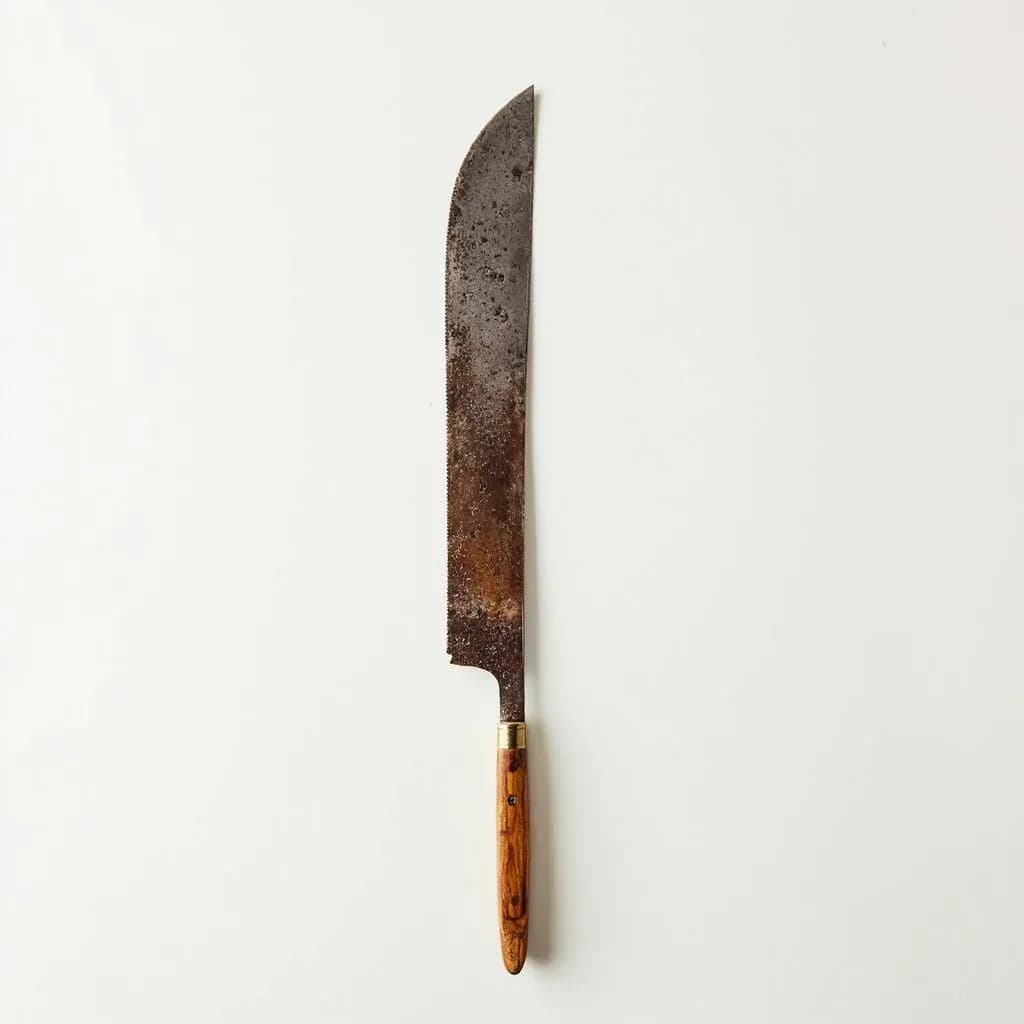
Shawarma / Trompo Carving Knife
A long thin blade or electric slicer for shaving thin strips off a vertical rotisserie of meat.
A shawarma knife is a long, narrow carving blade, or an electric handheld slicer, used to shave thin layers from a vertical spit of stacked, roasting meat. The cook draws it down the turning trompo so cooked outer slices fall away, ready for wraps and plates. Manual versions need careful sharpening, while battery and corded electric models speed service in busy shops.
The shawarma knife — also called a trompo knife, döner bıçağı, or gyro knife — is a specialized slicer built for one job: shaving paper-thin, uniform strips of seasoned meat off a spinning vertical spit. Its defining feature is length. A manual blade runs 50 to 80 cm so it can span the radius of a full-size shawarma or döner cone in a single pass, while compact 30–40 cm versions handle the narrower pork trompos used for tacos al pastor. The blade is long, narrow, and thin, with a flexible to semi-flexible spine and a very acute edge angle, all of which let the cook lay it flat against the rotating meat and let the spit do the cutting. The result is a continuous ribbon of crisp-edged, juicy meat that is the signature texture of street shawarma, döner, gyro, and al pastor.
What separates this knife from a regular carving or slicing knife is geometry. A chef's knife or even a long sujihiki is built for length of stroke on a stationary roast; a shawarma knife is built for length of reach on a moving surface, and for a slice thin enough to crisp the moment it leaves the hot outer crust of the spit. Thinness matters more than hardness — a thick spine would push meat off the cone rather than shave it. Electric shawarma slicers follow the same logic with a small (100–130 mm) guarded circular blade that oscillates or rotates; they exist to reduce wrist strain and keep the cut consistent during long, high-volume services, not to change the nature of the slice itself.
For most home cooks a true shawarma knife is unnecessary. Occasional shawarma nights can be handled with a long slicing knife, and small countertop grills pair well with a compact trompo blade. But for anyone running a spit at home, or simply curious about how the iconic shawarma shave is produced, understanding the tool explains the dish: thin blade, full radius, edge angled against the grain, and the rotation of the spit pulling the meat across steel.
Alternatives
Types & varieties
Long, thin, flexible blade held at a fixed angle while the spit turns; the classic tool in Middle Eastern and Turkish shops.
Shorter 30–40 cm blade suited to the narrower pork trompos used for tacos al pastor; often a bit stiffer for cutting through the chicharrón-like outer crust.
Handheld power tool with a small guarded circular blade that oscillates or rotates; standard behind busy döner and shawarma counters to reduce repetitive strain.
Same family of long slicers, used for Greek gyros and Turkish döner spits; blade is often slightly wider and stiffer than the shawarma style.
Thicker, more rigid spine used to break through the crisp outer crust of döner or al pastor before switching to a thinner blade for the inner layers.
Manual vs. electric: choosing the right tool
Manual shawarma knives are still the standard in most traditional shops for good reason: they give the cook direct control over slice thickness, and a long flexible blade can be laid against the cone at a precise angle, producing the very thin, almost translucent shave that crisps at the edge. They are also quiet, cheap to maintain, and forgiving of the small variations in meat density that occur as a spit cooks down. Electric slicers trade some of that control for speed and ergonomics. The oscillating or rotating circular blade keeps a consistent cut for hours, which matters when a shop is shaving dozens of cones a day. For home use, manual is almost always the right answer: a long sujihiki or a compact al pastor knife covers nearly every situation, and the learning curve is short.
What to look for if you buy one
Three qualities matter more than any other: blade length relative to your spit, blade thinness, and edge retention. A blade that does not span the radius of the cone forces you to cut in stages, which tears the meat. A thick spine pushes meat off the spit instead of shaving it. And a soft steel will roll within a single service against the seasoned, often crusty outer layer. For most home cooks, a compact 30–40 cm blade in DIN 1.4116 or similar high-carbon stainless is the practical sweet spot: it fits smaller countertop grills, holds an edge, and is forgiving to maintain.
Common uses
Tips & pitfalls
- Let the spit do the work — hold the blade at a steady angle and let the rotation pull the meat across the edge rather than sawing back and forth.
- Sharpen before every service; a slightly dull blade tears instead of shaves, and torn meat falls off the cone and is wasted.
- Keep the blade's contact point near the hot outer crust so the slice is thin enough to crisp at the edge as it falls.
- Cut with the visible grain of the stacked meat on the cone to keep slices intact and prevent crumbling at the edges.
- Wipe the blade with a damp cloth between shavings — built-up fat and seasoning drag against the meat and tear the surface.
- Angle the cutting edge slightly downward (15–30°) for shawarma and döner; flatter angles work better on the tighter, narrower al pastor trompo.
- For electric slicers, never bypass the safety guard and keep the cord clear of the rotating spit — the blade can catch a loose cord in a fraction of a second.
- If you don't own a true shawarma knife, a long sujihiki or a stiff brisket knife is a workable substitute for home-scale work, but blade length will be the limit on a full-size spit.
Good to know
- Also called
- Trompo knife, shawarma slicer, döner bıçağı, al pastor knife, gyro knife
- Primary use
- Shaving thin, uniform slices of meat from a vertical rotisserie (shawarma, döner, al pastor, gyro)
- Manual blade length
- Typically 50–80 cm (20–32 in); long enough to span the radius of a full-size spit
- Compact blade length
- 30–40 cm versions for smaller countertop grills and narrow al pastor trompos
- Blade profile
- Long, narrow, thin, semi-flexible to flexible, with a rounded or squared tip
- Common steel
- High-carbon stainless steel (420/440-class or DIN 1.4116); carbon steel used by some traditionalists
- Electric variant
- Handheld power slicer with a 10–13 cm circular blade, usually guarded, oscillating or rotating
- Skill level
- Low to moderate; the rotating spit does most of the work once the angle is set
Also called
trompo knife · shawarma slicer · doner knife · gyro knife · kebab carving knife
Related

Knife
The fundamental cutting tool every kitchen is built around

Chef's Knife
The do-everything blade for chopping, slicing, and mincing

Paring Knife
Small, nimble blade for peeling and detailed in-hand work

Serrated Knife
Saw-toothed blade that slices crusty bread without crushing

Cleaver
Heavy broad blade for chopping through bone and bulk prep

Cutting Board
The stable surface every cut starts on

Mandoline
Adjustable blade for paper-thin, perfectly even slices

Kitchen Shears
Heavy-duty scissors for poultry, herbs, and packaging