Baking & Pastry
Sheet-Pan Extender
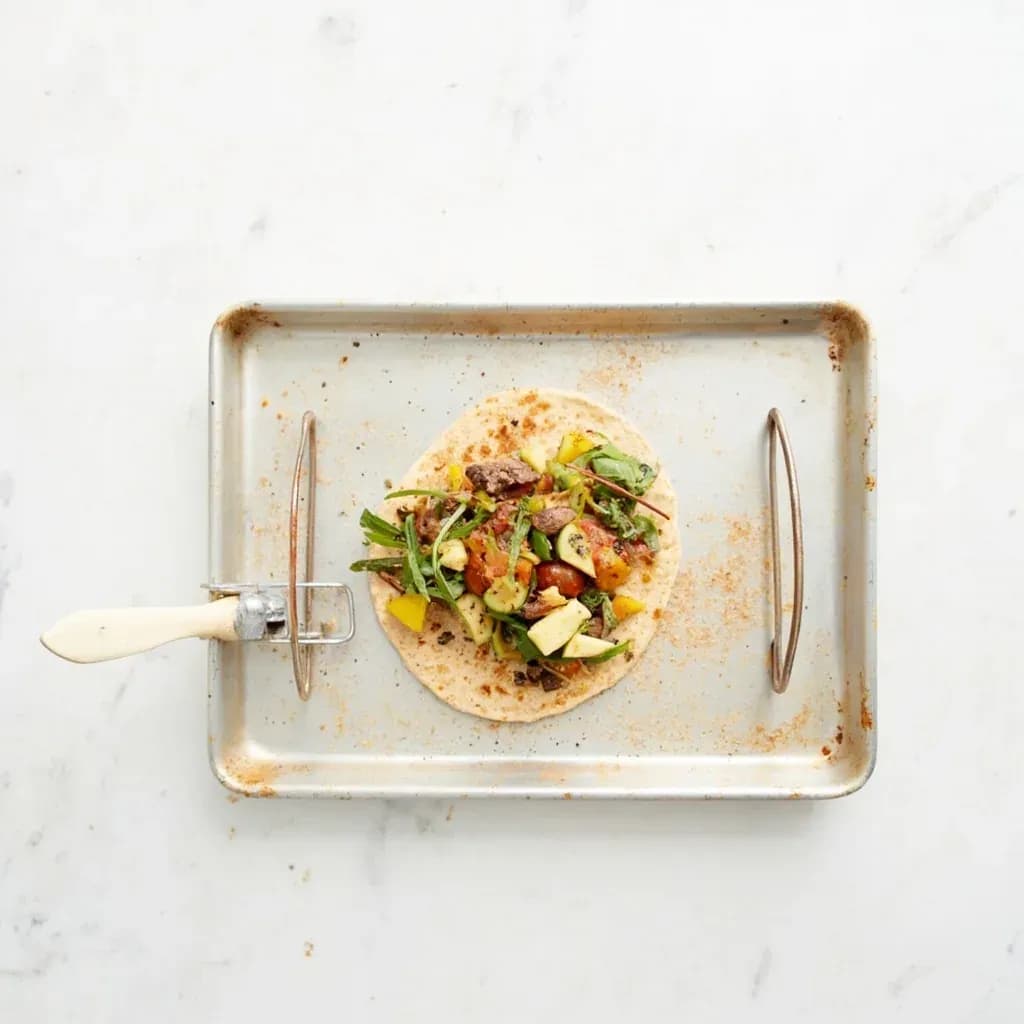
An adjustable frame that raises and divides a sheet pan's walls for sheet cakes and slab bakes.
A sheet-pan extender is a metal frame that sits on or inside a baking sheet to add taller, often adjustable, walls. It turns a flat pan into a deeper, custom-sized form for sheet cakes, focaccia, bar cookies, and slab pies, and some models slide to set the exact dimensions or partition the pan. It saves buying many fixed-size pans by reshaping one tray.
A sheet-pan extender is an aftermarket wall kit for a rimmed sheet pan — a four-sided frame, usually anodized aluminum, that nests onto the pan's rim and effectively doubles or triples its wall height. It does not replace the pan; it sits on top of it, turning a shallow 1-inch rim into a deeper 2- to 3-inch well. For bakers who want to make tall sheet cakes, slab pies, or deep-dish pizzas without buying a dedicated deep pan, it is the most practical and inexpensive solution.
What makes the extender genuinely useful is the combination of a wide footprint and contained vertical space. Sheet-pan baking has become a home-kitchen default because the large surface area promotes even browning and fast oven times, but the shallow rim is the limiting factor for anything that rises, sloshes, or oozes. The extender solves that constraint while keeping the pan's existing heat distribution and handling, so batters bake the same way they would in a dedicated deep pan, and finished slabs lift out cleanly when the pan is lined with parchment.
Anodized aluminum is the de facto standard for good reason. The finish releases tender batters — génoise, financier, brownie — without the aggressive greasing a plain-aluminum pan demands, and it resists warping better than raw aluminum at the volumes these pans hold. Stainless versions exist for heavy commercial use, but for most home bakers, a single half-sheet extender in anodized aluminum is the tool that converts an existing sheet pan into a small hotel pan.
Alternatives
Types & varieties
The most common size; nests onto a standard 18 x 13 in half sheet pan and raises walls to roughly 2–3 in.
Larger version for commercial 26 x 18 in full sheet pans; common in bakery and restaurant settings.
Smaller version for 13 x 9 in quarter sheet pans, useful for small batches or testing recipes.
Panels that assemble in multiple configurations to divide a sheet pan into sections or build a taller box.
Telescoping or multi-tier versions that allow variable wall heights beyond a fixed 3 in.
Heavier-duty option, often more warp-resistant; pricier than aluminum but more durable in commercial use.
How the Extender Fits the Pan
Most half-sheet extenders are designed with a shallow lip or channel on the bottom edge that seats over the rolled rim of a standard half sheet pan. The fit is intentionally snug, since any gap becomes a leak path for thin batter. Manufacturers like Fat Daddio's and Nordic Ware size their extenders to common American half-sheet pans (the 18 x 13 in footprint), but small size differences between brands are common, and that variation is the most common reason an extender weeps batter at the corners. The single most important spec to match when buying is the interior footprint of your existing pan, measured flat across the bottom, not the outer dimensions.
- Match the interior footprint of your sheet pan, not the outer dimensions — pans vary by brand.
- The extender adds height but does not stiffen the pan itself; warped pans still leak.
- Modular dividers can stand on edge inside the pan to create separate compartments for baking several small items at once.
When to Choose an Extender Over a Dedicated Pan
If you only occasionally need a deeper wall — for a birthday sheet cake, a slab pie at Thanksgiving, a Detroit-style pizza night — an extender is a smarter buy than a second pan. It costs less, takes up less storage, and keeps your sheet pan doing double duty. A dedicated deep sheet pan or full hotel pan is the better choice for high-volume commercial work, for recipes needing more than 3 inches of wall height, or for anyone baking deep-pan recipes weekly. The decision is mostly about frequency: occasional deep baking favors the extender, frequent deep baking favors the dedicated pan.
- Occasional deep baking (a few times a year): extender is the better buy.
- Weekly deep baking or commercial volume: dedicated deep pan pays off.
- An extender will not fix a warped sheet pan; the pan must sit flat for the seal to hold.
Care and Longevity
Anodized aluminum is forgiving but not invincible. Hand-washing with a soft sponge and mild detergent keeps the surface from dulling; dishwasher detergent is alkaline enough to slowly etch the anodized layer, especially on the cut edges where the coating is thinnest. Stack the extender nested inside its pan, or store it flat in a cabinet — the walls are thin and will dent if knocked around. If batter does bake onto the walls, soak the extender in hot water rather than scraping aggressively; the metal will release the residue, and a non-abrasive scrubber will finish the job without scratching the finish.
- Hand-wash when possible; dishwasher detergent dulls anodized finishes over time.
- Soak baked-on residue in hot water rather than scraping with metal tools.
- Store nested or flat to prevent denting the thin walls.
Common uses
Tips & pitfalls
- Always grease the extender walls (or line them with parchment strips) the same way you grease the pan — batter that bakes onto bare anodized aluminum is hard to remove and shortens the pan's life.
- Confirm the extender matches your specific sheet pan brand; even a quarter-inch of mismatch can cause thin batters to leak at the corners.
- Do not fill more than two-thirds full — sheet-pan batters rise with surprising force, and the rim is the only thing containing the overflow.
- Place the assembled pan on a flat, sturdy oven shelf before filling; a rimmed sheet pan set on a warped rack can tilt and spill.
- For very wet batters like a thin génoise, set the pan on a parchment sling with overhanging edges so the finished cake lifts out cleanly without tearing the side crust.
- For slab pies, chill the filled pan in the refrigerator for 15 to 20 minutes before baking so the fat stays solid long enough for the crust to set against the taller walls.
- Avoid prolonged exposure under the broiler — thinner aluminum can discolor or warp at the high, direct heat.
- To divide a sheet pan into sections, stand divider panels on edge inside the pan and seal any small gaps with a thin layer of batter or a strip of parchment.
Good to know
- Type
- Adjustable frame that nests onto a standard rimmed sheet pan to increase its wall height
- Typical Material
- Anodized aluminum (most common); stainless steel also available
- Standard Size (Half Sheet)
- Fits an 18 x 13 in (45 x 33 cm) half sheet pan, raising walls from ~1 in to 2–3 in (5–7.5 cm)
- Full Sheet Size
- Larger versions fit 26 x 18 in (66 x 46 cm) full sheet pans
- Heat Tolerance
- Safe for oven temperatures up to at least 450°F (230°C); check manufacturer specs for higher
- Dishwasher Safe
- Most anodized-aluminum and stainless models are dishwasher safe, though hand-washing extends life
- Origin
- Modern commercial baking accessory; widely available to home bakers from the 2000s on
- Notable Brands
- Fat Daddio's (SHE-13 model), Nordic Ware, USA Pan, Wilton, and various generic options
- Weight
- Typically 0.5–1 lb (225–450 g); light enough to handle without reinforcing the pan
- Storage
- Nests flat or stacks; many are designed to store nested inside or alongside the sheet pan they fit
Also called
pan extender · baking frame · adjustable cake frame · sheet cake extender
Related

Muffin Pan
Multi-cup pan for muffins, cupcakes, and egg bites

Bundt Pan
Fluted ring mold for showstopping cakes with a center hole

Springform Pan
Latch-release pan that frees delicate cakes without flipping

Pie Dish
Sloped round dish for crisp-bottomed pies and quiches

Tart Pan
Fluted pan with a pop-out base for clean-edged tarts

Rolling Pin
Rolls dough into even sheets for pastry and bread

Pastry Brush
Brushes on egg wash, glaze, butter, and marinades

Bench Scraper
Flat blade that divides dough and clears your work surface