Baking & Pastry
Sheet Pan Rack (Speed Rack)
A tall wheeled frame with slotted shelves that holds many sheet pans in a small footprint.
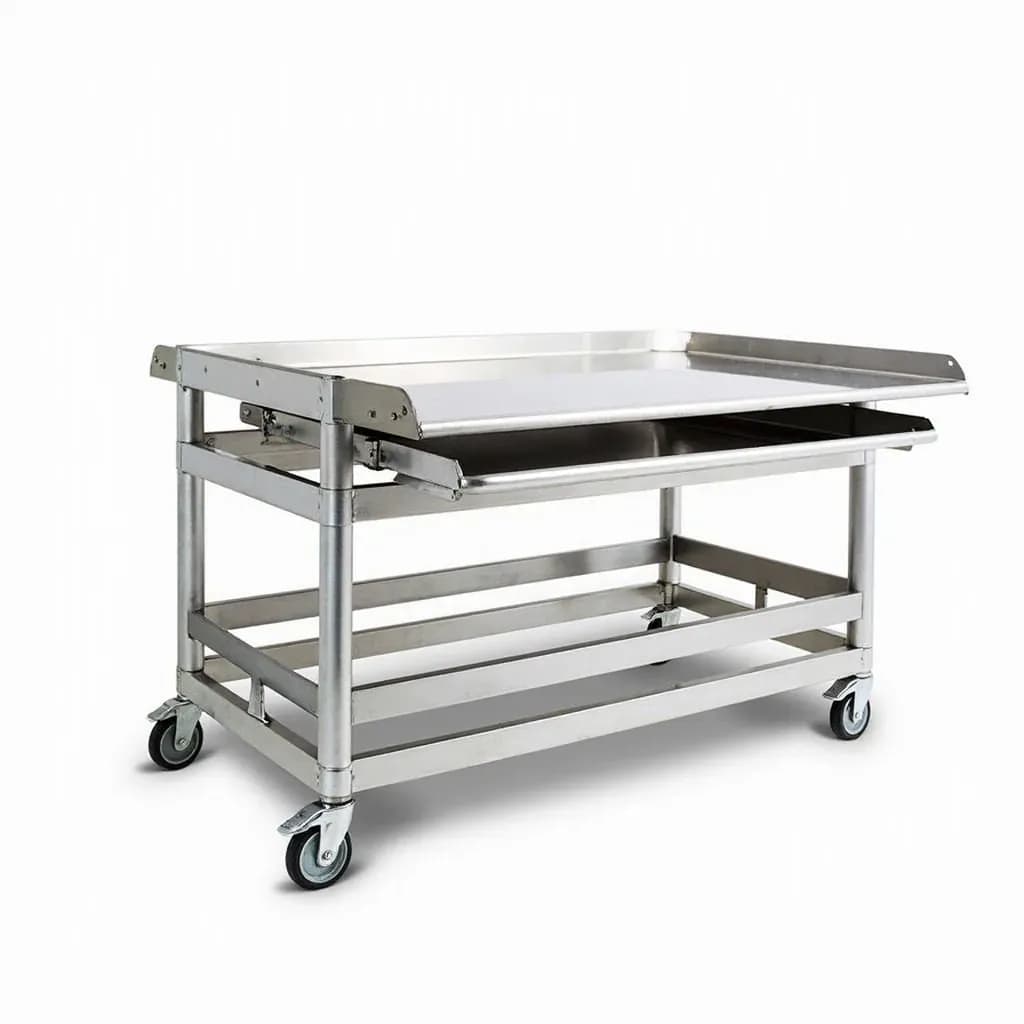
A sheet pan rack, often called a speed rack, is a mobile metal frame with horizontal runners that slide and hold standard sheet pans vertically stacked. Bakeries and busy kitchens use it to store, transport, proof, and cool large numbers of trays in minimal floor space. A fitted plastic cover turns it into a makeshift proofing or holding box.
A sheet pan rack is the vertical filing cabinet of the professional kitchen — a tall, wheeled frame with slotted shelves that turns a stack of pans into a single movable column. Its value is less about the rack itself than about what it does to workflow: a baker can wheel twenty loaded pans from bench to oven to cooler in one motion, and a banquet cook can stage an entire service on one tower that rolls into the room.
The whole system is built around the U.S. full-size sheet (or bun) pan at 18 by 26 inches, which sets the footprint for nearly every rack, oven, and pro range in the country. A standard full-height unit holds 18 to 20 of those pans on rails spaced about an inch and a half apart; half-size racks take the 18-by-13-inch pan and slip into tighter kitchens. Most are anodized or mill-finish aluminum because the metal is light enough that a fully loaded rack is still manageable, with stainless reserved for heated holding, heavy abuse, or corrosive environments.
The same chassis wears different names depending on the job. Pastry cooks call it a bun rack or sheet pan rack; banquet cooks call the shorter plate-staging version a speed rack; dough rooms use wide-rail proofing racks so croissants and loaves aren't crushed. Whatever the name, the rule is the same: it has to hold the pans your kitchen actually runs, fit through every doorway on its route, and stay put when you lock the casters.
Alternatives
Types & varieties
Holds 18 × 26 in pans; the workhorse in bakeries and hotel pantries, typically 18–20 shelves.
Slimmer footprint for 18 × 13 in pans; common in smaller kitchens and cafés.
Shorter, mobile cart with flat or plate-grooved shelves used to stage plated food for banquets and pass service; sometimes fitted with sheet-pan slot inserts.
Wider rail spacing (≈3 in) so proofing baskets, sheet pans of dough, or trays of croissants aren't crowded; usually paired with a humidity-controlled proof box.
Enclosed cabinet on casters with a heat source to hold plated food hot during transport; used in catering and banqueting.
Sized to roll directly into a roll-in blast chiller or reach-in refrigerator.
Sits below standard work-surface height; used where vertical clearance is limited.
Most are end-load (pans slide in from the short end); side-load versions exist for narrow aisles.
Aluminum is light, inexpensive, and standard; stainless costs more and is chosen for corrosion resistance, heated service, and heavier loads.
Sizing the rack to your route
The most common mistake is buying by capacity alone. A full-height 20-shelf unit loaded with sheet-pan dinners is roughly the size of a refrigerator and weighs far more than you expect; if it won't clear the walk-in door, roll under the lowest prep table, or fit the corridor between bakery and dishwasher, it isn't useful. Measure every threshold on the route — including the lip at the walk-in and the underside of any pass-through — before you commit.
- A full-height rack on 5-inch casters tops out around 70 inches; many standard door frames clear that, but oven hoods, low ceilings, and pass-throughs may not.
- Capacity and weight scale together: a rack built for 20 full-size pans of sheet-pan dinner can approach 200 lb loaded, which is the upper end of what one cook should push alone.
- End-load racks slide pans in from the short end and use floor footprint most efficiently; side-load racks exist for narrow galley kitchens but limit pan orientation.
- NSF/ANSI 2 certification matters in any kitchen under health-department inspection — non-certified racks collect grease in seams and fail on close inspection.
The speed rack, defined
In a pastry kitchen, 'speed rack' and 'sheet pan rack' are often the same object. In banquet and catering, a speed rack is something else: a shorter, often stainless cart with flat or plate-grooved shelves used to stage finished plates from the kitchen to the dining room, sometimes fitted with sheet-pan slot inserts so the same cart carries a sheet-pan dessert course or a stack of rolls.
- Plate-up speed racks typically hold 30 to 60 plates and sit at a height comfortable for plating at the pass.
- Slot inserts convert a plate-up rack into a sheet-pan rack, which is why many banquet operations own one rack that does both jobs.
- Heated and refrigerated versions extend the same idea: the rack becomes a transport cart that holds plated food at temperature from kitchen to service.
- The rails on a true sheet-pan rack are the defining feature — without them, a 'speed rack' is just a rolling shelf.
Common uses
Tips & pitfalls
- Lock two casters (usually the swivel pair) before loading or unloading; a rolling rack loaded with hot pans is a serious liability on any kitchen floor.
- Load heavy pans on the lower shelves and keep the top shelves light — a top-heavy rack tips easily over uneven thresholds or dock plates.
- Push from the end, not the side. Side-loading a heavy rack creates a whipping motion that can throw pans and pull the rack over.
- Use rimmed half- or full-sheet pans that match the rack. Mixing sizes leaves pans cantilevered and prone to tipping when you slide a neighbor in or out.
- Line pans with parchment, silicone mats, or pan liners so grease and flour don't migrate between shelves — and so the rack itself stays clean.
- Wipe rails and casters daily. Flour and grease buildup makes pans stick, and clogged casters are how racks end up in the dishwash pit.
- Mind overhead clearance. A loaded full-height rack is taller than most people expect; measure before pushing into a walk-in or under a hood.
- In a proof box or hot-holding cabinet, leave one or two shelf positions empty so air can circulate — a fully packed rack blocks airflow and gives uneven results.
Good to know
- Also called
- Speed rack, bun rack, bun pan rack, sheet pan trolley, pan rack
- Standard pan size (full)
- 18 × 26 in (the U.S. full-size sheet/bun pan)
- Standard pan size (half)
- 18 × 13 in
- Typical full-rack capacity
- 18–20 full-size sheet pans
- Typical height
- ≈64–72 in (about 1.7 m) including casters
- Common materials
- Anodized or mill-finish aluminum (standard); stainless steel for heavy or heated use
- Casters
- Usually 5 in wheels; two swivel with brakes, two rigid for straight tracking
- Rail spacing
- ≈1.5 in between shelf lips (≈3 in for proofing/dough-room racks)
- Sanitation standard
- NSF/ANSI 2 certification common on commercial units
Also called
Speed Rack · Sheet-Pan Speed Rack · Bun-Pan Rack · Sheet-Pan Rack Cover · Bakery Rack
Related

Muffin Pan
Multi-cup pan for muffins, cupcakes, and egg bites

Bundt Pan
Fluted ring mold for showstopping cakes with a center hole

Springform Pan
Latch-release pan that frees delicate cakes without flipping

Pie Dish
Sloped round dish for crisp-bottomed pies and quiches

Tart Pan
Fluted pan with a pop-out base for clean-edged tarts

Rolling Pin
Rolls dough into even sheets for pastry and bread

Pastry Brush
Brushes on egg wash, glaze, butter, and marinades

Bench Scraper
Flat blade that divides dough and clears your work surface