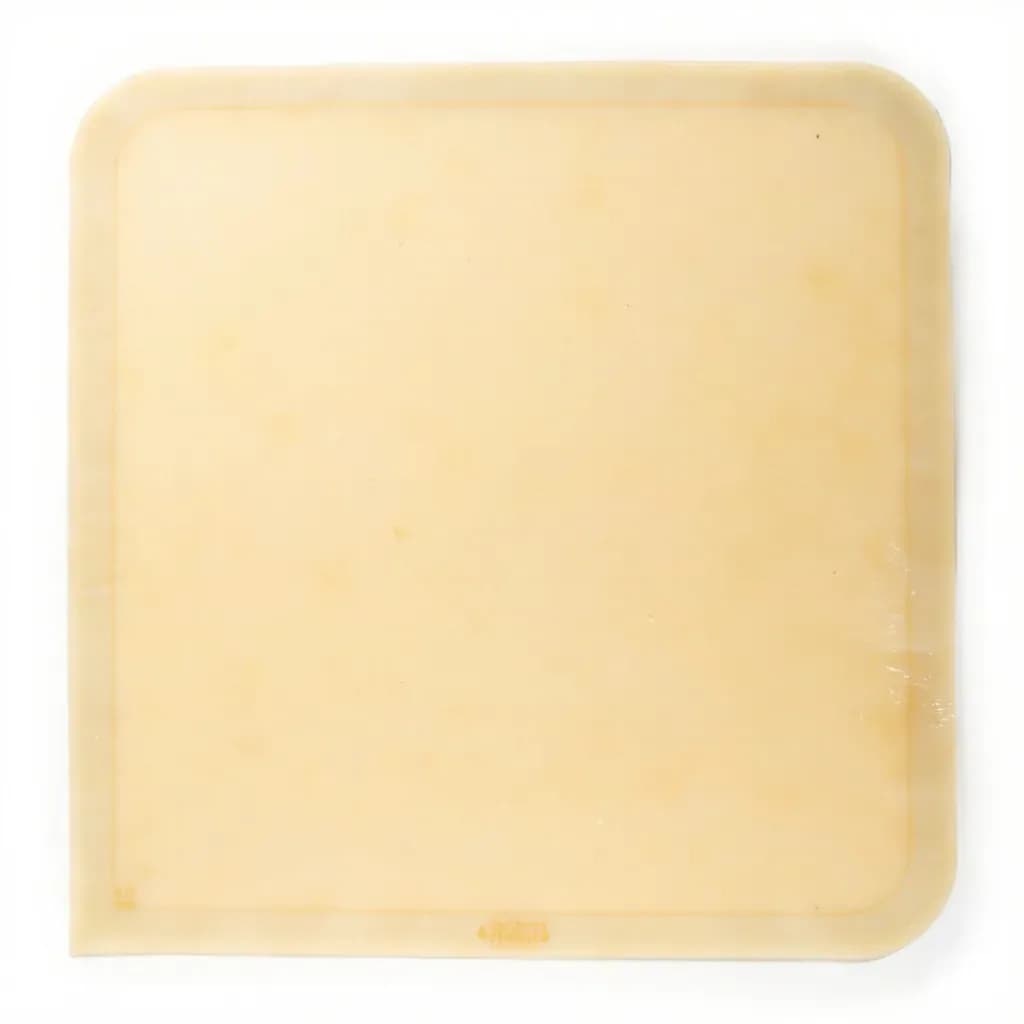
Baking & Pastry
Silicone Baking Mat (Silpat)
A reusable nonstick fiberglass-and-silicone sheet that lines pans for even, no-grease baking.
A silicone baking mat is a flexible, heat-resistant sheet of food-grade silicone, often reinforced with a fiberglass mesh, laid over a baking tray. Its slick surface releases cookies, pastries, and candy without grease or parchment and spreads oven heat for even browning. Reusable thousands of times, it is washable and rolls up for storage, with the Silpat brand giving it its common name.
The silicone baking mat is one of the few genuinely labor-saving tools to enter home kitchens in the last forty years. It is a thin, flexible sheet built around a woven fiberglass scrim — typically a 4×4 or 5×5 mesh — bonded to a layer of food-grade silicone cured with platinum or peroxide catalysts. The fiberglass is what keeps the mat flat and dimensionally stable at oven heat; without it, pure silicone would sag and puddle. The silicone is what gives the surface its nonstick character. The two materials are fused during manufacture and arrive as a single, slightly tacky-feeling sheet that you simply lay on a baking pan. The most familiar version is the French-made Silpat, a trademark of Demarle (now Sasa Demarle), which has been making these mats since the 1960s; the basic design has since been copied by many manufacturers at lower prices.
What the mat does in the oven is more interesting than acting as a "nonstick liner." Because silicone is hydrophobic, almost nothing sticks to it, so most baking — cookies, scones, meringues, roasted vegetables — needs no butter, oil, or parchment. The fiberglass core conducts heat from the sheet pan to the food reasonably efficiently, so browning is similar to or slightly better than on a bare metal pan. The mat will not warp, buckle, or blow around inside a hot oven the way loose parchment can, and it tolerates temperatures from roughly –40 °F to 480 °F (some are rated to 500 °F).
The tradeoffs are real and worth naming. The mat does not let steam escape the way perforated silicone or parchment can, so very wet batters — notably French macarons — may rise with smaller feet on a solid mat. It is also not biodegradable and has to be replaced every few years when the surface goes shiny, gummy, or starts to stick. Finally, it is a pan liner and a work surface, not a baking pan on its own: it must sit on a rigid sheet pan to do anything useful, and it should never meet a broiler element, a toaster-oven coil, or an open flame.
Alternatives
Types & varieties
The original non-perforated half-sheet mat (~11⅝ × 16½ in); the workhorse format for cookies, candy, and roasting.
Thicker silicone layer, often with a raised waffle grid, for added rigidity and longer life.
Printed with concentric circles so drop cookies portion and spread to a uniform size.
Printed with a macaron template (typically 1.4–1.75 in shells) for consistent piping and even spacing.
Fits 9 in or 12 in round pans; useful for Swiss-roll sponges and tart bases.
Larger mats (roughly 16 × 24 in, or tailored to a 12 × 15 in jelly-roll pan) for commercial sheet pans and home roll pans.
Pinhole or mesh perforations for airflow and crisper bottoms; preferred for breads, pizza, puff pastry, and macarons that need taller feet.
Widely available from Nordic Ware, Kitzini, Amazon Basics, Artisan, Matfer, and others; same basic construction at a lower price point.
Construction: How the Two-Layer Design Works
The mat is deceptively simple. A heat-resistant fiberglass scrim — essentially a fine, open-weave cloth — is coated with silicone during manufacturing so the silicone both encapsulates the fiberglass and fills the weave. The silicone is then cured (vulcanized) with a platinum or peroxide catalyst to lock the polymer chains in place. The fiberglass carries the structural load at oven temperatures; the silicone is the food-contact surface and the release layer. The two are bonded — you cannot peel them apart — and the mat has a faint fabric texture and a slightly grippy hand feel. Pure silicone sheet would stretch and sag at 400 °F; pure fiberglass cloth would be brittle and not food-safe. The pairing gives you a flat, dimensionally stable sheet that is also hydrophobic and nonstick. "Premium" versions are thicker and stiffer, which helps them lie flat on the pan and resist creasing.
When to Replace the Mat
A silicone mat does not fail all at once; it degrades gradually, and the signs are easy to read once you know them.
- The surface has gone from matte to shiny and slightly gummy, especially after washing.
- Cookies, candy, or pastry that used to release cleanly now stick or leave a faint residue.
- Persistent brown or amber discoloration that does not wash off.
- Fiberglass becomes visible through the silicone — a white mesh or stray fibers — meaning the coating has worn through.
- A permanent crease or fold line from being stored wrong, which imprints on everything baked on it.
- At that point, retire it: a worn mat browns unevenly, may emit odor at high heat, and can no longer be trusted as a clean release surface.
Specialty Uses Beyond Baking
Because the mat is nonstick, freezer-safe to –40 °F, and microwave-safe, it is useful well outside the oven. It makes an excellent work surface for rolling pie dough, tart dough, and puff pastry directly on the counter, and for kneading and shaping enriched doughs. It can be laid flat in the freezer to freeze piped cream puffs, individual portions of cookie dough, or fruit purées for granita. In sugar work, it is one of the standard surfaces for pouring caramel, cooling hard-crack lollipops, and working pulled or blown sugar, which release cleanly once set.
Common uses
Tips & pitfalls
- Always place the mat on a flat, rigid baking sheet — the mat is floppy on its own and will not hold batter or food.
- Do not cut on the mat with knives, pizza wheels, or bench scrapers; nicks in the silicone skin cause sticking and shorten its life.
- Keep the mat away from direct high heat: broiler elements, toaster-oven coils, and gas flames can scorch the silicone.
- Let the mat cool fully before washing; plunging a hot mat into water can warp the fiberglass core.
- For very sticky batters (meringue, high-sugar candy), a whisper of butter or cooking spray on the mat can improve release.
- Restore a greasy or shiny mat by simmering it in a pot of water with 2–3 tablespoons of baking soda for 10–15 minutes, then air-dry flat.
- Store flat or gently rolled; sharp folds leave permanent ridges that imprint on cookies baked on them later.
- Use a plastic dough scraper rather than a metal one to lift baked goods off the mat and extend its useful life.
Good to know
- Material
- Woven fiberglass scrim bonded to food-grade silicone, cured with platinum or peroxide catalysts
- Standard size (half sheet)
- 11⅝ × 16½ in (29.5 × 41.9 cm)
- Temperature range
- –40 °F to ~480 °F (–40 °C to ~250 °C); some mats rated to 500 °F (260 °C)
- Heat source
- Oven-only; not for stovetop, broiler coils, toaster-oven elements, or open flame
- Lifespan
- Roughly 1,000–3,000 uses; typically 2–5 years of regular home use
- Storage
- Store flat or gently rolled; sharp folds leave permanent creases
- Cleaning
- Dishwasher safe; hand-washing with warm soapy water and a soft sponge extends life
- Food safety
- Food-grade silicone, BPA-free; considered inert at normal baking temperatures
Also called
Silpat · silicone mat · baking mat · nonstick baking liner
Related

Muffin Pan
Multi-cup pan for muffins, cupcakes, and egg bites

Bundt Pan
Fluted ring mold for showstopping cakes with a center hole

Springform Pan
Latch-release pan that frees delicate cakes without flipping

Pie Dish
Sloped round dish for crisp-bottomed pies and quiches

Tart Pan
Fluted pan with a pop-out base for clean-edged tarts

Rolling Pin
Rolls dough into even sheets for pastry and bread

Pastry Brush
Brushes on egg wash, glaze, butter, and marinades

Bench Scraper
Flat blade that divides dough and clears your work surface