Cookware
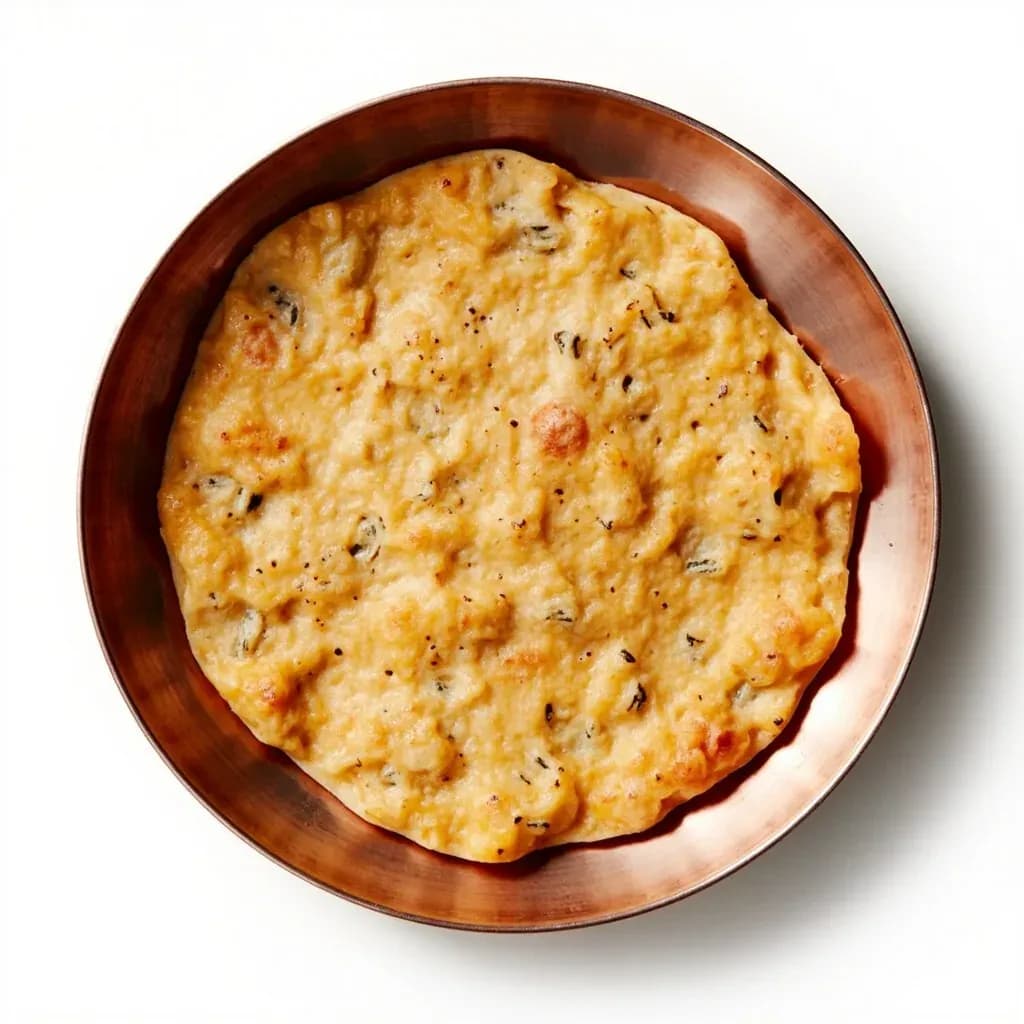
Socca Pan (Copper/Steel Round)
A wide shallow round pan for baking thin chickpea-flour socca pancakes.
A socca pan is a broad, low-sided round pan, traditionally tinned copper or heavy steel, used to bake the chickpea-flour flatbread of Nice and Liguria. The thin batter is poured to spread across the hot oiled surface and blasted under fierce heat so the socca sets crisp at the edges and tender within. The pan's wide flat base and shallow rim give the large diameter and even browning the dish depends on.
A socca pan is a specialist wide, shallow round pan built to cook a single very thin layer of batter at punishingly high heat. The classic Niçoise version is a tinned-copper disc with a low flared rim, generally 30–40 cm across and only 2–4 cm deep, that lives in a 290 °C oven for most of its working life. The pan exists for one reason: the batter — a thin slurry of chickpea flour, water, olive oil, and salt — must land on a surface hot enough to set the crust within seconds, so the center stays custardy and the base crisps into the blistered, lace-edged disc that defines socca (and its Ligurian cousin, farinata). Width spreads the batter paper-thin; shallowness lets the cook score and lift wedges with a knife; and the metal must be thermally responsive enough to recover temperature the instant the pour hits it.
In practice, the pan is a crepe pan pushed harder and hotter. Copper is the traditional choice because it conducts heat fast enough to sear the batter on contact, but a modern carbon-steel disc, properly seasoned, behaves almost identically for a fraction of the cost. What you do not want is a deep pan, a thin aluminum sheet, or any non-stick coating — those produce steamed, pale, floppy results that miss the point of the dish entirely.
Alternatives
Types & varieties
The traditional pan sold in Vieux Nice; superb thermal response, requires re-tinning over decades.
Modern, affordable workhorse and the best home compromise — behaves like a crepe pan, a flatbread pan, and a socca pan in one. Needs seasoning.
Light and cheap; heats fast but unevenly, and non-stick coatings tend to scorch at the temperatures socca demands.
Retains heat well and gives a good crust, but is heavy and slow to respond — less common for socca specifically.
The typical home pan: one continuous round cooking surface, scored into wedges at the table.
The market-stall Niçoise pan — a large copper disc split into rectangular portions by metal bars, so dozens of servings can be cut and lifted at once from a single pour.
Buying a pan for the home kitchen
Most cooks don't need the Niçoise market pan, which is built to feed a queue. A 34–36 cm (about 14 in) round, 2–3 cm deep carbon-steel disc is the most versatile choice: hot enough for socca, wide enough for a family-size farinata, and forgiving enough to use as a giant crepe pan or a thin-crust pizza base the rest of the time. Copper versions are gorgeous and respond a shade faster, but they cost several times as much and demand careful hand-washing and eventual re-tinning. Anything with a non-stick interior should be avoided — the coating degrades at the temperatures a proper socca needs and prevents the crust from grabbing the metal.
Care and feeding
The two materials ask for different routines, but the principle is the same: no dishwasher, no harsh scourers, and always dry the pan over heat before putting it away.
- On tinned copper, wash by hand with warm water and a soft cloth, dry it on the stove, and store dry. The tin will wear through eventually — usually at the rim first — and a coppersmith can re-tin it for a modest fee.
- On carbon steel, scrub with hot water and a stiff brush (a tiny drop of soap is fine), wipe dry, then set it over a burner or in a warm oven for a minute, wipe a film of neutral oil across the surface with a paper towel, and let it cool. This reseasoning is the same routine used for a crepe pan or a comal.
The market-stall pan, explained
If you see a copper disc with metal bars soldered across it in a Vieux Nice market, that's the professional version. The bars aren't decorative — they pre-score the socca into the rectangular portions stallholders sell, so a single pour of batter becomes a dozen servings that can be lifted out with a spatula and peeled apart on the paper plate. They are usually 50–60 cm across and weigh several kilos; wonderful objects, but impractical for a domestic kitchen.
Common uses
Tips & pitfalls
- Preheat the empty pan in the oven for at least 20–30 minutes at full temperature before adding oil and batter — a merely warm pan gives a pale, gummy disc.
- Pour a generous film of good olive oil into the hot pan and let it shimmer before the batter goes in; oil is non-negotiable for the crisp base.
- Rest the batter for at least 30 minutes and ideally 2–12 hours so the chickpea flour fully hydrates; a light foam on the surface is a good sign.
- Aim for heavy-cream-thin consistency — a thick layer will steam rather than crisp and won't be socca.
- Use true chickpea or gram flour (besan), not a chickpea pancake mix, which usually contains wheat flour and leavening that change the texture.
- Finish under the broiler for 60–90 seconds to blister and lightly char the top — the defining Niçoise look.
- Score into wedges in the pan with a knife and eat with fingers, sprinkled with freshly cracked black pepper.
Good to know
- Origin
- Nice, France (socca) and Liguria, Italy (farinata)
- Traditional material
- Tinned copper, sometimes spun copper
- Typical diameter
- 30–40 cm (12–16 in) for home use; market pans larger
- Depth
- Very shallow, roughly 2–4 cm (¾–1½ in)
- Cooking temperature
- Very hot — 250–290 °C (480–550 °F)
- Heat source
- Oven, often finished under the broiler
- Also called
- Plaque à socca, farinata pan, cecìna pan
- Notable makers
- Mauviel (copper), De Buyer (steel), Matfer
Also called
socca-pan-monaco · Farinata Pan · Chickpea Pancake Pan
Related

Steamer
Gentle moist heat that keeps vegetables, fish, and dumplings tender

Frying Pan
Shallow sloped pan for frying, sautéing, and quick sears

Saucepan
Tall, straight-sided pot for sauces, grains, and small batches

Sauté Pan
Wide straight-sided pan with room to brown and braise

Dutch Oven
Heavy lidded pot that turns tough cuts tender over hours

Stock Pot
Tall, roomy pot for stocks, pasta, and big-batch cooking

Wok
High-sided bowl pan built for blistering-hot stir-fries

Griddle
Flat, broad surface for pancakes, smash burgers, and breakfast