Cookware
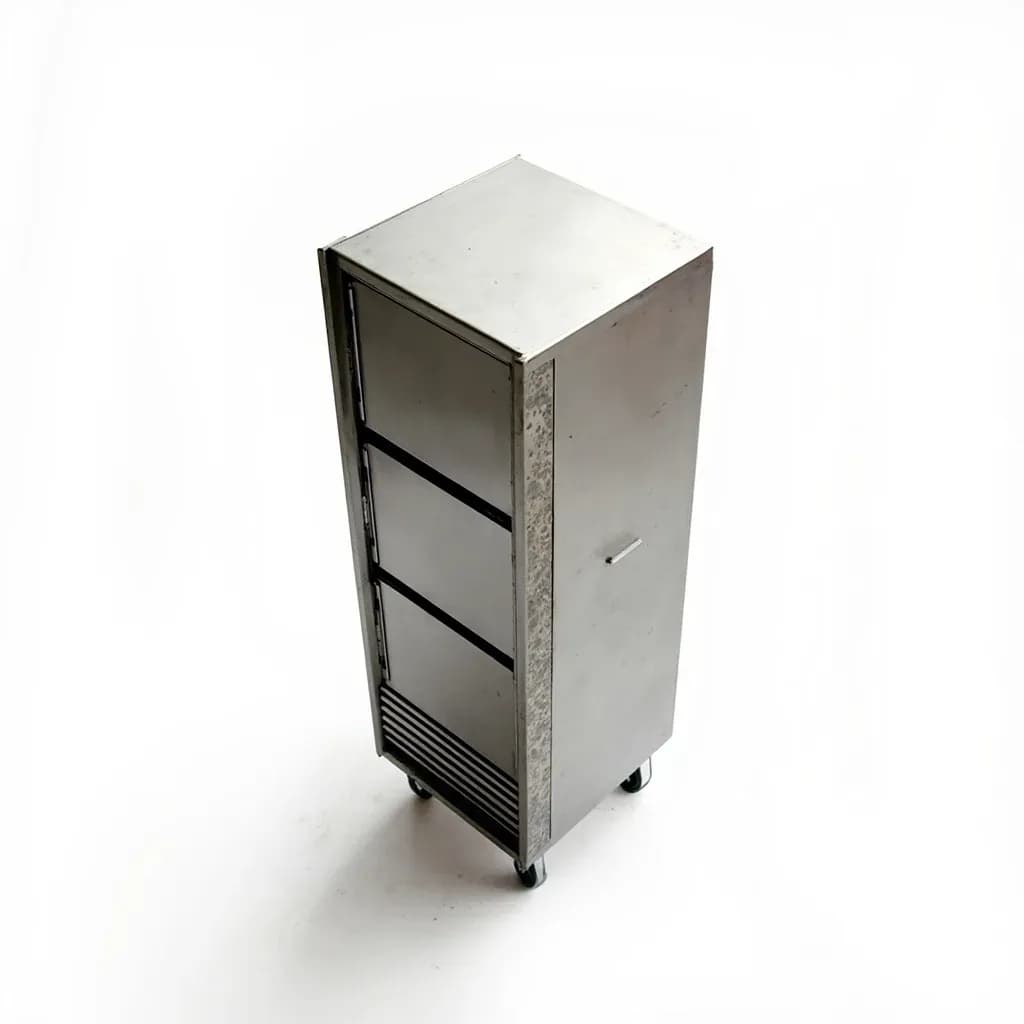
Stacked Steam Cabinet (Steamer Tower)
Tall multi-tier steamer that cooks several trays of food at once over one pot of boiling water.
A tall steaming unit of stacked trays or baskets set over a single boiling-water base, letting steam rise through every tier at once. It's used to cook large batches of dim sum, buns, dumplings, or rice cakes simultaneously, common in Asian restaurant kitchens. The vertical design conserves stovetop space while multiplying capacity.
A stacked steam cabinet — also called a steamer tower or, in its bamboo form, a zēnglóng — is a vertical column of perforated trays seated over a single pot of boiling water, so one burner drives steam through two, three, or more tiers at once. It exists because most stovetops only fit one flat steamer basket, and cooks who needed to feed a family or run a dim sum service had to find a way to multiply that capacity without multiplying the heat source. The result is one of the most efficient kitchen tools ever designed: a single 12-inch burner will cook dumplings, vegetables, fish, and buns simultaneously without the foods exchanging flavors, because steam itself is essentially tasteless and the fitted lid keeps the moisture circulating inside the column.
The cooking is gentler than boiling or roasting because steam transfers heat to food at a steady ~100 °C (212 °F), wrapping each piece in moist heat that cannot scorch or dry it out. That makes stacked steamers the right tool for delicate custards, leavened buns that need to rise, and any vegetable or fish where color and tenderness matter more than browning. The tradeoff is throughput: a tall stack must vent excess steam from the lid seam or pressure builds inside, and a small home burner can struggle to push steam through more than three tiers, so the tool works best when the cook understands where to place each food in the column.
Alternatives
Types & varieties
Traditional woven bamboo slats with a wooden or bamboo lid. The walls and lid absorb condensate so drips don't puddle on food, and bamboo lends a faint earthy aroma prized in dim sum kitchens.
Modern cookware form with nesting pots, perforated stainless discs, and a tight lid. Durable, dishwasher-safe, and the most common Western purchase; induction-compatible with a ferromagnetic base.
Lightweight and fast-heating; the budget option. Can react with acidic foods like tomato or vinegar and may warp with prolonged high heat.
Plug-in unit with a built-in water reservoir, heating element, digital timer, and often a clear door. Runs independently of the stovetop and suits small dim sum operations.
Large stainless cabinet with multiple removable racks, plumbed or reservoir-fed water, and thermostat control; standard in Chinese restaurants and banquet halls.
Specialized stackers fitted with shallow plates for idli molds or individual compartments for filled dumplings — popular across South and Southeast Asia.
Sealed 3–4 tier stainless vessels used across South India and Sri Lanka, sometimes doubling as lunch carriers.
The professional electric equivalent: a sealed cavity with injected steam at controlled temperatures. Produces the same gentle moist heat but on a closed, thermostat-controlled principle rather than an open boiling-water column.
How steam moves through a stacked cabinet
Once the base pot reaches a rolling boil, water vapor rises through the perforations of the lowest tray, wraps the food sitting on it, then passes up through the perforations of the next tray, and so on. The lid slows that escape just enough to keep the column saturated, but a small vent gap is essential — a fully sealed lid builds pressure that can distort delicate shapes, push liquid up through the trays, or pop the lid off. Steam temperature stays close to 100 °C throughout the stack, but actual heat intensity drops slightly with each tier because steam condenses on the food below and releases its latent heat there. That is why raw proteins and dense vegetables belong on the bottom (hottest, wettest) and delicate custards, fish fillets, and leafy greens belong on top.
- Heat intensity decreases with height — bottom tier is hottest and most humid, top tier is mildest.
- Steam is essentially flavor-free, so different foods can share the column without exchanging taste.
- A tight lid with a vent gap traps just enough steam to keep the column saturated without building pressure.
- Each lift of the lid drops the internal temperature by 10–20 °C, so plan your cook in a single or double lift.
Placing foods in the right tier
Think of the stack as three zones. The bottom tier, sitting just above the water line, is the most aggressive — steam is at its hottest and condensate is dripping down from above, which is fine for sturdy foods. The middle tier is the all-purpose workhorse for vegetables and proteins that need steady but not punishing heat. The top tier, sheltered under the lid, is the gentlest spot and the right home for anything that needs to stay intact or set: fish fillets, custards, filled buns that are still rising.
- Bottom tier: whole fish, dense root vegetables (carrots, potatoes, winter squash), and frozen dumplings that need maximum heat.
- Middle tier: broccoli, asparagus, bok choy, chicken pieces, reheated rice, siu mai and har gow.
- Top tier: fish fillets, steamed egg custard, bao and mantou during their final proof-and-cook, leafy greens, delicate modak.
Bamboo versus stainless: which to choose
Bamboo steamers breathe. The woven walls and lid wick moisture away from the surface of buns and dumplings, which is why Cantonese dim sum chefs still prefer them for char siu bao and har gow — the skins set without weeping. They also impart a faint woody aroma that most cooks welcome but that you do not want on every dish, which is why serious home cooks keep one bamboo tier for breads and dumplings and stainless tiers for everything else. Stainless is faster to heat, dishwasher-safe, won't stain from beetroot or turmeric, and works on induction — practical advantages that bamboo cannot match. The two are not mutually exclusive; many cooks run a bamboo top tier over a stainless base.
- Bamboo: best for buns, dumplings, and any food where dry skin matters; rinse with hot water only, never soap.
- Stainless: best for vegetables, fish, reheating, and any strongly pigmented or aromatic food; dishwasher-safe.
- Aluminum: cheap and fast, but reactive with acids and prone to warping — fine for occasional use, not a workhorse.
- Electric countertop cabinet: best when stovetop space is tight or you want hands-off timing; less flavor nuance than bamboo.
Common uses
Tips & pitfalls
- Fill the base pot so the water sits 2.5–5 cm (1–2 in) below the lowest perforated tray — high enough for steady steam, low enough that the water never touches the food or boils dry mid-cook.
- Bring the water to a full rolling boil before seating the stacked tiers, then drop to a vigorous simmer that keeps a steady plume of steam escaping from the lid seam.
- Line trays with napa cabbage leaves, perforated parchment rounds, or cheesecloth to prevent sticking — skip wax paper (can melt) and aluminum foil (blocks steam flow).
- Wrap the lid in a clean kitchen towel secured with a rubber band; the towel absorbs condensate so drips don't dimple buns or puddle on custards.
- Check water level every 15–20 minutes during long cooks and top up with water already at a boil — adding cold water stalls steam production and lengthens cook time.
- Don't seal the lid airtight; a small vent gap lets excess steam escape so pressure doesn't build and push liquid up through the perforations.
- Common mistake: stacking too many tiers over a small home burner. Three tiers is the practical cap for a 20–30 cm pot on a standard stove; for four or more, switch to a wide high-output burner or an electric steam cabinet.
- Common mistake: seasoning bamboo steamers with soap. The wood absorbs detergent and transfers off-flavors to the next cook — scrub with hot water and a soft brush only.
- Common mistake: lifting the lid to check progress. Each peek drops the internal temperature by 10–20 °C and can add 25% to total cook time. Trust the clock and steam by sound instead.
- Common mistake: overcrowding a tier. Leave 2–3 cm between pieces so steam circulates — crowding is the single most common cause of unevenly cooked dumplings and vegetables.
Good to know
- Origin
- China; woven bamboo steamers (zēnglóng) appear in Han dynasty records (~206 BCE–220 CE) and have been in continuous use for over 2,000 years.
- Also called
- Steamer tower, tiered steamer, multi-tier steamer, dim sum steamer, stacked bamboo steamer, zēnglóng; tiffin-style stack steamers in South Asia.
- Materials
- Woven bamboo with wood rims (traditional); stainless steel with perforated discs (modern home and pro); aluminum (budget); tempered glass lids on electric units.
- Typical home size
- 2–3 tiers, 20–30 cm (8–12 in) in diameter, total assembled height 25–40 cm; commercial units reach 1–1.5 m with 6+ tiers.
- Heat source
- Stovetop (gas, electric, or induction with a ferromagnetic base pot) or built-in electric heating element in countertop steam cabinets.
- Cooking temperature
- ~100 °C / 212 °F at atmospheric pressure — a true steam oven in open form.
- Power draw
- Countertop electric steam cabinets 1,500–2,000 W; commercial floor units 6–15 kW.
- Care
- Bamboo: rinse with hot water only (no soap), towel dry, oil the rim occasionally; stainless tiers are dishwasher-safe and induction-compatible.
Also called
Steamer Tower · Multi-Tier Steamer · Steam Cabinet
Related

Steamer
Gentle moist heat that keeps vegetables, fish, and dumplings tender

Frying Pan
Shallow sloped pan for frying, sautéing, and quick sears

Saucepan
Tall, straight-sided pot for sauces, grains, and small batches

Sauté Pan
Wide straight-sided pan with room to brown and braise

Dutch Oven
Heavy lidded pot that turns tough cuts tender over hours

Stock Pot
Tall, roomy pot for stocks, pasta, and big-batch cooking

Wok
High-sided bowl pan built for blistering-hot stir-fries

Griddle
Flat, broad surface for pancakes, smash burgers, and breakfast