Cookware
Stainless Steel Steamer Basket
Collapsible perforated basket that holds food above boiling water to steam in any pot.
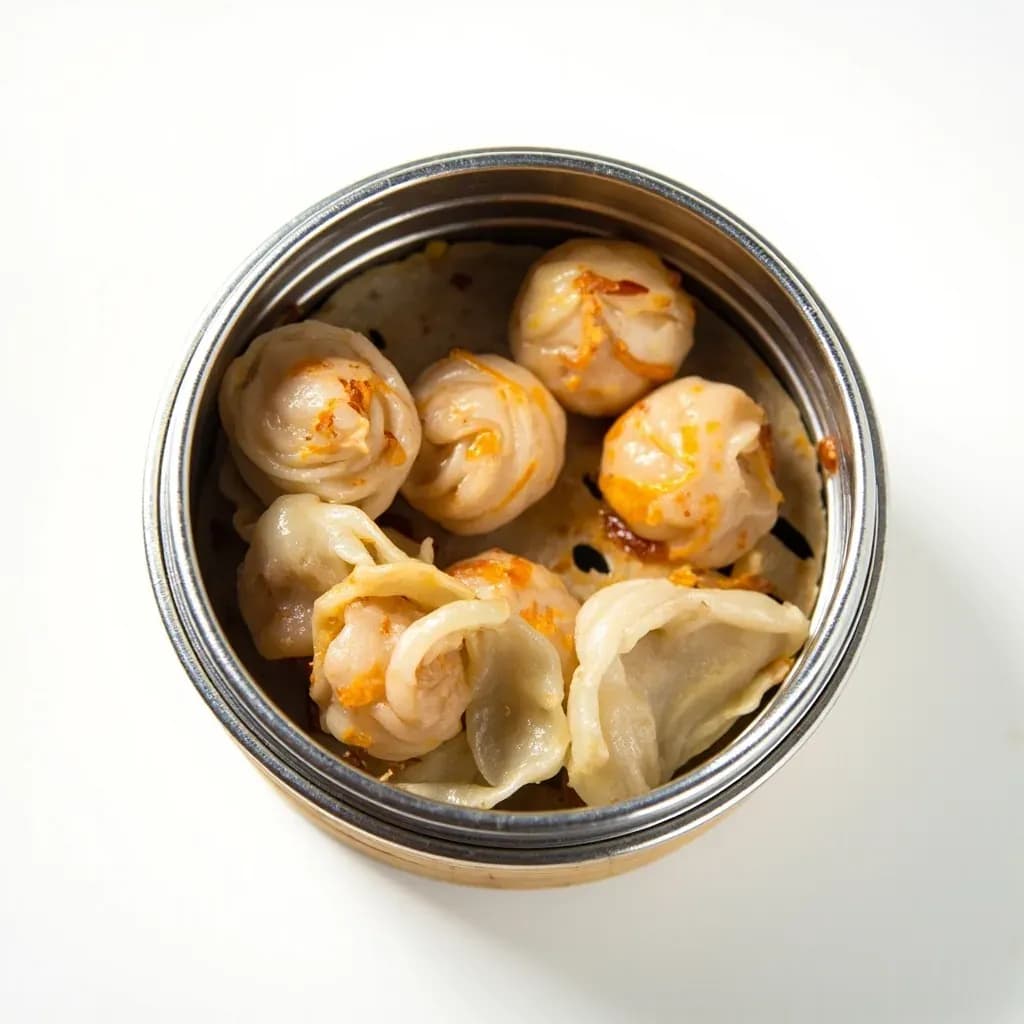
A perforated stainless steel basket, often with folding petal-like leaves, that sits inside a regular pot to steam vegetables, fish, or dumplings above simmering water. The collapsible design adjusts to fit different pot diameters and folds flat for storage. It's the simplest way to add steaming capability to cookware you already own.
The stainless steel steamer basket is a perforated, usually collapsible metal insert that sits inside a pot of simmering water, lifting food above the liquid so it cooks in rising steam rather than boiling water. Its telescoping petals open and close around a central post, letting one basket adjust to fit nearly any standard saucepan or stockpot, which makes it the most versatile single piece of steaming equipment in a typical home kitchen. Unlike a bamboo steamer, which absorbs surface moisture and adds a faint cereal aroma, stainless steel is flavor-neutral, non-reactive, dishwasher-safe, and folds flat to a disc only about 1.5 in (4 cm) tall for drawer storage.
The mechanics are simple but worth understanding: water boils in the pot, vapor rises through the perforations, condenses on the food's cooler surface, transfers its heat, and drains back down. Because the food never sits in water, steaming preserves more water-soluble nutrients and produces a cleaner, brighter flavor than boiling, with no added fat required. It is also one of the gentlest moist-heat methods available, ideal for tender vegetables, delicate seafood, filled or wrapped dumplings, and anything that would break apart in turbulent water.
In practice, a stainless basket handles a surprising range of jobs beyond vegetables: it lifts hot tamales out of a pot, retrieves a whole steamed fish without a slotted spoon, doubles as a fryer basket for breaded items, and reheats bao and tortillas without the rubbery texture a microwave gives them. For most cooks it is the first steamer to buy and the one that gets used most often.
Alternatives
Types & varieties
Telescoping petals and a central post that adjust to fit pots from roughly 5.5 to 12 inches; the most common household style. The center post usually hooks over the pot rim for lifting.
Rigid one-size bowl, often sold as a dedicated insert for a specific pot or multi-cooker; sturdier and has no pinch points, but limited to the pot it was made for.
Light, inexpensive wire mesh with short feet; good for blanching and quick jobs, but less stable under heavy or watery foods.
Fits a rimmed baking sheet or hotel pan; useful for whole fish, layered dumplings, and oblong items that don't sit well in a round basket.
Two or three stacked baskets sharing one post; allows cooking several foods at once with little flavor cross-over when lids separate the layers.
Most have a tall center stem that grabs the pot rim for easy lifting; simpler basket-only versions need long tongs to extract.
Stainless Steel vs. Bamboo
The stainless basket is a Western, industrial-era answer to the bamboo steamer, which has been the standard steaming vessel in Chinese kitchens for centuries. Bamboo absorbs excess surface condensation so dumplings don't sit in puddled water, and it lends a faint, pleasant cereal aroma that many cooks prize for bao and dim sum. Stainless steel gives up those qualities in exchange for durability, dishwasher-safe cleanup, and flavor neutrality between batches, which matters when steaming strongly flavored fish, acidic sauces, or back-to-back dishes you don't want to taste like the last one. For an authentic bamboo-steamer experience, dedicated bamboo tiers are still the tool of choice; for an all-purpose workhorse that goes in any pot, the stainless expandable basket is hard to beat.
- Use bamboo for dumplings, buns, and sticky rice where moisture absorption helps.
- Use stainless for fish, acidic dishes, and rapid back-to-back cooking where you need zero flavor carryover.
- A stainless basket also doubles as a fryer basket, blancher, and tamale lifter, roles bamboo can't fill.
Lining and Staging Food in the Basket
The basket's metal perforations are wide enough that small or sticky items can weld to the surface or fall through. A liner solves both problems and also catches drips so delicate custards and fish cook in gentle, even steam rather than in condensate. The liner should itself be perforated, otherwise it blocks the steam path.
- Parchment rounds with holes poked through them are the most versatile liner; cut to fit and reuse within the same cook.
- Cabbage or lettuce leaves work for dumplings and fish, and they impart very little flavor.
- A heat-safe plate (or a saucer turned upside down) set inside the basket elevates food above the perforations for gentle steaming and easy removal.
Common uses
Tips & pitfalls
- Keep the water 1 to 2 in (2.5–5 cm) below the basket floor. Too little scorches the pot; too much touches the food and boils it instead of steaming it.
- Bring the water to a full rolling boil before lowering the basket. A cold or lukewarm start yields limp, waterlogged vegetables and soggy dumpling skins.
- Don't overcrowd. Leave at least a thumb-width between pieces so steam can circulate; steam in batches when needed.
- Always cover the pot. A tight-fitting lid traps steam and matters more than the brand of basket.
- Use the center post's hook to lift the basket straight up and let it drip-drain over the pot for a few seconds before plating.
- Stainless steel retains heat aggressively. Treat the lifted basket like a hot pan: use tongs or a silicone mitt, and set it on a trivet, never on a laminate counter or wooden board.
- Line the basket with parchment (with holes poked through), cabbage leaves, or a heat-safe plate to keep small or sticky items from welding to the metal.
- Hard tap water leaves white mineral scale on the perforations; an occasional vinegar soak or simmer with lemon slices keeps the holes clear and steam flow strong. Avoid steel wool and metal scouring pads, which scratch the polished finish.
Good to know
- Material
- Stainless steel, almost always 18/8 (type 304) food-grade; higher-end models use 18/10.
- Expandable range
- Most household models adjust from roughly 5.5 to 9 in (14–23 cm); larger versions span 7 to 11 in (18–28 cm) or up to ~12 in.
- Other names
- Steamer basket, expandable steamer, telescoping steamer, vegetable steamer basket, steamer insert.
- Heat tolerance
- Safe well above 500°F / 260°C; designed for direct stovetop steam contact.
- Reactivity
- Non-reactive with acidic foods (tomato, citrus, wine), unlike copper, aluminum, or unglazed iron.
- Construction
- Collapsible designs use 6 to 12 hinged petals around a central post; weight is roughly 8–14 oz (225–400 g).
- Cleaning
- Dishwasher safe; stubborn residue responds to baking soda paste, vinegar soak, or a brief simmer with water and lemon.
- Storage
- Folds flat to a disc about 1.5 in (4 cm) tall; fits in a standard kitchen drawer.
Also called
Collapsible Steamer · Steamer Insert · Steaming Basket
Related

Steamer
Gentle moist heat that keeps vegetables, fish, and dumplings tender

Frying Pan
Shallow sloped pan for frying, sautéing, and quick sears

Saucepan
Tall, straight-sided pot for sauces, grains, and small batches

Sauté Pan
Wide straight-sided pan with room to brown and braise

Dutch Oven
Heavy lidded pot that turns tough cuts tender over hours

Stock Pot
Tall, roomy pot for stocks, pasta, and big-batch cooking

Wok
High-sided bowl pan built for blistering-hot stir-fries

Griddle
Flat, broad surface for pancakes, smash burgers, and breakfast