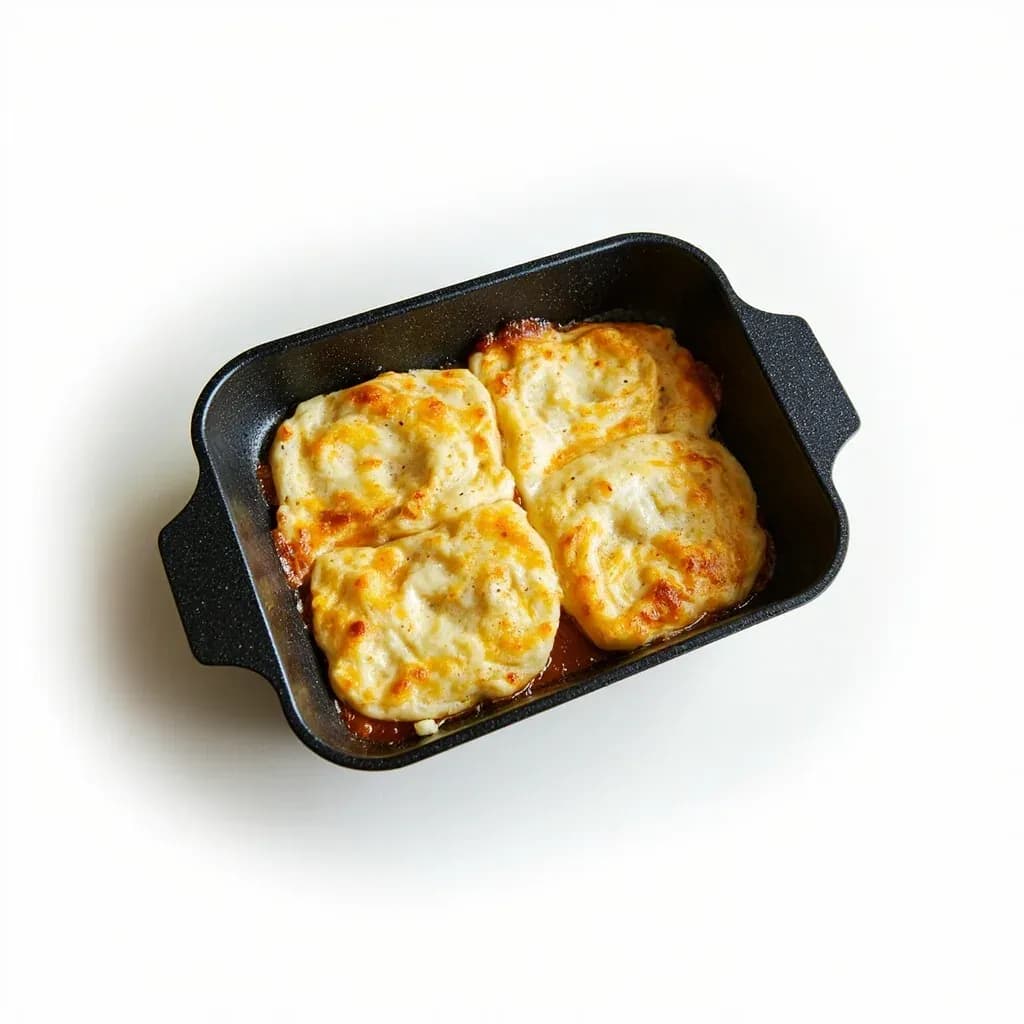
Cookware
Tamagoyaki Pan (Rectangular Egg Pan)
A small rectangular pan for rolling Japanese layered omelets into a neat block.
A tamagoyaki pan is a square or rectangular frying pan, often nonstick or seasoned copper, made for the Japanese rolled omelet. The cook pours thin layers of seasoned egg, rolling each one toward the side as it sets so they fuse into a striped log. The straight corners shape the omelet into the tidy rectangular form sliced for bento and sushi.
The tamagoyaki pan is a shallow, rectangular skillet designed for one job: producing a squared, layered omelet block. Its straight sides and right-angled (or gently rounded) corners let you roll a thin omelet into a tidy brick that a round pan simply cannot replicate — every turn meets a flat wall, so the roll forms a clean rectangle instead of a fat cigar. In Japan it is called tamagoyakiki (卵焼き器) and sits beside the rice cooker as a standard small-cookware piece; outside Japan it is usually sold as a "Japanese omelet pan" or "egg roll pan."
The defining features are size and depth. The classic household size is roughly 18 × 13 cm with sides only 2.5–4 cm tall — shallow enough to flip and roll with a long spatula, small enough to fit over a single burner without wasted surface. The pan heats quickly and evenly across its footprint so each thin layer of egg sets at the same rate, which is what gives a well-made tamagoyaki its uniform color from edge to edge. Most models carry a wooden handle on the long side, both to keep the hand away from the heat and to leave the working end unobstructed for rolling.
Material choice changes the cooking personality considerably. Copper (typically tin-lined) is the traditional choice, prized for its instant response to burner changes; aluminum non-stick is forgiving for beginners and the most widely available outside Japan; cast iron holds heat longest and develops a slightly deeper, caramelized color. The difference is in how aggressively you must manage heat, oil, and cleanup, and how long the pan will last.
Alternatives
Types & varieties
The traditional, prized version; very fast, even heat response; interior is usually tin-lined; requires hand-washing and gentle care to preserve the tin.
Modern, affordable, easy to release eggs; lighter weight but less heat precision than copper.
Heavy, retains heat well, gives a slightly deeper, caramelized color; must be seasoned like other cast iron cookware.
Smaller format (≈12–13 cm); produces bite-sized rolls ideal for bento boxes and appetizers.
Most common household size, around 18 × 13 cm; the workhorse of Japanese home kitchens.
Fitted with a drop lid (or sold with a separate lid) so the top of each layer cooks through before the next is added.
A larger rectangular pan divided into two equal squares, letting you make two rolls at once; popular in home cooking.
The Layered Build
A tamagoyaki is built like a log from thin veneers: one sheet of egg at a time, each fused to the last. The cook pours a thin film of beaten egg, lets it set on the bottom while staying glossy on top, then rolls the partially set layer to the far edge of the pan with a long flat spatula. The roll is pushed back to the start, the empty pan is wiped with a thin film of oil, and the next pour is added — the existing roll sits in the new wet egg and anchors it. The process repeats three to five times depending on the desired thickness. The shallow sides and rectangular shape make this possible: in a deep round pan the roll would slide and deform; here it meets flat walls and stays squared.
- Pour each layer no more than 2–3 mm deep; a small ladle or measuring cup helps keep the thickness consistent from start to finish.
- The previous layer should look almost set but still glossy on top when you start the roll — a fully dry layer will not fuse with the next one.
- For an even block, do not shift the completed roll more than necessary between layers; let it rest at one end while you pour and set the next layer at the other.
- Rest the finished roll off the heat for 1–2 minutes so residual heat finishes the center; a drop lid can stand in if the top layer is still wet.
Choosing a Pan
Most cooks should pick a tamagoyaki pan by how often they will use it and how much care they are willing to give it. The materials behave differently in the hand as well as on the burner, and the difference shows up in every layer of egg you build.
- Copper (tin-lined, 銅板 / dōhan) is the professional and traditional choice — fast, even, and responsive. Worth it if you cook tamagoyaki often and will hand-wash, dry on the burner, and send the pan for retinning when the lining wears through.
- Aluminum non-stick is the beginner's best friend. Eggs release easily, cleanup is simple, and the pan costs a fraction of copper. The trade-off is less heat precision and a coating that will eventually need replacement.
- Cast iron is the choice for cooks who already maintain cast iron and want a deeper, caramelized color on the egg. It is heavy and slow to heat but rewards a steady hand and even oiling.
- Size: the 18 × 13 cm standard is the right starting point for most home cooks. Step down to the mame (≈12–13 cm) only if you regularly pack bento; step up to the 20 cm size only if you feed a family or want extra-thick rolls.
Common uses
Tips & pitfalls
- Heat the pan at medium-low to low — high heat scorches the egg and turns the layers brown instead of the bright yellow tamagoyaki is supposed to be.
- Between each layer, wipe the pan with a paper towel dipped in a thin film of oil; too much oil makes the egg greasy and difficult to roll tightly.
- Pour only a thin, even film of beaten egg per layer; overfilling prevents clean rolling and leaves uncooked pockets at the center.
- Let each layer set on the surface but stay glossy on top before adding the next pour — this wet-to-set moment is when the layers actually fuse.
- Roll the first layer to the far edge of the pan, then shift the completed roll back to the start as you add subsequent layers; this is what gives a neat, even rectangle.
- Add fillings (nori strips, chopped scallion, mentaiko, cheese) sparingly and tuck them inside the roll, not on top, or they tear the next layer as you build.
- For copper pans, never use metal scrubbers or harsh dish soap — they strip the tin lining. Rinse, dry thoroughly, and warm the pan briefly on the burner to prevent oxidation.
Good to know
- Origin
- Japan
- Japanese name
- Tamagoyakiki (卵焼き器)
- Standard household size
- Approximately 18 × 13 cm
- Typical depth
- 2.5–4 cm (shallow sides for easy rolling and flipping)
- Primary materials
- Copper (traditional, usually tin-lined), aluminum, or cast iron
- Companion tool
- Tamagoyaki turner — a long, flat, slotted spatula
- Commonly confused with
- Korean gyeran-mari pan (similar shape, often slightly larger and deeper)
Also called
tamagoyaki-pan · Rectangular Egg Pan · Japanese Omelet Pan · Makiyakinabe
Related

Steamer
Gentle moist heat that keeps vegetables, fish, and dumplings tender

Frying Pan
Shallow sloped pan for frying, sautéing, and quick sears

Saucepan
Tall, straight-sided pot for sauces, grains, and small batches

Sauté Pan
Wide straight-sided pan with room to brown and braise

Dutch Oven
Heavy lidded pot that turns tough cuts tender over hours

Stock Pot
Tall, roomy pot for stocks, pasta, and big-batch cooking

Wok
High-sided bowl pan built for blistering-hot stir-fries

Griddle
Flat, broad surface for pancakes, smash burgers, and breakfast