Cookware
Tarka / Tempering Pan (Tadka)
A tiny long-handled pan for blooming spices in hot oil to finish Indian dishes.
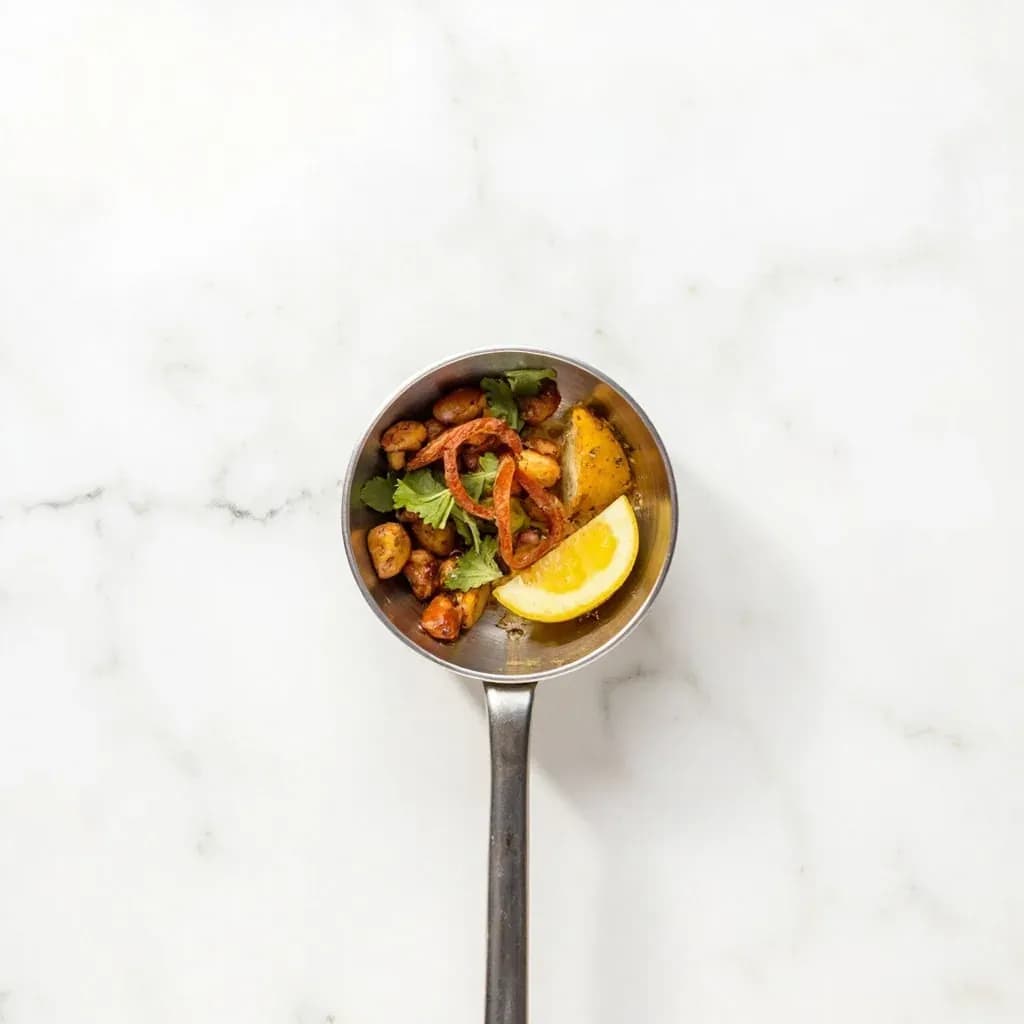
A tarka pan, or tadka pan, is a small deep ladle-like pan with a long handle used to temper spices. The cook heats a little ghee or oil in it, sizzles whole spices, garlic, or curry leaves until fragrant, then pours the aromatic mixture over a finished dal or curry. Its small size concentrates heat for a fast bloom and the long handle keeps the hand clear of sputtering oil.
The tadka pan (also called a tarka, chaunk, vaghaar, or phodni pan, depending on the region) is a deliberately tiny, long-handled vessel built for one specific job: blooming a teaspoon of whole or ground spices in a thin layer of hot fat, then pouring the sizzle over a finished dish. The bowl is only 3–4 inches across — small enough that even two or three tablespoons of ghee pool into a layer deep enough to sear spices quickly without burning them at the edges the way a wide skillet would. The long handle keeps the cook's hand well away from spitting mustard seeds and popping curry leaves, which can throw hot oil surprisingly far. Though the tempering technique predates the dedicated pan by centuries, the vessel exists because it gives the cook control over a process that lasts under a minute and tolerates almost no hesitation.
In Indian households a stainless or brass tadka ladle is often hung beside the stove the way a pepper mill sits on a Western counter, ready to deliver a finishing hit of aroma to dal, sambar, rasam, kadhi, or yogurt. In restaurants the pan is brought to the table and the sizzling fat poured tableside over sambar, rasam, or dal for the sound and smell as much as the flavor — the audible sizzle is itself part of the dish. A pan any larger than about four inches across stops being a tadka pan and starts being a saucepan, which is why even very experienced cooks prefer the dedicated tool rather than improvising with a full-sized skillet.
Alternatives
Types & varieties
Modern standard; inexpensive, non-reactive, dishwasher-safe, and the deep ladle shape pools oil in an even thin layer.
Heavier and retains heat well; useful for dry-roasting spices before adding fat; works on induction.
Traditional heirloom form with a tin or silver lining on the inside; prized for even heating and looks, but the lining must be renewed by a tinsmith if worn.
Rustic traditional version found in many regional kitchens; seasoned like a small wok and imparts a faint iron character.
A 6–8 cm (1-cup) stainless steel butter warmer or milk pan with a long handle serves the same function and is widely used in non-Indian kitchens.
A tiny cast-iron or steel wok about 15 cm across is the traditional alternative when a dedicated tadka pan is unavailable.
A flat-bottomed Chinese-style seasoning ladle (sometimes called a wok scoop) is a near-substitute and is popular among South Indian cooks.
Why the small size matters
The defining feature of the tadka pan is not the handle or the material — it is the small capacity. Spices need contact with hot fat for only a few seconds to release their volatile oils; any longer and they turn acrid. A wide skillet forces the cook to use far more oil than the dish needs, spreads that oil into a thin film that overheats at the edges, and lets whole spices migrate to dry patches where they scorch while the rest of the pan undercooks. The tadka pan's narrow bowl concentrates the fat around the spices so they bloom almost simultaneously, and the curved sides contain the inevitable popping of mustard seeds and the violent sputter of fresh curry leaves. In practical terms: if your pan needs more than about three tablespoons of oil to look full, it is the wrong pan for a tadka.
- Oil depth should sit roughly 3–5 mm in the bowl — enough to submerge small whole spices without drowning them.
- The curved, ladle-like shape lets you swirl and toss spices without spilling, even as mustard seeds pop.
- A long handle keeps fingers 8–10 inches away from sizzling curry leaves, which can spit fat surprisingly far.
- A pan that is too large will burn spices at the rim while leaving them raw in the center — a tell-tale sign the wrong vessel was used.
Choosing a material
Stainless steel is the practical default for most cooks: it heats quickly, is non-reactive, dishwasher-safe, and inexpensive enough that it does not matter if it lives on a hook by the stove for years. Cast iron holds residual heat, which is an asset for dry-roasting whole spices before fat is added, but it takes longer to respond to temperature changes and must be preheated gently to prevent sticking. Brass and tinned brass are heirloom choices with excellent thermal properties and a traditional look, but they require hand washing, no abrasives, and periodic re-tinning by a metalsmith once the inner lining wears through. Pure copper is rare and mostly decorative. For most home cooks, a stainless ladle for daily use and a small cast iron pan for dry-roasting covers every need.
- Stainless steel: best all-rounder; works on gas, electric, and magnetic-stainless induction; no seasoning needed.
- Cast iron: best for dry-roasting spice blends (no oil) and for very hot, fast temperings; induction-compatible.
- Brass/tinned brass: traditional and beautiful, but the tin lining must be renewed every few years if used regularly.
- Iron (un-coated): rustic and seasoned like a small wok; imparts a faint iron note that some cooks prize and others find metallic.
Common uses
Tips & pitfalls
- Heat the fat until it just begins to shimmer or smoke lightly before adding spices — too cool and the spices go greasy and raw-tasting, too hot and they scorch in seconds.
- Add ingredients in order of required cook time: whole seeds first (mustard, cumin, fennel), then ground spices, then quick-finishing aromatics like asafoetida, curry leaves, and garlic slivers last.
- Pour the finished tadka over the dish immediately while it is still sizzling — the audible sizzle releases volatile aromatics into the food that you will not get from a cooled mixture.
- Prep every spice, herb, and aromatic into small bowls before turning on the heat; the whole process lasts under a minute and there is no time to chop mid-tempering.
- Keep mustard seeds in the hot fat until they pop completely — under-popped seeds taste bitter and unpleasant, and uneven popping is the most common home-cook mistake.
- Do not crowd the pan; if doubling a recipe, temper in two batches rather than one, since a thick layer of seeds will steam instead of fry.
- For brass or tinned pans, never use steel wool or harsh abrasives that strip the lining; hand wash, dry over low heat, and retin every few years if used heavily.
- Cast iron versions need a brief preheat on low heat before adding oil to prevent sticking; stainless steel can go straight to medium-high heat without preheating.
Good to know
- Also called
- Tadka pan, tadka ladle, tempering pan, chaunk pan, vaghaar pan, phodni pan
- Origin
- Indian subcontinent; technique used across Indian, Pakistani, Bangladeshi, Sri Lankan, and Nepali cuisines
- Typical size
- Bowl diameter 3–4 inches (7–10 cm), depth 1.5–2.5 inches, total length 10–14 inches with handle
- Capacity
- Roughly 0.5–1 cup (60–240 ml) — intentionally small so fat heats fast and stays controllable
- Typical materials
- Stainless steel (most common); traditional versions in iron, brass (often tinned), or copper
- Cook time
- Under 60 seconds total; spices are bloomed in preheated fat for 5–30 seconds
- Spice load
- Usually 1–3 teaspoons of whole or ground spices per tempering
- Heat source
- Gas, electric, or induction (only ferrous metals — cast iron or magnetic stainless — work on induction)
Also called
Tempering Ladle (Tadka Pan) · Tadka Pan · Tempering Pan · Chaunk Pan
Related

Steamer
Gentle moist heat that keeps vegetables, fish, and dumplings tender

Frying Pan
Shallow sloped pan for frying, sautéing, and quick sears

Saucepan
Tall, straight-sided pot for sauces, grains, and small batches

Sauté Pan
Wide straight-sided pan with room to brown and braise

Dutch Oven
Heavy lidded pot that turns tough cuts tender over hours

Stock Pot
Tall, roomy pot for stocks, pasta, and big-batch cooking

Wok
High-sided bowl pan built for blistering-hot stir-fries

Griddle
Flat, broad surface for pancakes, smash burgers, and breakfast