Baking & Pastry
Tart Ring
A bottomless metal ring that shapes tarts and pastries with clean, straight sides during baking.
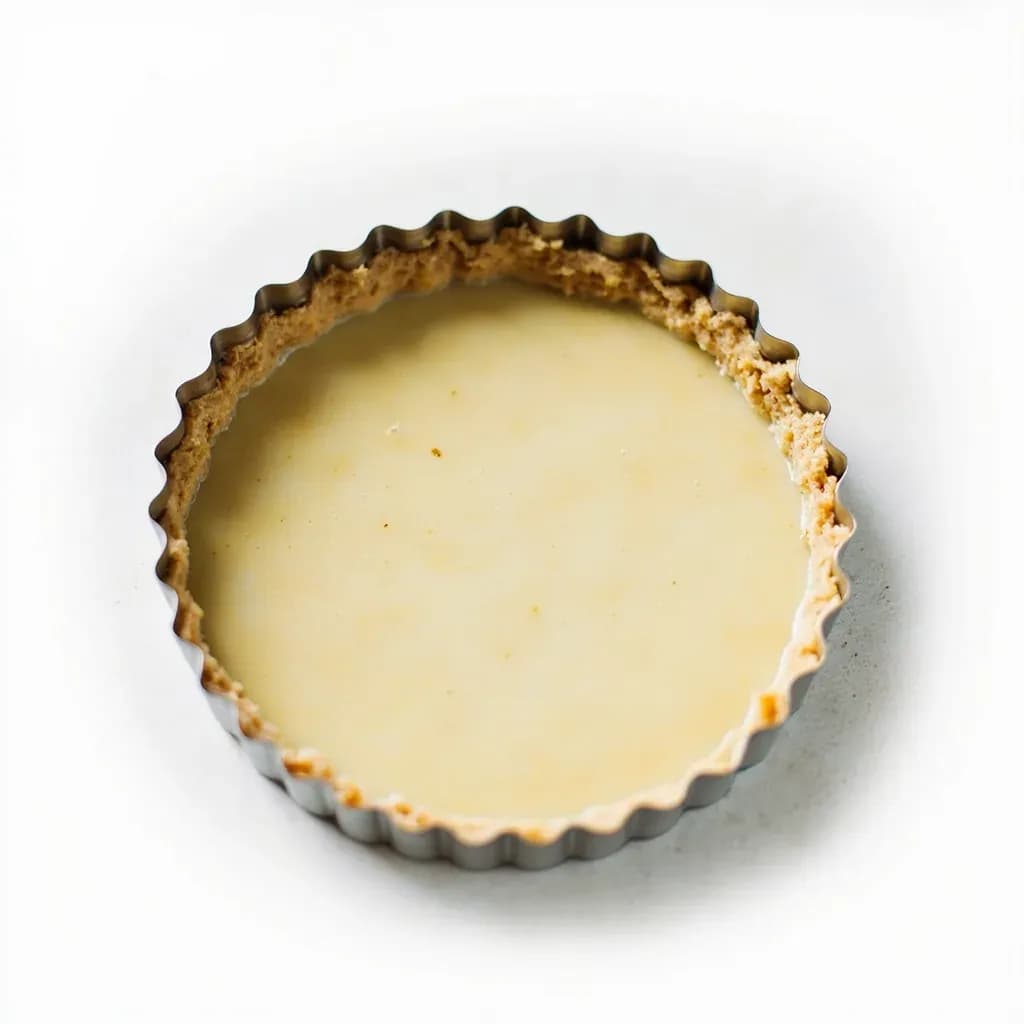
A tart ring is a simple stainless steel band with no base, set on a lined baking sheet to form a tart shell. Because it has no bottom, hot air reaches the pastry from below for an evenly crisp crust, and the ring lifts straight off after baking. Pastry chefs favor it over a fluted pan for the precise, sharp-edged sides it produces.
A tart ring is a bottomless metal band that does the work of a tart pan's side wall while letting the baking sheet do the work of the floor. That deceptively simple swap changes how a tart bakes: heat reaches the underside of the dough directly through the sheet, so the base browns more evenly than it would inside an enclosed pan, and the crust sets without the soggy center that pans with thick metal floors sometimes produce. In professional pâtisserie, the ring is the default tool for pâte sucrée, pâte sablée, and shortcrust shells because it produces the clean, vertical, sharply defined side that defines a finished tart.
Rings are cheap, almost indestructible, and reusable indefinitely, which is why a working pastry kitchen owns a small fleet of them in graduated sizes (typically 18, 20, 22, and 24 cm) rather than a stack of matching pans. The same ring that shapes a sweet shell in the oven becomes a cold mold in the cooler: lined with a strip of acetate, it holds layered mousse cakes, bavarois, and ice cream cakes in perfect geometry while they set. The French term cercle, or cercle à tarte, is what you will see in most published French recipes, and the dimensions those recipes assume (a Matfer 20 cm or 24 cm ring) have become the de facto industry standard.
Alternatives
Types & varieties
Smooth, straight sides; the everyday workhorse for pâte sucrée, pâte sablée, and shortcrust shells.
Scalloped or ridged interior that imprints a decorative edge into the pastry; less common than plain.
Walls pierced with small holes that let heat reach the sides of the dough, giving more even browning and a drier, crisper crust.
Used for modern plated desserts, bar-style tarts, and brownies where straight geometric edges are wanted.
Small-diameter (roughly 4–10 cm) rings for single-portion tartelettes, mignardises, and plated desserts.
Higher-walled version, roughly 4–4.5 cm, for deep tarts, charlottes, and layered entremets that need more vertical height.
Shallow 1 cm version for thin tartelettes and crisp bases topped with delicate layers.
Has a small inward ridge at the base that grips soft or sweet pastry and keeps it from sliding during baking.
Tart Ring vs. Tart Pan
The two tools look similar but bake very differently. A tart pan has a shallow metal floor (often with a removable bottom) that insulates the dough from direct oven heat. A tart ring has no floor at all: the dough sits directly on the baking sheet, so the base conducts heat from the metal and browns faster and more evenly. The result is a crispier, better-colored base and a cleaner, more vertical side wall — which is precisely what a finished fruit tart or chocolate tart is judged on. The trade-off is that an unenclosed ring is more fragile to move: you must slide the whole sheet, not lift the pan. For most home bakers making one or two tarts a year, a pan is forgiving; for anyone baking regularly, rings are the better tool and the lower-cost one in the long run.
- Pan has a floor, ring does not — heat reaches the base directly through the sheet.
- Pan can be lifted and moved alone; the ring and its sheet must move together.
- Both work for liquid fillings (custard, quiche); the ring on a sheet is in fact the standard professional setup for quiches.
- Rings cost less, last longer, and store flat; pans nest but take more space.
Using Rings for Layered Desserts and Entremets
Outside the oven, the same ring becomes a precision mold. Lined inside with a strip of acetate (called rhodoïd in French kitchens) and set on a rigid support — a cake board, a perforated stainless disc, or a flat baking sheet — the ring holds mousse, bavarois, ice cream, and cheesecake mixtures in a perfect cylinder while they set in the refrigerator or freezer. The acetate peels away to reveal a glassy, factory-finished side wall that is impossible to achieve with a springform pan. This is the technique behind most restaurant plated desserts and is well within reach of a home cook willing to invest in a 4–4.5 cm tall ring and a roll of acetate.
Common uses
Tips & pitfalls
- Place the ring on a parchment-lined flat baking sheet (or a silicone mat); never directly on an oven rack, because the bottomless shell will sag and lose its shape.
- For soft doughs, chill the lined ring with the dough pressed in for 15–20 minutes before blind baking so the sides hold their height.
- Do not flour the inside of the ring; a thin, even buttering (or no grease at all on a perforated ring) gives the cleanest side walls.
- Fill the shell no more than two-thirds with pie weights, dried beans, or uncooked rice so the rim can rise gently and the base cooks evenly.
- Remove the ring about two-thirds of the way through baking to let residual heat crisp and color the sides — they stay pale if the ring stays on for the full bake.
- To release a baked shell, lift the ring straight up while the tart is still slightly warm; if it resists, run a thin palette knife around the inside edge, never pry the ring sideways, which can crack the shell.
- For entremets and mousse cakes, line the inside of the ring with a clear acetate strip to get a mirror-smooth, perfectly vertical side wall.
- Avoid cutting inside the ring with a knife; it will score the metal and leave fragments in the next tart. Lift the ring off and cut on a board.
Good to know
- Definition
- A bottomless metal ring used to shape tarts, quiches, and layered pastries during baking and assembly.
- Also called
- Cercle à tarte, cercle, tart circle, pastry ring
- Typical material
- Stainless steel, occasionally anodized aluminum
- Standard diameters
- 6–10 cm for individual rings, 18–28 cm for large tarts; specialty sizes from 4 cm up to 30 cm exist
- Standard height
- 2–3 cm; low (1 cm) and tall (4–4.5 cm) versions are made for thin tartelettes and deep entremets
- Origin
- Standard equipment of the French professional pâtisserie tradition; ubiquitous in restaurant kitchens since the late 20th century
- Bottom
- None — open at both top and bottom by definition
- Common support
- Baking sheet lined with parchment or a silicone mat, sometimes a perforated aluminum disc
Also called
pastry ring · flan ring · perforated tart ring
Related

Muffin Pan
Multi-cup pan for muffins, cupcakes, and egg bites

Bundt Pan
Fluted ring mold for showstopping cakes with a center hole

Springform Pan
Latch-release pan that frees delicate cakes without flipping

Pie Dish
Sloped round dish for crisp-bottomed pies and quiches

Tart Pan
Fluted pan with a pop-out base for clean-edged tarts

Rolling Pin
Rolls dough into even sheets for pastry and bread

Pastry Brush
Brushes on egg wash, glaze, butter, and marinades

Bench Scraper
Flat blade that divides dough and clears your work surface