Cookware
Tempura Frying Pot
Deep, heavy pot built for stable-temperature deep-frying of light, crisp tempura.
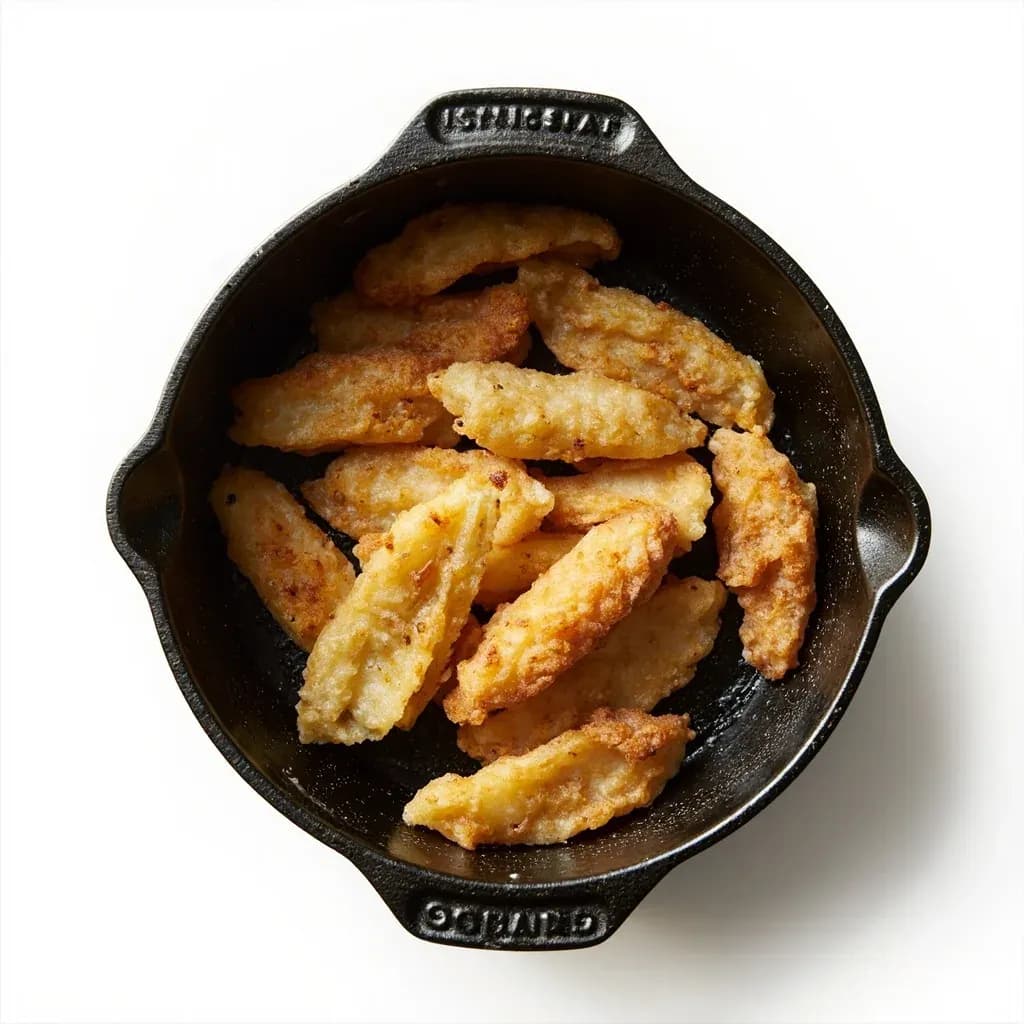
A deep, heavy-bottomed pot, often cast iron, designed for frying tempura at a steady oil temperature. Its mass holds heat so the oil doesn't crash when cold batter goes in, keeping the coating light and crisp rather than greasy. Many come with a clip-on draining rack along the rim to rest the fried pieces.
A tempura-nabe is the wide, shallow iron pot that defines Japanese at-home and restaurant tempura frying. Where a Western stockpot or Dutch oven is tall and narrow — built to submerge food in a deep bath of oil — a tempura pot is broad and flat, typically 24–30 cm across and only 8–12 cm deep, holding roughly a liter of oil. The geometry is not a stylistic choice; it is the direct answer to how tempura is actually cooked: each piece is laid into a few centimeters of oil, turned partway through with chopsticks, and lifted out before the crust sets. The wide oil surface is what produces the lacy, blistered, almost translucent shell that distinguishes good tempura from a heavy fritter, because a large hot area rapidly flashes the water in the batter into steam and pushes the crust outward before the oil can soak in.
Iron — hammered or spun — is the traditional material because its thermal mass resists the sharp temperature drop that happens when a cold, wet-battered piece is dropped into the oil. That stability is the whole game: a pot whose oil rebounds quickly between batches gives you a crisp crust on the sixth piece as easily as the first. Modern stainless-clad and carbon-steel versions trade a little of that responsiveness for induction compatibility and easier care, but the proportions stay the same. Nearly every tempura pot also includes a wire rack or mesh insert that sits near the rim; this is not a garnish but a working tool, used to drain finished pieces above the oil while the next batch goes in.
For cooks coming from a Western deep-frying tradition, the biggest adjustment is psychological: you are not filling the pot. A tempura pot is meant to be filled only to roughly half its depth, with the food lying on its side in perhaps 5–8 cm of oil. Once that mental switch is made, the pot's advantages — quick recovery, easy access with chopsticks, stable temperature, and built-in draining — make it a versatile vessel for any small-batch shallow fry, from kakiage and fish strips to croquettes and thin vegetable fritters.
Alternatives
Types & varieties
Traditional heavy iron pot with a dimpled hand-hammered finish; the most heat-stable option; must be seasoned and dried on the burner after washing to prevent rust.
Lighter and smoother-surfaced than hammered iron; same seasoning and drying requirements.
A practical modern compromise — lighter than cast iron, heats faster, still responsive, and induction-friendly since carbon steel is magnetic.
Stainless exterior over an iron or aluminum core; induction-ready, dishwasher-tolerant, and the easiest to live with for Western kitchens.
Coated interior that needs no seasoning; usually restricted to gas stoves; the pot must be retired if the enamel chips into the cooking zone.
A very small iron skillet-like vessel used at the table for one or two pieces at a time, common in traditional tempura-ya service.
Long, narrow stainless tank used on restaurant service lines so multiple pieces can be fried side-by-side and presented quickly.
The standard home configuration: removable wire rack that sits near the rim for draining fried food above the oil.
Why the pot is shallow
A tempura pot looks wrong to anyone trained on a deep-fryer, and that is the point. The Japanese technique — historically tied to fishing-port cooking where each piece of fish or vegetable was eased into a small amount of hot oil with chopsticks and turned once or twice — depends on access. A narrow, deep pot forces food into a vertical orientation where it is hard to see, hard to turn, and easy to overcook on the bottom before the top sets. The wide, flat shape solves all of that: every piece lies on its side, the cook can see the entire surface of the oil, and a single sweep of chopsticks turns the food. The shallow volume also means the oil has a large surface area relative to its mass, which both speeds evaporation from the batter (producing the lacy crust) and makes the pot respond quickly to the burner when temperature dips.
Choosing the right pot
A few practical rules of thumb cover most home situations.
- Pick a diameter that comfortably fits the largest piece you plan to fry flat — typically the length of a peeled shrimp or a halved eggplant. 26–28 cm is the most versatile home size.
- Choose depth based on the oil you intend to use. A 9–10 cm wall is the sweet spot: deep enough to contain splatter, shallow enough to keep the food accessible.
- Decide on material honestly. Bare iron gives the best fry but demands seasoning, hand-drying, and storage care. If you cook on induction or want low-maintenance cookware, stainless-clad or carbon steel is the realistic answer.
- Buy the version with a fitted mesh insert. After a few services you will not want to fry without one.
Care and maintenance
Iron pots last decades if treated like a cast-iron skillet; stainless and enameled pots need almost no thought. The two failure modes are rust on bare iron and chipped enamel on coated pots, and both are preventable.
- After frying, let the oil cool, then strain it through a fine cloth or coffee filter into a sealed jar for reuse. Wipe the pot with paper towels while still warm.
- For bare iron: rinse with hot water (no soap if you can avoid it), dry immediately on the burner over low heat for a minute, then wipe a thin film of oil over the interior before storing. Never let it air-dry wet.
- Never soak a tempura pot, and never put it in the dishwasher unless the manufacturer explicitly allows it.
- Discard oil that has darkened, foams heavily at the start of a fry, or smells scorched. Burnt batter debris in the oil is the most common cause of off flavors and smoking beyond the oil's smoke point.
- Retire an enameled pot the moment the coating chips into the cooking zone; shards of enamel in hot oil are a real hazard.
Common uses
Tips & pitfalls
- Choose a pot wider than your longest ingredient so each piece can lie flat and be turned with chopsticks; a cramped pot forces food to stand on edge and cooks unevenly.
- Fill only to about half the pot's depth — tempura is fried in roughly 5–8 cm of oil, not a full deep-fry bath. Overfilling is the most common home mistake.
- Use a high-smoke-point, neutral oil such as rice-bran, cottonseed, refined sunflower, or a light sesame blend. Strong olive oil and unrefined nut oils will overpower the batter.
- Aim for 170–180 °C for most pieces and let the oil rebound to 175 °C between batches. The wide, flat shape helps recovery, but a thermometer is still the only reliable guide.
- Pat ingredients bone-dry before battering. Surface water splatters violently and drops the oil temperature sharply, which is enough to turn a crisp crust greasy.
- Use long cooking chopsticks (saibashi) or a flat wire skimmer to handle pieces. A fork tears the fragile batter crust on the way out of the oil.
- Rest fried pieces on the mesh insert or on absorbent paper, never on a flat plate. Trapped steam is what turns a crisp crust leathery, and the pot's built-in rack is designed exactly to prevent that.
- Strain and reuse oil 2–3 times for light vegetable tempura; once or twice at most for heavily battered kakiage or anything breaded. Reused oil picks up batter debris that scorches quickly and taints the next batch.
- Season a new bare-iron pot the same way you would a cast-iron skillet: a thin film of oil heated in the empty pot until it just smokes, then wiped cool. Skip this and the first few fries will taste of iron.
- Do not crowd the pot. Fry 4–6 pieces at most in a 26 cm pot; crowding drops the oil temperature and pieces end up steamed against each other instead of fried.
Good to know
- Japanese name
- 天ぷら鍋 (tempura-nabe)
- Typical diameter
- 24–30 cm (about 9.5–12 in)
- Typical depth
- 8–12 cm (3–4.7 in), shallower than a Western stockpot
- Oil capacity
- Roughly 1–1.5 L for a home-sized pot; fill only to about half depth
- Working oil depth
- 5–8 cm, deep enough to lay food flat but not to submerge it
- Traditional material
- Hammered or spun iron (tetsu), prized for thermal mass
- Stove compatibility
- Plain iron is not induction-ready; stainless-clad and carbon-steel versions are; enameled pots are typically gas-only
- Working temperature
- 160–180 °C (320–355 °F); 150 °C for vegetables, up to 190 °C for shrimp heads
- Standard accessory
- Wire mesh insert (油切り, abura-kiri) for draining above the oil
- Notable makers
- Yamada Kogyosho, Hokuyo (Mitsumine), Yu-Ki, Shimomura Kogyo; Western equivalents from Matfer Bourgeat and de Buyer
Also called
Tempura Fryer · Deep Fry Pot · Agemono-nabe
Related

Steamer
Gentle moist heat that keeps vegetables, fish, and dumplings tender

Frying Pan
Shallow sloped pan for frying, sautéing, and quick sears

Saucepan
Tall, straight-sided pot for sauces, grains, and small batches

Sauté Pan
Wide straight-sided pan with room to brown and braise

Dutch Oven
Heavy lidded pot that turns tough cuts tender over hours

Stock Pot
Tall, roomy pot for stocks, pasta, and big-batch cooking

Wok
High-sided bowl pan built for blistering-hot stir-fries

Griddle
Flat, broad surface for pancakes, smash burgers, and breakfast