Cookware
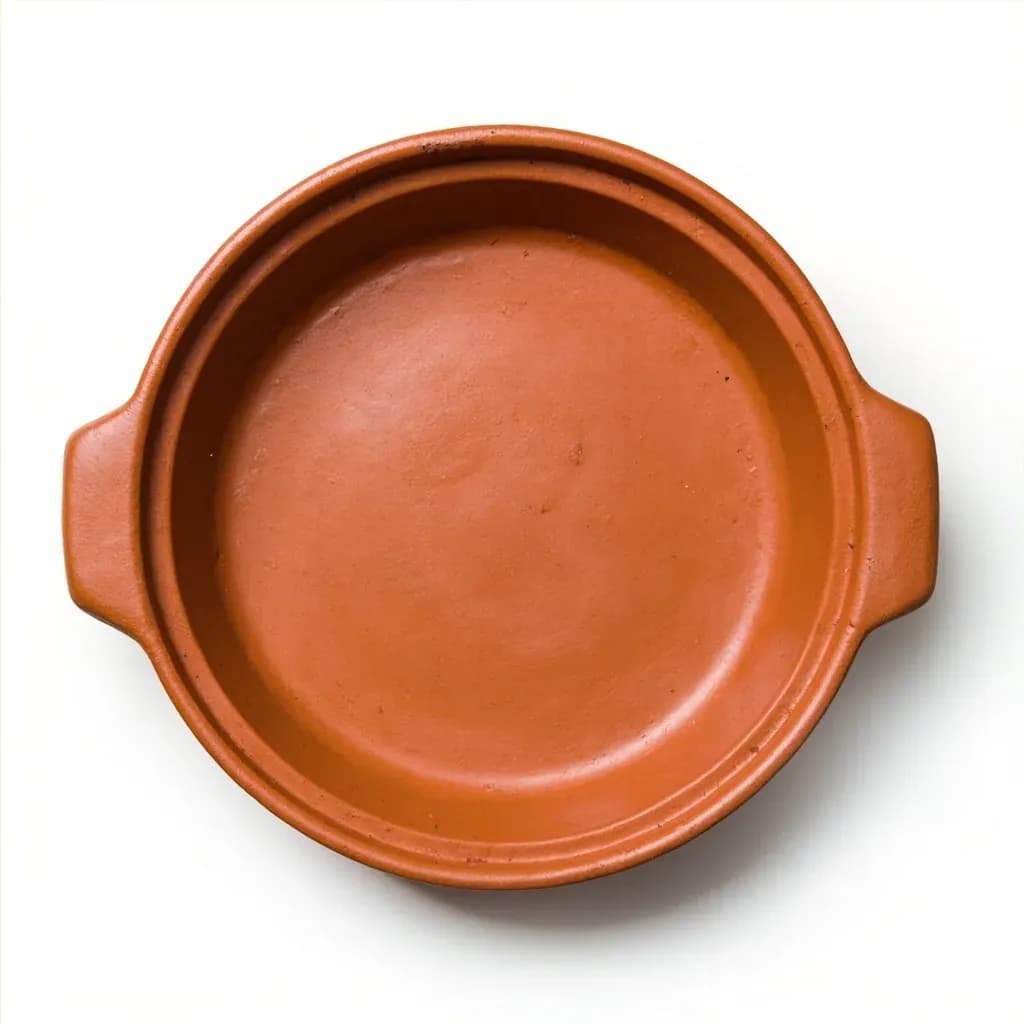
Terracotta Grill Dish
Unglazed clay dish that bakes and grills food with gentle, even, earthy heat.
A dish of unglazed or partly glazed terracotta clay used to roast, grill, and bake food with slow, even heat that retains moisture. Soaked or seasoned clay imparts a subtle earthy character and is common in Mediterranean, Indian, and Latin American cooking for baked vegetables, fish, and stews. The porous clay must be cured before first use and warmed gradually to avoid cracking.
A terracotta grill dish is an unglazed, kiln-fired clay vessel designed to bake or grill food directly over coals, gas flames, or in the oven. Unlike a metal grill pan — which transfers heat aggressively and concentrates it beneath the bars of the grate — porous terracotta absorbs water, heats slowly, and then releases that moisture as gentle steam during cooking. That dual action (radiant heat plus internal steam) is what produces the dish's signature result: a tender, moist interior with a crisp or lightly charred surface. It is the same effect that has made clay cookware central to cuisines from the Mediterranean to South Asia for thousands of years.
The high thermal mass evens out hot spots, so delicate items like fish fillets, sliced eggplant, and flatbreads cook through without the constant flipping a metal griddle demands. Food also picks up faint mineral and earthy notes from the fired clay, a flavor many cooks prize — particularly for bread, white fish, and mild vegetables where it shows through cleanly. The trade-off is fragility: unglazed terracotta cannot tolerate rapid temperature changes, must be seasoned with oil before first use, and will absorb soap if washed with detergent. Handled correctly, a dish seasons into a more naturally non-stick surface over time and improves with use.
For practical purposes, the most useful distinctions among terracotta grill dishes are shape and depth rather than material. Round, shallow cazuelas suit vegetables, whole fish, and pan pizzas; rectangular slabs handle skewers, focaccia, and large platters of grilled produce; deeper bowls and pots shift the use case toward stews, beans, and slow-braised meats. Care requirements are essentially identical across all of them.
Alternatives
Types & varieties
Mediterranean and Latin American form; shallow with sloped sides, ideal for vegetables, fish, and small flatbreads.
Broader surface for grilling vegetables, seafood, and skewers; sits directly on grill grates.
Shallow round pan for thick-crust pan pizza; crisps the bottom while keeping the top moist.
Rectangular, low-sided pan designed for breads and focaccia on the grill or in the oven.
Traditional unglazed clay bowl for mole, beans, rice, and stews; shallow versions work directly on the grill.
Round unglazed clay pot used over direct heat for slow-cooked curries and dals.
Conical-lid clay cooker; the shallow base works on grills while a full tagine is better suited to stovetop or oven.
Flat, thick clay plate used in tandoor-style cooking for breads and kebabs.
How the Steam-Release Principle Works
Unglazed terracotta is riddled with microscopic pores left by the firing process. When you soak the dish in water for 15 to 30 minutes before cooking, those pores fill like a sponge. As the dish heats on the grill, the absorbed water is driven back out as steam from the cooking surface, basting the food from below. The food essentially poaches and grills at the same time, which is why lean fish, bread, and sliced vegetables emerge tender inside with a lightly crisped or charred face — a combination that is difficult to achieve on a metal griddle. The same porosity also explains the other key rules: oil is absorbed into the surface during seasoning to build a natural patina, and soap is never used because detergent will lodge in the pores and taint future cooks.
- Soak times longer than 30 minutes add no benefit — the pores saturate quickly.
- The steam effect is most noticeable in the first 10–15 minutes of cooking; expect a drier finish on long roasts.
- A well-seasoned dish releases steam more gently than a brand-new one, because the oiled patina slows water loss.
Seasoning, Cleaning, and Storage
A new terracotta grill dish needs to be seasoned before its first use, then maintained with a simple ritual: rinse with hot water, scrub without soap, dry completely, and oil lightly before storing. The seasoning step is non-negotiable — it fills the open pores with oil that hardens during baking and creates the base layer of the patina that will build with every subsequent cook. From then on, every drop of fat in your food reinforces the patina, which is why older dishes perform better than new ones. Storage conditions matter as much as washing: a damp, sealed terracotta dish will mildew; a bone-dry one will not.
- Seasoning: rub the interior with a thin coat of neutral oil, bake at 250°F / 120°C for 2–3 hours, and let the dish cool inside the oven.
- Cleaning: hot water and a stiff brush or wooden scraper; stubborn bits can be loosened by soaking the dish in hot water for 20 minutes.
- Drying: air-dry upside down on a rack until completely dry to the touch; never seal a damp dish in a cabinet.
- Storage: rub a light film of food-safe oil on the dry dish and store uncovered or loosely covered in a dry cupboard.
Common uses
Tips & pitfalls
- Always soak the dish in water for 15–30 minutes before cooking so the clay releases steam and keeps food moist — this is the step that makes terracotta cook differently from metal.
- Preheat the dish gradually on the grill — start on the cool side, then move it over the heat once warm; never place a cold dish over direct flame.
- Thermal shock is the single most common cause of cracking: confirm the grill is at target temperature before setting the dish down, and set a hot dish only on a wooden board, dry towel, or trivet — never on cold stone, granite, or a wet counter.
- Brush both the food and the dish's surface with oil to prevent sticking, especially for breads, fish, and lean proteins.
- Lower the grill lid once the dish is in place to retain heat and mimic oven-like convection around the food.
- Clean only with hot water and a stiff brush or scraper; soap penetrates unglazed clay and will flavor future dishes.
- Dry the dish thoroughly after washing — air-dry upside down — and store with the lid off or loosely covered to prevent mildew and mustiness.
- Inspect for hairline cracks before each use, especially along the rim and base; once cracked, a dish cannot be reliably repaired for cooking and should be retired.
Good to know
- Material
- Unglazed, kiln-fired terracotta clay
- Heat sources
- Oven, gas grill, charcoal grill, wood-fired grill, open flame, stovetop
- Heat behavior
- Slow, even radiant heat with internal steam release during cooking
- Pre-cooking prep
- Soak in water 15–30 minutes; season with oil before first use
- Max oven temperature
- Typically 500°F / 260°C — confirm with the maker
- Flavor effect
- Imparts subtle earthy, mineral notes; retains and recirculates moisture
- Cleaning
- Hot water and a stiff brush only — no soap, which porous clay absorbs
- Dishwasher safe
- No
- Thermal shock risk
- High — never move a cold dish onto a hot grill or a hot dish onto a cold surface
Also called
Clay Grill Dish · Terracotta Baking Dish
Related

Steamer
Gentle moist heat that keeps vegetables, fish, and dumplings tender

Frying Pan
Shallow sloped pan for frying, sautéing, and quick sears

Saucepan
Tall, straight-sided pot for sauces, grains, and small batches

Sauté Pan
Wide straight-sided pan with room to brown and braise

Dutch Oven
Heavy lidded pot that turns tough cuts tender over hours

Stock Pot
Tall, roomy pot for stocks, pasta, and big-batch cooking

Wok
High-sided bowl pan built for blistering-hot stir-fries

Griddle
Flat, broad surface for pancakes, smash burgers, and breakfast