Baking & Pastry
Terrine Mold
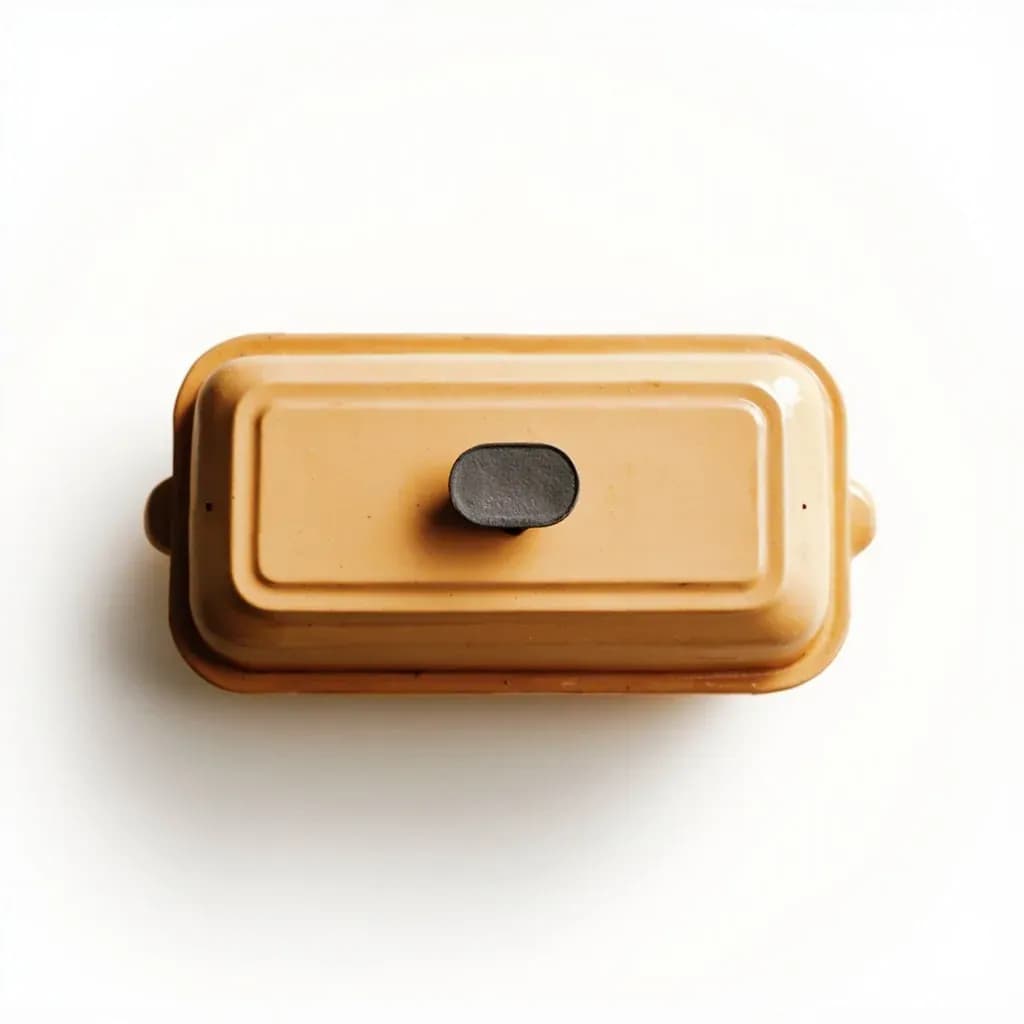
A lidded loaf-shaped dish for baking and chilling pâtés, terrines, and forcemeats.
A terrine mold is a deep rectangular or oval dish, often enameled cast iron or ceramic with a tight-fitting lid, used to cook layered meat, fish, or vegetable forcemeats. The filled mold is baked gently in a water bath, then pressed and chilled so the terrine firms into clean sliceable form. The lid traps moisture during cooking and the heavy walls give even, gentle heat.
A terrine mold is a straight-sided, rectangular baking dish with a fitted or loose lid, used to shape, bake, and chill forcemeats, pâtés, and layered savory loaves. The form — loaf-shaped with parallel sides and a flat base — is not decorative: it gives the finished terrine its clean, sliceable geometry and, crucially, allows the lid to sit directly on the food so it can be pressed and weighted during chilling. The lid also traps steam during cooking, keeping the top from drying out and helping the loaf set evenly. In classical garde manger and charcuterie, the lidded rectangular mold defines what a terrine *is*; the same recipe unmolded from a round dish is generally called a pâté en moule rather than a terrine.
Behavior varies sharply by material. Unglazed terracotta is porous and must be soaked in cold water before baking; the absorbed moisture gently steams the contents from the outside, and the clay's thermal mass produces slow, even cooking. Glazed earthenware is sealed by its glaze and needs no soaking, though it still cooks gently. Enameled cast iron heats more aggressively and browns the edges — a virtue for a crusty vegetable terrine, a liability for a delicate foie gras. Porcelain and stainless steel are non-reactive and chill quickly, which helps when you want a clean, set slice. Silicone sacrifices the weight-and-press quality that defines a traditional terrine in exchange for effortless unmolding. Most 1.5–2 quart molds (about 9 x 5 x 3 in) hold a standard 1 kg forcemeat recipe; leave roughly 1 in of headspace because the mixture expands and the lid needs clearance.
The skill lies less in the vessel than in the lining, the pressing, and the patience. A properly lined mold (with bacon, plastic wrap, or blanched cabbage leaves) lets a chilled terrine slide out clean and intact. A properly weighted lid, set with cans or a foil-wrapped brick and left overnight in the refrigerator, compresses the loaf into a dense, even slice and clarifies the fat that pools on top — that fat cap is your natural preservative seal. Treat the mold with care (no thermal shock, no abrasives, thorough drying) and it will outlast most other pans in the kitchen.
Alternatives
Types & varieties
Rectangular glazed earthenware with straight sides and a snug lid; the archetype, usually 1.5–2 qt.
Heavier and hotter than clay; gives even heat and crisp edges, well suited to both baking and chilling.
Traditional porous clay that breathes and self-steams; must be seasoned, soaked in cold water 20–30 minutes before baking, and dried thoroughly after.
Smooth, non-reactive, and elegant for chilled presentations; fair heat distribution and easy to clean.
Durable, non-reactive, often with a tight-fitting lid; favored in professional kitchens for hygiene and longevity.
Flexible for easy unmolding and no need to line, but lacks the weight and pressing quality of traditional lidded molds.
A related form, often hinged, latched, or springform-style, designed for easier unmolding of layered pâtés en terrine.
Smaller (12–18 oz / 350–500 g), shallower, and shaped to portion a whole foie gras; traditionally porcelain or enameled metal.
Small cylindrical single-serving molds used for plated presentations of layered or mousse-style terrines.
Choosing the Right Material
Material choice is the single biggest decision when buying a terrine mold, and it shapes what the finished dish will be like. Unglazed terracotta is prized for gentle, even cooking and a subtle exterior steam, but it is fragile, demands pre-soaking, and will not tolerate thermal shock. Glazed earthenware keeps the gentle cooking profile of clay but adds a sealed, easy-to-clean surface that needs no soaking. Enameled cast iron is the modern heavy-duty option: it holds heat, browns, and is essentially indestructible, which makes it the most forgiving choice for a cook who plans to bake as often as chill. Porcelain and stainless are the go-to for cold preparations — aspics, mousses, and foie gras — because they chill quickly in the refrigerator and release cleanly. Silicone is the practical compromise: the loaf unmolds in seconds, but you lose the weight of a traditional lid and the terrine will not have the same dense, pressed texture. Match the material to the dish rather than the other way around.
- Unglazed terracotta: best for rustic, gently steamed country terrines; pre-soak in cold water before baking.
- Glazed earthenware: same gentle cooking as terracotta with a sealed, low-maintenance surface; no soaking required.
- Enameled cast iron: best for long bakes and recipes that benefit from a browned crust; handles the highest oven temperatures.
- Porcelain or stainless: best for chilled terrines, aspics, and foie gras where a clean, pale finish matters.
- Silicone: best for beginners and for layered terrines that need to release without tearing; not a true substitute for a lidded mold.
Lining, Pressing, and the Fat Cap
Three techniques separate a passable terrine from an excellent one, and none of them depend on the mold. Lining — with thin bacon sheets, plastic wrap, or blanched cabbage leaves — guarantees a clean release and lets the loaf keep its shape on the platter. Pressing — setting the lid on top and weighting it with cans, a foil-wrapped brick, or a dedicated press, then chilling overnight — compresses the forcemeat, drives out trapped air pockets, and clarifies the fat that rises to the surface. That clarified fat cap seals the terrine from air, slows oxidation, and acts as a natural preservative, so a properly pressed and sealed terrine will keep for a week or more in the refrigerator. Skipping the press leaves a loose, crumbly slice; skipping the fat cap shortens the storage life and dulls the flavor of the first cut.
- Bacon lining: lay thin slices in overlapping strips so they wrap the entire loaf; trim the overhanging edges to fold over the top.
- Plastic wrap: useful for chilled, gelatin-set terrines; leaves a smoother exterior than bacon.
- Cabbage leaves: classic for game and country terrines; blanch briefly to soften, then line and wrap.
- Weighting: 1–2 kg (2–4 lb) of even weight is usually enough; heavier pressing is for very wet mixtures such as head cheese.
- Re-pour the rendered fat after pressing so the surface is fully sealed before you refrigerate the terrine for service.
Common uses
Tips & pitfalls
- Soak an unglazed terracotta mold in cold water for 20–30 minutes before baking; the absorbed moisture gently steams the loaf from the outside and helps prevent the clay from cracking. Skip this for glazed earthenware, which does not absorb water.
- Never move a cold terracotta, earthenware, or porcelain mold directly into a hot oven; let it come to room temperature first to avoid thermal shock.
- Leave at least 1 inch (2.5 cm) of headspace between the forcemeat and the lid; mixtures expand during cooking, and a tight lid will push the loaf out of shape or pop off.
- Line the mold before filling — thin bacon sheets, plastic wrap, or blanched cabbage leaves — and you will get a clean release and a finished surface worth presenting.
- After cooking, set the lid on top and weight it with cans, a foil-wrapped brick, or a press; chill overnight so the loaf compacts into a dense, sliceable terrine.
- Reserve and re-pour the rendered fat that rises during chilling; it forms a natural seal that preserves the terrine and gives the first slice a glossy finish.
- For very wet forcemeats, leave the lid slightly ajar or punch a small steam hole in a parchment cover to prevent pressure buildup that could push the loaf up.
- Avoid abrasive scrubbers and metal utensils on glazed or enameled surfaces; they strip the finish and cause sticking over time.
- If a chilled terrine refuses to unmold, run a thin knife around the long edges and briefly dip the outside of the mold in warm water (skip this step for unglazed terracotta, which will crack).
Good to know
- Origin
- France; the word 'terrine' derives from 'terre' (earthenware) and originally named the vessel rather than the food inside it.
- Materials
- Glazed earthenware and unglazed terracotta traditionally; modern molds are enameled cast iron, porcelain, stainless steel, or silicone.
- Standard Size
- 1.5–2 quarts (about 9 x 5 x 3 in / 23 x 13 x 7 cm), sized to hold roughly 1 kg (2 lb) of forcemeat.
- Lid Function
- A fitted or loose lid presses the contents, traps steam, and is often weighted during chilling to compact the loaf.
- Fill Line
- Leave about 1 in (2.5 cm) between the forcemeat and the rim; mixtures expand during cooking and the lid needs clearance.
- Thermal Shock Risk
- Terracotta, earthenware, and porcelain can crack if moved between very cold and very hot environments; warm gradually.
- Storage
- Store completely dry; porous clay must be air-dried thoroughly to prevent mildew and salt efflorescence.
- Price Range
- From under $20 for basic porcelain or stainless steel to roughly $80–$200+ for enameled cast iron.
Also called
Pate Mold · Terrine Dish
Related

Muffin Pan
Multi-cup pan for muffins, cupcakes, and egg bites

Bundt Pan
Fluted ring mold for showstopping cakes with a center hole

Springform Pan
Latch-release pan that frees delicate cakes without flipping

Pie Dish
Sloped round dish for crisp-bottomed pies and quiches

Tart Pan
Fluted pan with a pop-out base for clean-edged tarts

Rolling Pin
Rolls dough into even sheets for pastry and bread

Pastry Brush
Brushes on egg wash, glaze, butter, and marinades

Bench Scraper
Flat blade that divides dough and clears your work surface