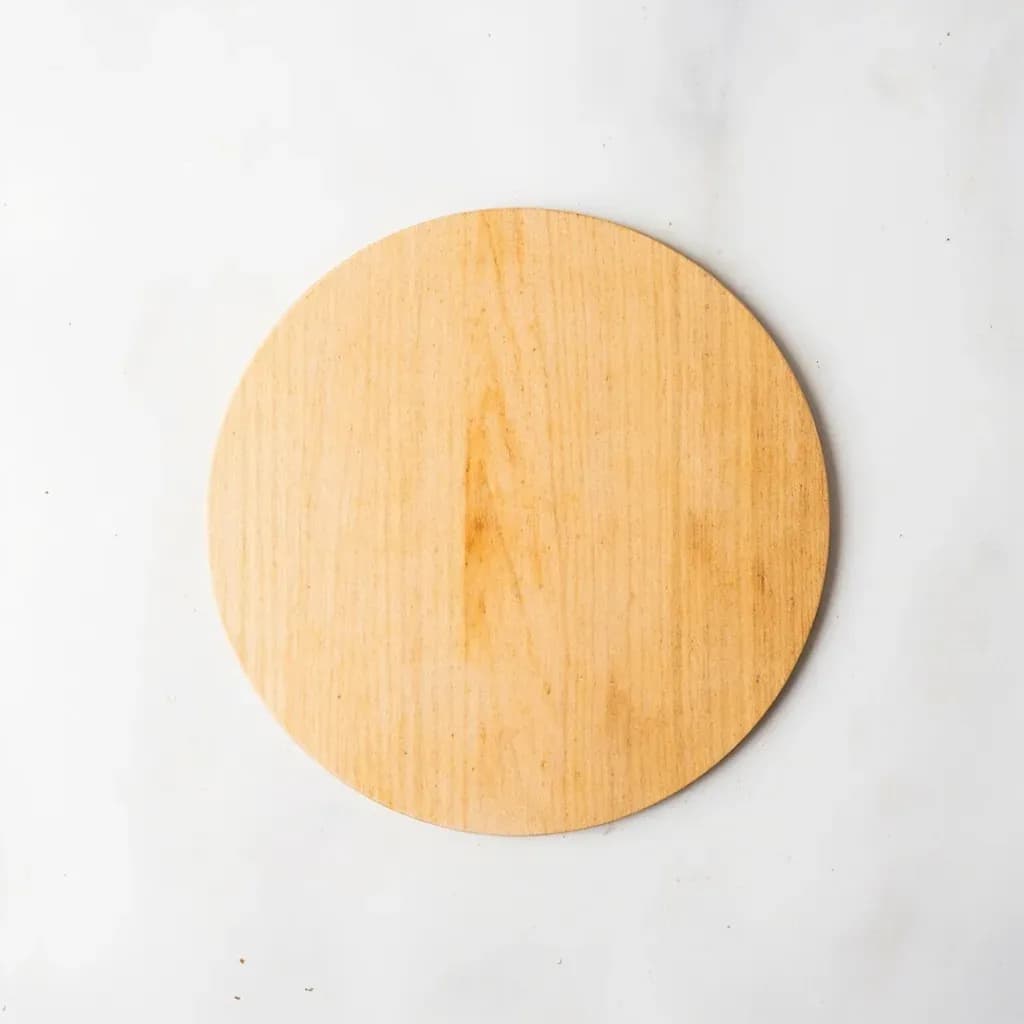
Baking & Pastry
Transfer Peel (Flip Board)
Thin long board for lifting and flipping shaped dough onto a peel or into the oven.
A long, very thin wooden or metal board used by bakers to lift and transfer shaped or proofed dough without deflating it. Its thin leading edge slides under a baguette or loaf so the dough can be flipped seam-side down onto a peel, couche, or baking surface. It's a staple of artisan bread shaping where gentle handling preserves the rise.
The transfer peel, also called a flip board or retournable, is a long, narrow board used in hearth-bread production to shape and load long loaves — baguettes, ficelles, bâtards — without deflating them. Bakers form the dough directly on its lightly floured, channeled surface, then invert the whole board in one confident motion to drop the loaf seam-side down onto a peel, couche, or oven deck. This flip-and-load method preserves the surface tension built up during shaping, the same tension that gives a baguette its blistered ear and its spring in the oven.
The design is deceptively simple: a flat, rigid plank sized to the loaf, often milled with shallow lengthwise channels that trap flour and act as miniature ball bearings under the dough. Wood, traditionally beech, is the classic material because of its feel and its ability to hold a light film of flour without slicking up; food-grade HDPE plastic has largely displaced wood in production bakeries for hygiene and warp resistance. A transfer peel is not the same tool as a pizza peel: a pizza peel is a paddle you slide dough off of, while a transfer board is a shaping surface you flip dough off of. The distinction matters, because the flip method is what protects a long, tensioned loaf from collapsing at the moment of loading.
For a home baker who only makes round boules, a transfer board is unnecessary; a bench scraper and a peel will carry you. But anyone regularly shaping long loaves will find that the board solves the awkward moment between "shaped" and "in the oven," where deflating or tearing is most likely. It is a tool of the French boulangerie tradition, and it makes a noticeable difference the first time you use one.
Alternatives
Types & varieties
Solid beech or similar hardwood, usually milled with shallow lengthwise channels; favored for feel and tradition but requires dry-only cleaning.
Wood or plastic milled with parallel grooves that trap flour and form a low-friction track under the dough; the most common form in artisan bakeries.
White or cream food-grade plastic; standard in commercial bakeries for hygiene, dishwasher-tolerance, and warp resistance.
Plain, ungrooved board used under a floured couche cloth for proofing and transferring; less common than channeled versions but useful for shaped bâtards.
Holes through the surface for airflow during final proof; more often seen on proofing trays than on transfer boards proper, but the same logic applies.
Flip vs. Slide
There are two schools of hearth loading. In the slide school, you assemble and shape on a floured work surface, then transfer the loaf to a peel with a bench scraper and slide it off into the oven. This works well for round boules, pizzas, and most pan loaves. In the flip school, you shape the loaf directly on the transfer board, then invert the board over a peel, couche, or oven deck so the loaf lands seam-side down. The flip is what the board exists to make possible: it preserves the taut top skin you built during preshaping and final shape, and it lets the seam — the weakest part of the loaf — rest against the peel or stone rather than tearing under its own weight. A baguette flipped seam-down will spring higher in the oven and produce a cleaner ear than one transferred with a scraper.
Channels and Flour Management
The grooves running the length of a baguette board are not decorative. They serve two functions. First, they catch a reservoir of flour as you shape, so the dough rides on a thin bed of flour rather than on bare wood, which would stick. Second, they give the dough something to slide on during the flip: when the board is inverted, gravity can pull the loaf along the channels rather than dragging it across a flat surface. This is why a floured channeled board feels almost frictionless at the moment of release, and why a smooth, ungrooved board tends to grip the dough and tear it.
Working with High-Hydration Dough
Very wet doughs are the hardest case for any transfer board, because the channels flood with sticky dough rather than flour. A few habits help: dust the board with rice flour or a 50/50 rice/AP blend, since rice flour does not hydrate as quickly as bread flour and stays granular in the grooves; keep the bench lightly misted rather than soaked; and avoid letting shaped loaves sit on the board longer than a minute or two, since sitting allows the dough to wet into the wood. If the loaf does stick at the flip, slide a bench scraper under it to free it — never pull the dough itself.
Common uses
Tips & pitfalls
- Dust with rice flour or a 50/50 rice/AP blend if the dough is very wet; rice flour does not gum up the channels the way pure bread flour can.
- Keep the channels clean. Burned flour packed into the grooves is a flavor and hygiene problem. Scrape between batches with a bench scraper.
- Flip with one confident, level motion. Hesitating causes the dough to fold onto itself and deflate — the very thing the board is meant to prevent.
- Shape the loaf so it sits on the centerline of the board, leaving equal board at each end as hand-holds for the flip. An off-center loaf tips and tears.
- If the dough sticks at the flip, slide a bench scraper underneath to free it rather than pulling the dough, which will stretch and deflate the surface.
- Wooden boards should never go in the dishwasher or sit wet; the grain raises and the board will harbor mold. Dry-brush and store flat or on edge.
- For very long loaves, choose a board a few centimeters shorter than the finished baguette so the ends do not overhang and tear during the flip.
- Do not confuse a transfer board with a pizza peel. The transfer board is a shaping surface you flip from; a pizza peel is a paddle you slide from. Using one in place of the other usually ends with a deflated loaf or a stuck dough.
Good to know
- Type
- Bakery handling tool for bread shaping and oven loading
- Other names
- Flip board, transfer board, baguette board, retournable (French)
- Primary purpose
- Shaping and transferring formed loaves (especially long ones) onto a peel, couche, or directly into the oven without deflating them
- Typical materials
- Hardwood (beech is traditional); food-grade HDPE plastic or composite in commercial bakeries
- Typical size
- Roughly 60–90 cm long, 15–25 cm wide, sized to the loaf (a baguette board runs the length of a finished baguette plus handling room)
- Key design feature
- Parallel channels or grooves along the working surface that catch flour and reduce sticking; some boards carry a small lip on one long edge
- Working method
- Dough is shaped directly on the floured board, then flipped over to deposit it seam-side down, or slid off onto a peel for loading
- Cleaning
- Wood: scrape and dry-brush, never soak. Plastic/composite: scrape, then wash with sanitizing solution
- Storage
- Flat or hung vertically on edge to prevent warping; wood should be kept dry and out of standing water
Also called
Flip Board · Baker's Transfer Peel · Loading Board
Related

Muffin Pan
Multi-cup pan for muffins, cupcakes, and egg bites

Bundt Pan
Fluted ring mold for showstopping cakes with a center hole

Springform Pan
Latch-release pan that frees delicate cakes without flipping

Pie Dish
Sloped round dish for crisp-bottomed pies and quiches

Tart Pan
Fluted pan with a pop-out base for clean-edged tarts

Rolling Pin
Rolls dough into even sheets for pastry and bread

Pastry Brush
Brushes on egg wash, glaze, butter, and marinades

Bench Scraper
Flat blade that divides dough and clears your work surface