Cookware
Turbot Kettle (Turbotière)
A large diamond-shaped poaching pan built to gently cook whole flatfish like turbot.
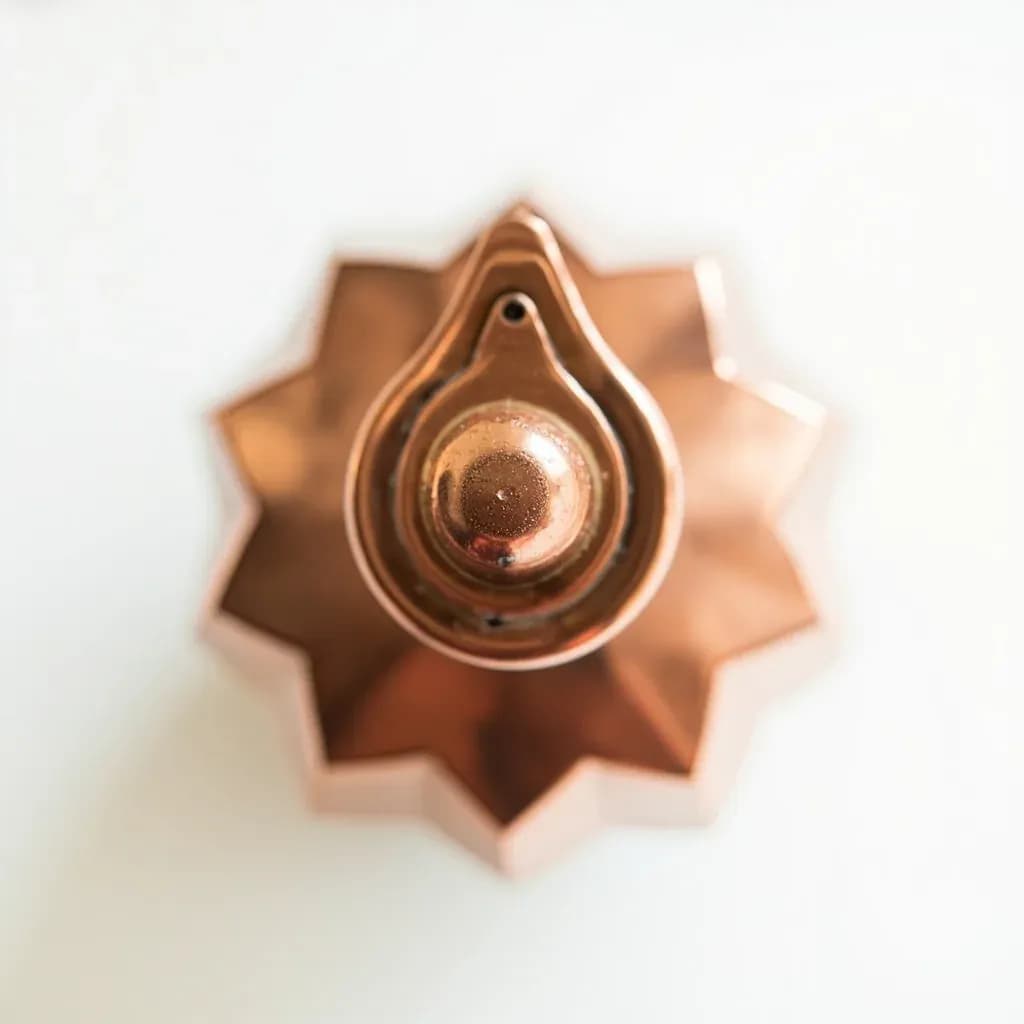
A turbotière is a wide, shallow, diamond- or kite-shaped poaching vessel with a lid and a perforated insert, sized to hold a whole flatfish flat without bending it. The fish rests on the lift-out grid and is gently poached in court-bouillon, then raised cleanly without breaking. Its distinctive shape mirrors the body of a turbot so the fish cooks evenly across its surface.
The turbotière is a specialized poaching pan whose outline is dictated by the fish it was designed to cook. A whole turbot is flat, oval, and roughly diamond-shaped, and a standard rondeau or fish kettle forces the cook to bend or fold the fish to fit. The turbotière solves that with a long axis matched to the fish, low straight sides, and — most importantly — a perforated, fish-shaped grid on short legs that suspends the turbot above a shallow pool of simmering court-bouillon. The result is a poach in liquid and steam at once, which is the gentlest way to cook turbot's high-collagen flesh.
Why the shape matters: turbot has a narrow window between silky-soft and dry, and the white skin is fragile. The grid keeps the fish off the pan floor so it is not battered by convection currents or pressed against hot metal, and the elongated outline keeps the skin flat and uncreased. In classical French service the pan is brought to the table whole for the ritual of filleting at the guéridon, which only reads correctly if the fish has cooked in its own silhouette.
As for heat, a heavy copper turbotière (the traditional material) gives uniform, gentle conduction that forgives a momentary lapse; stainless and aluminum work fine but punish inattention more quickly. The court-bouillon — usually a white-wine stock built on leek, onion, celery, and fennel — should barely tremble, never boil. Most home cooks reach for the pan only a handful of times a year, so the practical question is usually what to use instead, and for a small fish a large oval Dutch oven or a roasting pan fitted with a wire rack will do the job with some compromise.
Alternatives
Types & varieties
The benchmark French copper model, tin-lined, in lengths from roughly 45 to 65 cm; the choice of most professional kitchens.
High-end French copperware makers offering classic tin-lined fish kettles of the same form.
Heavy-gauge stainless for restaurant use; more durable than copper and induction-compatible with a diffusion plate.
Not strictly fish-shaped, but oval cocottes are pressed into service for whole turbot; oven-to-table friendly, slower to heat.
Lightweight consumer 'turbot pans' sold for home use; better suited to oven-roasting than true stovetop poaching.
The poach, step by step
Court-bouillon first, fish second. Bring the liquid to a bare simmer with aromatics, taste it (it should be well seasoned but balanced — it will be reduced later), then lay the turbot in dark side up on the grid. Baste the white side with a ladle of the hot liquid for the first two minutes to set the surface proteins and stop the skin from tearing. Hold the liquid at a low, almost-static simmer — about 80 °C / 176 °F — and cook roughly 8–10 minutes per kilogram. Test at the head end near the backbone, not the tail. Lift the grid out, rest the fish skin-side down on a warm platter, tent loosely, and fillet at the table. Strain and defat the court-bouillon; it is the base for a beurre blanc, a cream velouté, or simply a finished sauce with butter and herbs.
Substitutes for the home cook
If you cook a whole turbot only once or twice a year, the pan is not essential. The closest general substitute is a long oval fish poacher or rondeau with a trivet or wire rack inside; the fish will not sit as flat, but it will cook. For a 1–1.5 kg turbot, a large oval Dutch oven or a roasting pan with a wire rack set on overturned ramekins works well; baste often because the geometry is less efficient. A salmon-style fish kettle is too narrow for an adult turbot. Brill, the closest flatfish relative, is the standard substitute in restaurants when turbot is out of season or too dear, and it cooks identically in the same vessel.
Caring for copper
A tin-lined copper turbotière will outlast its owner if it is treated sensibly: hand-wash in warm (not hot) water with a soft cloth, dry immediately, and never put it in the dishwasher. Avoid thermal shock — do not run a cold tap over a hot pan, as the tin will craze and the copper may warp. When the silvery tin wears through to pink copper at the high points (rim, grid contact), send the pan to a réétameur (re-tinner); most French cities still have one, and the work is inexpensive relative to the value of the pan. A well-kept copper turbotière becomes a working heirloom, and many of the best examples in restaurant kitchens are fifty years old or more.
Common uses
Tips & pitfalls
- Match pan to fish: the turbot should lie flat with about a centimeter of clearance on the sides so the white skin does not curl away from the liquid and the flesh cooks evenly.
- Bring the court-bouillon to a bare simmer BEFORE laying the fish in; a rolling boil tears the delicate white skin and forces water into the flesh, giving a mushy texture.
- Slip the fish in dark (eyed) side up, then baste the white side with a ladle for the first two minutes to set the surface proteins and keep the skin intact.
- Cook to a finish of about 56–58 °C (133–136 °F) at the thickest part; turbot's high collagen content means it goes from perfect to dry in a very narrow window.
- Test doneness by lifting the dorsal fin near the tail — it should release with almost no resistance — and confirm with a probe at the head end near the backbone, not the thin tail.
- Save every drop of the cooking liquid: strain, defat, and reduce it. It carries the flavor of the fish and is the cleanest possible base for a butter sauce or a light cream velouté.
- Lift the fish out on its grid and rest it skin-side down on a warm platter, tented loosely with foil for 3–5 minutes, to relax the flesh before filleting at the table.
- Never run a cold pan under water while the copper is still hot — thermal shock warps thin copper and will crack tin linings.
- For copper, have the tin re-applied by a specialist every several years once the underlying copper shows through at the wear points.
Good to know
- Origin
- France; classical kitchen equipment associated with the great turbot fisheries of Brittany and Normandy.
- Form
- Diamond- or fish-shaped shallow pan with a long axis matched to the oval outline of a whole turbot, two side handles for lifting.
- Defining feature
- A perforated, fish-shaped rack on short legs that suspends the fish above the simmering court-bouillon so it cooks in liquid and steam simultaneously.
- Traditional material
- Heavy tin-lined copper (Mauviel, Gaillard), prized for even heat conduction.
- Typical size
- Internal length 45–70 cm (18–28 in), suited to whole turbot of about 1.5–4 kg (3–9 lb); a 2 kg turbot feeds 4–6.
- Cooking liquid
- White-wine court-bouillon: water, dry white wine, leek, onion, celery, fennel, bouquet garni, peppercorns, lemon.
- Doneness cues
- A fine needle or skewer meets no resistance at the thickest part (head end, near the backbone); the dorsal fin near the tail releases cleanly.
- Care
- Copper versions are hand-washed and re-tinned by a specialist every few years; stainless and aluminum versions are dishwasher-safe but last longer with hand-washing.
Also called
Turbotière · Fish Kettle · Flatfish Poacher
Related

Steamer
Gentle moist heat that keeps vegetables, fish, and dumplings tender

Frying Pan
Shallow sloped pan for frying, sautéing, and quick sears

Saucepan
Tall, straight-sided pot for sauces, grains, and small batches

Sauté Pan
Wide straight-sided pan with room to brown and braise

Dutch Oven
Heavy lidded pot that turns tough cuts tender over hours

Stock Pot
Tall, roomy pot for stocks, pasta, and big-batch cooking

Wok
High-sided bowl pan built for blistering-hot stir-fries

Griddle
Flat, broad surface for pancakes, smash burgers, and breakfast