Knives & Cutting
Uncapping Knife
A broad, often heated blade used by beekeepers to slice the wax caps off honeycomb before extraction.
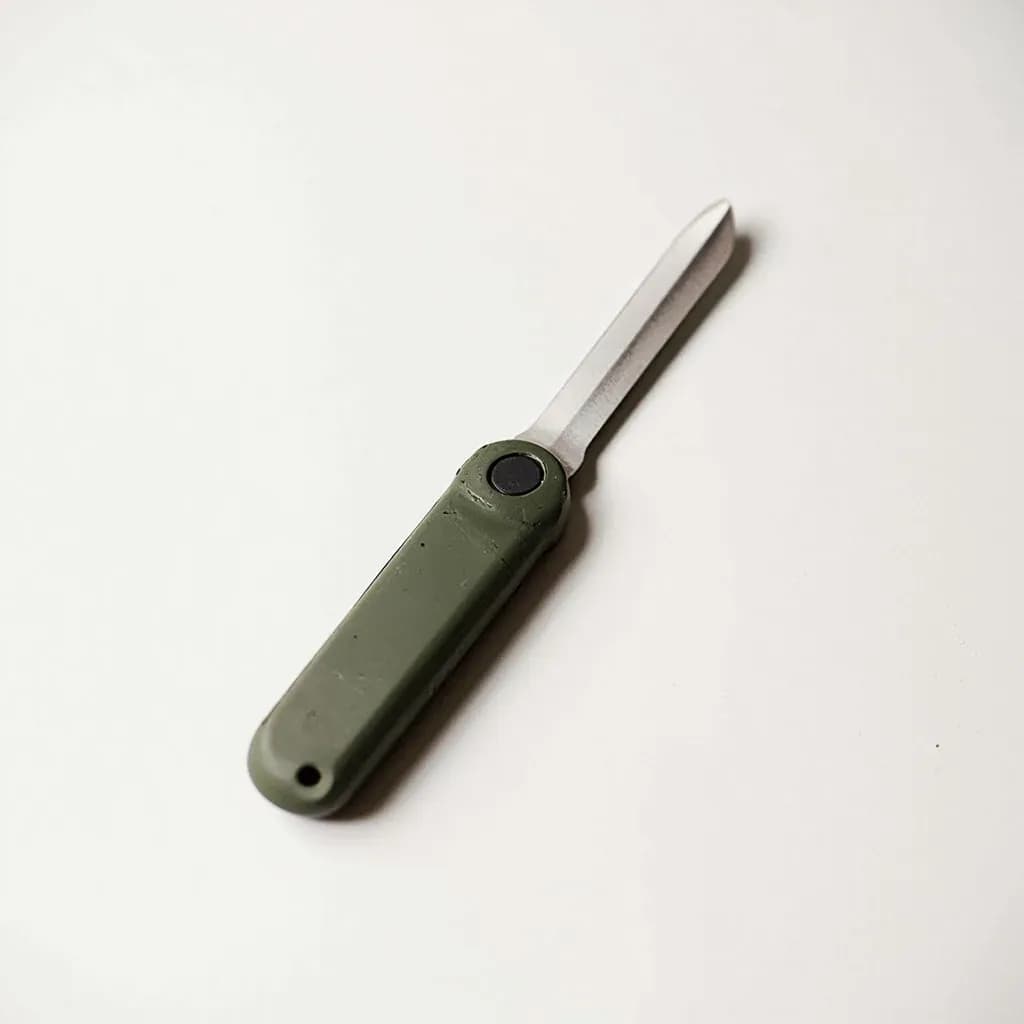
An uncapping knife is a wide, thin blade, frequently electrically heated, that shaves the thin wax cappings from a frame of honeycomb so honey can be spun out in an extractor. The heat lets it glide through wax cleanly, and the long flat edge follows the comb surface. It is a core honey-harvesting tool, with both manual and electric versions in common use.
The uncapping knife is a long, often heated blade that opens the wax seals on honeycomb so honey can be spun out in an extractor. Worker bees cap each cell of ripe honey with a thin layer of beeswax to preserve it; that cap must come off before the frame goes into the extractor, and a kitchen knife is the wrong tool for the job. Beeswax melts around 145°F (63°C), so a heated uncapping knife glides through the capping layer the way a hot blade slides through cold butter, while a cold serrated knife has to saw its way through and leaves a rougher, more torn cut.
For a hobbyist extracting a handful of frames, a plain serrated bread knife will work in a pinch, but anyone running more than a couple of hives benefits from heat. The blade runs roughly 8 to 10 inches — long enough to span a standard deep frame in a stroke or two — and the edge may be smooth (relying entirely on heat) or serrated (gripping the wax as it passes). Electric and steam-heated models are now the standard in serious operations, while traditional cold knives remain popular for their simplicity and zero setup time.
This is a working tool rather than a kitchen one, but it is the gateway between hive and jar: skip the uncapping step and the honey stays locked in the comb. The tool rewards a light hand and a hot blade — press too hard and you will gouge into the cell walls, destroying comb the bees spent weeks building and forcing them to draw fresh foundation next season.
Alternatives
Types & varieties
Plug-in knife with an internal resistance heating element; thermostatically controlled to keep the blade hot enough to glide cleanly through wax without dragging.
Connected by hose to a steam generator or wall-mounted boiler; delivers even, consistent heat and is favored by mid- to large-scale operations.
An unheated serrated knife, sometimes sold specifically as a beekeeping knife but functionally similar to a long serrated bread knife; always ready, no setup, but slower and rougher.
Saw-toothed edge that grips and cuts the wax; the most common style for both heated and cold use and the easiest for beginners.
Less common; relies entirely on heat to part the wax and gives the cleanest cut when the blade is properly warmed.
Choosing heated versus cold
The decision is largely about volume. A cold serrated knife is cheap, indestructible, and ready the moment you pick it up — fine for a single hive or two and a relaxed afternoon in the garage. Once you are uncapping dozens of frames in a sitting, the difference becomes obvious: a heated blade slides through cappings the way a heated spatula slides under a fried egg, while a cold blade drags, builds up wax, and leaves jagged cell walls behind.
- Cold knife: zero setup, no cords or steam, but slower and harder on comb; a good choice for one to three hives per year.
- Electric heated knife: the standard hobbyist upgrade; plug it in, wait a few minutes for the thermostat to cycle, and uncapping becomes a one-pass operation.
- Steam-heated knife: best for clubs or sideliners running many hives at once; even heat across the whole blade and no risk of a resistance element burning out mid-run.
How the cut works
A capping is only about 0.1 mm thick — a wax lid stretched over a pool of honey. The job is to remove the lid, not the cell wall beneath it. Think of it as shaving the fuzz off a peach: a hot blade kisses the surface, the wax melts just ahead of the edge, and the blade glides forward. A cold blade has to tear and saw through that same thin film, which is why it leaves a ragged cut and often pulls chunks of comb out with the wax.
Care and storage
Wax, honey, and propolis are corrosive to steel if left to sit, and a heated knife adds electrical components to the cleaning equation. Wipe the blade between frames and give it a proper wash at the end of the day; never submerge the heating element, cord, or steam fitting in water. Store dry, unplugged, and ideally hanging so the blade does not rest on a damp surface.
Common uses
Tips & pitfalls
- Heat the knife fully before the first cut — a lukewarm blade is the single most common cause of torn, ragged cappings.
- Let the heat do the work; draw the blade across the frame with a light, even stroke rather than pressing down. Pressing gouges into the midrib and destroys comb the bees will have to rebuild.
- Wipe the blade on a damp cloth, a scrap of wood, or the edge of the uncapping tank between frames; accumulated wax drags and tears the next pass.
- Keep a pot of hot water nearby during long runs so you can dunk and reset the blade in seconds when wax builds up.
- Work over an uncapping tank with a strainer, not over the floor or a baking sheet — cappings are sticky and a tank catches both wax and the honey that drains out with them.
- Sharpen or replace a blade that has gone dull; a dull edge is harder to compensate for than missing heat.
- Never submerge the heating element, cord, or steam hose of a heated knife in water — wipe, do not soak.
- If the knife starts dragging mid-frame, it has lost heat; pause a few seconds for it to recover rather than forcing the cut.
Good to know
- Also called
- Honey uncapping knife, beekeeping uncapping knife
- Primary use
- Slicing wax cappings from sealed honeycomb cells before honey extraction
- Typical blade length
- 8–10 inches (20–25 cm); spans a standard frame in one or two strokes
- Blade material
- Stainless steel standard; carbon steel in some traditional models
- Operating temperature
- Above the melting point of beeswax, roughly 145°F (63°C) and up
- Edge style
- Serrated (most common) or smooth; serrations grip wax on cold knives
- Used with
- Uncapping tank or tray, cappings basket, honey extractor, strainer or sieve
- Skill level
- Beginner-friendly; technique and heat matter more than strength
Also called
heated uncapping knife · electric uncapping knife · honey uncapping knife
Related

Knife
The fundamental cutting tool every kitchen is built around

Chef's Knife
The do-everything blade for chopping, slicing, and mincing

Paring Knife
Small, nimble blade for peeling and detailed in-hand work

Serrated Knife
Saw-toothed blade that slices crusty bread without crushing

Cleaver
Heavy broad blade for chopping through bone and bulk prep

Cutting Board
The stable surface every cut starts on

Mandoline
Adjustable blade for paper-thin, perfectly even slices

Kitchen Shears
Heavy-duty scissors for poultry, herbs, and packaging