Knives & Cutting
Usuba (Vegetable Knife)
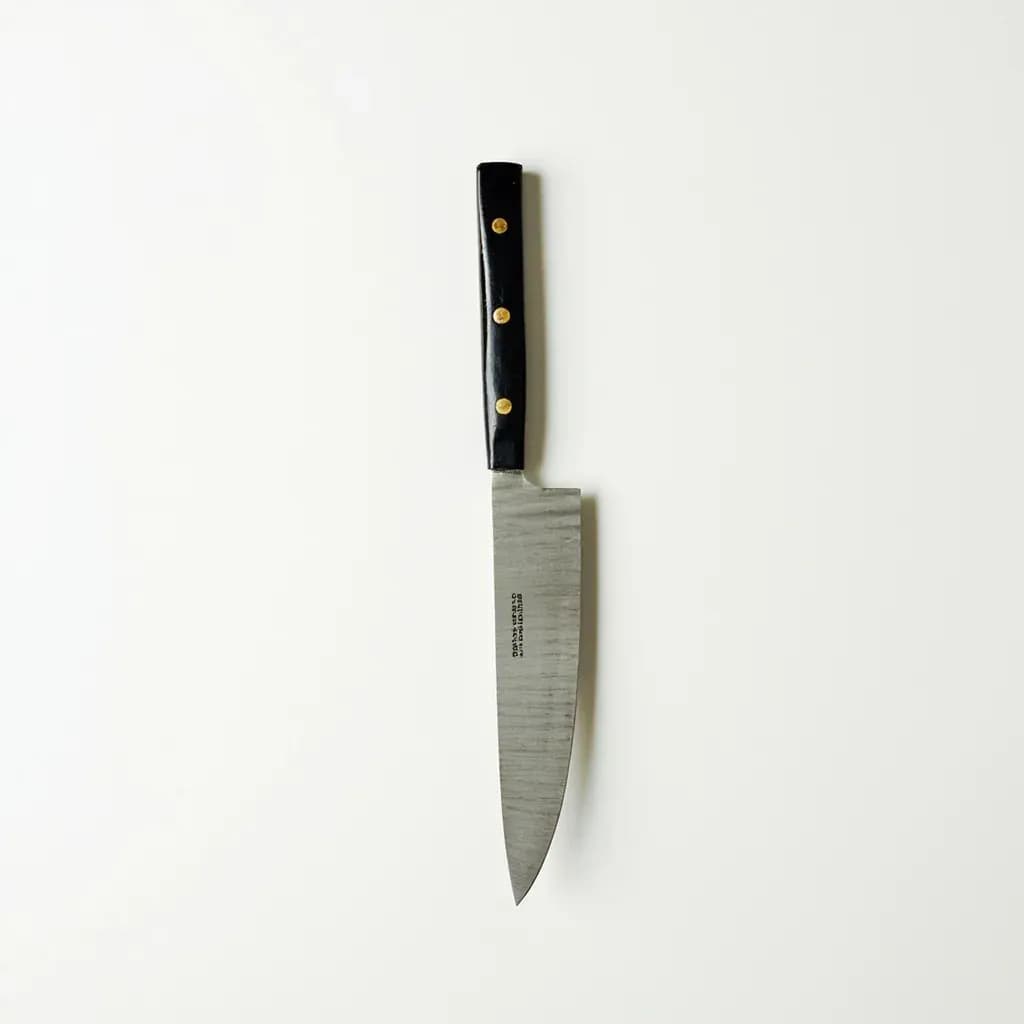
A Japanese single-bevel vegetable knife with a flat, thin blade for precise straight cuts.
An usuba is a traditional Japanese kitchen knife with a thin, flat, single-bevel blade designed specifically for cutting vegetables. Its flat edge lets the cook make clean push-cuts straight down through produce and execute decorative techniques like katsuramuki, the paper-thin rotary peel. The single-bevel grind produces extremely clean cuts but requires regular honing and careful technique.
The usuba is the Japanese kitchen's specialist vegetable knife and the defining tool for the precise, decorative vegetable work at the heart of kaiseki, sushi, and traditional Japanese cooking. Its name, 薄刃, literally means 'thin blade,' and that thinness is the whole point: the blade is ground flat from heel to tip with no belly curve, allowing a single straight pull that produces a cut surface so clean it looks almost polished. A single bevel on the front (right) face lets the edge meet the food at an acute angle on one side, drawing through high-moisture vegetables like daikon and cucumber with almost no crushing of the cell walls. For cooks who have watched a sushi chef peel a translucent sheet from a daikon in one continuous ribbon, that knife is almost certainly an usuba.
What separates the usuba from a Western chef's knife or even from its double-bevel cousin the nakiri is geometry. The spine is thick at the heel for leverage on downward strokes and thins dramatically toward the tip, where the blade becomes almost paper-thin for delicate work. The back face is hollow-ground into a ura, a shallow concave that reduces drag and keeps the food from sealing against the steel. The trade-off is real: a single-bevel edge is unforgiving of abuse, will not tolerate rocking cuts or hard produce, and must be matched to the user's dominant hand. In exchange, the cook gets cuts no other knife can replicate — paper-thin sheets that read light through them, mirror-flat slabs that stand for julienne, and edges on tofu and vegetables so clean they appear to have been planed.
Alternatives
Types & varieties
Square-tipped, rectangular blade; the Tokyo standard and the most common form worldwide. Equally capable of katsuramuki and tategiri, and the easiest first usuba to learn on.
Curved, sickle-shaped tip from the Kansai tradition. The rounded toe initiates katsuramuki sheets cleanly and is favored by many professional sushi chefs for daikon work.
Angled, downward-sloping pointed tip that adds fine tip control for decorative cuts (kazarigiri, muimono) while keeping the flat usuba body for sheets and slabs.
Choosing an Usuba
Selection is mostly about tip shape, blade length, and steel. For most cooks, the Kanto rectangular form is the safest first choice because the flat tip behaves predictably for both tategiri and katsuramuki. The kamagata is the pick of dedicated sushi chefs and anyone who plans to do a lot of rotary sheet cuts, since the curved toe engages the daikon surface more gently. A kiritsuke-style usuba is worth considering if the knife will be used for decorative work as well as prep.
- 180 mm suits most home cooks; 210 mm is the professional standard and worth the upgrade if your board can accommodate it.
- High-carbon shirogami and aogami take the keenest edge but require prompt drying; stainless-clad or full-stainless options are more forgiving and a better first knife for humid climates.
- Handle shape is a personal call — the D-shape is comfortable for long prep sessions; octagonal (kikkou) handles are easier to roll between cuts.
Single-Bevel Geometry in Practice
Because the usuba is ground on one side only, every cut is asymmetric in a way that takes a little retraining for cooks used to a double-bevel knife. The beveled front face guides the cut and produces a clean right-hand side; the hollow ura on the back reduces friction so the food releases cleanly. There is no 'other side' to fall back on if you are right-handed using a right-handed blade, so the cut must be made in one motion. The result is control that a double-bevel blade cannot match: angle, depth, and direction are all in the cook's hand from start to finish.
Working with the Ura
The concave back of the usuba is what lets long sheets of daikon release without sticking, but it is also the most vulnerable part of the knife. Packed food in the hollow distorts the geometry and will scratch into the finish on a soft whetstone. Wipe the ura clean between cuts, and never run it flat across a stone the way you would a double-bevel edge — the stone will seat against the rims and round them out. A few careful passes along a small-radius stone, or a light rub on the back of a ceramic hone, is enough.
Common uses
Tips & pitfalls
- Always cut with a single straight pull — the flat profile and thin edge are not designed to be rocked, and forcing a rocking motion will chip the blade.
- Let gravity and the weight of the blade do the work on downward cuts; on pull cuts, draw the knife toward you in one fluid motion rather than sawing.
- Match the blade to your dominant hand. A right-handed usuba has no usable left side — there is no shallow bevel to fall back on, and using the wrong side will not produce clean cuts.
- Hone lightly before use on a #1000 stone and finish on a #3000 or finer. The high-carbon edge is harder and thinner than a typical gyuto and rewards a finer polish.
- Store the knife in a saya (wooden sheath) or on a magnetic strip. Never leave it loose in a drawer where the tip can strike other tools — the tip is the most fragile point on the blade.
- Use only soft cutting boards: hinoki cypress, end-grain maple, or a high-quality plastic board. Bamboo, glass, and stone will chip the edge within a few cuts.
- Keep the ura (concave back) clean between cuts. Packed food ruins the hollow geometry and will grind into the finish the next time the knife touches a stone.
- Lead with the heel for heavy work and avoid twisting or prying. The thin tip is fragile; if you need to break down something dense, switch to a deba or a heavier knife.
Good to know
- Origin
- Japan — Kanto (Tokyo) for the rectangular form, Kansai (Osaka/Kyoto) for the curved kamagata form.
- Name meaning
- Usuba (薄刃) literally translates to 'thin blade.'
- Bevel
- Single-bevel (kataba), sharpened only on the front face for right-handed users; left-handed blades are forged as mirrors.
- Typical blade length
- 165, 180, 195, 210, and 240 mm; 210 mm is the professional standard.
- Profile
- Flat from heel to tip with no belly; thick spine at heel, paper-thin at tip.
- Edge geometry
- Concave ura ground on the back face to reduce drag and prevent food from sticking.
- Steel
- Traditionally high-carbon — shirogami, aogami, or aogami super; stainless and stainless-clad versions are widely available.
- Handle
- Magnolia (ho) wood wa-handle with buffalo-horn ferrule, octagonal (kikkou) or D-shaped; yo (Western) handles are also made.
- Primary technique
- Katsuramuki (rotary sheet-cutting) and tategiri (standing-cut) vegetable prep.
- Maintenance
- Hand-wash, dry immediately; hone on Japanese whetstones (#1000 routine, #3000–#8000 polish); never dishwasher.
Also called
Usuba Bocho · Japanese Vegetable Knife
Related

Knife
The fundamental cutting tool every kitchen is built around

Chef's Knife
The do-everything blade for chopping, slicing, and mincing

Paring Knife
Small, nimble blade for peeling and detailed in-hand work

Serrated Knife
Saw-toothed blade that slices crusty bread without crushing

Cleaver
Heavy broad blade for chopping through bone and bulk prep

Cutting Board
The stable surface every cut starts on

Mandoline
Adjustable blade for paper-thin, perfectly even slices

Kitchen Shears
Heavy-duty scissors for poultry, herbs, and packaging