Cookware
Wide Shallow Pan (Shakshuka Pan)
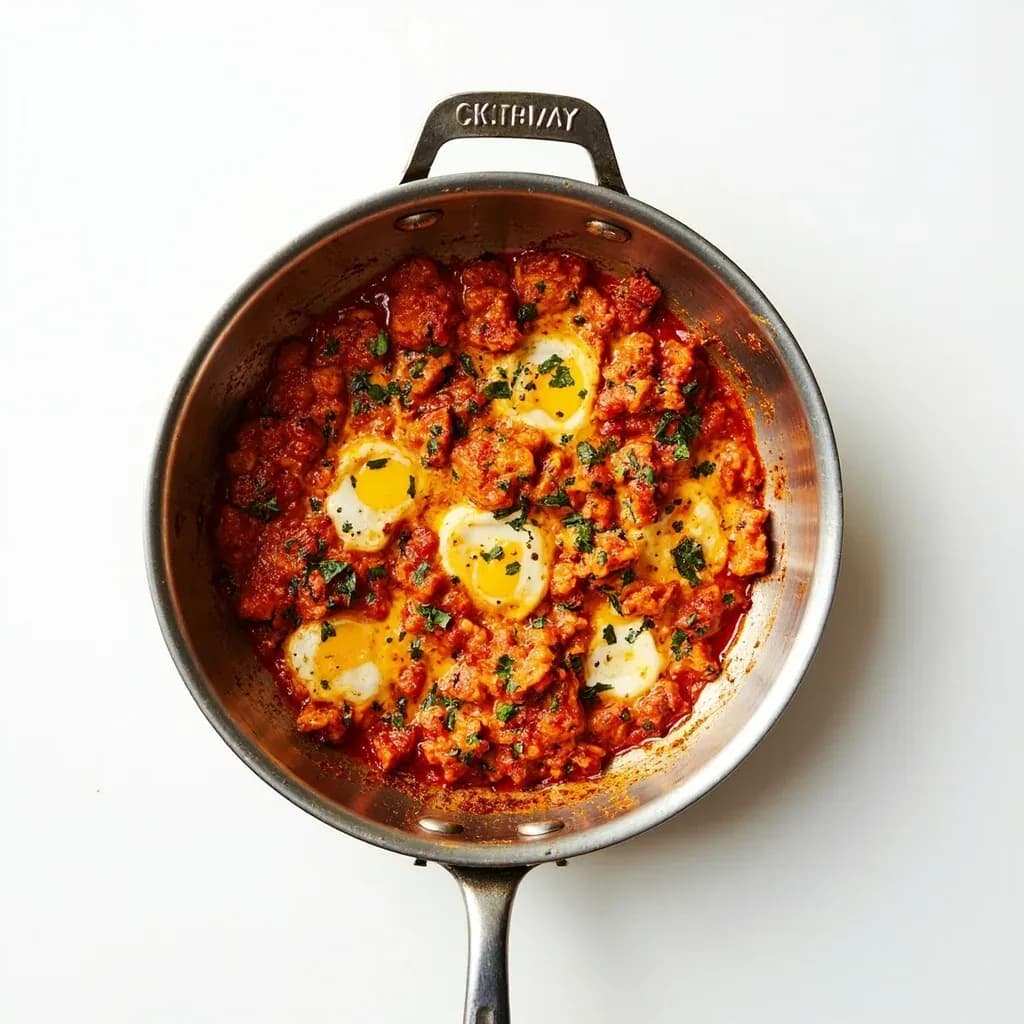
A broad, low-sided pan ideal for simmering sauces and cooking eggs into them, as in shakshuka.
A wide shallow pan is a large-diameter, low-walled skillet or sauté pan that maximizes surface area for evaporation and even simmering. It is the classic vessel for shakshuka, where eggs are poached directly into a spread of spiced tomato sauce, as well as for reductions, braises, and one-pan dishes. The broad base lets a cook nestle multiple portions side by side without crowding.
The wide shallow pan — frequently sold as a 'shakshuka pan' in the wake of that dish's global popularity — is fundamentally a low-walled sauté or fry pan built for cooking in a thin layer. Its defining geometry is broad surface area paired with short sides of roughly 3.5 to 6 cm, which means liquids reduce quickly, evaporation is active rather than trapped, and a spatula can reach every corner of the cooking surface. That shape does work that deeper pans cannot: eggs nestle into a thin sauce without drowning, vegetable cuts brown in a single layer rather than steaming in a pile, and a finished dish slides from burner to table without a second vessel.
What separates a genuine shakshuka-style pan from an ordinary fry pan is the combination of generous width (usually 28 to 32 cm), modest depth, and on the larger versions a helper handle on the far side. Bigger sizes become genuinely heavy when loaded with sauce, and the helper handle turns a one-handed risk into a controlled two-handed lift. Material choice matters more than the marketing name on the box: seasoned cast iron and carbon steel develop fond and crisp edges; enameled cast iron gives the same thermal mass without seasoning; non-stick aluminum is forgiving for beginners but lacks the browning power of iron.
The label is recent and largely commercial. There is no centuries-old cookware tradition called a shakshuka pan — the format is a wide, low-sided sauté or fry pan (a 'fry pan' in American catalogs, a 'tegame' in Italian cookware lines) rebranded around the global popularity of North African egg-in-tomato dishes. The closest historical relatives are the Spanish paella pan (shallower, with sloped sides and no lid) and the French plat à sauter or rondeau (deeper, lidded, and oriented toward braising). When choosing one, prioritize diameter, side height, and material over the name on the box; a 28–30 cm seasoned cast iron or carbon steel pan with a tight-fitting lid covers nearly everything the category is sold for.
Alternatives
Types & varieties
Highest heat retention; ideal for building fond on a tomato base and crisping bread on the rim. Requires seasoning and is heavy.
Same thermal mass as bare cast iron with a non-reactive enamel interior — no seasoning needed, brighter colour at the table, higher price.
Lighter than cast iron, heats faster, develops a natural patina with use. The professional kitchen preference.
Responsive heat, oven-safe, dishwasher-friendly, no seasoning required. Less non-stick than seasoned iron but exceptionally durable.
Light, easy for beginners, low maintenance. Lower oven tolerance and the coating will eventually wear.
Same shallow profile but oval; a common shape for serving shakshuka or gratins directly at the table.
Wider and shallower (often 35–40 cm) with sloped sides; overlaps in use but cooks liquid off faster and is harder to poach eggs in cleanly.
How it compares to neighboring pans
Cooks often hesitate between this pan, a classic sauté pan, a paella pan, and a rondeau. The differences are not cosmetic — they change how a recipe behaves.
- Sauté pan: 7–9 cm sides trap more steam and splatter; better for deglazing with wine and finishing a sauce in volume, worse for crisping and for sliding an egg out cleanly.
- Paella pan: shallower still with sharply sloped sides and no lid; designed for fast evaporation of rice-cooking liquid, not for poaching or braising.
- Rondeau / plat à sauter: deeper and usually lidded; built for braises and stews that finish with a long simmer. The shakshuka pan is essentially a shallower, lid-equipped cousin.
- Cast iron skillet (American): similar in material but typically 25 cm and round; works fine for two eggs but crowds four. The shakshuka pan's 28–32 cm width is the real point of the design.
Material and construction
The pan is sold in every common cookware material, and the choice is the single biggest factor in how it cooks.
- Seasoned cast iron and carbon steel give the deepest browning and the best fond on tomato-based sauces; both need a thin oil film and a steady re-seasoning habit.
- Enameled cast iron skips the seasoning and tolerates long acidic cooks (tomato, wine) without reacting — but the enamel surface browns slightly less than bare iron.
- Tri-ply stainless steel is the most responsive to burner changes and the most oven-tolerant; food sticks more until the pan is properly preheated and oiled.
- Non-stick aluminum is the easiest for a beginner poaching eggs but cannot match iron for crust on vegetables, and high heat will shorten the coating's life.
Common uses
Tips & pitfalls
- Preheat the empty pan over medium-low for 3–5 minutes before adding oil; a properly hot pan sears, a cold pan sticks.
- Choose seasoned cast iron or carbon steel when you want the tomato base to develop a fond; non-stick is fine for delicate egg whites but will not brown as deeply.
- Make a shallow well in the sauce for each egg, then drop the heat once they are in — residual warmth finishes them without toughening the whites or overcooking the yolks.
- Cover the pan with its lid for the last 2–3 minutes of egg cooking to set the tops without flipping.
- Do not overcrowd: sauce should sit in a thin 1–2 cm layer so eggs sit half-submerged, not buried under a deep pool.
- Avoid high heat on non-stick pans — it degrades the coating and can give food a faint metallic taste.
- If the pan is bare cast iron, never soak it; scrub with hot water and a stiff brush, dry it on a warm burner, and rub a thin film of oil over the surface before storing.
- A helper handle is essential above 30 cm — without it, a sauce-filled pan becomes awkward and unsafe to move.
Good to know
- Typical diameter
- 25–32 cm (10–12 in), with 35 cm (14 in) versions available for larger households
- Side depth
- 3.5–6 cm (1.5–2.5 in) — noticeably lower than a sauté pan's 7–9 cm walls
- Wall angle
- Usually straight or gently flared; distinct from the sharply sloped walls of a paella or crepe pan
- Material options
- Cast iron, carbon steel, enameled cast iron, stainless steel (often tri-ply), hard-anodized non-stick aluminum
- Weight range
- Cast iron 2.5–4.5 kg; carbon steel 1.5–2.5 kg; aluminum non-stick under 1 kg
- Handle configuration
- Long primary handle plus a short opposing helper handle on sizes 30 cm and up for two-handed lifting
- Lid
- Many ship with a matching domed or flat lid; some are sold open with the lid sold separately
- Oven-safe temperature
- Cast iron and stainless: 260 °C / 500 °F; non-stick coatings: typically 180–200 °C / 350–400 °F
- Capacity (rough guide)
- A 30 cm pan holds roughly 1.5–2 L of sauce, enough to nest 4–6 eggs in a tomato base
- Distinguishing feature vs. sauté pan
- Lower sides mean faster evaporation and easier plating with a spatula; less splatter containment than a deep sautéuse
Also called
wide-shallow-pan · Shakshuka Pan · Sauté Pan
Related

Steamer
Gentle moist heat that keeps vegetables, fish, and dumplings tender

Frying Pan
Shallow sloped pan for frying, sautéing, and quick sears

Saucepan
Tall, straight-sided pot for sauces, grains, and small batches

Sauté Pan
Wide straight-sided pan with room to brown and braise

Dutch Oven
Heavy lidded pot that turns tough cuts tender over hours

Stock Pot
Tall, roomy pot for stocks, pasta, and big-batch cooking

Wok
High-sided bowl pan built for blistering-hot stir-fries

Griddle
Flat, broad surface for pancakes, smash burgers, and breakfast