Knives & Cutting
Yanagiba Knife
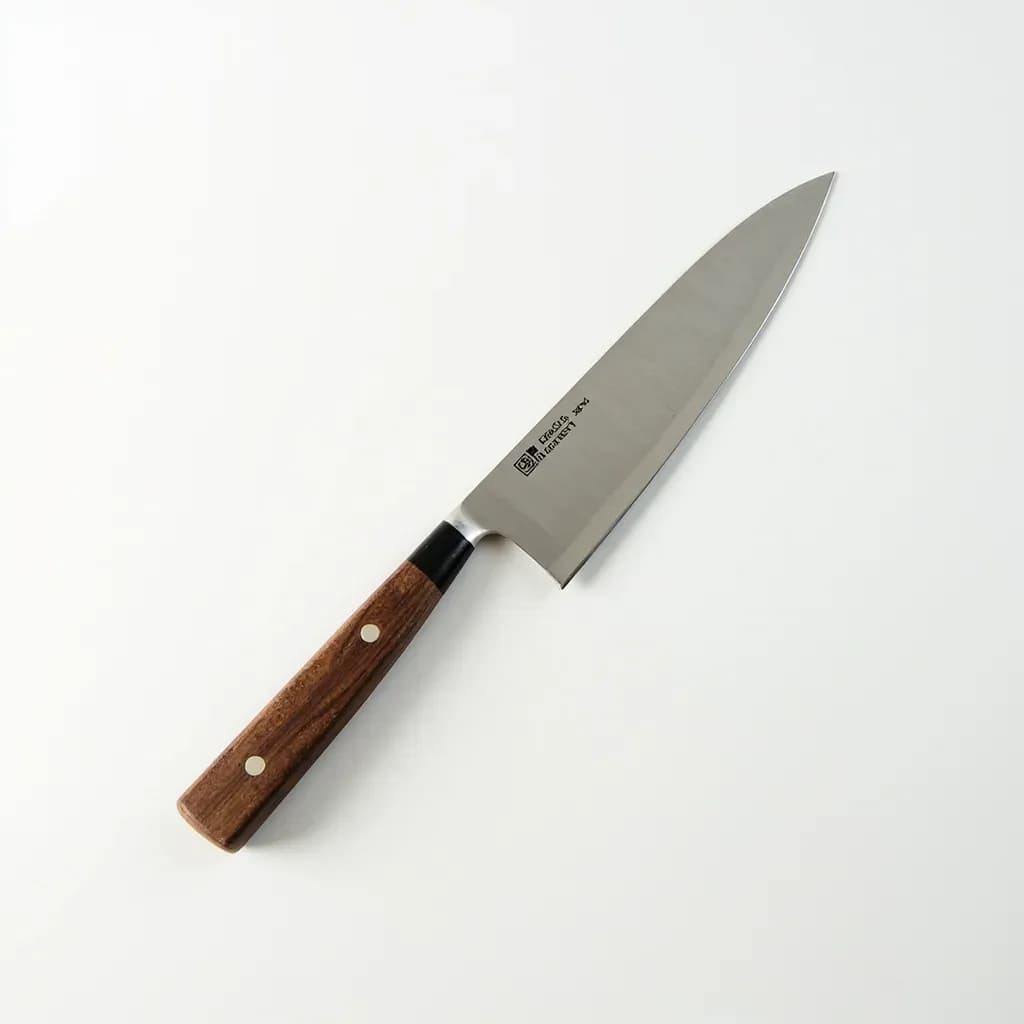
A long, slender single-bevel Japanese knife for slicing raw fish and sashimi.
The yanagiba is a long, narrow single-bevel Japanese slicing knife with a pointed tip, named for its willow-leaf shape. Sushi chefs use its length to slice through a block of raw fish in a single clean pulling stroke, producing smooth sashimi and sushi neta without tearing. The single bevel gives an exceptionally keen edge and a clean cut surface that preserves the fish's texture.
The yanagiba is the long, slender sashimi knife that defines Japanese raw-fish preparation, its profile curving like a willow leaf from a thick heel to a fine, almost sword-like tip. Where a Western chef's knife crushes and severs in a rocking motion, the yanagiba is ground on a single bevel (kataba) — the right side carries the primary edge, the left side is hollowed into a shallow concave known as the ura. That asymmetry is not decorative: it forces the blade into the fish at a precise angle and pushes the cut away from the board, separating fibers rather than tearing them, so a slice of tuna emerges glossy, intact, and almost unmarred.
In use, the knife is drawn through the flesh in a single continuous pull from heel to tip, using the blade's own weight and the acute, polished bevel to do the work. There is no sawing, no chopping, no rocking. The technique is exacting precisely because the geometry is so refined: a 270 mm edge of high-carbon shirogami or aogami steel, hardened to around HRC 60–63, can be honed to a polish that reads almost mirror-like, and that edge is unforgiving of poor technique or inappropriate materials.
For the cook, the yanagiba is a specialty tool rather than an all-purpose one, and owning one means committing to stone sharpening, careful drying, and the discipline of a wooden board. But in return it offers a cut on fish that no double-beveled slicer can match — a sashimi surface so clean it looks lacquered — and a direct link to the craft of Edomae sushi, with the related takohiki more often seen at Kansai (Osaka) counters.
Alternatives
Types & varieties
Yanagiba family with a squared-off tip; originally developed for octopus (tako), now a general sashimi knife favored by some Edomae chefs for straight push cuts.
Yanagiba profile with a slight reverse curve at the tip (clamshell-shaped); used for slicing blocks of sushi and decorative work.
Shorter, thinner yanagiba-style blade, around 210–240 mm, traditionally for fugu preparation; sometimes used for general sashimi on smaller fish.
Hybrid with a kengata (sword-tip) point at the front, combining yanagiba length with a more versatile tip for precision work.
The Single-Stroke Pull Cut
Everything about the yanagiba is engineered to make one specific motion work, and the rest of the knife's character — its weight, its balance, the way it is sharpened — flows from that. A sashimi cut begins at the heel of the blade, with the mune (spine) held just a few degrees above the surface of the fish and the edge angled slightly downward into the flesh. From there the knife is drawn backward and forward in one fluid stroke toward the tip, the bevel doing the work as the slice peels away. The chef's role is mostly to guide weight and direction; the geometry does the cutting.
- Pull the knife in a single stroke from heel to tip — never stop mid-cut and never reverse direction.
- Keep the spine slightly elevated; a common beginner error is laying the blade flat, which crushes the flesh against the board.
- Angle the edge into the fish at roughly 10–15° so the bevel sits perpendicular to the surface, producing the clean, glossy sashimi cut.
- For very long cuts on tuna, draw the fish toward you with the free hand while the blade moves; for smaller pieces, draw the knife through a stationary fillet.
- Wipe the blade between cuts with a damp cloth to keep fish from sticking to the polished ura, which would tear the next slice.
Sharpening and Maintenance
A yanagiba is only as good as the stone work behind it. The knife is sharpened on Japanese whetstones in a clear progression, and the concave ura is treated differently from the flat bevel. For most cooks the discipline is more important than the equipment: a quick strop on a high-grit finisher before service, a proper sharpen every few weeks, and an absolute rule about drying the blade the instant washing is done.
- Progression of stones is typically #1000 for shaping, #3000 for refining, and #6000–#8000 for polishing.
- Sharpen the beveled side first, raise a light burr along the entire edge, then flip and make one or two light passes on the ura to deburr.
- Deburr the ura by laying it flat on a stone and wiping once in the cutting direction — this prevents a wire edge and keeps cuts clean.
- Hone lightly on a #6000 or finer finishing stone before service to realign the edge without removing significant material.
- Wash by hand with mild soap, dry immediately with a soft cloth, and never put a yanagiba in a dishwasher or leave it wet on a counter.
- Store in a wooden saya (sheath) or on a magnetic strip — never loose in a drawer, where the edge will contact other steel and chip.
Common uses
Tips & pitfalls
- Cut in one continuous pull from heel to tip — never rock, saw, or chop. The blade's weight and single-bevel geometry do the work; force ruins the cut.
- Keep the spine (mune) just slightly elevated; laying the blade flat crushes flesh against the board and dulls the polish.
- Wipe the blade with a damp cloth between cuts and dry it the instant you finish washing. High-carbon yanagiba will spot with rust within minutes if left wet.
- Deburr the ura periodically by laying it flat on a finishing stone and wiping once in the cutting direction — this prevents a wire edge that tears the next slice.
- Hone lightly on a #6000 or finer stone before service rather than reaching for a heavy grind; small corrections are this knife's friend.
- Never use a yanagiba on bone, frozen fish, or hard root vegetables — the thin geometry chips easily and chips are very difficult to grind out.
- Use a soft wooden board (hinoki or a quality end-grain maple); avoid bamboo and hard plastic, which dull the edge quickly and spoil the cut surface.
- Store in a wooden saya or on a magnetic strip — never loose in a drawer, where the edge will contact other steel and chip.
Good to know
- Origin
- Japan; refined during the Edo period for Edomae-style sushi in Tokyo and now the standard long slicer across Japan.
- Name meaning
- Yanagiba (柳刃) literally means 'willow blade,' a reference to the long, willow-leaf silhouette of the profile.
- Edge geometry
- Single-bevel (kataba); the right side is ground to a primary bevel, the left side (ura) is concave. Standard knives are right-handed; left-handed versions exist but are uncommon.
- Typical blade length
- 240 mm is the entry size, 270 mm the most common professional length; 300 mm and 330 mm versions exist for very large fish.
- Blade steel
- Traditionally high-carbon white steel (shirogami) or blue paper steel (aogami); modern makers also offer stainless and Damascus-clad variants.
- Handle style
- Traditional Japanese wa-handle, octagonal or D-shaped, in magnolia wood (ho) with a buffalo-horn ferrule (kuchiwa). Western yo-handle versions are also produced.
- Bevel angle
- Roughly 10–15° on the beveled side, producing an extremely acute, polished edge.
- Cutting motion
- Single long drawing pull along the entire length of the blade in one stroke — no rocking, no sawing, no chopping.
Also called
Sashimi Knife · Yanagi · Sushi Knife
Related

Knife
The fundamental cutting tool every kitchen is built around

Chef's Knife
The do-everything blade for chopping, slicing, and mincing

Paring Knife
Small, nimble blade for peeling and detailed in-hand work

Serrated Knife
Saw-toothed blade that slices crusty bread without crushing

Cleaver
Heavy broad blade for chopping through bone and bulk prep

Cutting Board
The stable surface every cut starts on

Mandoline
Adjustable blade for paper-thin, perfectly even slices

Kitchen Shears
Heavy-duty scissors for poultry, herbs, and packaging