Cookware
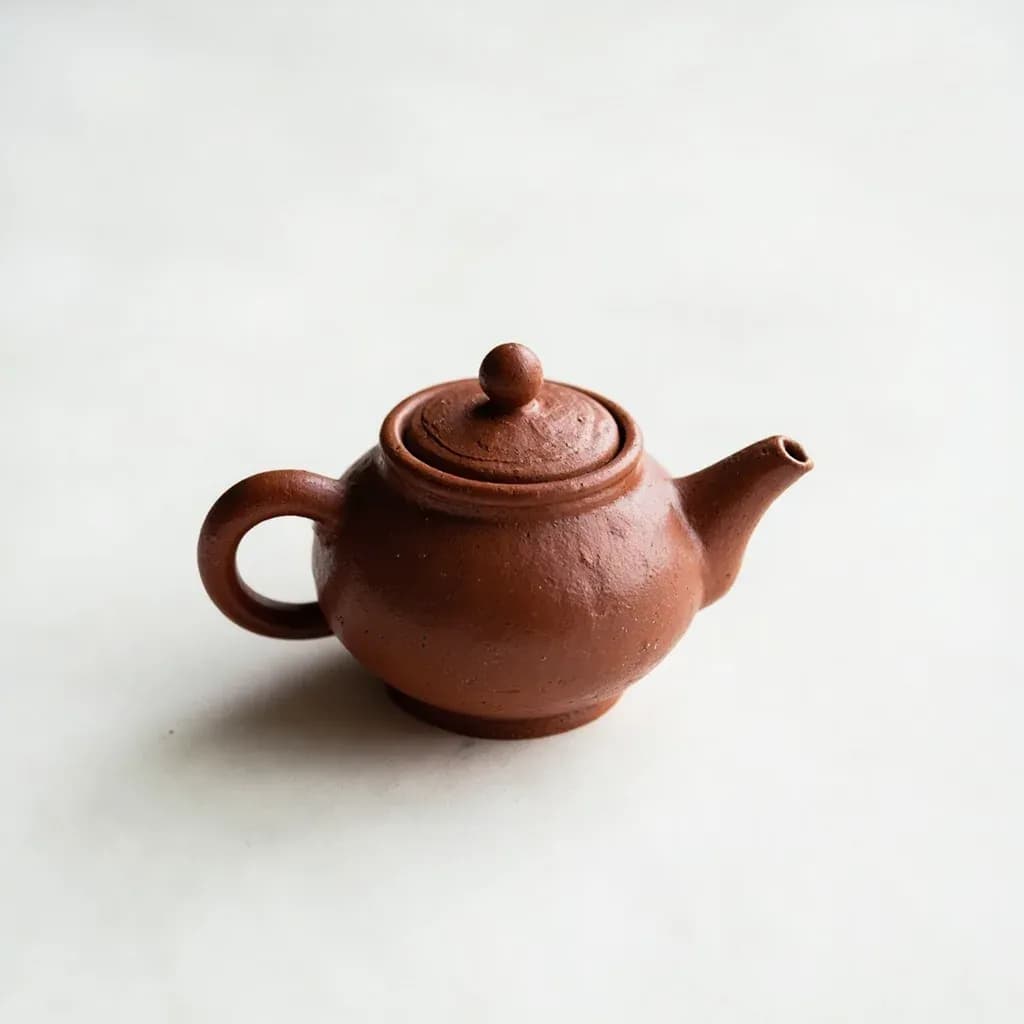
Yixing Clay Teapot
Unglazed purple-clay teapot prized for brewing oolong and pu-erh tea.
A Yixing teapot is a small unglazed teapot made from the mineral-rich zisha (purple clay) of Yixing, China. Its porous walls absorb a little tea oil with each use, gradually seasoning the pot and enriching the brew, so each teapot is dedicated to a single type of tea. It is a cornerstone of gongfu-style brewing of oolong, pu-erh and other dark teas.
A Yixing teapot is a small, unglazed vessel made from zisha — literally "purple sand" — clay mined near the town of Dingshan in Jiangsu Province, China. The craft dates to the Song Dynasty (960–1279) and flowered in the Ming, when potters discovered that this particular iron-rich clay, fired at lower temperatures than porcelain, produces a thin-walled, microporous body that holds heat beautifully and absorbs the oils of tea brewed inside it. Over years of use the pot takes on a deepening patina — the celebrated "tea shine" — that subtly enriches every subsequent brew, the vessel becoming a participant in the tea rather than just a container.
In practice, the Yixing pot is the heart of gongfu cha, the southern Chinese method of brewing tea with a high leaf-to-water ratio and many short infusions. Its clay walls stay warm without scorching the leaf, and the micropores release trace amounts of previously absorbed tea oils back into the pot, rounding the flavor of the current brew. For this reason, the strictest rule of the tradition is one pot, one tea: a zini pot dedicated to a Wuyi rock oolong will, after a decade of daily use, brew that oolong better than any porcelain ever could — and it should never be asked to brew anything else.
Capacities are deliberately small, typically 60 to 250 ml, to suit gongfu proportions. Potters shape the clay into a handful of named silhouettes — Xishi, Shipiao, Duoqiu, Jinglan, Qinquan among others — each with its own pour characteristics and grip. Buyers choose first by clay body (zini, hongni, duanni, or the rarer luni) and only then by shape, because the clay does far more for the tea than the silhouette does.
Alternatives
Types & varieties
Most common zisha; fires to dark purplish-brown; a versatile all-rounder for medium-roast oolongs and sheng (raw) pu-erh.
High iron content; fires to warm red-orange; traditional choice for dancong and Taiwanese gaoshan oolongs.
A natural blend or leaner ore; pale buff color; porous, best reserved for light, fragrant teas; stains easily with dark teas.
Rare; fires to pale yellow-beige; treated as a sub-category of duanni; reserved for delicate, floral oolongs.
Pots showing unpredictable surface color from ash deposits during firing; valued for visual variation.
Rounded, full-bellied teapot named for the legendary beauty; the classic beginner silhouette.
Triangular silhouette, raised spout, inverted handle; prized for grip and a clean, fast pour.
Spherical body with a large round lid knob; the iconic Mengchen school form.
Well-rail form: cylindrical shoulder with rounded base; stable, traditional, easy to pour.
Modeled on an ancient weight: flat top, deep body, long handle; favored for darker oolongs and shu (ripe) pu-erh.
Choosing a clay body
The four traditional Yixing clay bodies each suit a different family of tea. Match the clay to the tea's roast level and flavor weight, and the pot will reward you for years; mismatch it and you will fight the clay every session.
- Zini: the versatile all-rounder. Best for medium-roast oolongs (Tieguanyin, Wuyi rock teas, dancong) and sheng pu-erh.
- Hongni: higher in iron and slightly denser. Traditional choice for high-mountain Taiwanese oolongs and lighter dancong.
- Duanni: the most porous and palest. Reserve for very light, floral teas; it stains permanently with dark teas and is hard to reverse.
- Luni: rare and delicate. Best for green oolongs or green tea; handle gently and never cross-use with roasted teas.
Craftsmanship grades and what to expect
Yixing pots are sold across three widely recognized production tiers, and the difference in price reflects real differences in clay quality, wall evenness, and lid fit. Knowing the tier sets realistic expectations for both price and brewing performance.
- Quanshou gongyi (fully handmade): built by a single artisan using the traditional slab-and-pin method. Wall thickness and clay grain are consistent; lid tolerance around 0.5 mm. From several hundred to tens of thousands of USD depending on the maker.
- Ban shougong (half-handmade): body shaped on a mold, then hand-finished by an artisan. Good pour and fit at $50–300; the sweet spot for most daily users.
- Laji (machine-pressed / "pulled clay"): slip-cast or pressed in bulk. Cheap and inconsistent; lid fit and porosity are unreliable. Best avoided for serious brewing.
- Buying tip: insist the seller disclose the clay mine, firing method, and maker. Forged artisan seals are common in the secondary market; if the deal looks too good for a named pot, it almost certainly is.
Common uses
Tips & pitfalls
- Dedicate one pot to one tea type; switching teas muddles the clay's seasoning and ruins the flavor.
- Never use soap, detergent, or scented dish soap — the porous wall will absorb it and leach into tea for months.
- Rinse only with hot water, then air-dry with the lid off between sessions; wipe the exterior and leave the pot in a ventilated spot.
- Season a new pot with the tea you intend to use it for: brew and discard 2–3 full rounds before drinking the first infusion.
- Avoid scented or heavily flavored teas (jasmine, osmanthus, Earl Grey, most herbal infusions) — they permanently perfume the clay.
- Don't boil the pot to "clean" it; thermal shock can crack the body. A thorough hot-water rinse is enough.
- Hold the lid with your thumb during the pour — well-made Yixing lids stay put, but a lost lid is irreplaceable.
- After years of use the inside develops a brownish tea film (tea shine); this is desired patina, not grime. Don't scrub it out.
Good to know
- Origin
- Yixing (Dingshan), Jiangsu Province, China
- Material
- Unglazed zisha ("purple sand") clay, mined locally
- Earliest documented use
- Song Dynasty (960–1279); craft flourished from the 1500s onward under the Ming
- Typical capacity
- 60–250 ml for gongfu brewing; larger pots up to 500 ml exist but are less traditional
- Wall thickness
- Traditionally 3–5 mm; thinner walls respond faster to water temperature
- Porosity
- Microporous (not macroporous); absorbs tea oils and aroma compounds over years of use
- Heat retention
- Good; clay holds heat and helps draw out deeper notes of oolong and sheng/shu pu-erh
- Seasoning time
- First-use rinse plus 2–3 brews; full patina develops over months to years
- Body finish
- Unglazed; surface is burnished, sometimes stamped, carved, or incised
- Lid fit
- Should rotate smoothly with roughly 0.5 mm tolerance; the spout hole aligns with the lid hole
- Pour style
- Side-handle, raised spout; held with thumb on the lid, middle finger through the handle loop
- Price range
- Machine-pressed from ~$20; half-handmade $50–300; fully handmade by named artisans from several hundred to tens of thousands of USD
Also called
Yixing teapot · zisha teapot · purple clay teapot
Related

Steamer
Gentle moist heat that keeps vegetables, fish, and dumplings tender

Frying Pan
Shallow sloped pan for frying, sautéing, and quick sears

Saucepan
Tall, straight-sided pot for sauces, grains, and small batches

Sauté Pan
Wide straight-sided pan with room to brown and braise

Dutch Oven
Heavy lidded pot that turns tough cuts tender over hours

Stock Pot
Tall, roomy pot for stocks, pasta, and big-batch cooking

Wok
High-sided bowl pan built for blistering-hot stir-fries

Griddle
Flat, broad surface for pancakes, smash burgers, and breakfast