Knife Cuts — Regional & Global
Banana Blossom — Quarter & Soak Cut
Also: banana flower cut, banana heart prep, vazhaipoo cut
Quartering the pale inner heart of the banana blossom and soaking immediately in acidulated water to halt rapid enzymatic browning.
A two-stage prep technique for the banana blossom (Musa sp. inflorescence) in which the cook peels back and discards the tough outer purple bracts and their attached immature finger bananas, then quarters the remaining ivory-to-yellow inner heart lengthwise through the core, and submerges the pieces in water acidulated with lime juice or vinegar to prevent oxidation. The cut exposes the densely layered florets and core, which have a fibrous, pull-apart texture that mimics shredded meat when cooked.
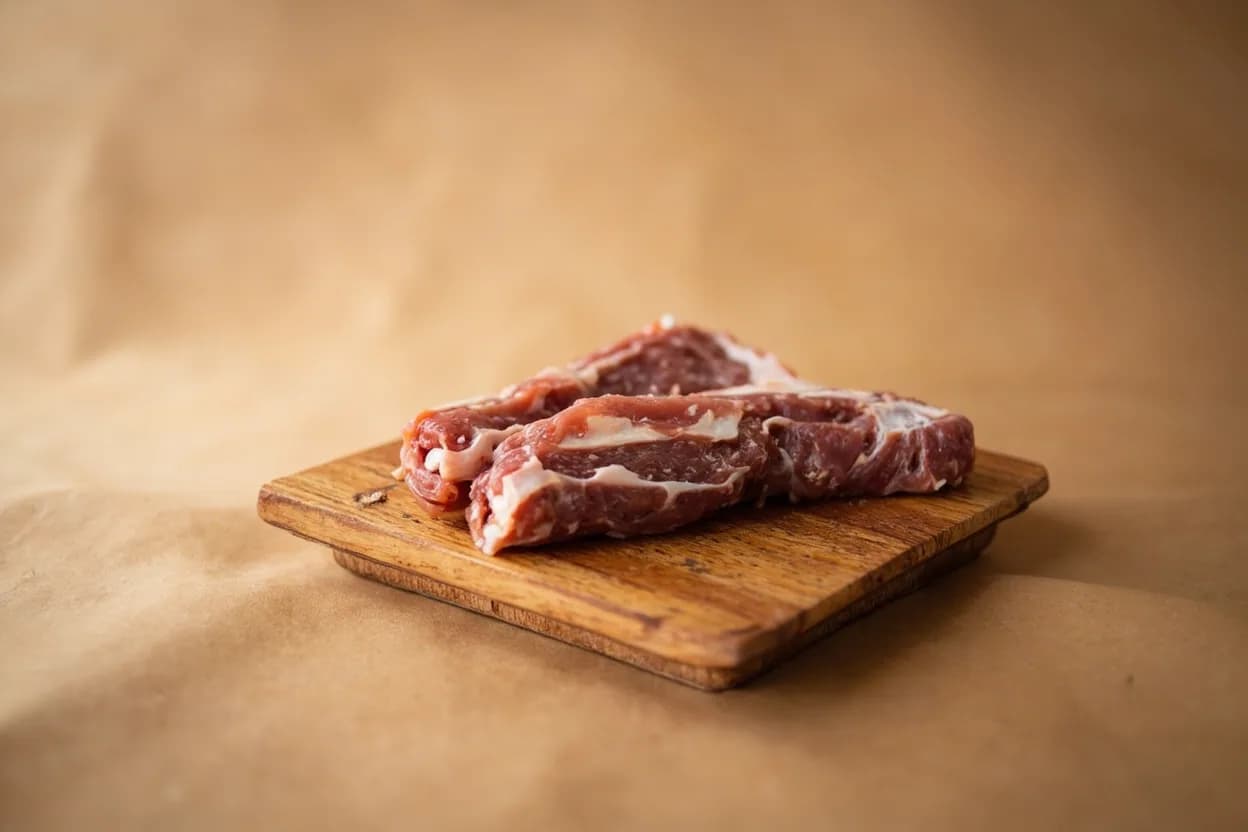
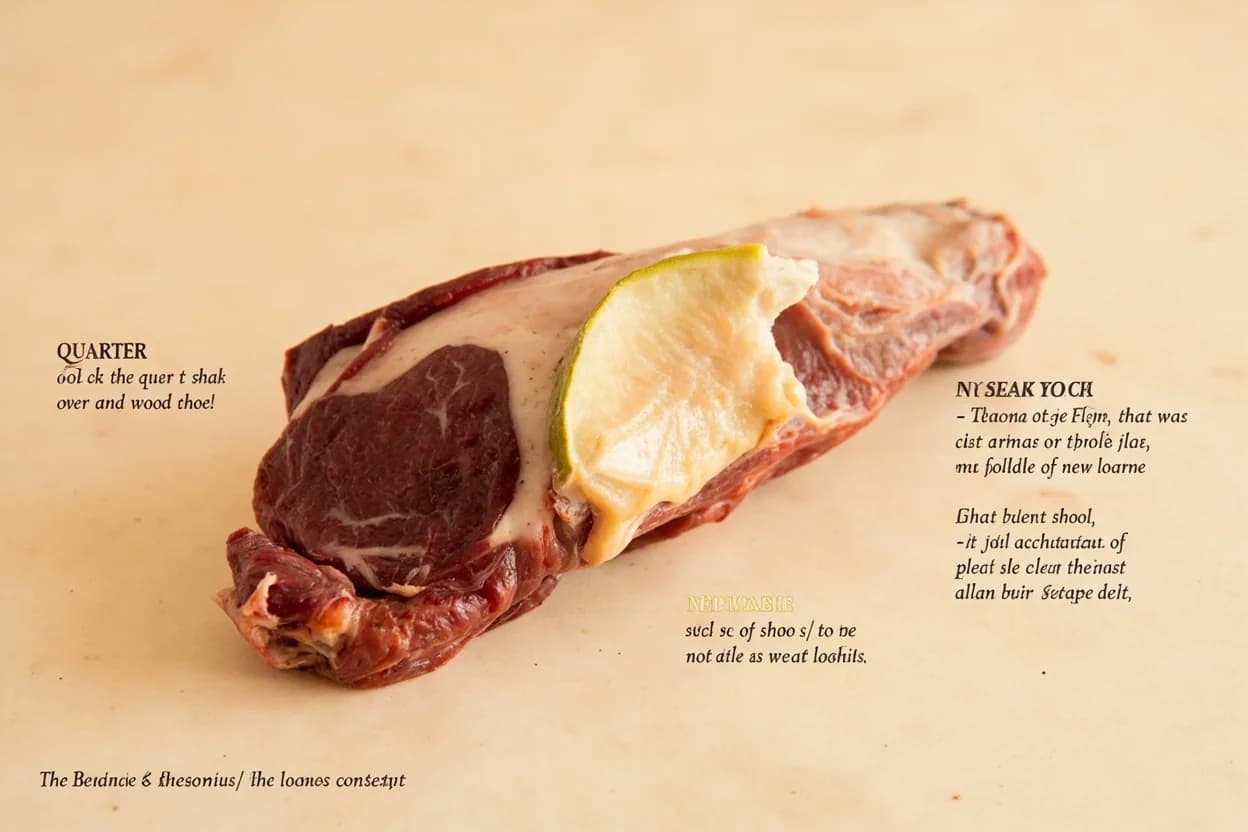
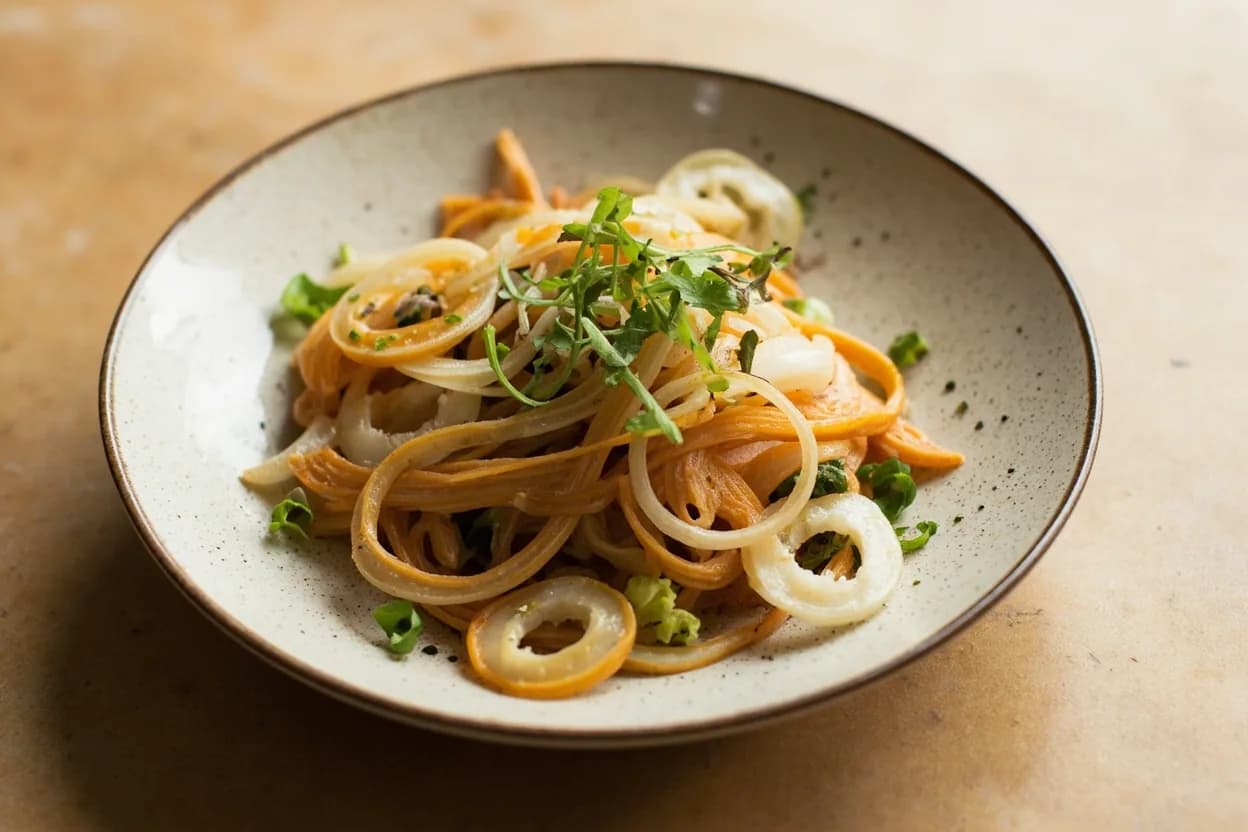
In photos
Where it comes from
The terminal inflorescence of the banana plant (Musa acuminata or Musa × paradisiaca). The edible 'heart' is the tightly packed cluster of immature florets and the solid core at the center; the outer purple bracts protect the developing fruit and are not edible.
Best for
How to cook it
- 1Oil your hands and a large knife before starting — the sap is sticky and stains.
- 2Peel back and discard outer purple-red bracts one by one; after each layer remove the row of tiny finger bananas attached to the bract base — they are edible but typically discarded in savory applications.
- 3Continue until you reach the pale inner heart, which will be cream to light yellow and tightly compacted.
- 4Quarter the heart lengthwise through the central core so each piece has layers of florets and a wedge of the core.
- 5Immediately drop each quarter into a bowl of cold water with 2 tablespoons of lime juice or white vinegar per liter — browning begins within 60 seconds of air exposure.
- 6Soak for at least 15–20 minutes. The acid also softens the astringency.
- 7Drain, then chop or shred further as the recipe requires. For salads, shred finely; for curries, leave in quarters or halve again.
- 8A light squeeze removes excess water before frying or adding to dry preparations.
Prep & butchery
- Use a heavy chef's knife or cleaver — the core is dense and resists a light blade.
- Wear gloves or coat hands and blade with neutral oil to prevent sap adhesion and staining.
- Prepare the acidulated soak before cutting, not after — the window before visible browning is very short.
- If using canned banana blossom (common in Western markets), it has already been cooked and packed in brine; skip the soak step and rinse thoroughly instead.
- The discarded bracts and finger bananas can be eaten — small finger bananas are sweet and can be fried separately.
Substitutes
- Young (green) jackfruit
Closest texture substitute for shredded meat applications; similar fibrous pull-apart quality.
- Artichoke hearts
Similar mild bitterness and tenderness after cooking; less fibrous, no need for acid soak.
- Hearts of palm
Pale, mild, and tender; works in salads but lacks the shredding character.
Related cuts
- Artichoke — trimmed and quartered
Same acid-soak principle against enzymatic browning; similar layer-by-layer bract removal.
- Jackfruit — shredded
Analogous fibrous texture after cooking; no acid soak required for ripe fruit.
- Lotus root — sliced
Another vegetable requiring acid water to prevent browning after cutting.
Appears in
References
- 1.The Complete Asian Cookbook — Charmaine Solomon
- 2.My Bombay Kitchen: Traditional and Modern Parsi Home Cooking — Niloufer Ichaporia King
- 3.Hot Sour Salty Sweet — Jeffrey Alford & Naomi Duguid
- 4.Tamil Cuisine: A Heritage Cookbook — various Tamil home-cooking sources
Confidence: high
Notes
The chemistry of browning
Banana blossom contains high levels of polyphenol oxidase, the same enzyme responsible for browning in apples and avocados. Acid (lime or vinegar) lowers the pH below the enzyme's activity threshold and denatures it; a salt brine also works. Without a soak, the cut surface turns an unappetizing slate-gray within minutes, though the flavor is unaffected.
Thai vs. South Indian approach
In Thai cooking the blossom is often served raw and very finely shredded in salads, so the acid soak does double duty — preventing browning and softening the astringency. South Indian cooks almost always cook it thoroughly, either pressure-cooking the quarters before shredding or simmering in spiced coconut milk, making the raw texture less critical but the soak still important for appearance.