Pork — Primal & Subprimal
Baby Back Ribs
Also: loin back ribs, back ribs, Canadian back ribs, pork back ribs
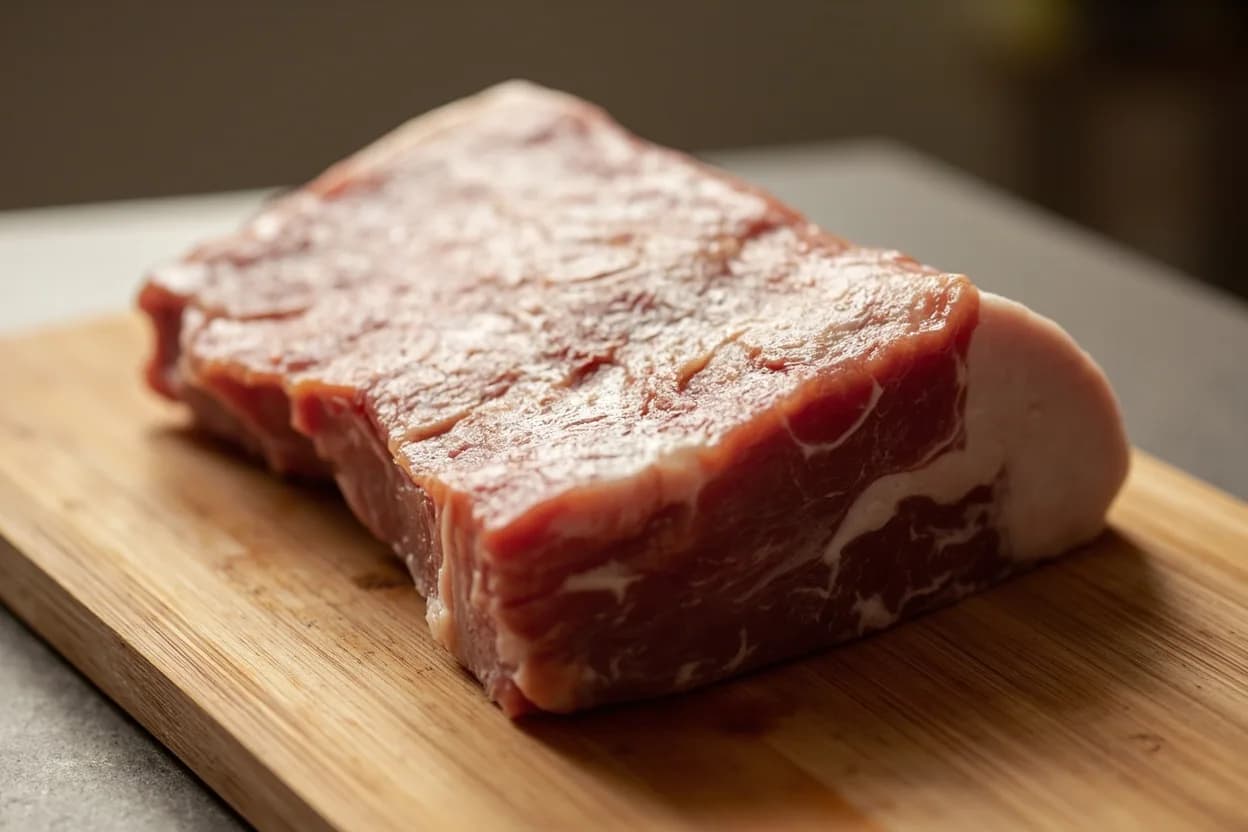
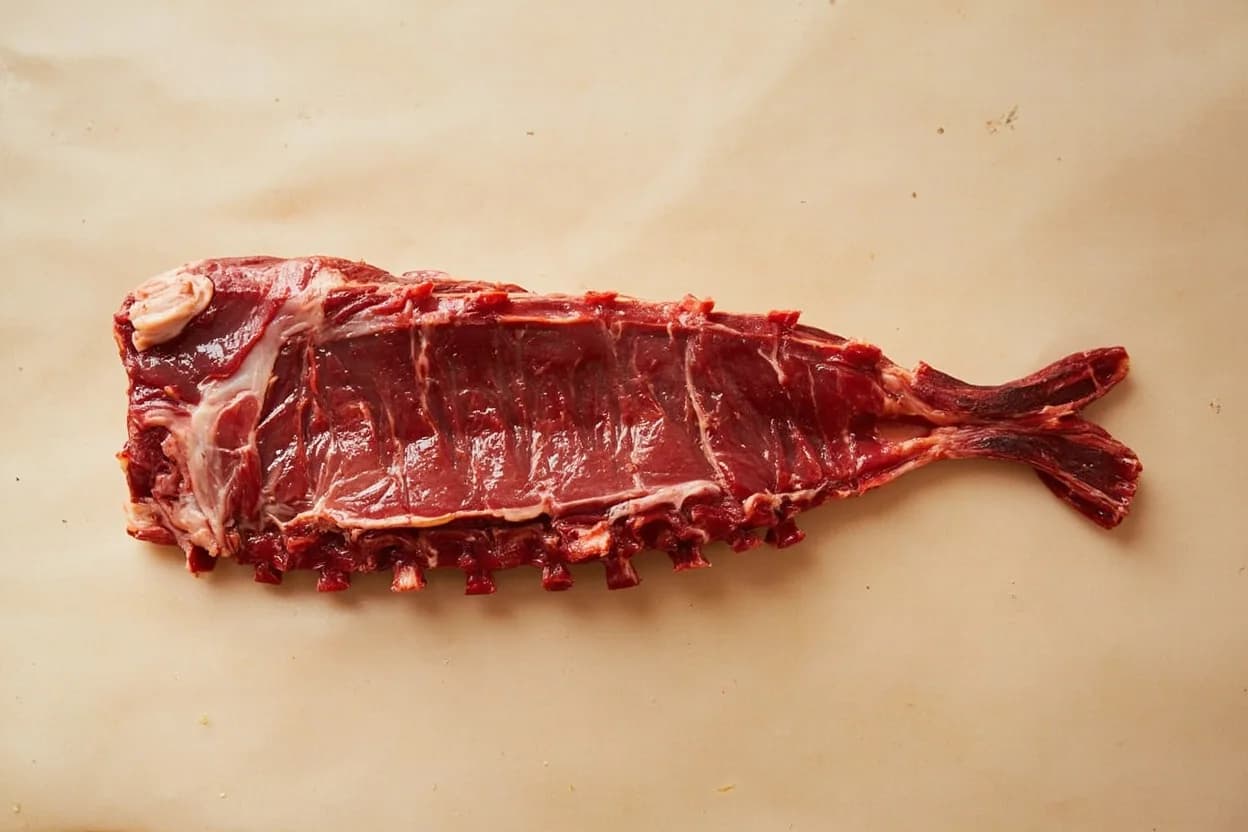
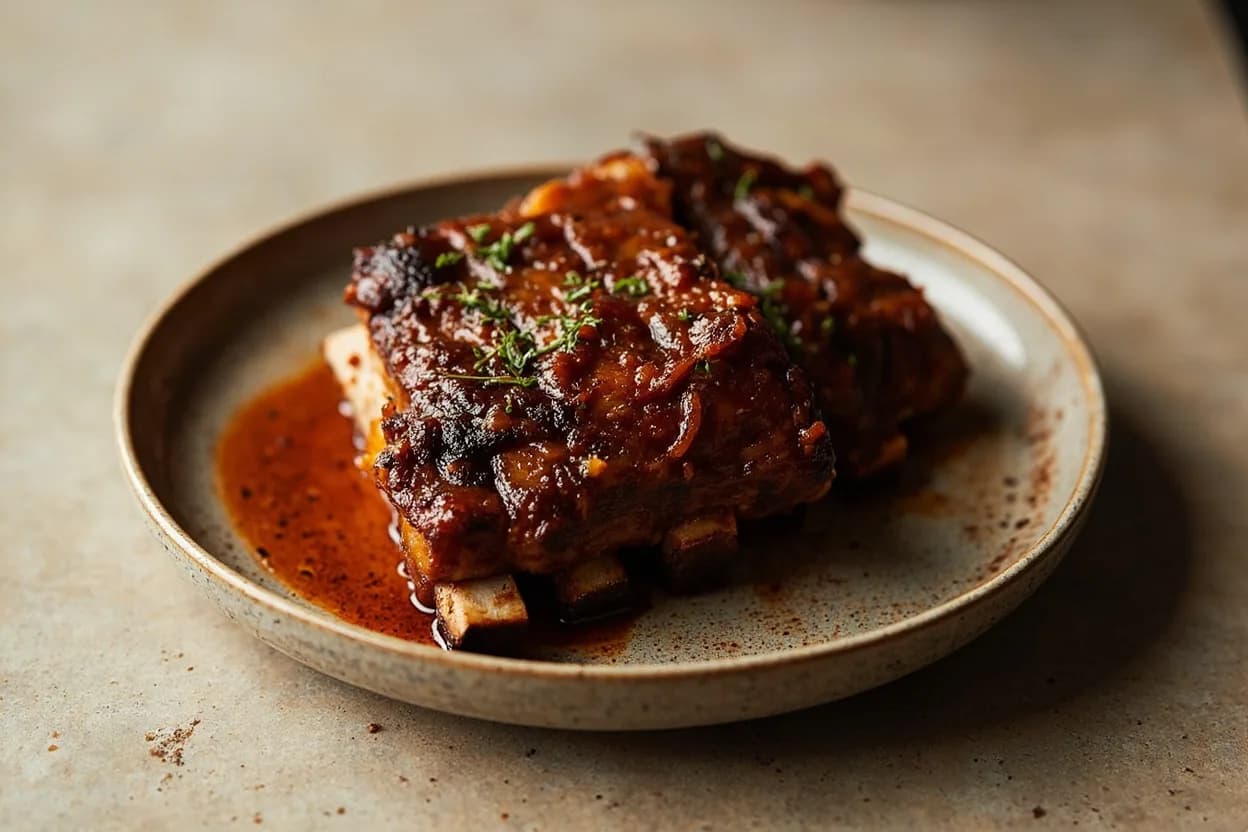
Baby back ribs are the curved, compact rib bones attached to the loin — leaner and more tender than spare ribs, with a distinctive arc that sets them apart at the butcher counter.
Baby back ribs are the 13 rib bones attached directly to the pork loin (the top of the rib cage, near the spine). They are not 'baby' in the sense of young pig; the name refers to their shorter length relative to spare ribs. Each bone curves from the loin attachment and tapers toward the smaller end of the rack. The rack contains generous meat on the bone-side surface (between and beneath the bones) and a thin layer of intercostal meat between each rib.
In photos
Where it comes from
Baby back ribs are removed from the pork loin primal when that loin is deboned. The bones remain attached to a thin layer of loin meat on the top surface and the intercostal muscle between each rib. Because they are adjacent to the loin — the pig's least-worked dorsal muscle — the surrounding meat is inherently more tender and leaner than spare ribs, which are attached to the harder-working belly muscles.
Best for
How to cook it
- 1Membrane removal: bone-side up, insert a butter knife under the thin white membrane at one end of the rack, grip with a paper towel and pull straight along the length in one motion.
- 2Apply dry rub generously to both sides; let sit uncovered in the refrigerator at least 1 hour or up to overnight for better bark development.
- 3Smoke method (2-2-1): smoke at 225–250°F (107–121°C) bone-side down for 2 hours, wrap in foil with a tablespoon of honey, butter, and brown sugar for 2 hours, unwrap and glaze with sauce for 1 hour. Total: 5 hours.
- 4Oven method: season and wrap in foil. Roast at 300°F (150°C) for 2 hours. Unwrap, glaze with barbecue sauce, and broil 5–7 minutes until the glaze caramelizes and tacks up.
- 5Doneness check: the bend test (rack bends 45–90 degrees with cracks in the bark) or probe test (skewer slides between ribs with no resistance). Internal temperature alone is unreliable for ribs — aim for 195–203°F (91–95°C) for best texture.
- 6Do not boil ribs before cooking — this leaches flavor and creates a waterlogged texture with no bark potential.
Prep & butchery
- Remove the membrane on the bone-side before any rub or marinade application
- Trim any thick fat pads on the meat side to 1/4 inch — excess fat on a lean rack does not render and can create a greasy surface
- For large racks over 2.5 lbs, allow an extra 30–45 minutes in the smoke or oven
- If portioning a rack, use kitchen shears or a heavy knife to cut between individual ribs cleanly — a sawing motion tears the meat
- Racks can be seasoned and refrigerated raw up to 24 hours; beyond that, the salt begins to denature the surface proteins
Substitutes
- Pork Spare Ribs (St. Louis cut)
Fattier, longer cook time, more meat; use when you want deeper flavor or are feeding more people
- Lamb Ribs
Same curved rack structure; intense flavor, fattier; shorter cook time
- Beef Back Ribs
Larger, tougher, much longer cook time; analogous attachment point on the beef chuck/rib primal
Related cuts
- Pork Spare Ribs
Belly-side ribs; longer bones, more fat, more collagen, longer required cook time
- Pork Loin — Rib End
The loin section from which baby back ribs are separated during butchery
- Beef Short Ribs
Analogous bone-with-meat rib cut from beef; much meatier cross-cut or flanken-cut
- Lamb Rack
Curved rib rack from lamb; same convex-concave shape, frenched for presentation
Appears in
References
- 1.Franklin Barbecue: A Meat-Smoking Manifesto — Aaron Franklin & Jordan Mackay
- 2.The Barbecue! Bible — Steven Raichlen
- 3.The Professional Chef, 9th ed. — The Culinary Institute of America
- 4.USDA Institutional Meat Purchase Specifications (IMPS) — Fresh Pork Series 400
Confidence: high
Notes
Why 'Baby'?
The name is not about pig age but about bone length: baby back rib bones are significantly shorter than spare rib bones, typically 3–5 inches versus 6–8 inches. Some butchers call them 'loin back ribs' (the technically more accurate name) or 'Canadian back ribs' in different markets. The marketing term 'baby back' became dominant in the US in the 1970s and 1980s, partly through restaurant chains that positioned them as a premium, more tender alternative to spare ribs.
The Debate: Baby Backs vs. Spare Ribs
Baby backs are more tender and cook faster, making them the choice for weeknight cooks and casual backyard grillers. Spare ribs have more fat, more collagen, more meat between the bones, and — in the opinion of many pitmasters — more flavor. At professional BBQ competitions, both are judged in separate categories. For home cooks, baby backs are harder to overcook badly; for serious rib enthusiasts, spare ribs (especially the St. Louis cut) are the preferred canvas.