Knife Cuts — Regional & Global
Avocado Fan Cut
Also: avocado rosette, fanned avocado, avocado florentine, avocado spread
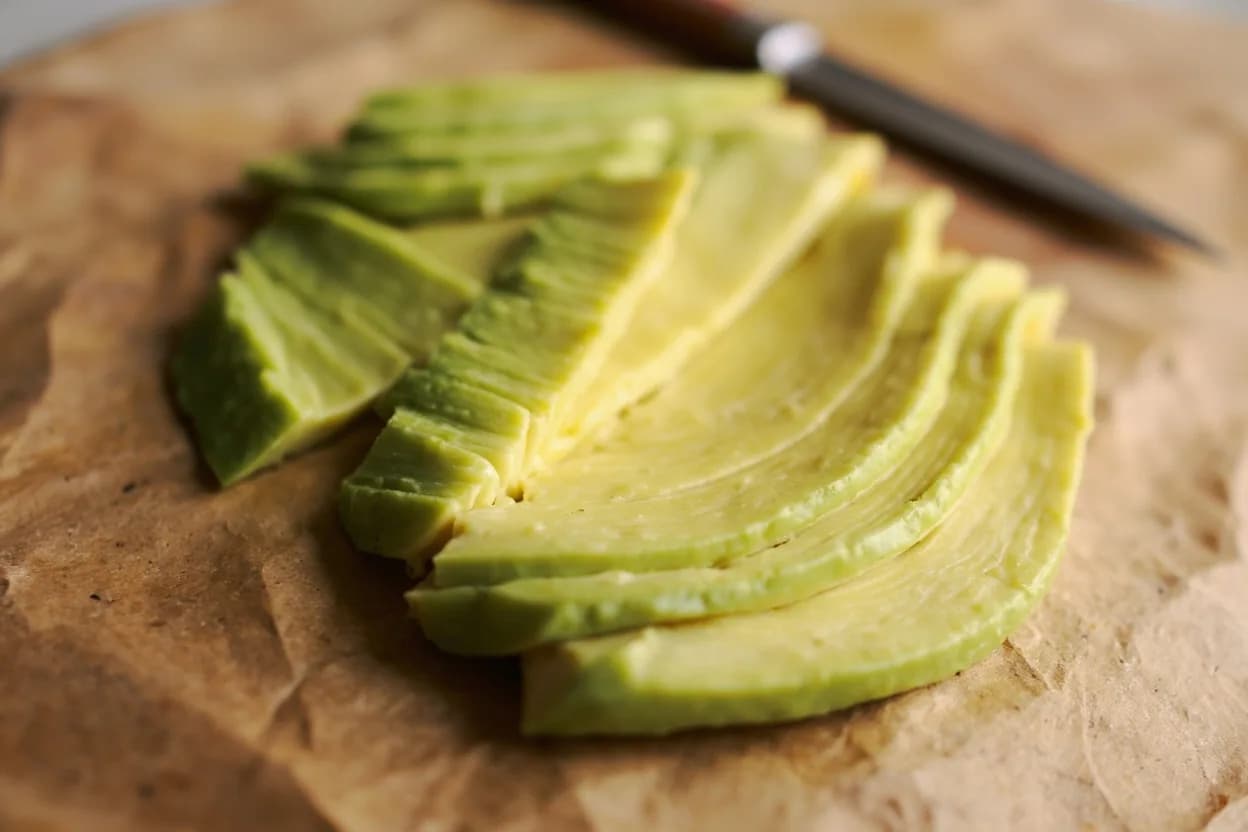
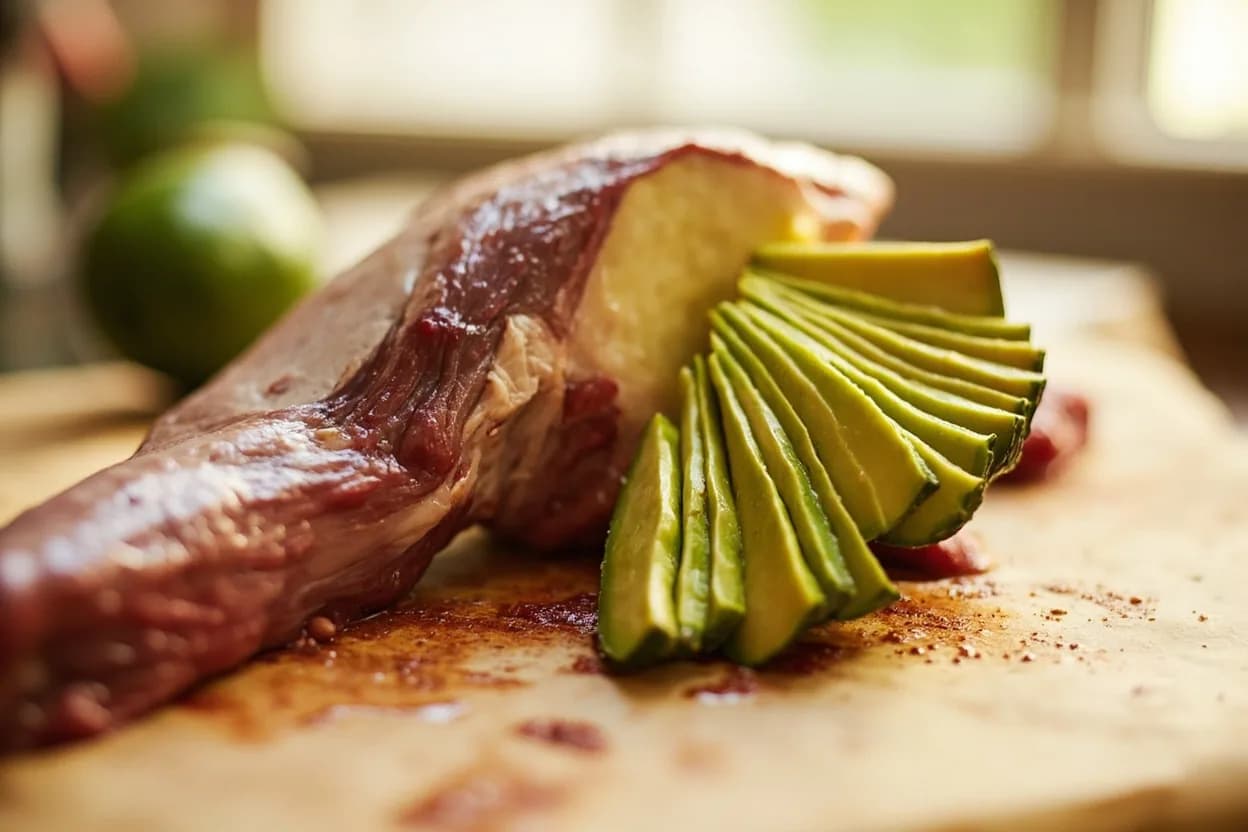
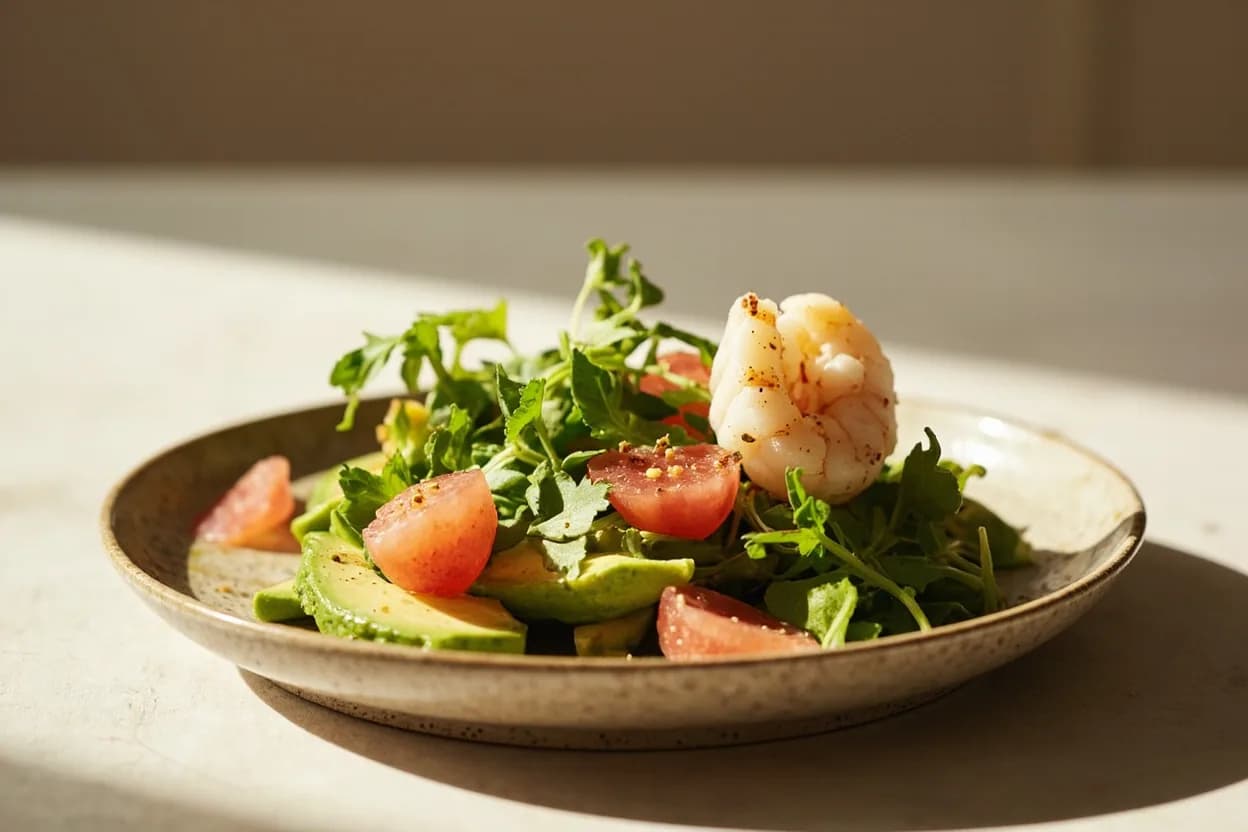
Lengthwise slices cut in a halved, pitted, and peeled avocado, then spread into a fan for elegant plating — a fundamental restaurant garnish technique.
The avocado fan cut involves halving the avocado lengthwise, removing the pit, peeling or scooping the flesh, making a series of parallel lengthwise cuts through the widest part while leaving the narrow stem end intact as a hinge, then pressing gently to splay the slices into an arched fan. The result is a structured, petal-like arrangement that displays the avocado's gradient — pale cream at the center deepening to vivid green near the skin — in a single intact piece that can be lifted and placed as a plating unit.
In photos
Where it comes from
Whole avocado (Persea americana), most successfully executed with Hass variety at peak ripeness — firm enough to hold slice integrity but yielding enough to splay without cracking. The cut is applied to the flesh after halving and peeling, using the natural teardrop geometry of the fruit. A 180–200 g avocado produces an aesthetically proportional fan with 6–10 slices.
Best for
How to cook it
- 1Select an avocado at peak ripeness: it should yield to gentle pressure at the broad end but not feel mushy. Refrigerate briefly if too soft.
- 2Halve lengthwise with a sharp chef's knife, rotating the fruit rather than moving the blade through the pit. Twist halves apart.
- 3Remove pit by tapping the heel of the knife into it firmly and twisting out — or simply scoop with a spoon.
- 4Peel the skin by sliding a large spoon between skin and flesh in a single arc, keeping the half intact. Alternatively, score and peel in strips.
- 5Place the half flat-side down on the board, narrow stem end toward you. Beginning 1–1.5 cm from the stem tip (the hinge), make parallel cuts lengthwise at 4–5 mm intervals through to the broad end.
- 6Use the flat of the blade or your palm to press gently on the top of the avocado and push forward to splay the slices into an open fan.
- 7Immediately brush or spray with lemon or lime juice to retard oxidation. Transfer with a wide offset spatula or cake lifter.
Prep & butchery
- Avocados must be cut to order — even with acid treatment, the fan surface browns within 15–20 minutes at room temperature.
- Lemon juice (freshly squeezed, applied by brush or fine spray) is most effective at pH control; bottled lemon concentrate has off-aromas that affect taste.
- A very sharp, thin-bladed knife (Japanese petty or narrow slicer) minimizes drag through the slippery flesh and produces clean, non-ragged cut faces.
- Work on a clean board with no lingering onion or garlic odor — avocado flesh readily absorbs ambient aromas.
- For volume service, prep as close to plating time as possible; never hold fanned avocado in advance beyond 10 minutes without covering tightly in plastic wrap pressed against the surface.
Substitutes
- Sliced avocado rounds (cross-cut)
Simpler but lacks the fan's visual unity; better for sandwiches and wraps
- Avocado half in skin
Often used for filling (with crab or vinaigrette); different plating role
- Cucumber fan cut
Same fanning technique applied to English cucumber; similar visual effect, no browning concern
Related cuts
- Cucumber fan cut (Japanese)
Same open-fan geometry achieved by the same hinge technique; a precursor in Japanese kaiseki plating
- Strawberry fan
Exact same hinge-and-splay applied to strawberries for patisserie and dessert plates
- Avocado rose
Variation: tighter, thinner slices rolled into a spiral rather than splayed flat; more technically demanding
Appears in
References
- 1.The Professional Chef, 9th Edition — The Culinary Institute of America
- 2.Garde Manger: The Art and Craft of the Cold Kitchen — CIA
- 3.Jacques Pépin: New Complete Techniques — Jacques Pépin
- 4.The Flavor Bible — Karen Page & Andrew Dornenburg
Confidence: high
Notes
Oxidation chemistry and prevention
Avocado browning is driven by the enzyme polyphenol oxidase (PPO), which reacts with oxygen to oxidize phenolic compounds in the flesh into brown quinones. Acids (citric, ascorbic) lower the pH below the enzyme's activity range (~pH 3.5–4 inhibits PPO substantially). Pressing plastic wrap directly against the flesh surface is more effective than a loose cover because it physically blocks oxygen contact. In commercial contexts, ascorbic acid powder dissolved in water is sprayed; at home, fresh lemon juice is the practical solution.
Ripeness test for the cut
The hinge at the stem end is under the most mechanical stress during fanning. Under-ripe flesh has insufficient plasticity and will crack or break the hinge; over-ripe flesh tears between slices rather than spreading cleanly. The ideal avocado for this cut gives to light pressure (5–10 Newtons at the apex) but immediately springs back — not a persistent indentation. If the stem-button pulls out cleanly to reveal green beneath, ripeness is optimal.