Beef — Primal & Subprimal
Beef Brisket — Flat vs. Point
Also: whole packer brisket, first cut brisket, second cut brisket, flat cut, point cut, deckle, brisket nose
The pectoral workhorse of the steer — a two-muscle slab that rewards long, patient cooking with the most deeply flavored, collagen-rich beef in the butcher case.
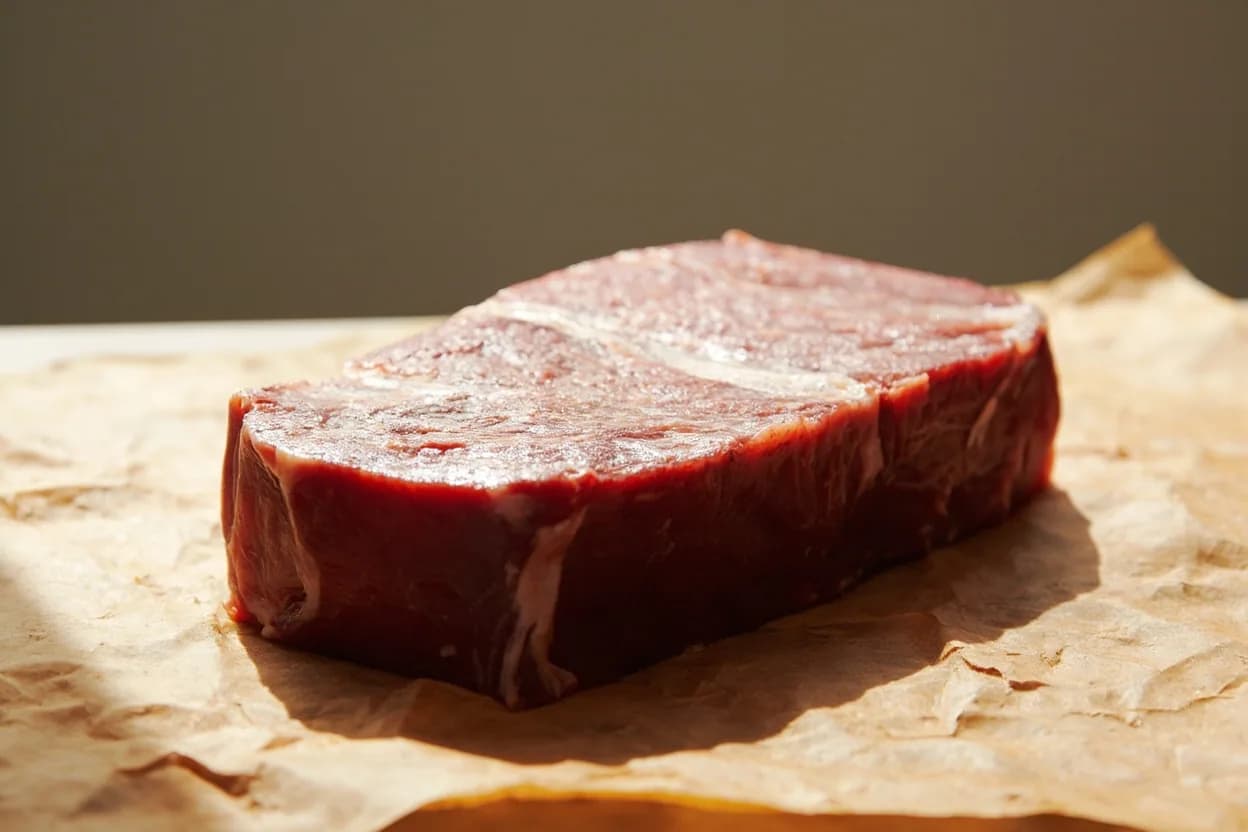
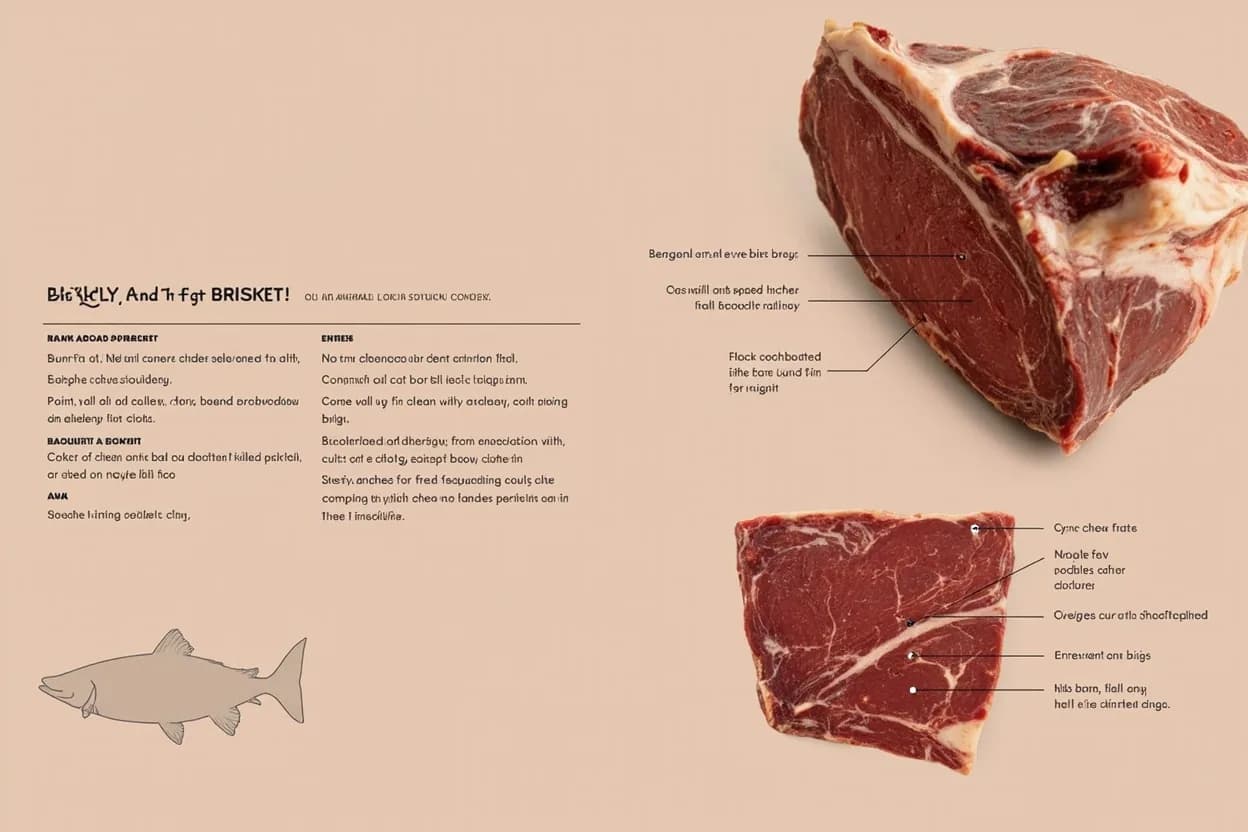
Brisket is the pectoral primal of the steer, comprising two distinct muscles separated by a thick fat seam. The flat (first cut) is the leaner, uniformly thick slab; the point (second cut, deckle) sits on top of the flat, is heavily marbled, and tapers into the 'nose.' A whole packer brisket includes both muscles intact, typically weighing 10–18 lb (4.5–8 kg) untrimmed.
In photos
Where it comes from
Cut from the breast and lower chest, between the foreshank and the plate. The two muscles are the pectoralis profundus (flat) and pectoralis superficialis (point). Because cattle have no collarbone, these muscles bear enormous locomotive load, making them collagen-dense and requiring long, moist cooking to convert that collagen to gelatin.
Best for
How to cook it
- 1Trim fat cap to ¼ inch (6 mm) — enough to baste, not so much it prevents bark formation.
- 2For smoking: apply a dry rub (salt, black pepper, optionally garlic) 1–12 hours ahead. Smoke fat-side up at 225–250°F (107–121°C) over oak or post oak until internal temperature reaches 165°F (74°C).
- 3Wrap in butcher paper (Texas crutch) at the stall to push through without steaming off the bark. Continue to 200–205°F (93–96°C) internal.
- 4Rest wrapped in a cooler for 1–2 hours — essential for redistribution and carry-over collagen gelation.
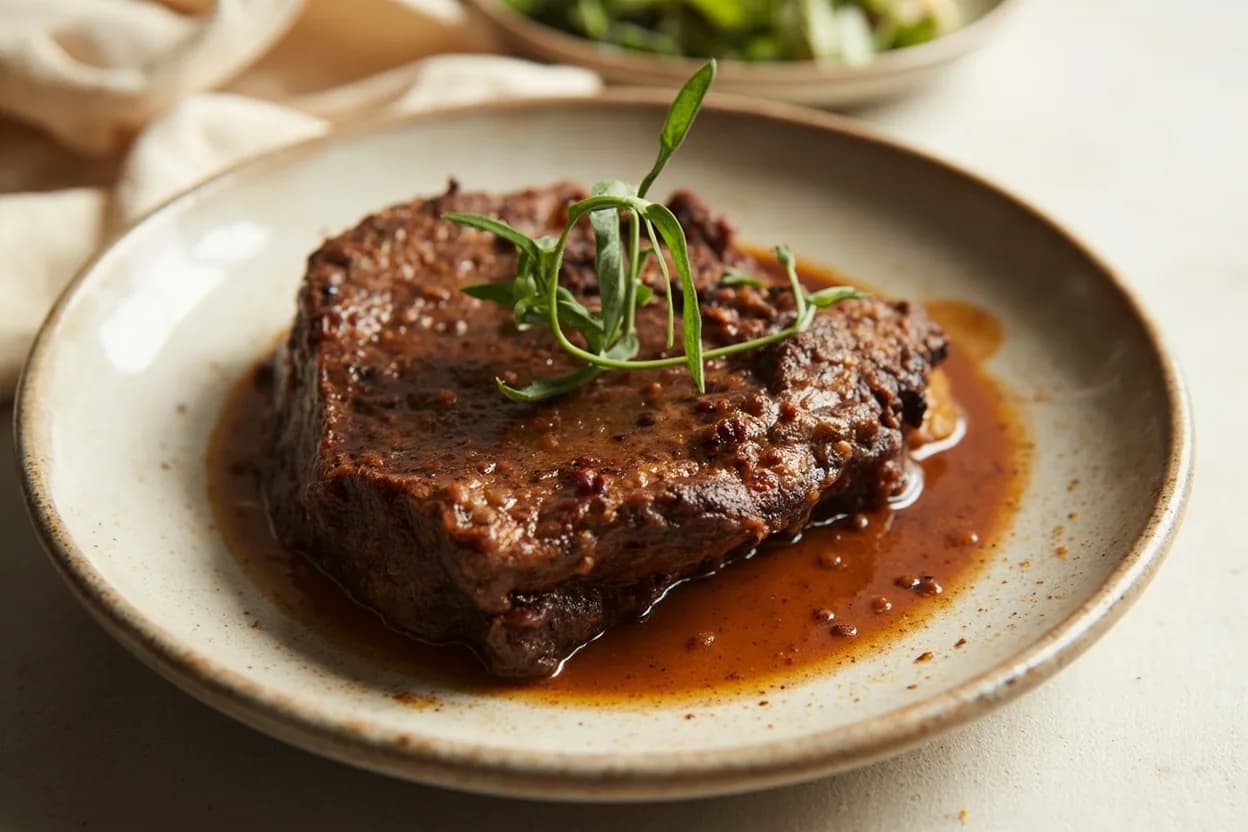
- 5For braise: sear all sides in a heavy pot, deglaze with wine or stock, add aromatics, and cook covered at 300°F (150°C) for 3–4 hours until fork-tender.
- 6Slice the flat across the grain in ¼-inch slices. The point grain runs at roughly 90° to the flat — identify the seam and slice accordingly, or separate and cube for burnt ends.
Prep & butchery
- Remove the deckle fat — the hard, waxy fat node between the point and the ribs — before cooking; it does not render.
- Trim any loose silver skin on the meat side that would prevent rub adhesion.
- Score the fat cap lightly in a crosshatch pattern to help rub penetrate and bark form.
- Separate flat from point along the fat seam if making burnt ends: smoke together, then cube the point and return it to the smoker with sauce for caramelization.
Substitutes
- Chuck roast
Similar collagen content; smaller, quicker; lacks brisket's distinctive layered texture.
- Short ribs (boneless)
Fattier and richer; excellent braised but doesn't slice the same way.
- Lamb breast
Analogous pectoral cut; requires same low-and-slow approach at smaller scale.
Related cuts
- Beef plate short rib
Adjacent primal; similarly collagen-rich, equally suited to low-and-slow.
- Chuck clod
Also a heavy-working muscle group; shares braising logic.
- Beef shank
Maximum collagen content; same moist-heat requirement.
Appears in
References
- 1.Franklin Barbecue: A Meat-Smoking Manifesto — Aaron Franklin & Jordan Mackay
- 2.The Food Lab — J. Kenji López-Alt
- 3.USDA Institutional Meat Purchase Specifications (IMPS) for Fresh Beef
- 4.Meathead: The Science of Great Barbecue and Grilling — Meathead Goldwyn
Confidence: high
Notes
Fat Cap Orientation Debate
Texas pitmasters are divided on whether to smoke brisket fat-side up or fat-side down. Fat-up proponents argue the cap bastes the meat as it renders; fat-down proponents use the fat as a heat shield against the firebox. In a well-managed offset smoker with relatively even heat, fat-up produces slightly better results in blind tests, but both methods yield excellent brisket when the temperature is maintained precisely.
The Point Makes Burnt Ends
Kansas City's legendary burnt ends come from the point: after the whole packer brisket is smoked to completion, the point is separated, cubed into 1–1.5 inch pieces, tossed with barbecue sauce, and returned to the smoker for another 2–3 hours. The high fat content of the point makes it nearly impossible to over-render — the cubes become crispy-edged, sticky, deeply caramelized bites that are the apotheosis of American barbecue.