Beef — Primal & Subprimal
Beef Cheeks
Also: beef jowl, joue de boeuf, carrillera de res, mejillas de res
The masseter muscle of the steer's jaw — extraordinarily collagen-rich, yielding meltingly silky braises after long, slow cooking.
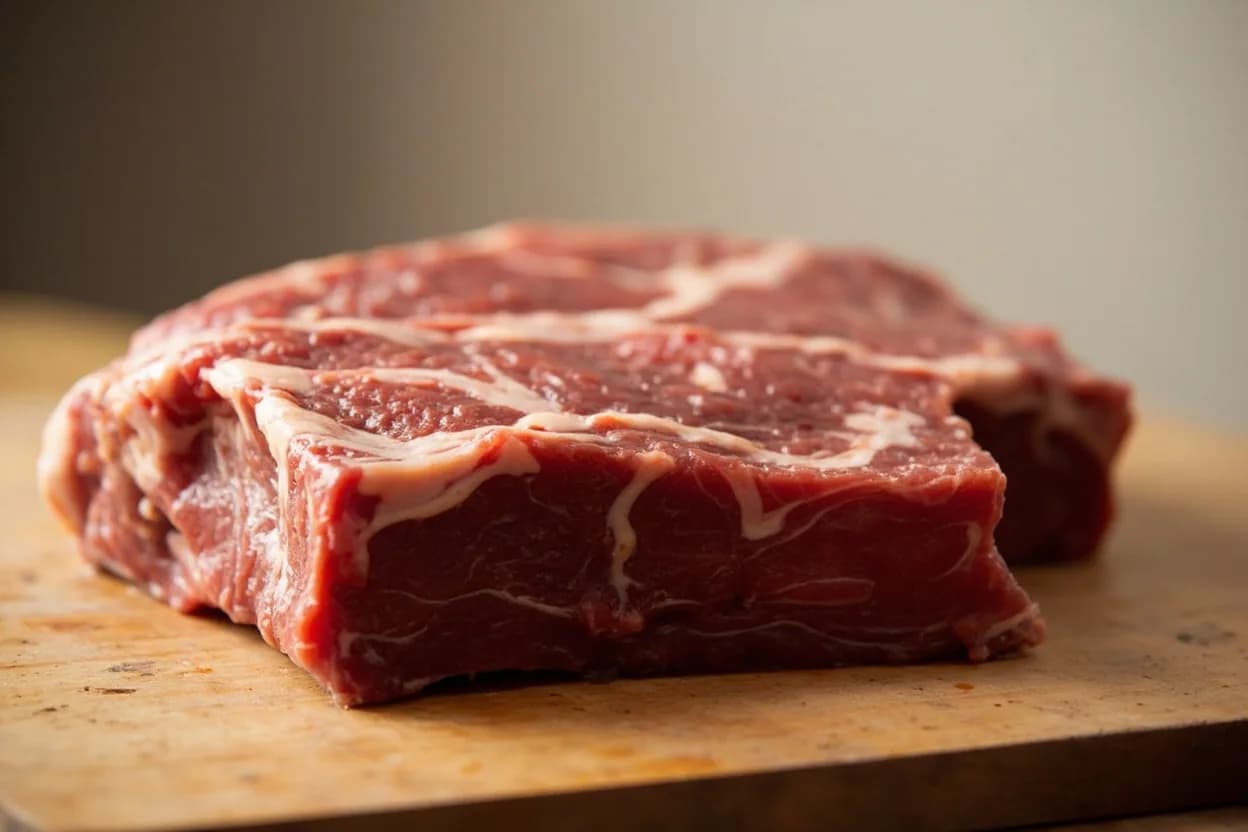
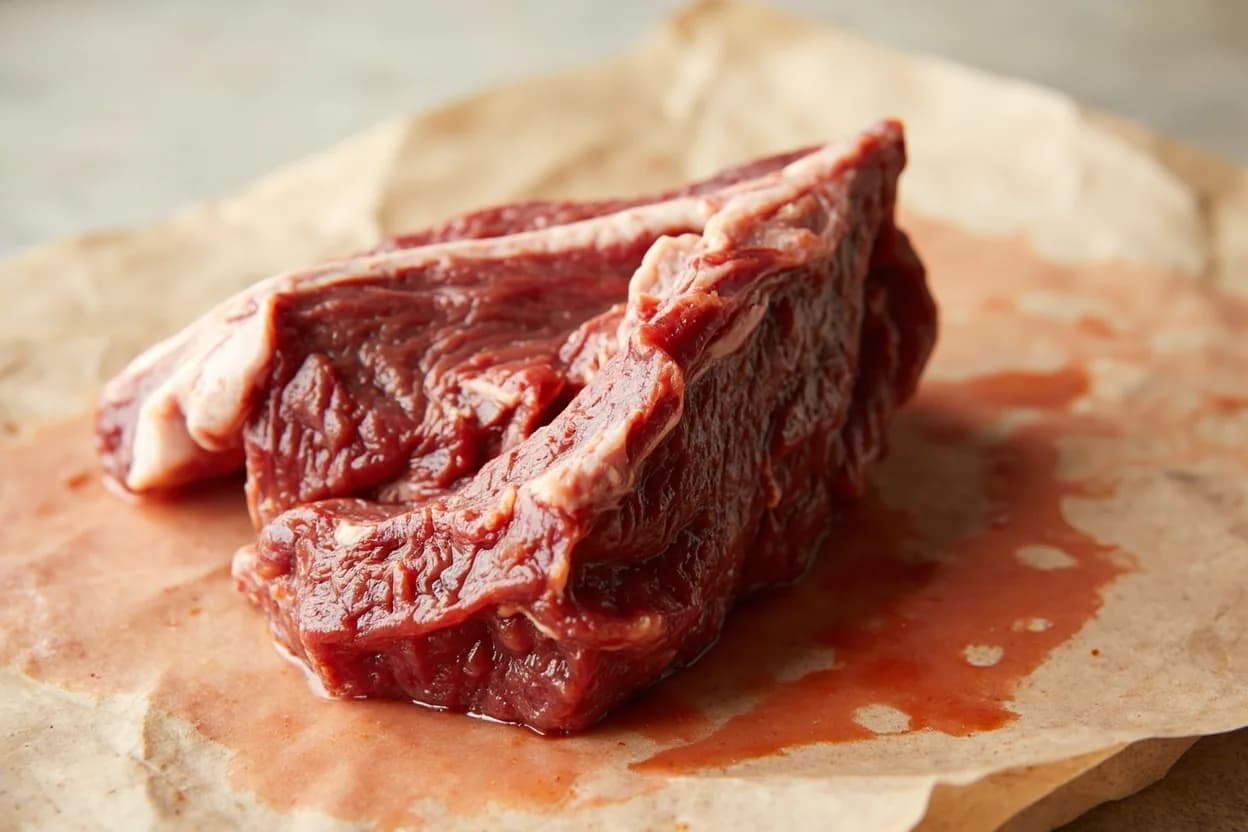
Beef cheeks are the masseter (cheek) muscles of the steer, each a compact, roughly oval mass of about 250–400 g raw. Because cattle chew almost continuously, the masseter is among the hardest-working muscles on the animal, building dense connective tissue networks. This makes raw cheeks tough and fibrous, but after prolonged moist heat the collagen converts to gelatin, producing a luscious, almost spoonable texture that distinguishes them from every other braise cut.
In photos
Where it comes from
The masseter muscle on either side of the steer's skull, between the cheekbone and the lower jaw. Each animal yields exactly two cheeks. The muscle sits beneath thick layers of fat and silverskin that must be removed before cooking.
Best for
How to cook it
- 1Remove all exterior silverskin and thick inter-muscle fat using a sharp boning knife — these do not break down cleanly and will remain stringy or greasy if left.
- 2Pat dry and season generously with salt; for best color, let rest uncovered in the refrigerator overnight (dry brine).
- 3Sear in a very hot heavy pot (cast iron or enameled Dutch oven) in small batches with a high-smoke-point fat until deeply mahogany on all surfaces. Do not crowd the pan.
- 4Build a braising base: aromatics (mirepoix, garlic, herbs), a full bottle of full-bodied red wine reduced by half, and enough beef stock to come two-thirds up the cheeks.
- 5Braise covered at 150 °C (300 °F) for 4–6 hours, or until a cake tester or thin skewer meets zero resistance when inserted into the thickest part.
- 6Remove cheeks and reduce the braising liquid to a sauce consistency; enrich with cold butter (monter au beurre) for gloss.
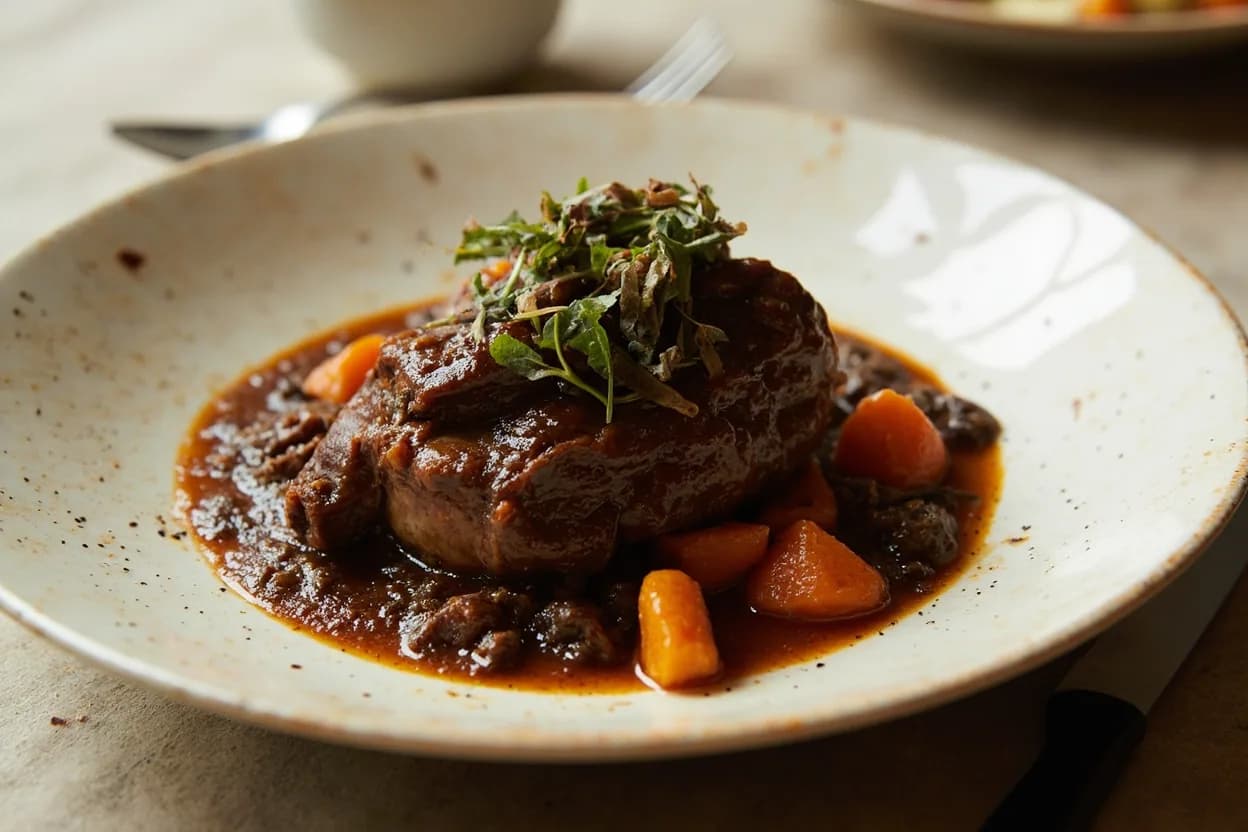
- 7Serve cheeks whole or gently pressed and chilled, then sliced — the compressed, set gelatin slices cleanly and can be pan-crisped to order.
Prep & butchery
- Buy cheeks with silverskin still on and trim yourself — pre-trimmed cheeks from some butchers may have lost the thin inter-muscle fat that bastes from within.
- A sharp, flexible boning knife is essential; work the blade parallel to the silverskin membrane, pulling the membrane taut with the off hand.
- Portion for even cooking if cheeks vary in size: split very large cheeks (over 400 g) in half along the natural seam to expose more surface for searing.
- Excess silverskin left on the exterior will shrink dramatically during braising, buckling and tightening the cheek into an uneven shape.
Substitutes
- Beef Short Rib (Bone-In)
Similar collagen yield but slower to break down; richer fat; slightly more forgiving of imprecise timing
- Beef Chuck (Shoulder)
Lower collagen, will not achieve the same silky texture; works for a more traditional pot roast style
- Pork Cheeks
Smaller (80–120 g each) and fattier; shorter braise time (2–3 hours); excellent substitute in most recipes
Related cuts
- Beef Short Ribs
The other premier braise cut; similarly collagen-rich but fattier and bone-in
- Oxtail
Another high-collagen slow-braise cut from the extremities; more gelatin from the tail cartilage
- Beef Tongue
Another head muscle; also requires long moist-heat cooking and careful peeling
Appears in
References
- 1.The Complete Meat Cookbook — Bruce Aidells & Denis Kelly (Houghton Mifflin, 1998)
- 2.Nose to Tail Eating — Fergus Henderson (Bloomsbury, 1999)
- 3.On Food and Cooking: The Science and Lore of the Kitchen — Harold McGee (Scribner, 2004)
- 4.Modernist Cuisine: The Art and Science of Cooking — Nathan Myhrvold et al. (The Cooking Lab, 2011)
Confidence: high
Notes
Why Collagen Matters
Raw collagen (Type I and III) is insoluble and tough. Above 70 °C in the presence of moisture, the triple-helix collagen molecules gradually hydrolyze into gelatin — a soluble protein that gels upon cooling and coats the palate with a silky, full-bodied mouthfeel. Beef cheeks contain roughly twice the collagen of chuck roast per unit weight, which is why even experienced cooks are surprised by the texture difference when they first braise them properly.
Pressing and Slicing
A restaurant technique worth replicating at home: after braising and cooling, place cheeks in a loaf pan or terrine mold with strained braising liquid poured over. Weight with another pan and refrigerate overnight. The set gelatin holds the cheeks in a neat brick. To serve, slice with a sharp knife and sear cut-face-down in a hot dry pan for a caramelized crust while the interior rewarms — far more elegant presentation than a rough-torn braise.