Beef — Primal & Subprimal
Beef Chuck — Subprimal Breakdown
Also: chuck roll, chuck subprimals, chuck muscle map, chuck seam butchery
The chuck primal — roughly the shoulder and neck — breaks into six distinct subprimals and individual muscles, each with different textures and ideal cooking methods.
The beef chuck primal covers the first five ribs (ribs 1–5), the neck vertebrae, and the blade (scapula) region. It accounts for roughly 26–28% of carcass weight and is the single largest primal. Because the chuck encompasses muscles used constantly for locomotion and supporting the animal's head, most muscles are heavily exercised, collagen-rich, and tough — but that collagen converts to rich gelatin under sustained low heat. Seam butchery (separating individual muscles by following natural connective-tissue seams) allows the chuck to yield premium individual-muscle steaks and roasts that would otherwise be obscured in a bone-in chuck roast.
In photos
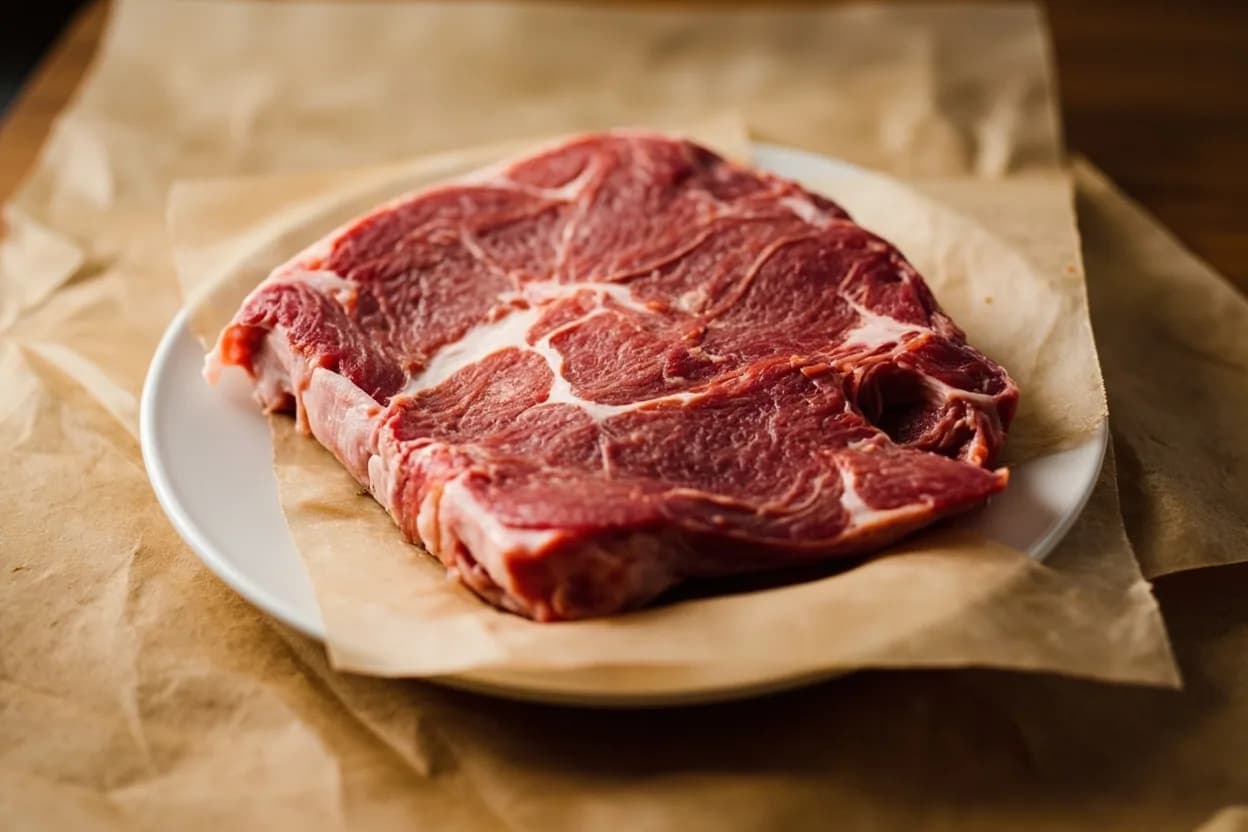
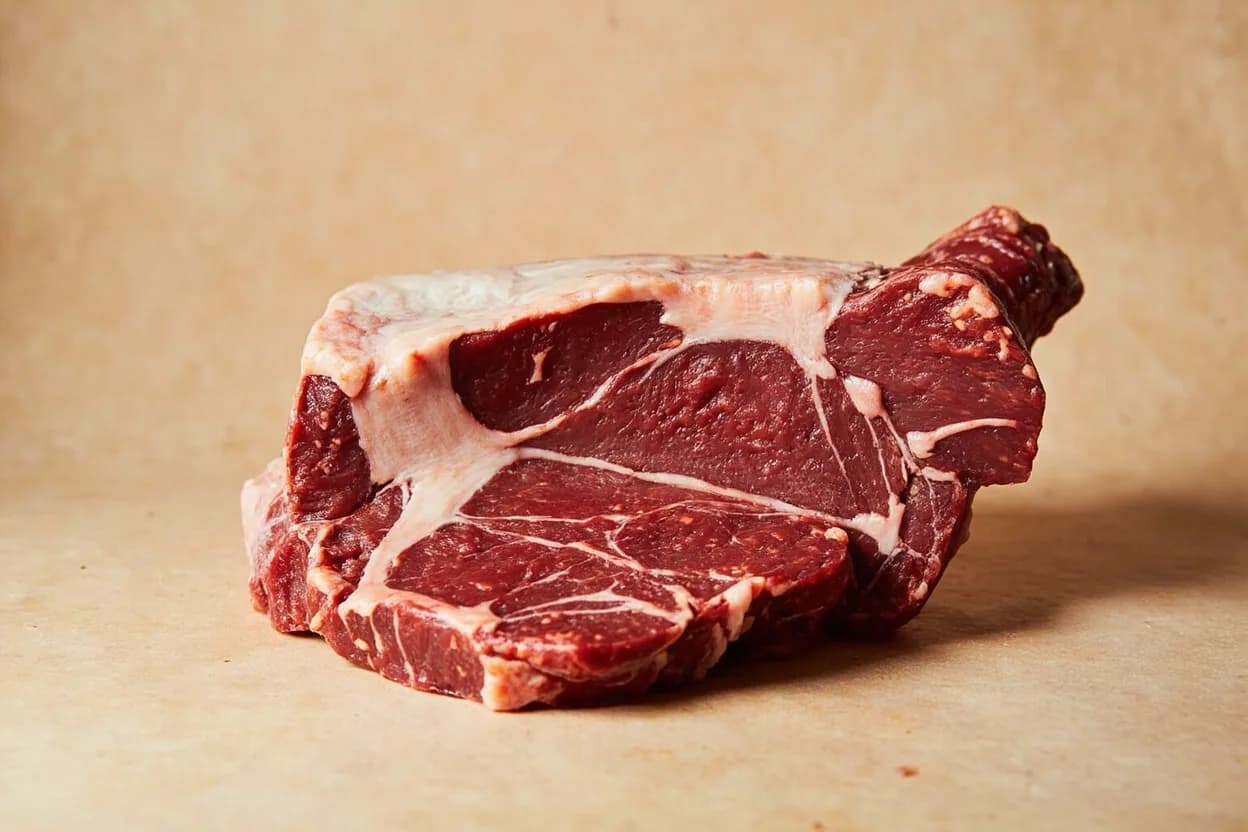
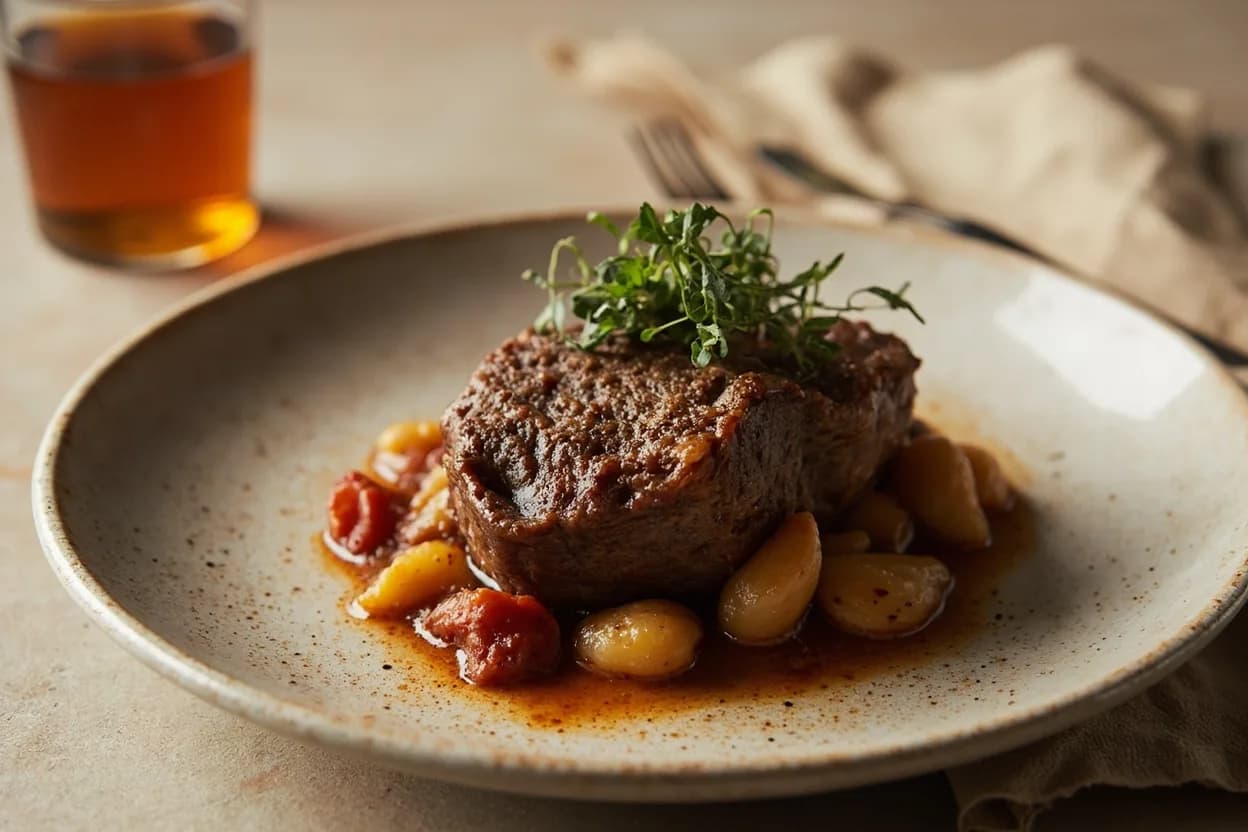
Where it comes from
Anterior section of the forequarter: neck (cervical vertebrae), shoulder blade (scapula), and the first five ribs with associated shoulder and arm muscles. Bordered posteriorly by the rib primal (cut between ribs 5 and 6), inferiorly by the brisket and foreshank.
Best for
How to cook it
- 1For whole-muscle braising: sear the exterior hard in a heavy pot, then braise at 275–300°F (135–150°C) in liquid for 3–4 hours until fork-tender and collagen has converted to gelatin.
- 2For flat iron steaks: remove the tough central ligament (the broad band of connective tissue running through the infraspinatus) by slicing horizontally through the muscle to yield two clean steaks. Season simply and grill to medium-rare (130–135°F / 54–57°C).
- 3For Denver cut: look for a natural seam around the serratus ventralis. Trim, slice against the grain, and grill or sear over high heat. Rest at least 5 minutes.
- 4For chuck short ribs (bone-in English cut): braise in red wine and aromatics at 300°F (150°C) for 3–3.5 hours; or smoke at 250°F (121°C) for 6–8 hours until probe-tender.
- 5For chuck eye steaks: treat exactly like a ribeye — hot cast-iron sear, baste with butter and aromatics, rest 5 minutes.
- 6Smoking a whole bone-in chuck (the 'poor man's brisket'): maintain 225–250°F (107–121°C), spritz every hour after the first 3 hours, pull at an internal temp of 200–205°F (93–96°C) for full collagen breakdown.
Prep & butchery
- Remove the neck and blade bones with a boning knife before seam separating the individual muscles.
- The flat iron lies beneath the scapular spine: once the blade bone is extracted, a thick seam of connective tissue runs lengthwise through the infraspinatus — split along it to yield two flat iron steaks.
- The chuck roll sits between the blade bone and the 1st–5th rib bones: once deboned, peel away the seam fat and silverskin to reveal the chuck eye at the center.
- Denver cut (serratus ventralis) separates easily at natural seam fat once the chuck roll is removed; requires careful silverskin removal before cutting into steaks.
- Chuck short ribs (ribs 1–5, below the eye muscle) can be cut English style (parallel to the bone, one bone per piece) or flanken style (across the ribs).
Substitutes
- Beef Brisket
Equally collagen-rich; substitutes well in braises and smoked preparations, though brisket is leaner in the flat and fattier in the point.
- Pork Shoulder (Boston Butt)
Similar collagen and fat ratio; useful substitute in braise-and-shred applications where beef is unavailable.
- Lamb Shoulder
Comparable muscle architecture; braises in the same manner as chuck with a slightly shorter cooking window.
Related cuts
- Flat Iron Steak
Infraspinatus muscle, second most tender cut on the entire carcass
- Denver Cut
Serratus ventralis muscle, fourth most tender cut on the carcass
- Chuck Eye Steak
Continuation of the rib-eye roll into ribs 1–5; budget rib eye
- Chuck Short Rib
Ribs 1–5 below the eye muscle; distinct from plate short ribs
- Clod Heart (Shoulder Clod)
Triceps brachii; lean, best braised or ground
Adjacent primal, shares the rib-eye muscle extension (chuck eye)
Appears in
References
- 1.The Meat Buyer's Guide — North American Meat Institute (NAMI), IMPS Item 116A (Chuck Roll)
- 2.Steak with Friends — Ray Lampe
- 3.The Fat Duck Cookbook — Heston Blumenthal (seam butchery techniques)
- 4.Modernist Cuisine: The Art and Science of Cooking — Myhrvold et al.
- 5.Butchering Beef — Adam Danforth
Confidence: high
Notes
The flat iron discovery
The flat iron steak was formally identified and named in 2002 by meat scientists at the University of Nebraska and the University of Florida as part of a USDA-funded research project to find underutilized, high-value muscles in commodity cuts. Before that, the infraspinatus was almost exclusively ground or braised whole. It is now one of the most widely used restaurant steaks in the United States, second only to the tenderloin in tenderness across the whole carcass.
Chuck vs. plate short ribs
Both are labeled 'short ribs' in retail, but they come from different primals. Chuck short ribs (IMPS 130) carry the meat from ribs 1–5 above the brisket — they are wide, meaty, and well-marbled. Plate short ribs (IMPS 123) come from ribs 6–8 in the plate primal and are the thick, elongated cuts prized in Texas BBQ. Chuck short ribs have more flavor complexity from their muscle variety; plate short ribs have a more uniform, deeply fatty character.