Beef — Primal & Subprimal
Beef Rib Section — Ribeye, Short Rib & Back Rib
Also: beef rib primal, rib eye roll, prime rib section, beef ribs
The rib primal (ribs 6–12) is home to the most lushly marbled steaks on the carcass — ribeye, prime rib — plus back ribs and the beginning of plate short ribs.
The beef rib primal spans ribs 6 through 12 (seven ribs), cut from the forequarter between the chuck (ribs 1–5) and the short loin (beginning at rib 13). It contains the longissimus dorsi (the eye muscle, continuous with the strip loin), the spinalis dorsi (the cap or deckle, widely considered the most flavorful muscle on the carcass), and accessory muscles including the complexus and multifidus. Because these muscles run along the back and do very little work, they are exceptionally tender and carry the highest average marbling of any primal. The rib primal subdivides into the ribeye roll (boneless or lip-on), the back ribs (the seven rib bones after the eye muscle is removed), and the short ribs (the lower rib section attached to the plate).
In photos

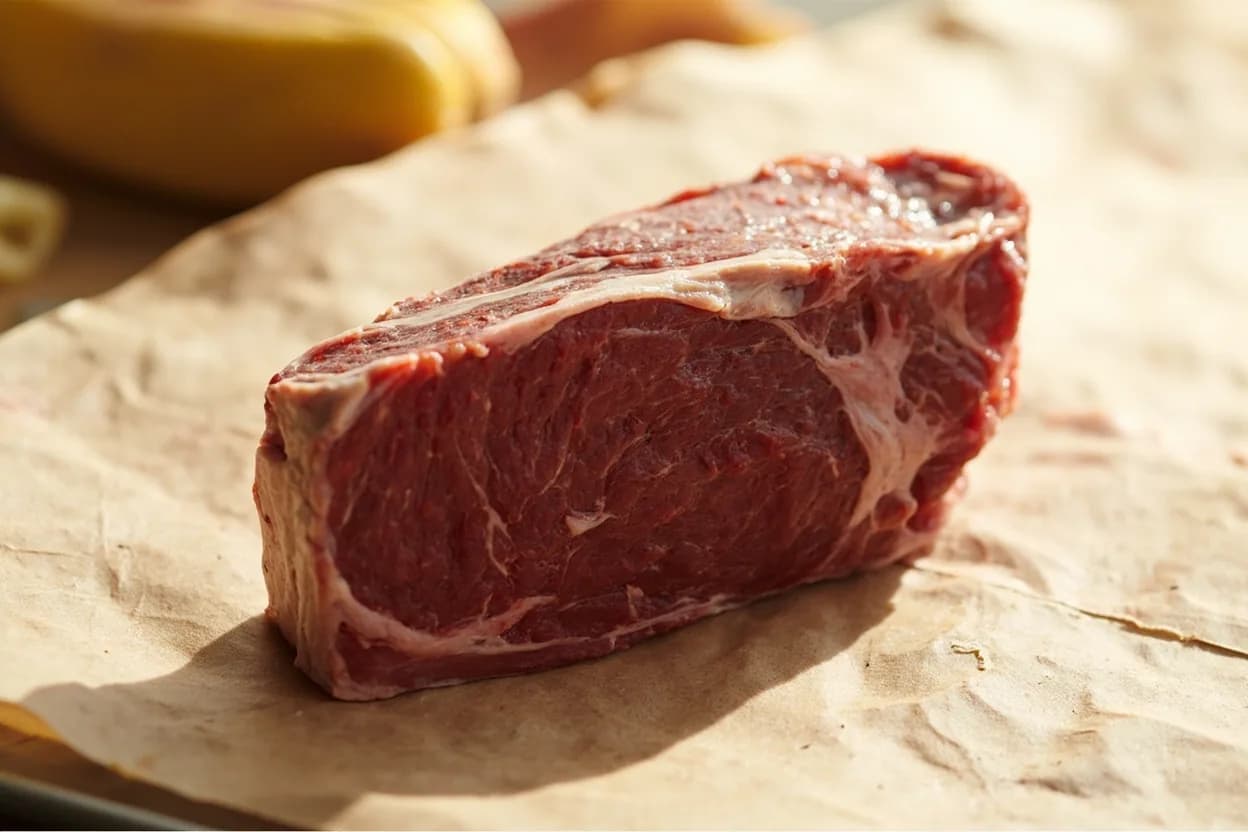
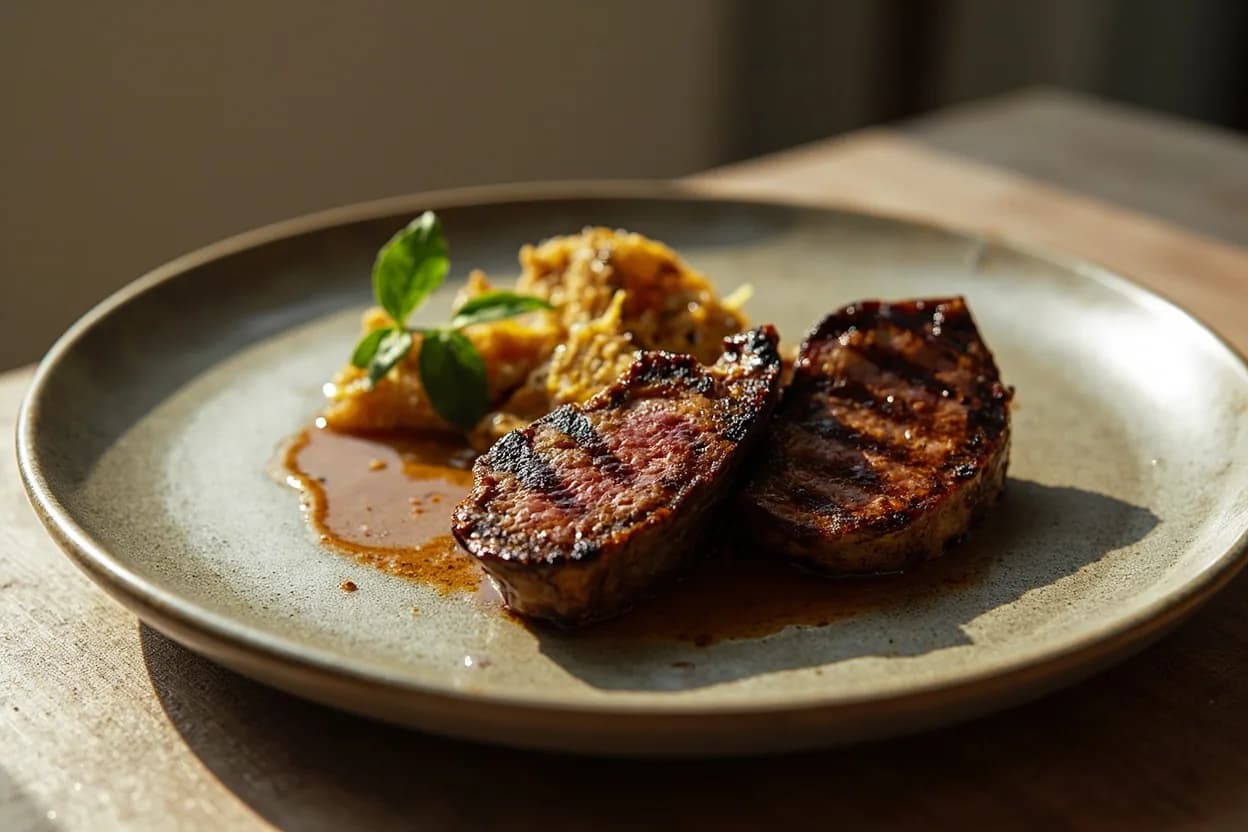
Where it comes from
Forequarter, dorsal (back) region, ribs 6–12. The longissimus dorsi (eye) runs the full length; the spinalis dorsi arches over the top of the eye, widest toward rib 6, tapering toward rib 12. The rib bones curve ventrally; after the eye muscle is harvested, the bones remain as back ribs.
Best for
How to cook it
- 1Ribeye steak: season heavily with salt 45 minutes to 24 hours before cooking. Sear in a screaming-hot cast-iron pan 2–3 minutes per side, baste with butter, garlic, and thyme, then rest 5–8 minutes. Target 130–135°F (54–57°C) for medium-rare.
- 2Prime rib (standing rib roast): dry-brine uncovered in the refrigerator 1–3 days. Roast at 250°F (121°C) until internal temp reaches 120°F (49°C), then blast at 500°F (260°C) for 10 minutes to crust. Rest 20 minutes before carving.
- 3Reverse-sear ribeye: bring to 125°F (52°C) in a 250°F (121°C) oven, then sear hard in a cast-iron pan for 90 seconds per side. No resting needed after the high-heat finish.
- 4Plate short ribs (the 'Brontosaurus rib'): smoke at 250–275°F (121–135°C) for 8–10 hours over oak. Internal temp should reach 200–205°F (93–96°C) for full collagen breakdown. The meat pulls from the bone cleanly when done.
- 5Back ribs: remove membrane, smoke or grill at 225°F (107°C) for 4–5 hours; wrap in foil with butter and brown sugar for the final hour to braise in their own fat.
- 6For the spinalis cap alone: butchers sometimes sell it separated; treat it like a very fatty flank steak — quick high-heat sear, slice thinly against the grain.
Prep & butchery
- To produce a bone-in rib roast (prime rib): leave the ribs attached, trim the fat cap to 1/4–1/2 inch, remove the chine bone to allow carving between ribs.
- For boneless ribeye steaks: remove the back ribs by running a boning knife along the rib bones; peel away the lip for lip-off, or retain it for lip-on.
- To isolate the spinalis cap: unroll the ribeye roll after removing the fat cap — the spinalis peels away from the eye along a natural seam of fat.
- Short rib separation: the plate short ribs are cut from the lower rib section (the 'lifter meat' and intercostal muscles below the eye); separate from the eye roll before portioning.
Substitutes
- Chuck Eye Steak
Continuation of the longissimus into ribs 1–5; excellent budget ribeye with slightly more connective tissue.
- Bone-in Strip Steak
Adjacent loin primal; very tender but lacks the spinalis cap and rib-primal fat levels.
- Wagyu Ribeye
Same anatomical cut with dramatically higher marbling; requires lower heat (max medium-rare) to avoid rendering the fat excessively.
Related cuts
Adjacent primal posterior; shares the longissimus dorsi muscle
Adjacent primal anterior; chuck eye steak is the continuation of the ribeye roll
- Spinalis Dorsi (Rib Cap)
The cap muscle atop the ribeye roll, most flavourful muscle on the carcass
- Plate Short Rib
Lower rib section continuing into the plate primal
Appears in
References
- 1.USDA IMPS Series 100 — Fresh Beef, Items 103 (Rib, Primal), 107 (Rib, Oven-Prepared), 112A (Ribeye Roll, Lip-On)
- 2.The Complete Meat Cookbook — Bruce Aidells and Denis Kelly
- 3.Steak — Mark Schatzker
- 4.Modernist Cuisine: The Art and Science of Cooking — Myhrvold et al.
- 5.Butchering Beef — Adam Danforth
Confidence: high
Notes
Lip-on vs. lip-off: a flavour question
The 'lip' is the outer layer of intercostal muscle and fat that wraps over the longissimus. Lip-on ribeye rolls (IMPS 112A) retain this layer, which bastes the steak during cooking and contributes to a more complex, beefier flavour profile — many steakhouses prefer lip-on precisely for this. Lip-off (IMPS 112) gives a cleaner, more uniform appearance with consistent portion weight. High-volume steakhouses often go lip-off for plate consistency; destination steak restaurants and butchers who prize flavour tend toward lip-on.
Back ribs vs. plate short ribs
A common point of confusion: back ribs (IMPS 124) are the seven rib bones left after the ribeye roll is removed. Most of the meat is between the bones (intercostal), not on top. They are often cheaper than short ribs because the eye muscle has already been harvested. Plate short ribs (IMPS 123) come from the plate primal below the rib, ribs 6–8, and carry thick, heavily marbled meat on top of the bone — these are the massive 'Brontosaurus ribs' served in Texas BBQ. Chuck short ribs come from ribs 1–5 and are a third distinct product. All three are marketed as 'beef short ribs' in retail, which causes significant confusion.