Beef — Primal & Subprimal
Beef Primal Cuts (Western/USDA)
Also: USDA beef primals, primal beef cuts, beef primal map
The eight foundational sections into which a beef carcass is divided before further butchering under the USDA system.
Under the USDA/North American beef grading and cutting system, a side of beef (half carcass) is first divided into eight wholesale primals: chuck, rib, loin (short loin + sirloin), round, brisket, plate, flank, and shank. Every retail cut and subprimal originates within one of these regions. Understanding the primal map is prerequisite knowledge for butchery, purchasing, and cooking method selection.
In photos
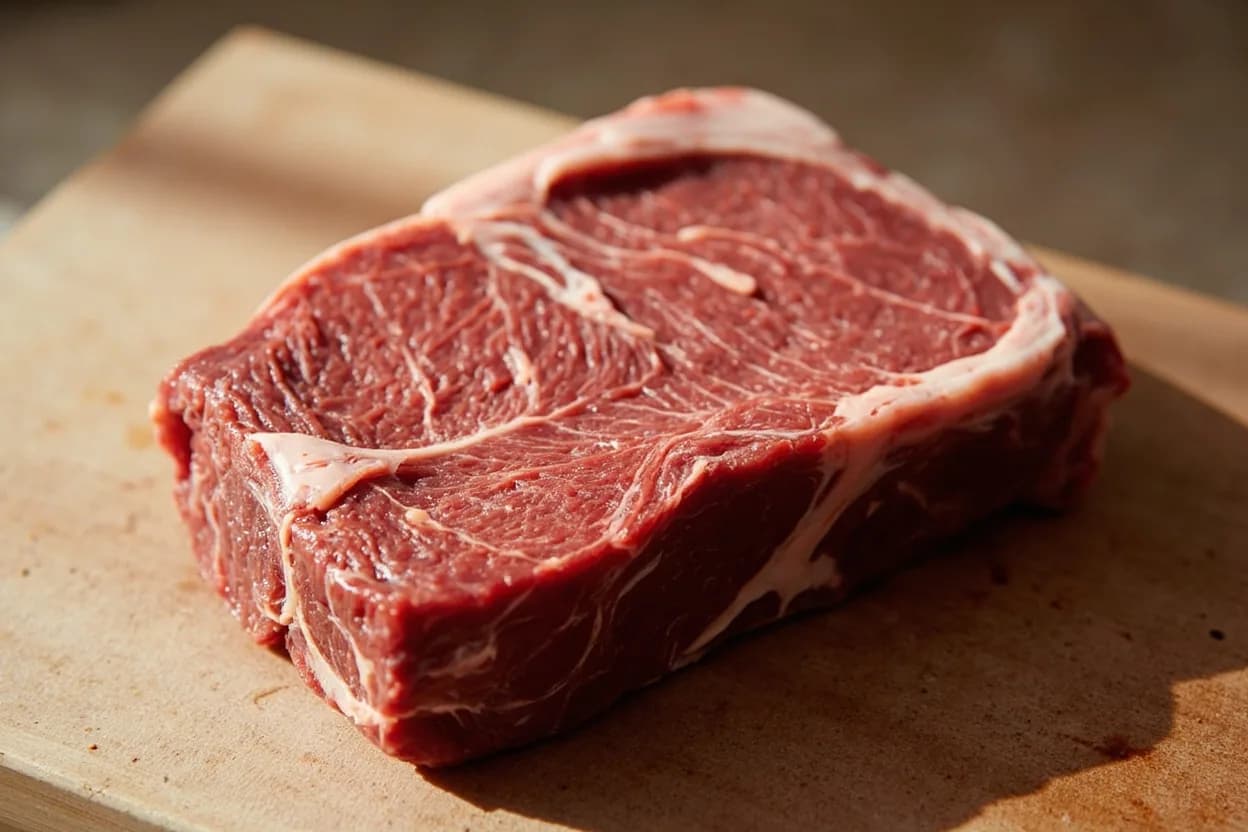
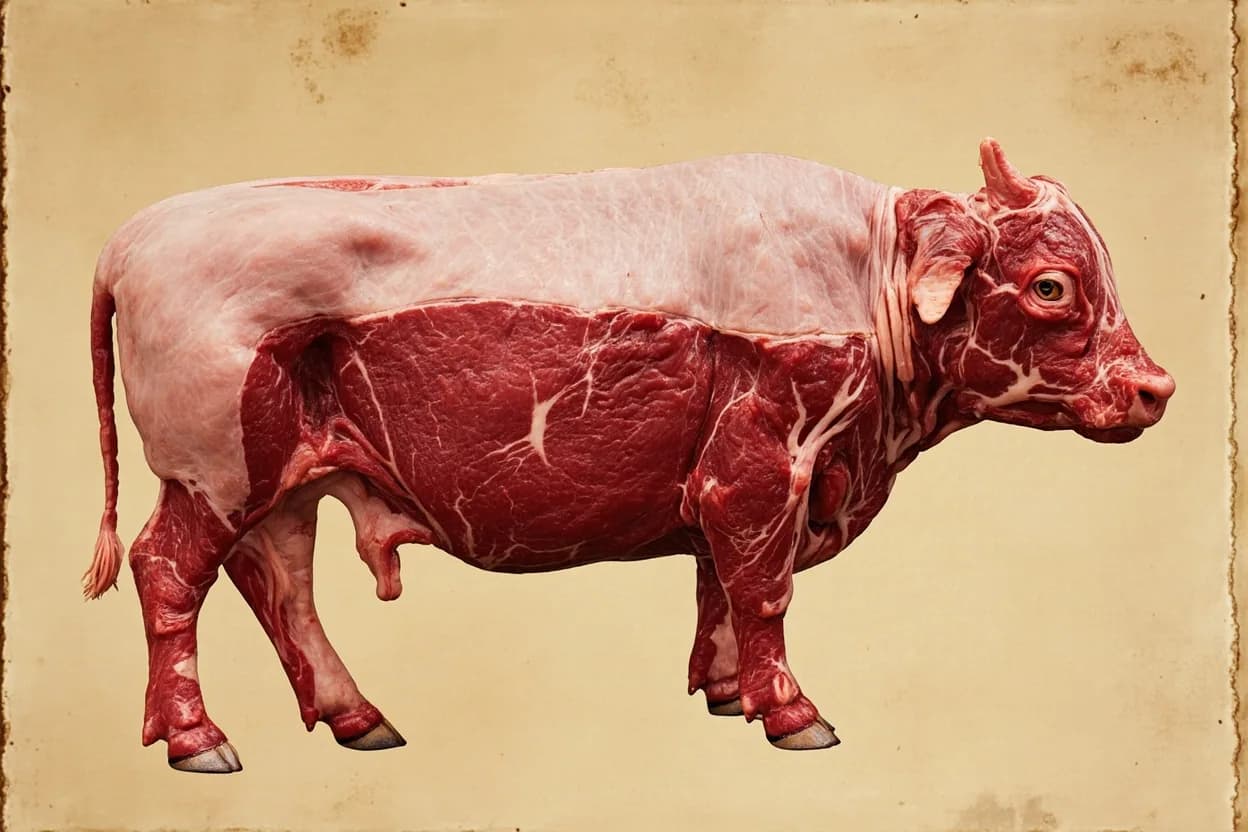
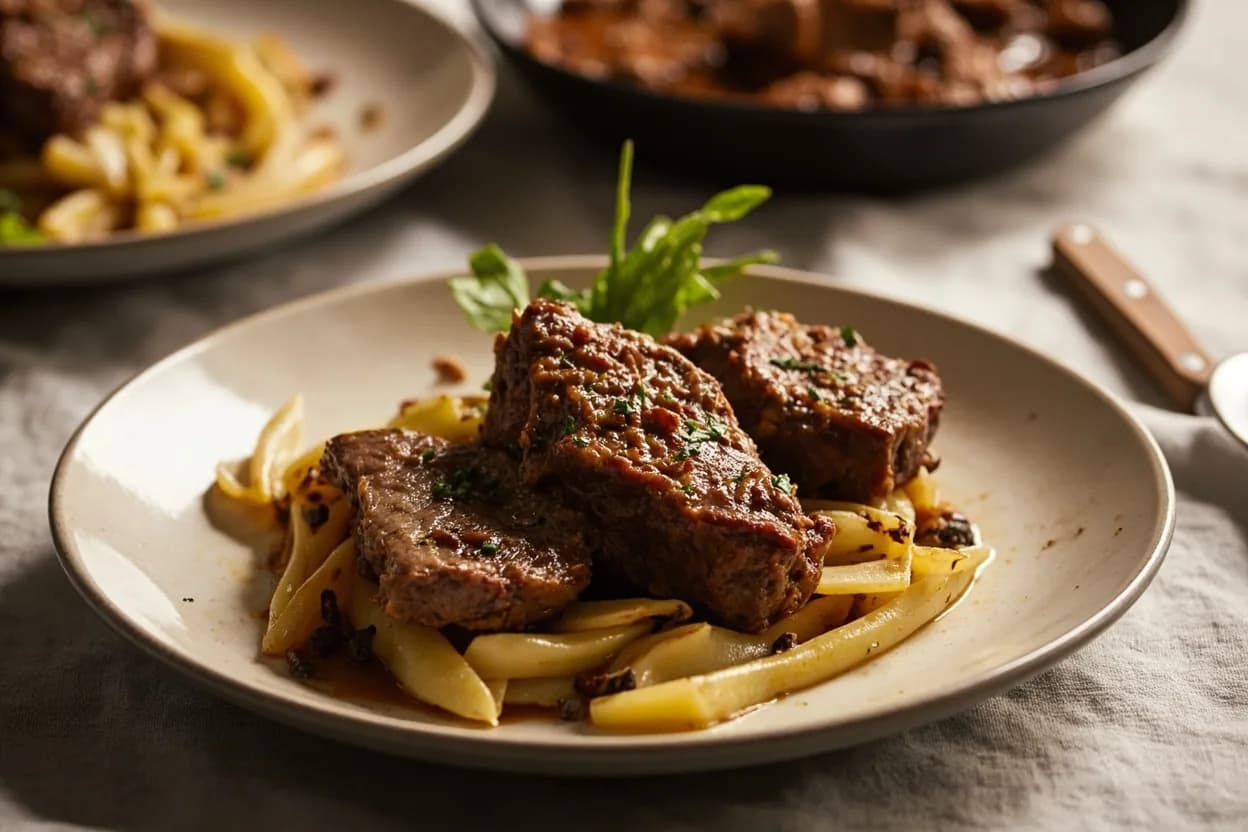
Where it comes from
The entire bovine carcass, bilaterally symmetrical; a full carcass yields two matching sides, each containing all eight primals. The forequarter (front half, separated between the 12th and 13th ribs) contains chuck, rib, brisket, plate, and shank. The hindquarter contains loin, round, and flank.
Best for
How to cook it
- 1Identify the primal origin of any cut before choosing a method: high-collagen, high-connective-tissue primals (chuck, brisket, shank, plate) demand low-and-slow moist or indirect heat to dissolve collagen into gelatin.
- 2Tender, low-collagen primals (rib, short loin) reward fast, dry, high-heat methods and suffer from overcooking.
- 3Round sits in between: lean enough to dry out quickly, tough enough to benefit from moderate slow-roasting or tenderizing marinades.
- 4When butchering a side, make the forequarter/hindquarter separation between ribs 12 and 13 to leave the correct rib count on the rib primal.
- 5Always work with the grain in mind: identify muscle-fiber direction within each subprimal to determine optimal slicing angle (against the grain for tenderness).
Prep & butchery
- Primals arrive vacuum-packed (cryovac) and require aging time (wet-aged in bag, or dry-aged after unpacking) before further breakdown.
- Use a boning knife for seam butchery separating individual muscles; a hand saw or band saw for bone-in cuts.
- Trim external fat cap to desired thickness (typically 1/4 inch for steaks, more for roasts).
- Always work on a chilled carcass (34–38°F / 1–3°C) to maintain food safety and firm texture during cutting.
Substitutes
- Equivalent British/European cuts
UK uses a different primal map (12 primals incl. topside, silverside, thick flank); cross-reference USDA vs. UK Meat Education charts before substituting.
- Wagyu primal equivalents
Japanese A5 Wagyu follows a similar anatomical division but the extreme marbling changes cooking dynamics significantly — lower heat, shorter times.
Related cuts
- Chuck Roll
Primary subprimal of the chuck primal
- Ribeye Roll
Primary subprimal of the rib primal
- Tenderloin
Sits within the loin primal, straddling short loin and sirloin
- Top Round
Largest subprimal of the round primal
- Beef Brisket Flat
Thin, lean half of the brisket primal
Appears in
References
- 1.The Meat Buyer's Guide — North American Meat Institute (NAMI)
- 2.Modernist Cuisine: The Art and Science of Cooking — Myhrvold et al., Chapter on Meat
- 3.USDA Institutional Meat Purchase Specifications (IMPS) for Fresh Beef
- 4.The River Cottage Meat Book — Hugh Fearnley-Whittingstall
Confidence: high
Notes
Why the 12th/13th rib split matters
The forequarter/hindquarter separation at the 12th–13th rib interface is the single most consequential cut on a beef carcass. It determines how many ribs end up on the rib primal (seven bones: ribs 6–12) and sets the boundary that separates brisket and plate from flank. Moving that separation even one rib changes the commercial yield of both the rib and the chuck.
Yield vs. quality grading
USDA quality grades (Prime, Choice, Select, Standard, Commercial, Utility, Cutter, Canner) assess palatability potential — primarily marbling — and are determined at the rib eye between ribs 12 and 13. Yield grades (1–5) predict the percentage of boneless, closely-trimmed retail cuts from the round, loin, rib, and chuck. A high-yield-grade (1) carcass is heavily muscled with little external fat; a low-yield-grade (5) carries significant fat. Prime quality + high yield grade is a rare and expensive combination.