Beef — Primal & Subprimal
Beef Primal Cuts (French)
Also: découpe française, French beef primal, aloyau, pièces de boeuf françaises
The classical French system divides the beef carcass into 29 primary pieces — finer-grained than the 9 USDA primals — reflecting a tradition that prizes seam butchery and muscle-specific cooking.
French butchery ('découpe à la française') does not carve the carcass into large block primals as the USDA system does; instead it separates individual muscles or muscle groups along natural seam lines ('couture'), producing 29 named pieces from a whole carcass. Each piece has a defined culinary destiny encoded in its name and tradition. The system is regulated loosely by professional norms rather than a single federal standard, though the French Association Française de Normalisation (AFNOR) has documented nomenclature. Understanding the mapping between French and USDA/British nomenclature is essential for sourcing: the same muscle may be easy to find in Paris but require special ordering from an American or British butcher.
In photos
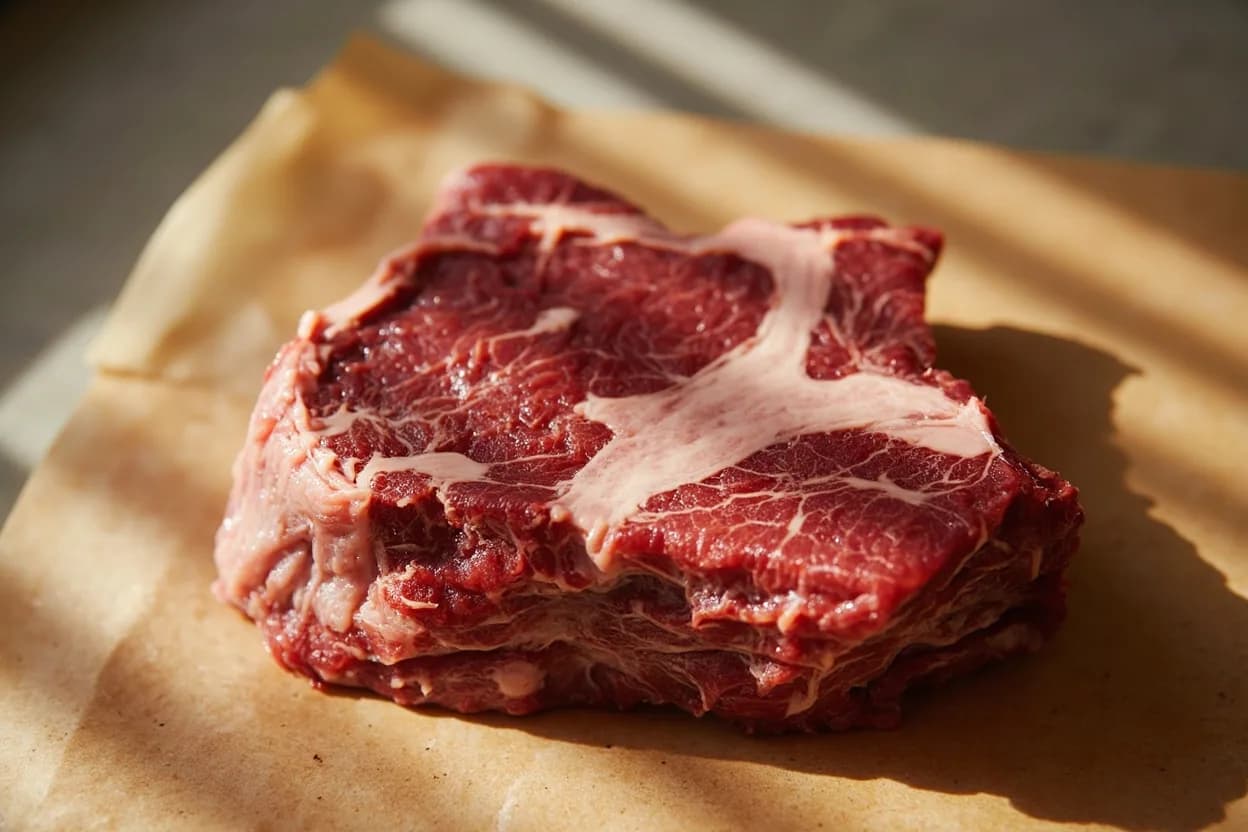
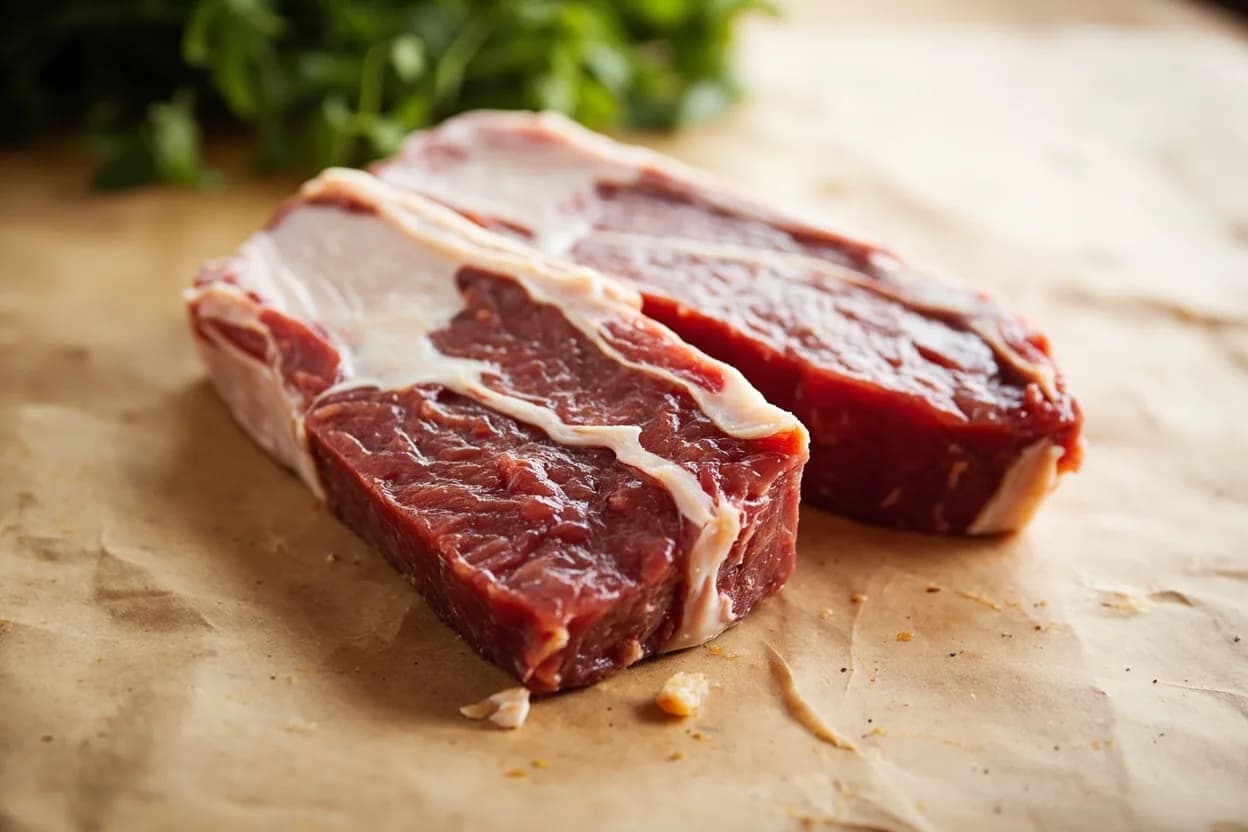
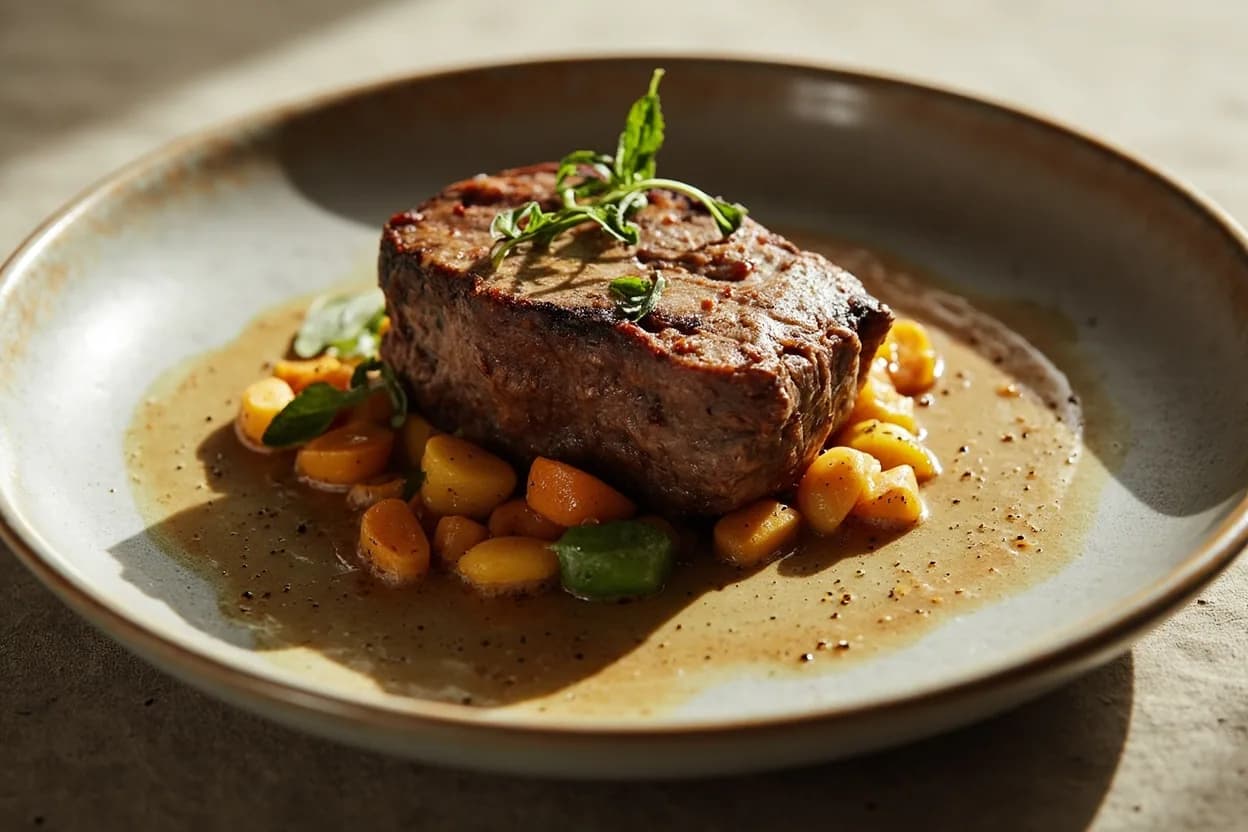
Where it comes from
The entire beef carcass, divided into avant (forequarter) and arrière (hindquarter), then further broken into the 29 standard pieces. Key hindquarter pieces include: aloyau (loin — covers entrecôte/contre-filet + filet together), rumsteck (rump), tende de tranche (top round/topside), rond de gîte (eye of round), gîte à la noix (silverside), bavette d'aloyau (flank/flap), and onglet (hanger steak). Key forequarter pieces: côte (rib/standing rib), macreuse (chuck/flat iron zone), paleron (blade/chuck shoulder), collier (neck), gîte (shank), tendron (plate/brisket rib area), plat de côtes (short ribs/plate), and poitrine (brisket).
Best for
How to cook it
- 1ENTRECÔTE (≈ ribeye): season, rest at room temperature 30 min, sear in clarified butter over high heat 2–3 min per side for saignant (medium-rare); rest 5 min.
- 2ONGLET (hanger): marinate in shallot-thyme-red wine vinegar; grill fast over high heat to just medium-rare — it toughens past 58 °C. Slice against the grain immediately.
- 3PALERON (blade): braise low and slow (150 °C, 3–4 hours) in red wine, stock, mirepoix; the central line of collagen dissolves to create characteristic double-muscle texture.
- 4FILET (tenderloin): tie tournedos at 3 cm thick; sear in butter with thyme and crushed garlic (arroser) to 52 °C core; sauce separately (Périgueux, Rossini, or Béarnaise).
- 5BAVETTE D'ALOYAU (flank steak): marinate with mustard and red wine, grill hot and fast, serve at medium-rare; slice against grain at 45° angle for tenderness.
- 6POT-AU-FEU: start plat de côtes and gîte in cold water, skim assiduously; add vegetables at the 1.5-hour mark; serve broth separately as consommé.
Prep & butchery
- Seam butchery requires following natural fascial planes with a flexible boning knife — force separates muscle fibres and reduces quality
- French butchers typically remove silverskin from individual muscles before sale; check and remove any remaining before cooking
- Many French cuts (paleron especially) have a central sinew line — leave it intact during braising so it dissolves; remove if grilling
- For tartare, hand-chop filet or rumsteck on a cold board in a cold kitchen — never blend or mince
Substitutes
- USDA Hanger Steak (for onglet)
Direct equivalent — the same muscle; American label 'hanger steak' or 'butcher's steak'
- USDA Chuck Roast (for paleron)
Close but includes more muscle groups; ask for blade chuck or flat-iron area for best paleron approximation
- USDA Flank Steak (for bavette d'aloyau)
Close equivalent; bavette de flanchet is the truer match but flank steak is interchangeable in most recipes
Related cuts
- Onglet (Hanger Steak)
The most celebrated French 'secondary' cut; hung from the diaphragm, one per animal
- Araignée (Spider Steak)
Hidden in the hip/pelvis; marbled and tender, only two small pieces per animal
- Bavette d'aloyau
French flank; grilled and sliced thin for steak-frites
Appears in
References
- 1.Le Répertoire de la Cuisine — Théodore Gringoire & Louis Saulnier (Dupont et Malgat, 1914)
- 2.On Food and Cooking — Harold McGee (Scribner, 2004)
- 3.The Whole Beast: Nose to Tail Eating — Fergus Henderson (Ecco, 2004)
- 4.Larousse Gastronomique (Larousse, 2009 English ed.)
- 5.Modernist Cuisine: The Art and Science of Cooking — Myhrvold et al. (The Cooking Lab, 2011)
Confidence: high
Notes
USDA vs. French primal mapping (key equivalences)
Aloyau = USDA Short Loin + Sirloin (roughly); Côte = USDA Rib; Macreuse = roughly USDA Chuck (blade zone); Paleron = Chuck shoulder clod area; Gîte = Shank; Plat de côtes = Short Plate; Poitrine = Brisket; Collier = Neck (usually ground in US); Rumsteck = Sirloin tip/rump; Tende de tranche = Top Round; Rond de gîte = Eye of Round; Gîte à la noix = Silverside/Bottom Round.
Why French butchery produces more named pieces
The USDA primal system was designed for industrial throughput — fast sawing through bone to create uniform retail cuts. The French seam system is slower and requires skilled labour, but it allows each muscle to be cooked by its optimal method. The paleron's central collagen line, which an American block cutter would ignore, is a defining textural feature of boeuf en daube when braised whole.