Beef — Primal & Subprimal
Beef Plate Short Rib vs. Chuck Short Rib
Also: plate short ribs, dino ribs, 3-bone slab, chuck short ribs, flanken ribs, English-cut short ribs, Jacob's ladder
Two very different short rib cuts from different primals — plate ribs are the big, fatty showstoppers of Texas BBQ; chuck ribs are the braise-ready workhorses of bistros and Sunday kitchens.
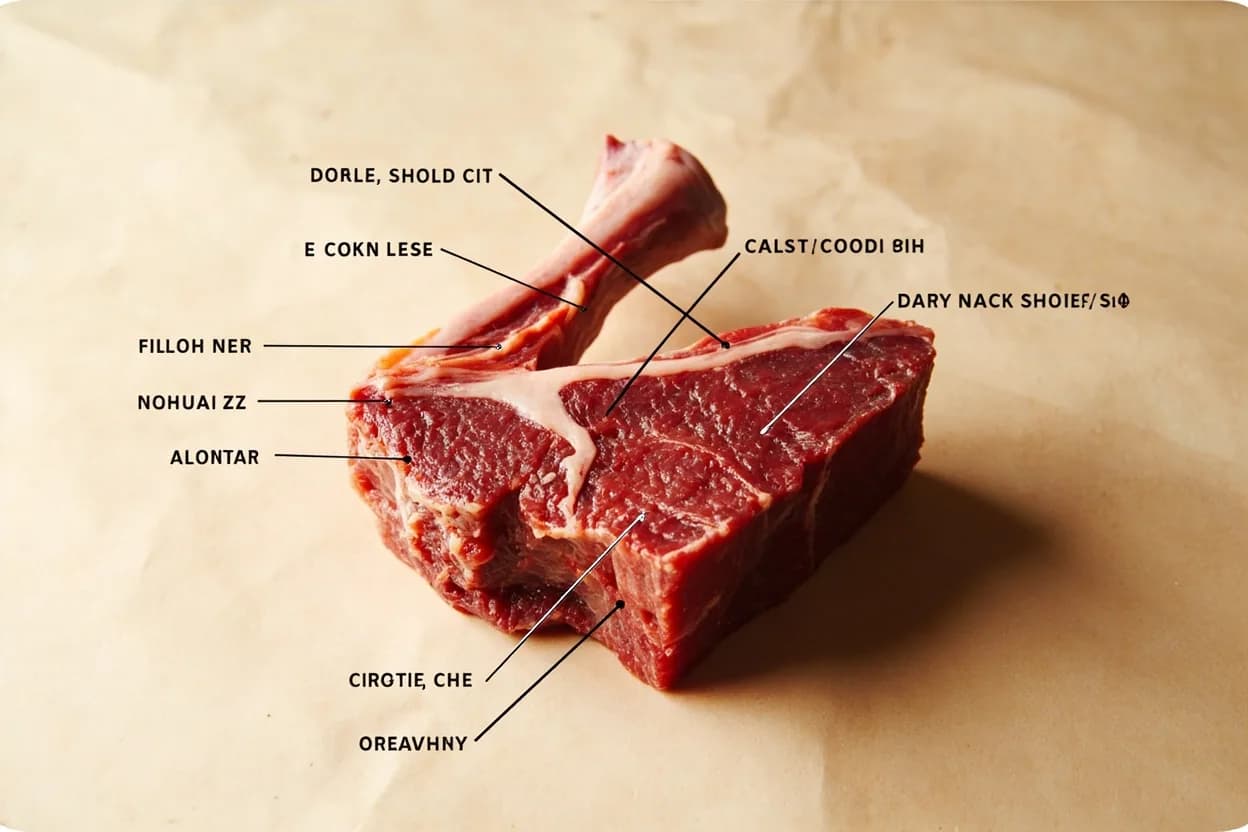
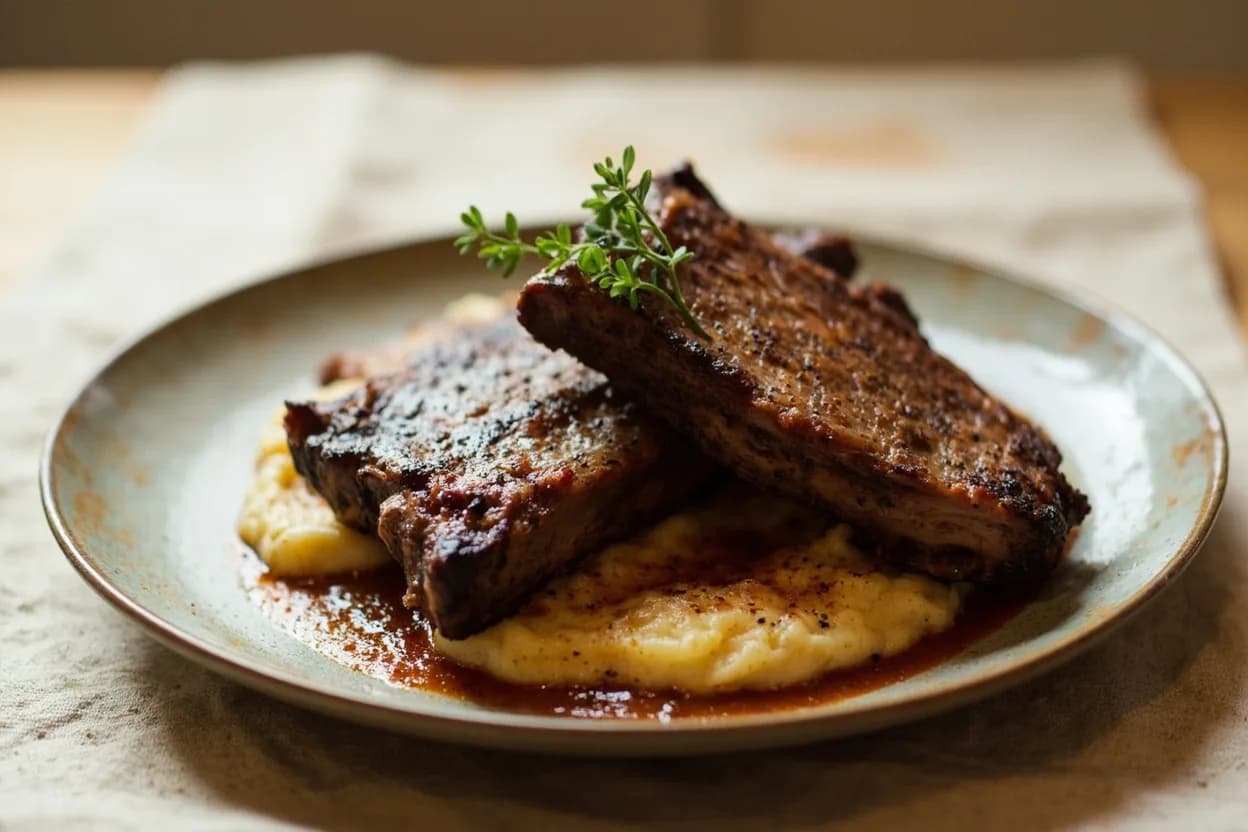
Short ribs are bone-in sections of beef cut from the rib cage where the rib bones are too short or awkwardly placed to sell as prime roasting ribs. 'Plate short ribs' come from the plate primal (ribs 6–8, lower chest wall) and are enormous, heavily marbled, and best suited to smoking. 'Chuck short ribs' come from the chuck primal (ribs 1–5, shoulder region) and are smaller, with dense connective tissue, ideal for braising.
In photos

Where it comes from
Plate short ribs: cut from the lower portion of ribs 6, 7, and 8 where they intersect the plate primal; the meat sits on top of and between the bones in a thick, fat-capped slab. Chuck short ribs: from ribs 1–5 of the chuck primal; the meat is layered between bones with more seam fat and connective tissue.
Best for
How to cook it
- 1Plate short ribs (smoking): trim fat cap to ¼ inch; apply coarse salt and black pepper generously. Smoke at 250–275°F (121–135°C) over post oak for 8–12 hours until internal temperature reaches 200–205°F (93–96°C) and a probe slides through with zero resistance.
- 2Chuck short ribs (braising): season and sear in a heavy pot until deeply browned. Build a mirepoix, deglaze with red wine, add beef stock to halfway up the ribs, and braise covered at 325°F (163°C) for 3–4 hours.
- 3Flanken-cut ribs (Korean kalbi): marinate in soy sauce, pear or Asian pear, sesame oil, garlic, and sugar for 4–12 hours. Grill over high heat 2–3 minutes per side.
- 4Remove membrane from bone side before cooking any format: score and peel with a dry paper towel for grip.
- 5Rest smoked plate ribs 30–45 minutes wrapped in butcher paper before serving.
Prep & butchery
- Remove the membrane (silverskin) on the bone side of all short rib formats — it doesn't render and creates a barrier to smoke and seasoning.
- For English-cut chuck short ribs: trim any overhanging fat to ¼ inch and score through the seam fat to allow deeper penetration during braise.
- For a 3-bone plate slab: keep it whole through smoking; the slab format insulates itself and cooks more evenly than individual ribs.
- Flanken slices should be rinsed under cold water to remove bone dust from the band saw cut; pat dry before marinating.
Substitutes
- Beef brisket
For the smoking application; similar collagen and fat profile but different bone structure.
- Lamb ribs
Much smaller; cook faster; similar fat richness for braising.
- Pork spare ribs
Rib structure is analogous; dramatically different fat composition and cooking time.
Related cuts
- Beef brisket (plate)
Same primal as plate short ribs; shares the plate's fat-forward character.
- Chuck roast
Same primal as chuck short ribs; boneless version with identical braising logic.
- Back ribs (prime rib bones)
Rib bones 6–12 with minimal meat; what remains after cutting a prime rib roast.
Appears in
References
- 1.Franklin Barbecue: A Meat-Smoking Manifesto — Aaron Franklin & Jordan Mackay
- 2.The Food Lab — J. Kenji López-Alt
- 3.Korean BBQ: Master Your Grill in Seven Sauces — Bill Kim
- 4.USDA Institutional Meat Purchase Specifications (IMPS) for Fresh Beef
Confidence: high
Notes
Why 'Dino Ribs'?
Plate short ribs sold as a 3-bone slab earned the nickname 'dino ribs' or 'dinosaur ribs' from Texas BBQ culture simply because of their prehistoric size. A single full-bone slab can weigh 10–12 lb (4.5–5.5 kg) raw; a single cooked rib can feed two adults. They became a social media phenomenon around 2012–2015 as Austin and Houston pitmasters began competing to serve the most dramatic single-bone presentation.
Flanken vs. English Cut — A Key Distinction
Chuck short ribs are sold in two very different butchery styles. The 'English cut' (one bone per piece, cut parallel to the bone) gives a tall, single-bone block — the classic braise format. The 'flanken cut' slices perpendicular to the bones across 3–4 ribs, producing thin strips 3–4 inches wide that are perfect for high-heat grilling, especially the Korean galbi preparation. These are not interchangeable — know which you need before ordering.