Beef — Primal & Subprimal
Beef Loin — Strip, Tenderloin, T-Bone & Porterhouse
Also: beef loin primal, short loin, sirloin, loin breakdown
The loin primal (short loin + sirloin) is the source of the strip steak, tenderloin, T-bone, porterhouse, and sirloin — the most prestigious dry-heat cuts on the carcass.
The beef loin encompasses two adjacent primals that are often handled together: the short loin (from rib 13 to the hip, roughly 7–8 vertebrae) and the sirloin (from the hip joint to the round). Together they house the two most tender muscles on the beef carcass — the longissimus dorsi (strip loin) and the psoas major (tenderloin). The T-bone and porterhouse are cross-sectional slices taken through the short loin with the T-shaped lumbar vertebra intact, containing a portion of both the strip and the tenderloin. The difference between them is legal and anatomical: a porterhouse must have a tenderloin section at least 1.25 inches (32mm) wide; a T-bone at least 0.5 inches (13mm). Toward the sirloin end, the tenderloin tapers and the top sirloin and tri-tip emerge as distinct subprimals.
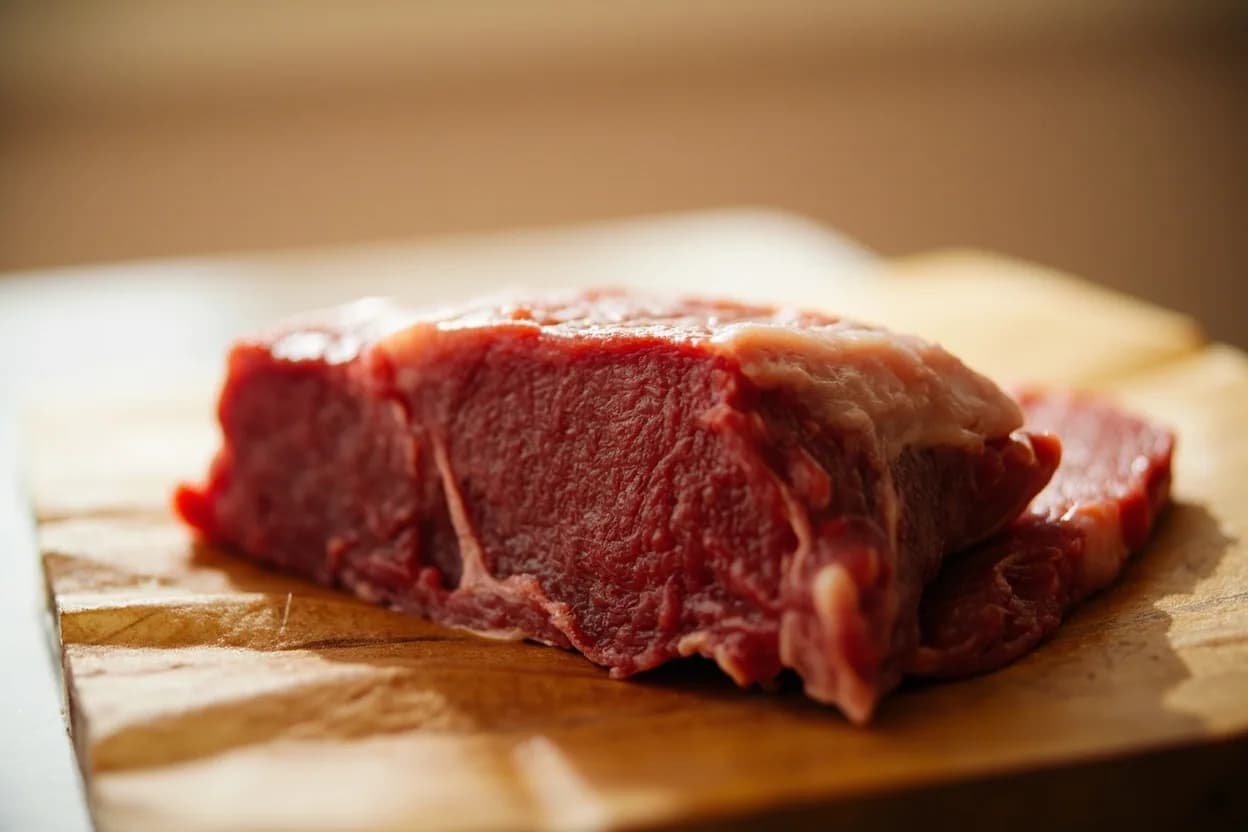
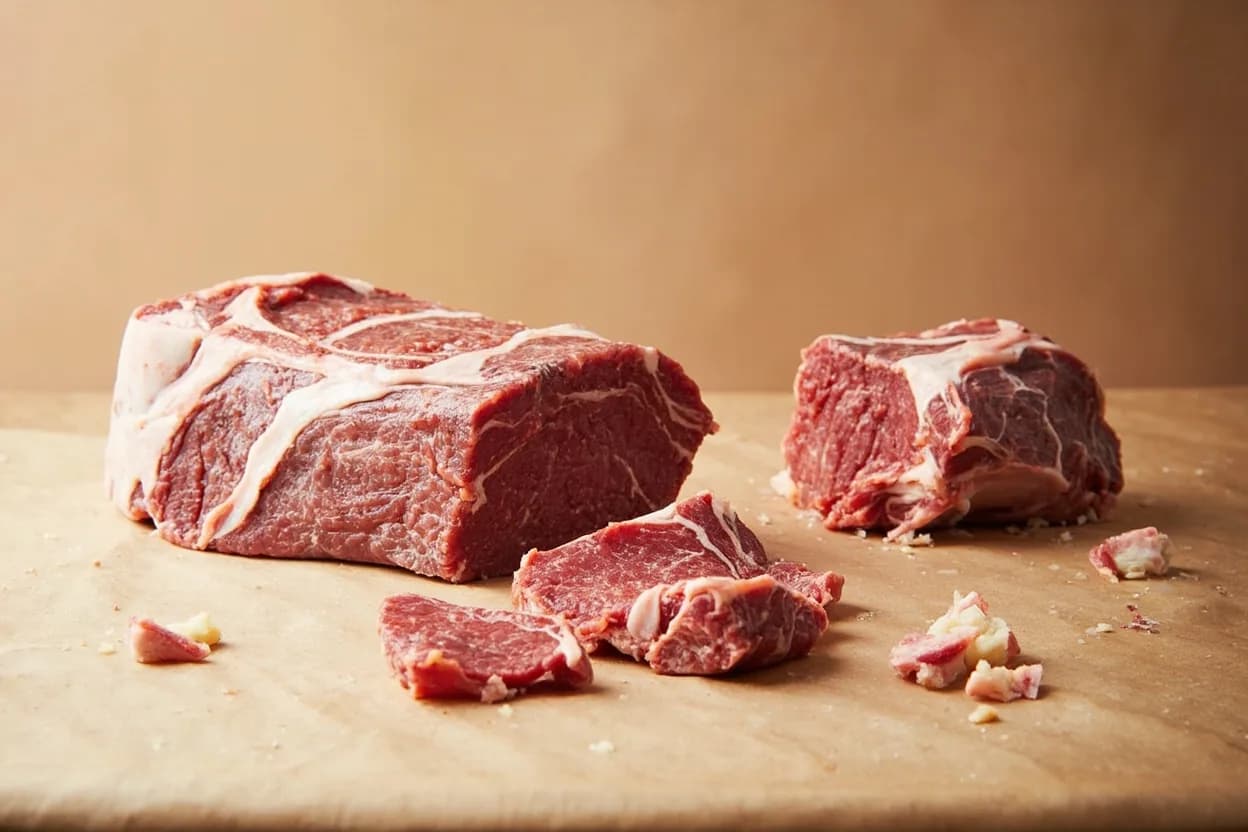
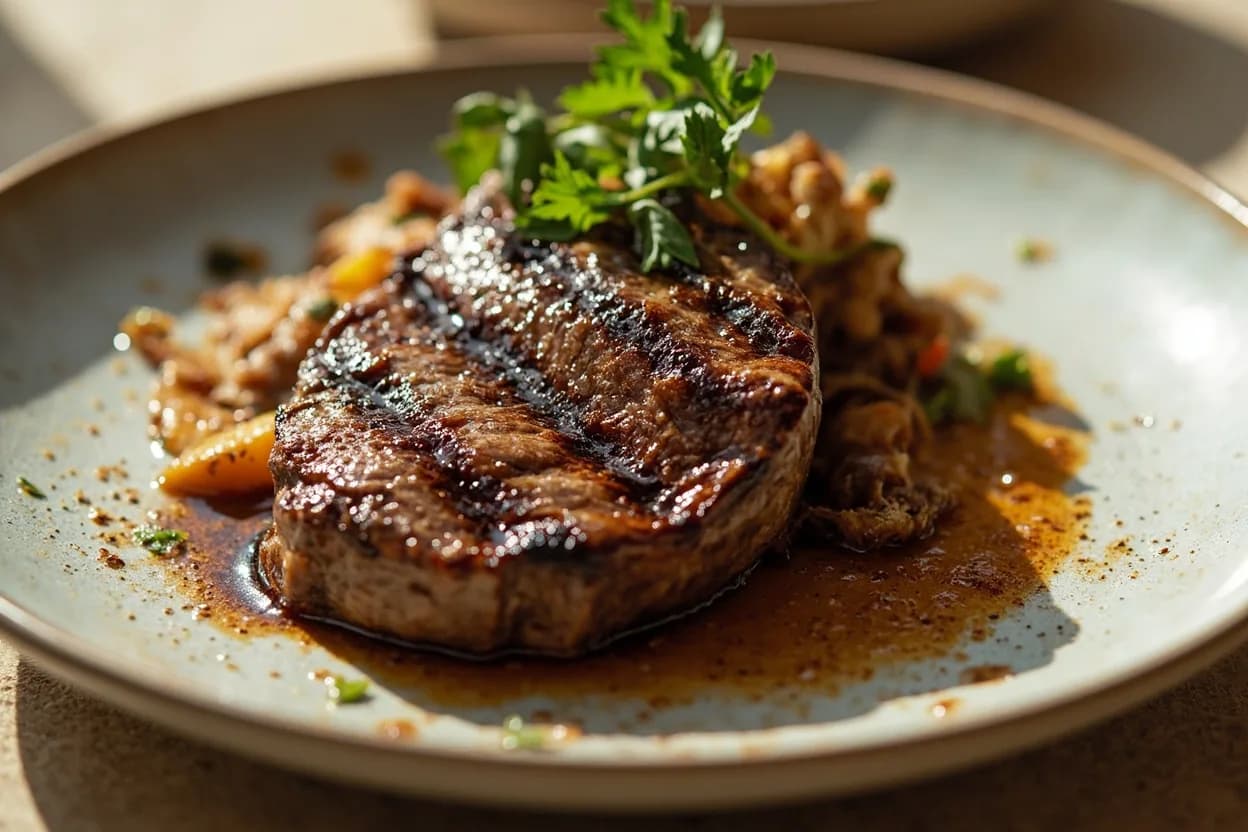
In photos
Where it comes from
Hindquarter dorsal region, spanning from the 13th rib to the hip (short loin) and continuing to the sirloin facing the round. The longissimus dorsi runs continuously along the top, flanked by the spinalis (which tapers out toward the loin end) and the psoas (tenderloin) running beneath the lumbar vertebrae on the inside of the carcass.
Best for
How to cook it
- 1Strip steak: dry-brine 1–24 hours in refrigerator, uncovered. Sear in cast iron at highest possible heat, 2–3 minutes per side. Baste with butter, garlic, and thyme. Rest 5 minutes. Slice against the grain. Target 130°F (54°C) internal for medium-rare.
- 2Tenderloin (whole or center-cut): tie the tapered tail end under itself for even thickness. Sear all over in a very hot pan, then roast at 400°F (204°C) to an internal temp of 125°F (52°C). Rest 10 minutes. Or use reverse-sear for maximum edge-to-edge uniformity.
- 3T-bone/Porterhouse: the challenge is that two muscles of different thicknesses cook at different rates. Keep the bone toward the heat source, which acts as a shield for the strip side and helps the tenderloin side catch up. Or cook strip-side-down first. Target 130°F (54°C) in the strip, not the tenderloin (which will read 5°F higher due to its thinner cross-section).
- 4Bistecca alla fiorentina: cut 2–3 inches (5–7.5 cm) thick from a Chianina or well-aged Florentine heifer. Grill over oak or olive wood embers, 5–6 minutes per side, leaving the core very rare (115–120°F / 46–49°C). Stand the steak upright on the bone for 3–4 minutes to cook the tenderloin side via radiant heat. Rest 10 minutes, season with sea salt and Tuscan olive oil.
- 5Top sirloin: marinate 2–4 hours in acid-forward marinade (lemon, red wine) to soften fibers, then grill or pan-sear to medium-rare and slice thinly against the grain for maximum tenderness.
Prep & butchery
- Removing the tenderloin: the psoas major runs inside the carcass along the lumbar vertebrae. It is removed by peeling at the sirloin end and pulling it free, then trimming the silverskin (pearlescent connective sheath) with a boning knife — silverskin does not dissolve with heat and causes the tenderloin to curl and toughen.
- T-bone and porterhouse: use a band saw or hand saw to cut crosswise through the short loin, leaving the lumbar vertebra (the T) intact. The strip is on the lateral (outside) and the tenderloin on the medial (inside).
- Bone-in vs. boneless strip: remove the vertebral processes with a saw for bone-in New York strip (club steak); for boneless, run a boning knife along the top of the vertebrae and remove the entire strip loin.
- Aging: the short loin is the prime candidate for dry aging — the large surface area of the strip loin allows enzymatic tenderization and flavour concentration over 21–45 days. The tenderloin does not benefit significantly from dry aging due to its already-minimal connective tissue.
Substitutes
- Ribeye Steak
Adjacent primal; more fat and flavour than the strip, comparable tenderness. Best swap for strip steak in most applications.
- Flat Iron Steak
Budget alternative to filet mignon — different texture (slightly more chew) but comparable tenderness; lacks the lean, mild character of the tenderloin.
Bottom sirloin triangle muscle; lean, flavourful, a good substitute for top sirloin in roasting and grilling.
Related cuts
Adjacent anterior primal; longissimus dorsi continues as the rib eye
Adjacent posterior primal; sirloin transitions to round at the hip
- Tenderloin (Psoas Major)
The most tender muscle, running medially within the loin primal
Bottom sirloin triangle — a distinct subprimal at the sirloin/round border
- Coulotte (Sirloin Cap)
The fat-capped top sirloin muscle, also called picanha in Brazilian tradition
Appears in
References
- 1.USDA IMPS Series 100 — Fresh Beef, Items 172 (Loin, Full Loin, Trimmed), 174 (Loin, Short Loin), 180 (Loin, Strip Loin, Boneless), 189A (Loin, Tenderloin, Full, Side Muscle Off, Skinned)
- 2.The Complete Meat Cookbook — Bruce Aidells and Denis Kelly
- 3.Modernist Cuisine: The Art and Science of Cooking — Myhrvold et al.
- 4.Steak — Mark Schatzker
- 5.Bistecca: The Definitive Guide to the Florentine Steak — Meridith Ford
Confidence: high
Notes
T-bone vs. porterhouse: the legal distinction
In the United States, the USDA specifies that a porterhouse must have a tenderloin cross-section measuring at least 1.25 inches (32mm) at its widest point; a T-bone requires at least 0.5 inches (13mm). Both are cut from the short loin, but porterhouse steaks come from the posterior end of the short loin, where the tenderloin is thicker. Moving toward the rib primal, the tenderloin tapers and eventually disappears — those anterior cuts become strip steaks. The porterhouse is sometimes called 'the King of steaks' because it combines the richness of the strip with the tenderness of the filet in a single cut.
Why the tenderloin is lean — and why that matters
The psoas major muscle is the most inactive major muscle in a quadruped's body — it simply suspends the hindquarters from the lumbar spine and rarely contracts during locomotion. Consequently it accumulates almost no intramuscular fat (marbling) and develops minimal connective tissue, explaining both its legendary tenderness and its relatively mild, less 'beefy' flavour compared with the strip or ribeye. Classical French cuisine compensates with rich sauces (béarnaise, bordelaise, foie gras) and wrapping (larding, bacon strips, pastry in Wellington). Argentine and Brazilian parillada tradition, which prizes fat and flavour, largely bypasses the tenderloin in favour of the sirloin cap (picanha) and skirt.