Beef — Primal & Subprimal
Beef Flank & Plate — Skirt, Hanger & Flap
Also: skirt steak, inside skirt, outside skirt, hanger steak, onglet, bavette, flap meat, sirloin flap
Four deeply flavored, grain-forward muscles from the underbelly — the butcher's secret weapons for tacos, bistro steak, and live-fire cooking.
A family of thin, intensely beefy muscles harvested from the flank and plate primals — the lower abdominal and rib-underside region of the steer. Skirt, hanger, and flap are anatomically distinct but share high myoglobin content, pronounced grain, and exceptional flavor that repays quick high-heat cooking or careful braise.
In photos
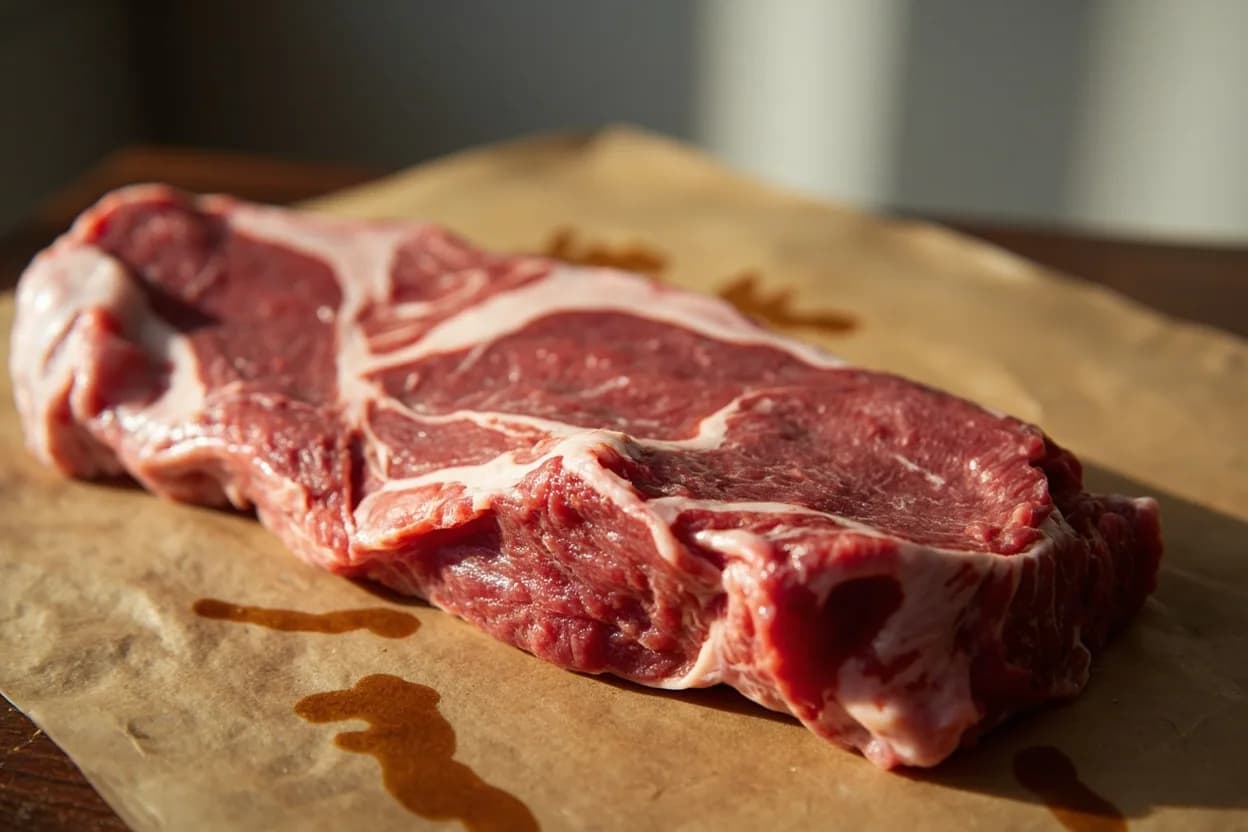
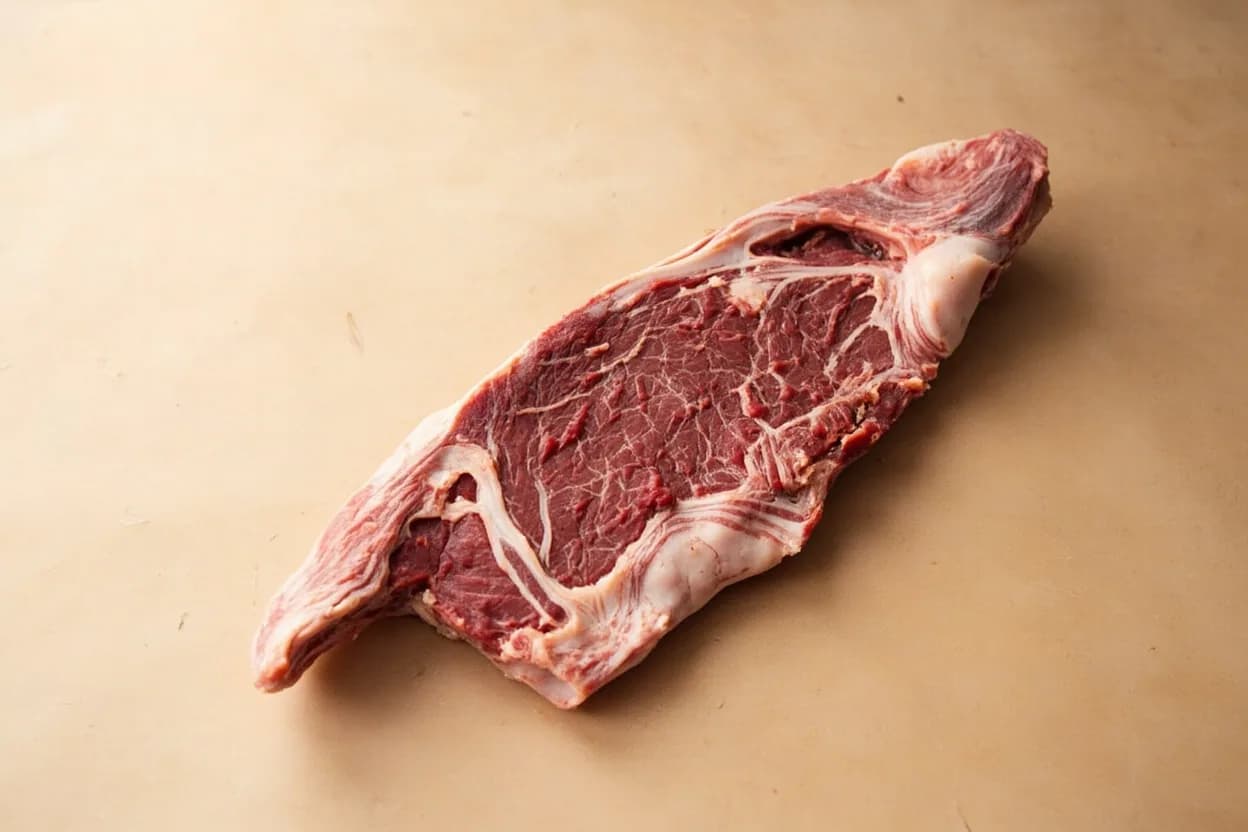

Where it comes from
Flank primal (rear lower belly) yields the flank steak and flap meat. Plate primal (front lower belly, below ribs 6–12) yields the inside skirt (transversus abdominis) and outside skirt (diaphragm). The hanger steak (diaphragm's thick anchor) hangs between the kidney and last rib — one per animal, hence 'butcher's secret.'
Best for
How to cook it
- 1Remove membrane from hanger steak's central sinew before cooking; split into two lobes.
- 2Trim heavy silverskin from outside skirt; inside skirt often comes pre-trimmed.
- 3Season generously — these cuts absorb salt and dry rubs readily.
- 4Cook over the highest possible heat for 2–4 minutes per side; target 125–130°F (52–54°C) internal for medium-rare.
- 5Rest 5–8 minutes on a wire rack to redistribute juices.
- 6Always slice thinly across the grain at a 45° angle — this is non-negotiable for tenderness.
Prep & butchery
- Remove thick outer membrane from outside skirt with a boning knife, pulling while scoring.
- For hanger steak, locate and excise the central sinew running lengthwise; the two resulting lobes cook more evenly.
- Flap meat often arrives uneven in thickness — pound thicker sections or butterfly before marinating.
- Marinate 30 minutes to 4 hours maximum; acids (lime, vinegar) begin to 'cook' the surface beyond that.
Substitutes
- Flank steak
Leaner and larger than skirt; requires the same cross-grain slicing discipline.
- Flat iron steak
More tender and uniform; lacks the mineral depth of hanger or skirt.
- Machete steak (outside skirt)
Outside skirt sold under this name in Latin markets — identical cut.
Related cuts
- Flank steak
From the flank primal; similar grain, leaner, larger surface area.
- Plate short rib
From the same plate primal; vastly different cooking — low and slow.
Bottom sirloin neighbor; similarly grained but thicker and less intensely flavored.
Appears in
References
- 1.The River Cottage Meat Book — Hugh Fearnley-Whittingstall
- 2.Modernist Cuisine — Myhrvold, Young & Bilet
- 3.Steak: One Man's Search for the World's Tastiest Piece of Beef — Mark Schatzker
- 4.USDA Institutional Meat Purchase Specifications (IMPS) for Fresh Beef
Confidence: high
Notes
Inside vs. Outside Skirt
The outside skirt (diaphragm muscle) is the most prized of the two skirts — thicker, fattier, and more marbled, with a rich, almost liver-like intensity. It is commonly reserved for fajitas in Texas Tex-Mex tradition. The inside skirt (transversus abdominis) is thinner, slightly tougher, and leaner, but equally flavorful. Both come with a tough outer membrane that must be removed before cooking.
The Hanger's Peculiarity
The hanger (onglet in French) is technically part of the diaphragm, hanging between the last rib and the kidney. There is only one per animal, making it a butcher's perk historically. French bistros have long prized it for its funky, iron-rich depth. The central sinew divides it into two irregular lobes — remove it entirely, as it doesn't soften with heat.