Beef — Primal & Subprimal
Tri-Tip
Also: triangle roast, triangle steak, bottom sirloin butt, Newport steak, Santa Maria steak, culotte (partial overlap)
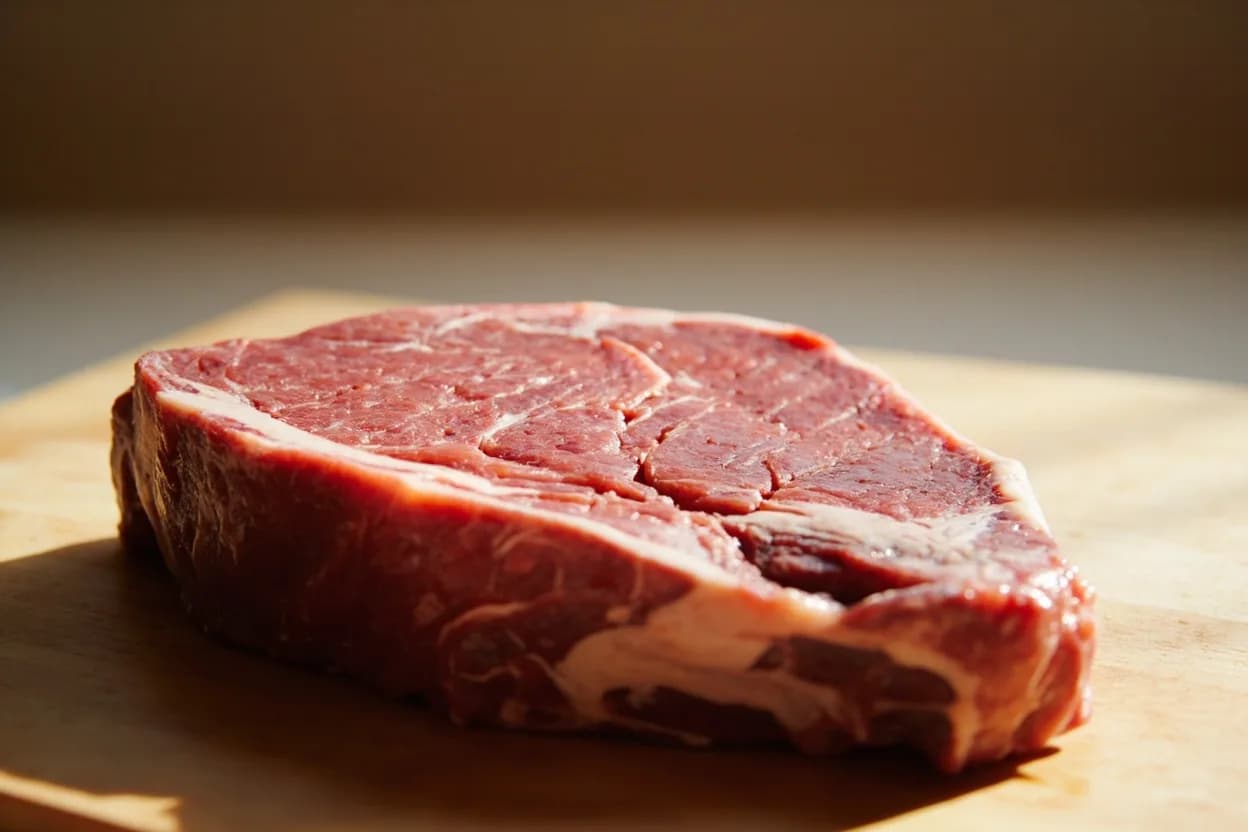
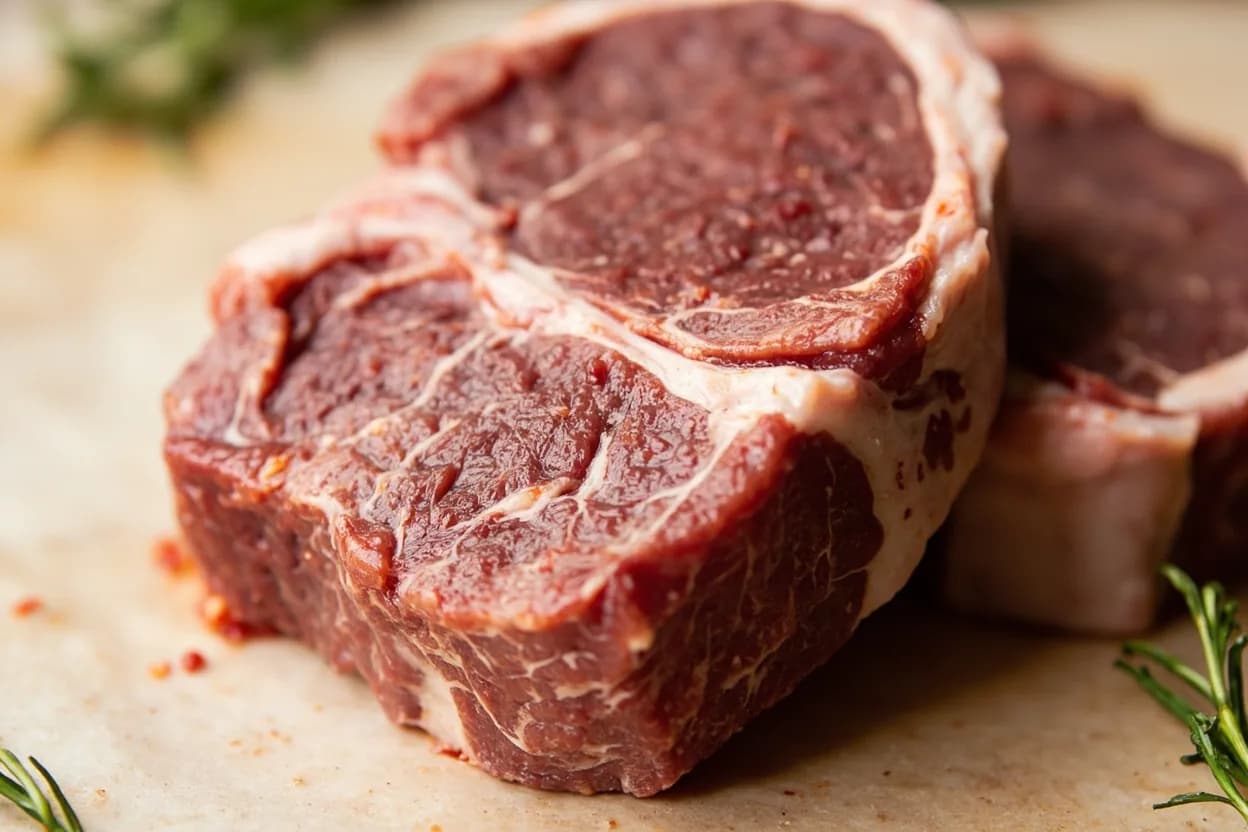
A triangular, well-marbled muscle from the bottom sirloin butt, famous in California's Santa Maria Valley for reverse-sear or direct-grill cooking — and notorious for its two-direction grain that demands careful slicing.
The tri-tip (NAMP #185C) is the tensor fasciae latae muscle, a roughly triangular, flat roast weighing 1.5–2.5 lbs / 680–1,130 g cut from the bottom sirloin butt at the junction of the sirloin and round. It tapers from a thick, wide end to a narrow point — the characteristic triangle that gives it its name. Long associated with Central California BBQ, particularly the Santa Maria Valley tradition of slow-cooking over live-oak embers, the tri-tip was largely unknown outside California until the 1990s–2000s, when it gained national recognition. Its grain runs in two different directions: the muscle fibers fan out from the thick end and then shift approximately 90° toward the tip, meaning that a single straight slice cut produces both with-the-grain and against-the-grain pieces unless the cook bisects the roast at the grain-change point before slicing.
In photos
Where it comes from
Sirloin primal, bottom sirloin butt section; the tensor fasciae latae muscle, located at the lower tip of the sirloin, just anterior to the round primal. It sits below the top sirloin and above the flank, partially covered by a removable fat cap.
Best for
How to cook it
- 1Identify the grain change: lay the roast fat-cap down and look at the muscle fibers on the lean face. Fibers run roughly diagonally from the thick end; near the tip they pivot about 90°. Find the inflection point (usually where the roast narrows sharply) — this is where you will bisect after cooking.
- 2Trim fat cap to 3–6 mm; remove any heavy silverskin on the lean face. Season liberally with salt, pepper, and garlic powder (Santa Maria standard) or a wet rub.
- 3Reverse sear: season and let rest uncovered in the fridge 1–24 hours. Cook in a 250 °F / 121 °C oven on a wire rack until internal temp hits 120 °F / 49 °C (about 45–60 min). Rest 10 minutes, then sear over screaming-hot coals or cast iron 2–3 minutes per side until deeply charred outside, 130–135 °F / 54–57 °C inside for medium-rare.
- 4Santa Maria open-fire: grill fat-cap up over red oak at medium-high, turning every 5–7 minutes, 25–35 minutes total for medium-rare on a 2 lb roast.
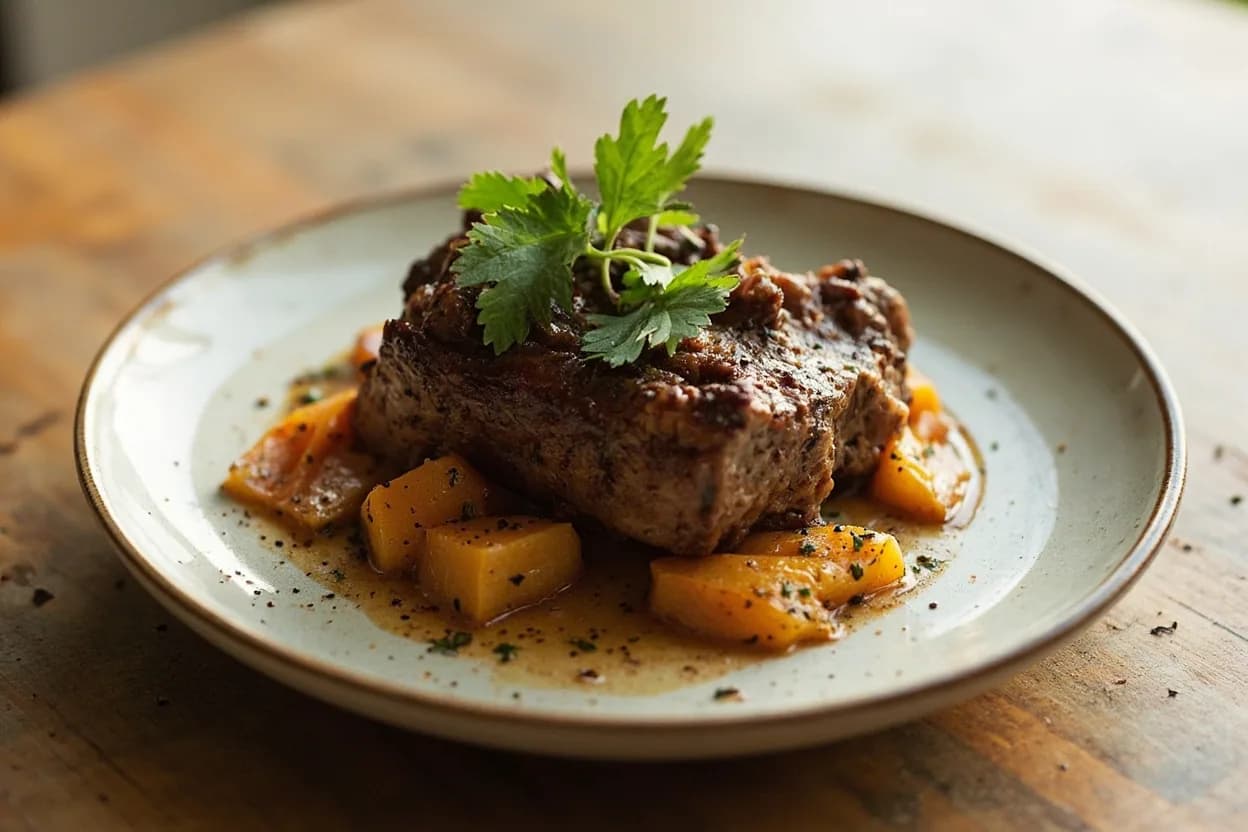
- 5After cooking, bisect the roast at the grain-change point. Slice each half against its own grain at 6 mm / ¼ inch thickness. This produces uniformly tender pieces — skipping this step results in half the slices being chewy.
Prep & butchery
- Look for the fat cap on one face — this is a quality indicator and a cooking asset; buy trimmed only if you intend to slice into steaks before cooking.
- Remove the silverskin (silver-white, opaque membrane) from the lean face — it will not render and causes curling during cooking.
- Pat completely dry before seasoning or the surface will steam rather than sear.
- For Santa Maria rub: 2 tsp kosher salt, 1 tsp coarse black pepper, 1 tsp garlic powder per pound — applied at least 45 minutes ahead.
- Rest the finished roast at least 10 minutes before slicing — resting is especially important here because of the thickness variation from tip to thick end.
Substitutes
- Top Sirloin
More uniformly tender and easier to slice; less pronounced beefy character; a good substitute when grain complexity is a concern.
- Flank Steak
Thinner and leaner; cooks faster; similar directional grain challenge; marinate for best results — different eating texture.
- Coulotte (Picanha)
Top sirloin cap with thick fat cap; similar fat coverage and size; used for Brazilian churrasco in the same way California uses tri-tip.
- Chuck Eye Steak
More marbled and fattier; similar price point; requires slightly longer cook time; works as a budget substitute.
Related cuts
- Top Sirloin
Adjacent sirloin primal cut; more tender and uniformly shaped
- Picanha (Coulotte)
South American cousin; top sirloin cap muscle with thick fat cap; similar size and cooking approach
- Sirloin Tip (Knuckle)
Below the tri-tip in the round primal; leaner and tougher but used in similar preparations
- Flank Steak
Shares the characteristic strong-grained, lean profile; both benefit from slicing against the grain
Appears in
References
- 1.The Food Lab — J. Kenji López-Alt, W. W. Norton & Company
- 2.Santa Maria-Style BBQ — cookbook entries, Santa Maria Valley Chamber of Commerce culinary history documentation
- 3.Beef Magazine — 'Discovering the Tri-Tip: A California Classic Goes National', trade press coverage
- 4.NAMP Meat Buyers Guide — Item 185C (Beef Loin Tri-Tip), North American Meat Institute
Confidence: high
Notes
California origin story
The tri-tip's identity as a named cut is largely a California invention. Before the 1950s, this muscle was typically ground or sold as stew meat. Bob Shutz, a butcher at a Santa Maria Safeway, is often credited with popularizing it as a standalone roast in the late 1950s, promoting it as a grilling cut for the Santa Maria BBQ community. For decades it remained a California regional specialty — butchers in other states often had to be asked specifically to cut it, or it was already processed into ground beef before reaching the retail case.
The grain change: why it matters
The two-direction grain is the tri-tip's most important technical feature. The tensor fasciae latae muscle has fibers that converge from the wide end and then run nearly perpendicular near the tapered tip. A cook who slices the whole roast in one straight direction will get some slices with long, tough fibers. The correct technique — bisect the roast at the pivot, then slice each half perpendicular to its own grain — takes about 30 seconds of attention and transforms the eating experience.