Offal & Variety Meats
Tripe & Offal Cleaning Cuts (Dulet Preparation)
Also: dulet cuts, Ethiopian offal preparation, qurs tibs offal
The fine-chopping and cleaning protocol for Ethiopian dulet, combining tripe, liver, and raw or briefly cooked beef into one unified mince.
Dulet preparation is a multi-offal butchery process rather than a single anatomical cut. It involves cleaning and finely chopping three components — honeycomb or blanket tripe, beef or lamb liver, and lean beef — then combining them with spiced butter, onions, and berbere. The cutting technique is a rapid hand-chop to a near-mince texture, sometimes finished raw (kitfo-style) or flash-sautéed.
In photos
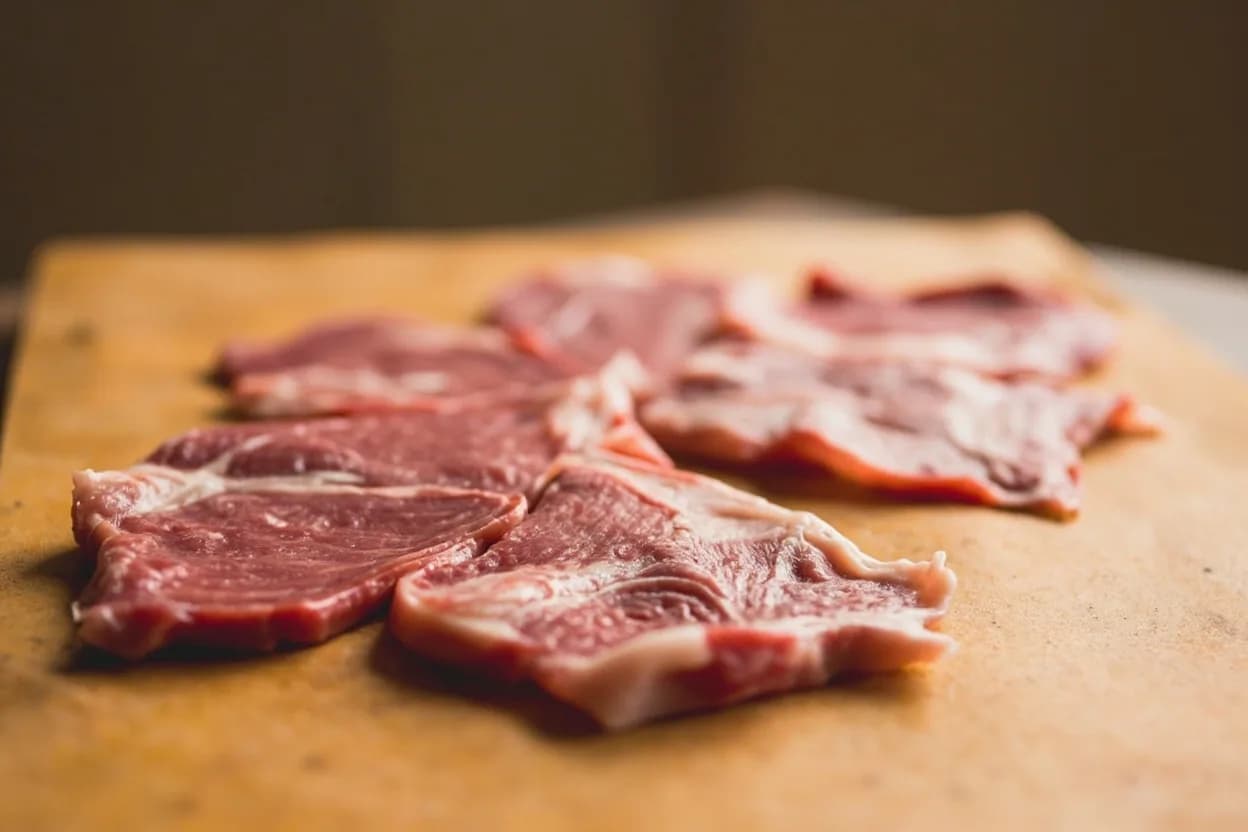
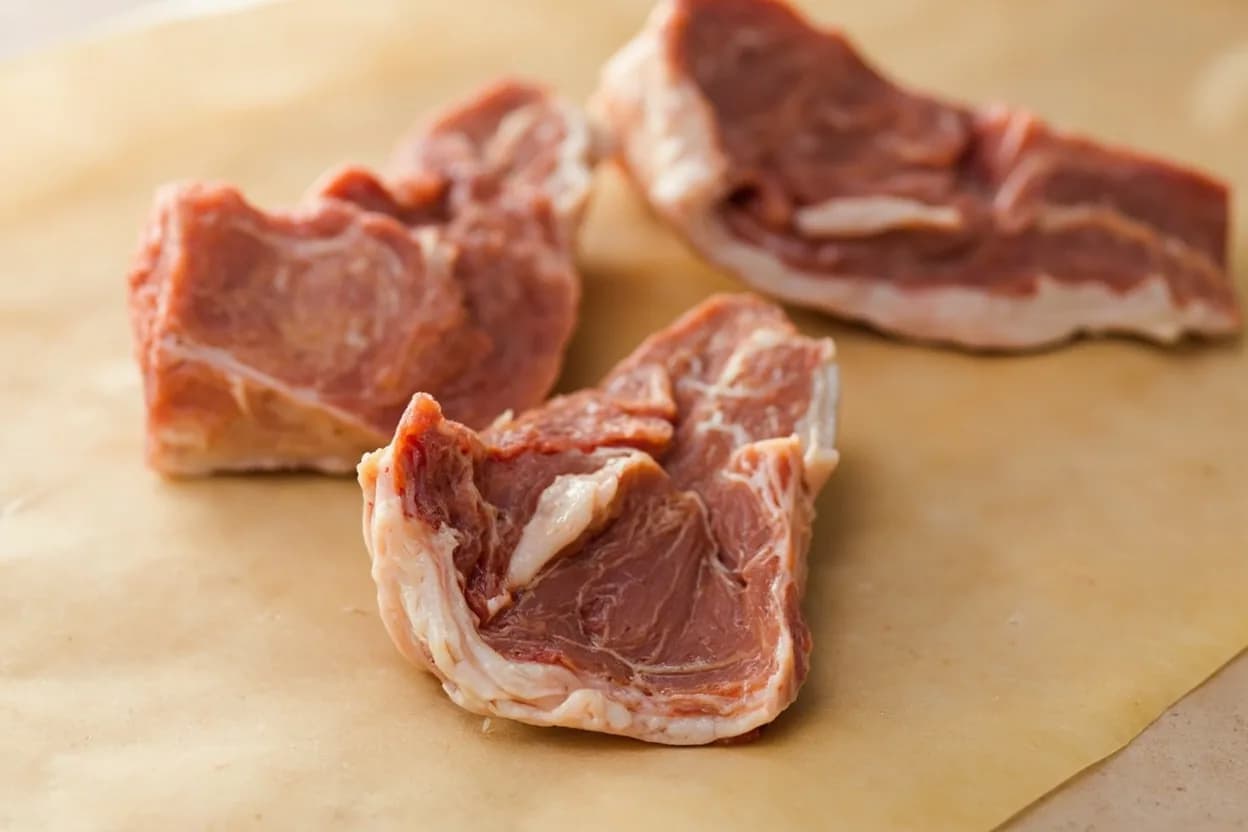

Where it comes from
Tripe from the rumen or reticulum (honeycomb) of cattle or sheep; liver from the left lobe (more delicate, less bitter than right); lean beef from the shoulder or inside round for balanced fat-to-protein ratio.
Best for
How to cook it
- 1Clean tripe by scrubbing with salt and lime juice, blanching in boiling water 10 minutes, then refreshing in cold water; peel away inner membrane if present.
- 2Trim liver of bile duct, sinew, and any green-tinged patches; soak in cold salted water 20 minutes to draw out bitterness.
- 3Chill all components before chopping — cold offal cuts cleanly without smearing.
- 4Hand-chop each component separately on a large board using a sharp cleaver or heavy chef's knife to a rough 3–5 mm dice; do not use a food processor.
- 5Combine chopped components in roughly equal thirds; season with mitmita, berbere, or a blend of both.
- 6For raw dulet: toss with niter kibbeh, minced onion, and fresh jalapeño; serve immediately on injera.
- 7For cooked dulet: sauté onions in niter kibbeh until golden, add meat mixture, toss over high heat 3–4 minutes until just set but still pink at the centre.
Prep & butchery
- Score tripe surface lightly to help cleaning agents penetrate fat pockets.
- Remove all visible bile ducts from liver — even a trace of bile makes the whole dish bitter.
- Keep components chilled separately until the moment of combining to prevent cross-contamination of flavours during prep.
- A rocking mezzaluna can accelerate fine-chopping if a large cleaver is unavailable.
Substitutes
- Lamb offal combination
Lamb tripe, liver, and shoulder work identically at smaller scale; flavour is slightly more gamey
- Liver and beef only (no tripe)
Acceptable shortcut when tripe is unavailable; loses textural contrast but keeps flavour profile
- Goat offal
Common in Ethiopian highland regions; chewier tripe, more assertive liver flavour
Related cuts
- Honeycomb Tripe
The preferred tripe cut for dulet — reticulum texture holds up to brief cooking
- Liver (Beef)
Core component; left lobe preferred for milder flavour
- Beef Shoulder (for mince component)
Provides the lean beef element in the trio
Appears in
References
- 1.Exotic Ethiopian Cooking — Daniel Jote Mesfin (1993)
- 2.The Africa Cookbook — Jessica B. Harris (1998)
- 3.Tasting Ethiopia — Jeff Koehler (Saveur, 2010)
Confidence: high
Notes
The Raw Tradition
Eating dulet raw is not carelessness but cultural intentionality — the same logic as Ethiopian kitfo or Ethiopian beef tartare. The dish is made only from freshly slaughtered animals inspected at source. The brief niter kibbeh toss partially denatures the surface proteins while leaving the interior pink, producing a texture that cooked organ meat cannot replicate.
Chopping vs. Grinding
The hand-chop is non-negotiable in authentic dulet. Grinding smears the fats from liver into the tripe and beef, homogenising the textures into a paste. The separate chop-then-combine method preserves the identity of each element in every mouthful, which is the point of the dish.