Knife Cuts — Regional & Global
Beet Rouelle
Also: beet round, beet disc, rouelle de betterave, beet cross-section
A thick (roughly 1 cm) circular cross-section of beet — the rouelle — cut for roasting, braising, or plating with consistent depth and a full-diameter face.
Rouelle (French, from 'roue' — wheel) denotes a thick round slice cut perpendicular to the long axis of a cylindrical or ovoid vegetable. Applied to beet, it produces a disc with the full circular cross-section of the root exposed: visually striking growth rings, vivid pigment, and a flat face on both sides. The standard thickness for beet rouelle is 8–12 mm — substantial enough to hold structure through roasting or braising without turning to mush, yet thin enough to cook through without extended time.
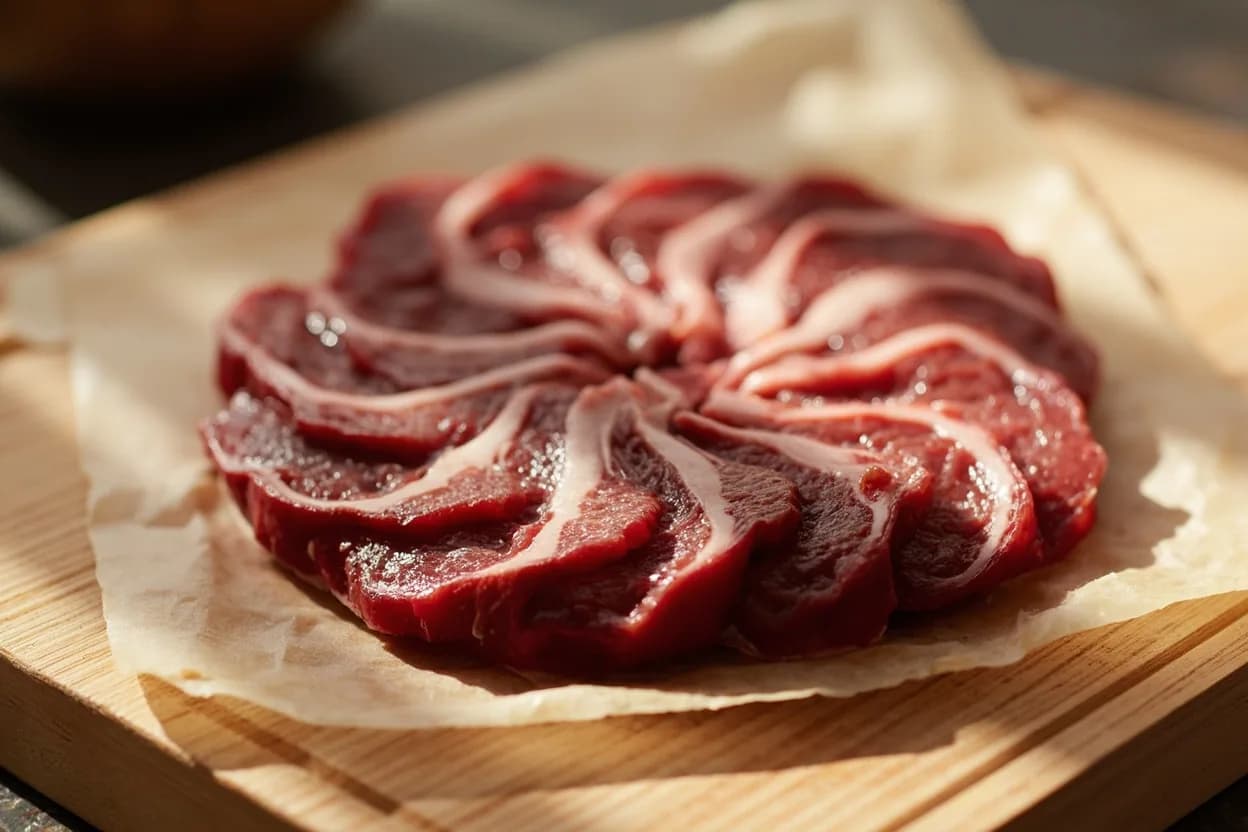
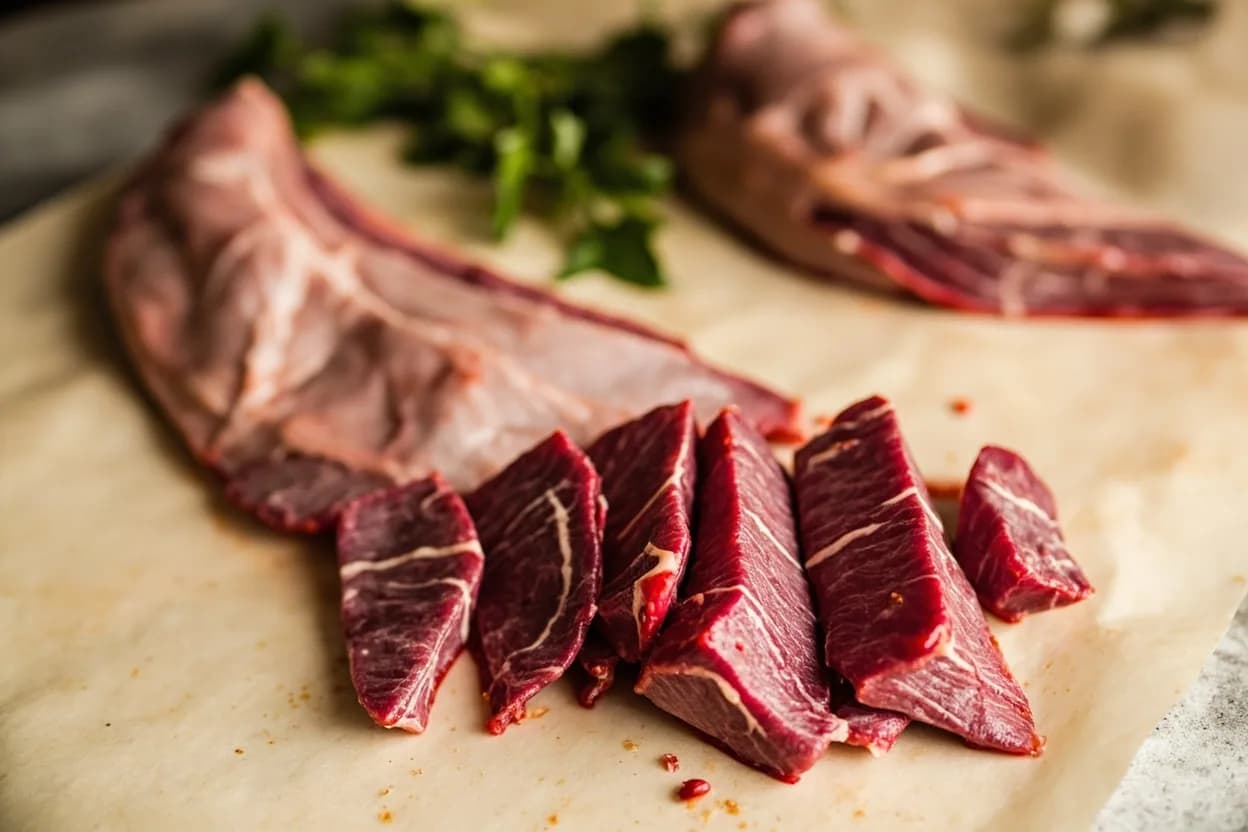
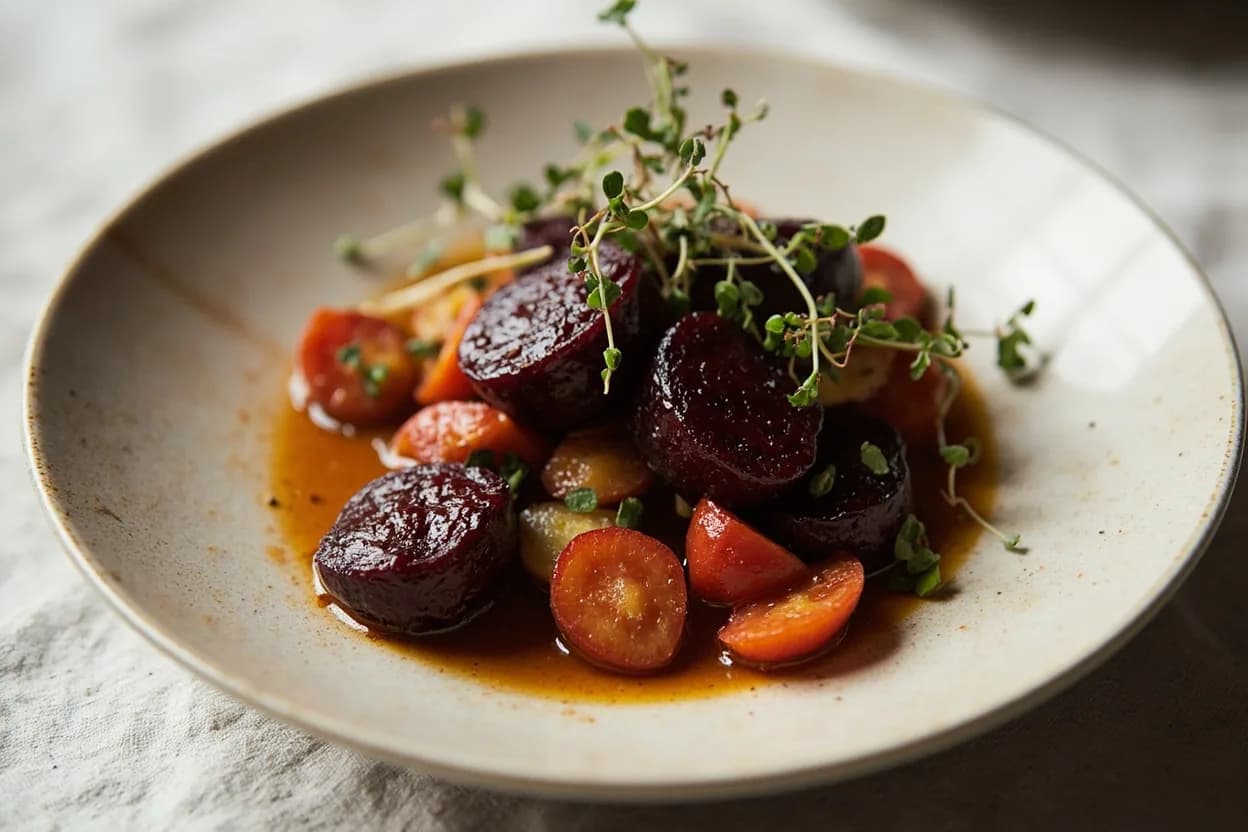
In photos
Where it comes from
Whole beetroot (Beta vulgaris), most commonly red (Detroit, Chioggia), golden, or candy-striped (Chioggia). The rouelle is taken from the cylindrical body of the root after trimming the taproot and crown. Beets of 6–8 cm diameter produce the most visually dramatic rouelles; very small baby beets are better halved or left whole.
Best for
How to cook it
- 1Wash beets thoroughly; peel with a vegetable peeler before cutting (wear gloves for red beet — betalain stains deeply). Alternatively, roast whole, cool, and rub the skins off after cooking if a smoother, sweeter flavor is desired.
- 2Trim the crown and taproot flat to create stable ends for the initial slice.
- 3Use a mandoline set to 10 mm for precision batches, or a sharp chef's knife for rustic cuts. Mandoline gives the cleanest cross-section and most consistent thickness for plating.
- 4For roasting: toss rouelles in olive oil, salt, and pepper; arrange in a single layer on parchment-lined sheet trays. Roast at 200°C for 25–30 minutes, flipping once, until tender throughout and edges are just beginning to caramelize.
- 5For braising: place rouelles in a single layer in a wide pan; add stock, orange juice, or wine to half-depth; cover and cook at medium-low heat 20–25 minutes. Remove lid and reduce liquid to a glaze in the final 5 minutes.
- 6For carpaccio: mandoline at 2–3 mm, blanch 30 seconds in boiling salted water, refresh in ice water, pat dry, and dress immediately.
Prep & butchery
- Handle red beet with disposable gloves and a plastic cutting board if staining is a concern — betalain dye penetrates wood grain and grout irreversibly.
- For mandoline work, use a cut-resistant glove and a mandoline with a hand guard; beet is among the firmest vegetables and the hardest to control safely.
- Keep different colored beet varieties (red, golden, Chioggia) strictly separated during cooking — red betalains will bleed into golden or striped flesh if they share liquid.
- If peeling after roasting (whole roasting method), the rouelle cut can be made post-cook: cool the whole roast beet, slip skin, then slice — results in less firm discs but more concentrated flavor.
- Acid (lemon juice, red wine vinegar) in the cooking liquid brightens and preserves betalain color; alkaline environments (baking soda) dull it.
Substitutes
- Beet wedges (eighths)
More casual, rustic cut; less elegant for plating but practical for bulk roasting on sheet trays
- Turnip rouelle
Same cut, milder flavor; almost interchangeable in most roasting applications
- Carrot rouelle (oblique cut)
Bias-cut carrot round — related but with an angled rather than perpendicular face
Related cuts
- Rouelle (lamb or pork)
The same cross-section cut applied to a cylindrical meat portion — same French term, analogous geometry
- Tournée (turned vegetable)
Classical French shaped cut applied to beet in haute cuisine; contrasts with the rustic simplicity of the rouelle
- Cucumber rounds
Rouelle geometry at smaller scale, thinner — often 3–5 mm for salads and canapé bases
Appears in
References
- 1.On Vegetables — Jeremy Fox
- 2.The French Laundry Cookbook — Thomas Keller
- 3.Vegetables — James Peterson
- 4.Larousse Gastronomique — Prosper Montagné (Ed.)
Confidence: high
Notes
Rouelle vs. rondelle
In French culinary vocabulary, 'rondelle' and 'rouelle' describe the same perpendicular round slice, but common usage distinguishes them by thickness: rondelle implies thin slices (2–5 mm, typical for carrots in a mirepoix or cucumber salads), while rouelle implies a thick steak-like section (8–15 mm) that can stand independently on the plate. Beet preparations that read as 'substantial' — roasted medallions, braised discs — use rouelle. The term carries an implicit hospitality signal: a rouelle is a serving portion, not just an ingredient preparation.
Chioggia beet: the showpiece rouelle
Chioggia (candy-striped) beet is almost exclusively cut as a rouelle rather than wedge-cut, because the perpendicular cross-section is the only cut that reveals the alternating red-and-white concentric rings that define its visual identity. The rings fade significantly during cooking — they are most vivid raw or very lightly dressed. For plated salads, raw Chioggia rouelles sliced at 3 mm on a mandoline and dressed with acid immediately on cutting retain their rings better than cooked versions. Cooking for more than 10 minutes causes the rings to bleed together into a uniform pale pink.