Beef — Primal & Subprimal
Beef Tripe — Honeycomb vs. Book (Blanket)
Also: honeycomb tripe, reticulum tripe, book tripe, blanket tripe, omasum tripe, trippa, callos, dobrada
The inner lining of a cow's stomach chambers — honeycomb (reticulum) and book/blanket (omasum) each have distinct textures and perform differently in hot pot, braise, and stew.
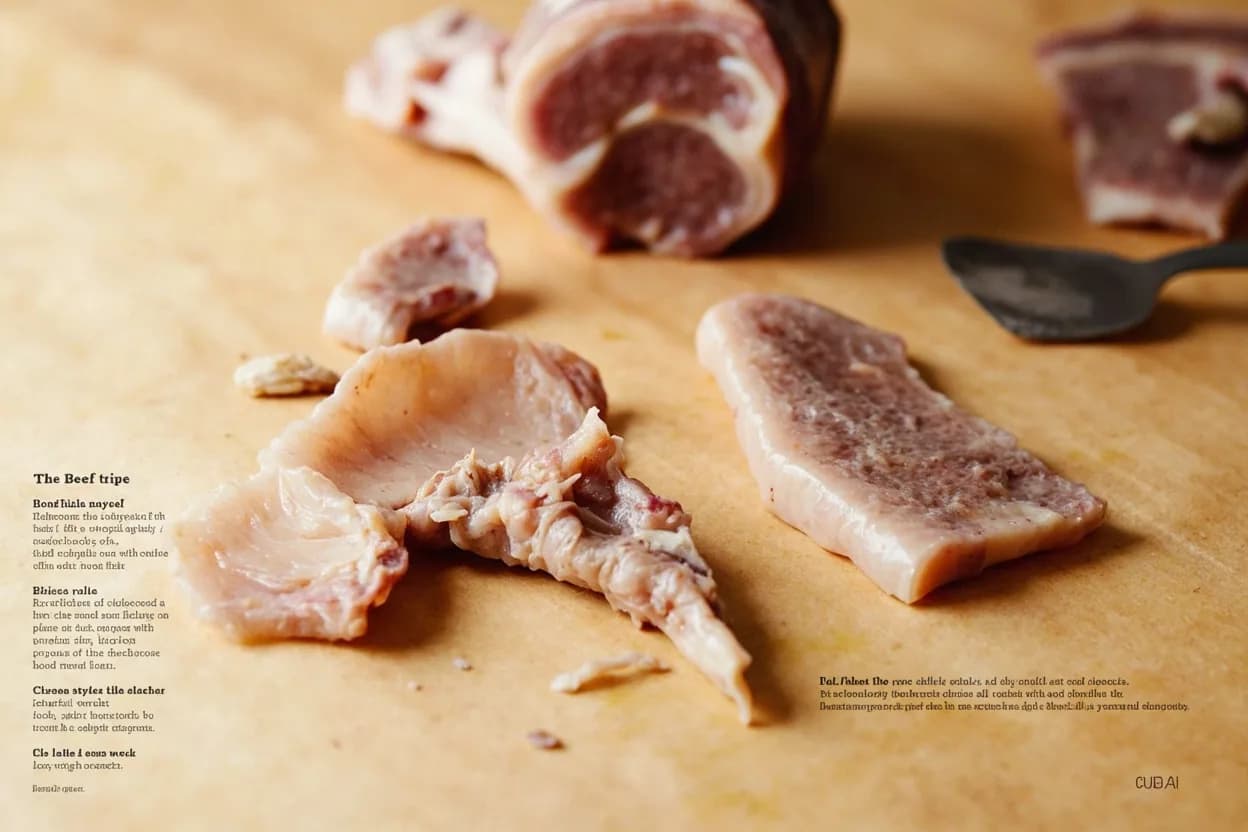
Beef tripe is the edible lining of the bovine stomach, which has four chambers: rumen (the largest, also called 'blanket' or 'flat' tripe), reticulum (honeycomb tripe), omasum (book or bible tripe), and abomasum (reed tripe, the least common commercially). Honeycomb and book tripe are the two most commonly sold and culinarily distinct types. Honeycomb tripe (reticulum) features a raised, hexagonal lattice pattern on one side; book/blanket tripe (omasum) consists of dozens of parallel leaf-like folds, like the pages of a book. Both require thorough cleaning and extended pre-cooking before incorporation into dishes.
In photos

Where it comes from
Second stomach chamber (reticulum) = honeycomb. Third stomach chamber (omasum) = book/bible/blanket. Both are the internal mucosal lining of their respective chambers. The rumen (first, largest chamber) produces 'flat' or 'blanket' tripe with a smooth surface — often grouped with book tripe in trade but anatomically distinct.
Best for
How to cook it
- 1CLEANING: Commercial tripe is sold pre-bleached (scalded and cleaned by the processor) and is off-white or pale yellow. Rinse thoroughly under cold running water, scrubbing both surfaces. For very fresh/green tripe, soak in salted water with vinegar for several hours, changing water twice.
- 2PRE-COOKING (essential): Place cleaned tripe in a large pot, cover with cold water plus aromatics (onion, bay leaf, peppercorns, vinegar or lemon juice). Bring to a boil, then drain and discard this first water. Repeat with fresh water and simmer for 1.5–3 hours until the tripe has softened enough to pierce easily with a finger but still has a definite chew. This step removes residual off-flavors and begins tenderizing.
- 3CUTTING honeycomb tripe: Cut into 4–6 cm squares or rectangles, following the natural ridges so the hexagonal pattern remains visible on each piece. The pattern is purely on the mucosal surface; the outer face is smoother.
- 4CUTTING book tripe: Separate the leaf folds and cut into 1–2 cm ribbons (tagliata style for Italian preparations) or 5–6 cm strips for stews. The many-layered folds will naturally separate during final braising.
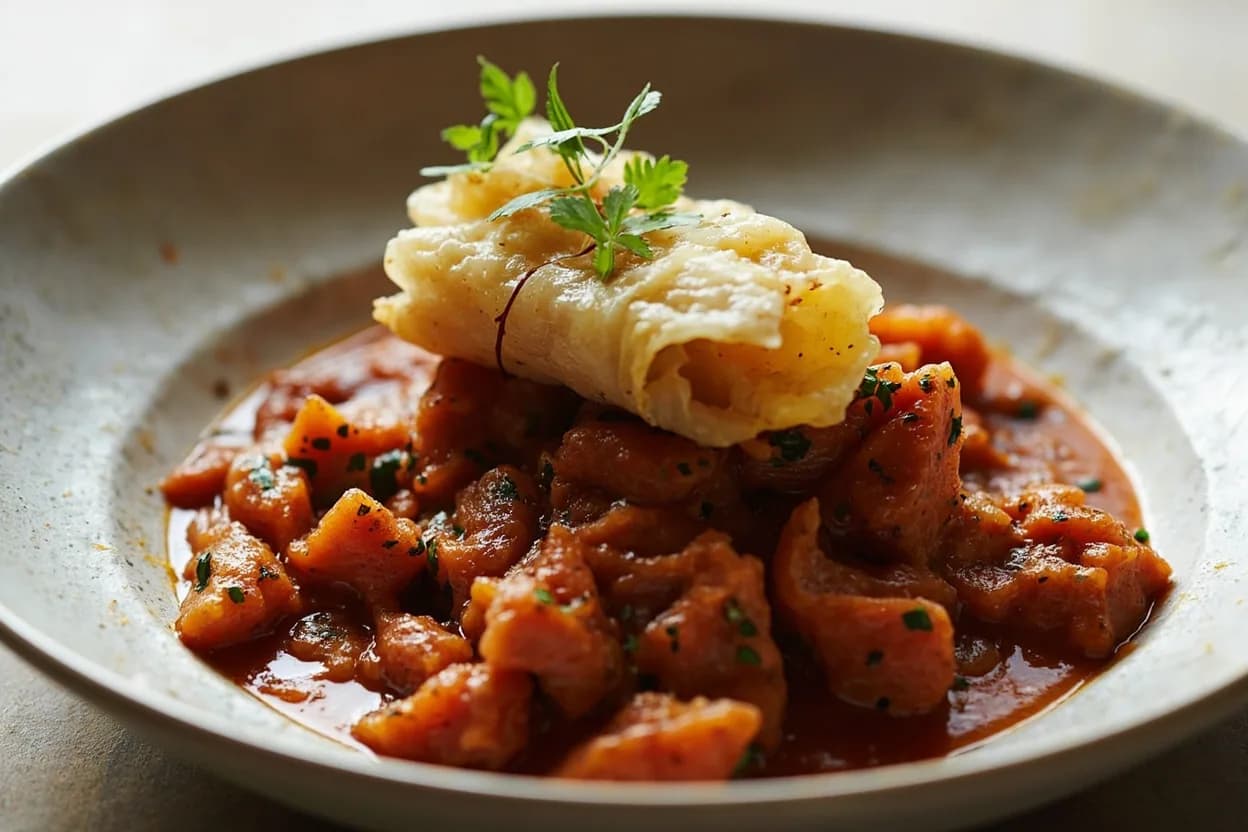
- 5FINAL BRAISE: After pre-cooking, incorporate into your chosen sauce base and braise for an additional 45–90 minutes until the tripe has absorbed the sauce flavors and reached your preferred tenderness.
- 6FOR HOT POT (shabu style): Use honeycomb tripe only; after pre-cooking, slice into thin strips and add to simmering broth tableside — it cooks in 30–60 seconds.
Prep & butchery
- IDENTIFY the type before purchasing if possible: honeycomb has an obvious raised hexagonal grid on one surface; book tripe looks like layered pages or a thick sponge with parallel folds.
- Commercial pre-cleaned tripe is safe to use without extensive home cleaning, but always blanch at least once before final cooking — the blanching liquid picks up residual processing odors.
- Acidity during pre-cooking (a splash of white wine vinegar, a squeeze of lemon, or white wine) significantly improves the final aroma and flavor neutrality of the finished dish.
- Freeze pre-cooked tripe in portioned bags for convenience — it keeps 3 months frozen and incorporates directly into hot braising liquids from frozen.
Substitutes
- Flat/Blanket Tripe (Rumen)
The same category of offal; larger, smoother surface; used interchangeably in stews but lacks honeycomb's visual appeal
- Pork Stomach
Similar texture when cooked; smaller; used in some Asian preparations requiring tripe-like texture
- Pork Intestine (large)
Similar chewy character; very different anatomy; used in Chinese and Korean dishes as a textural substitute
Related cuts
- Reed Tripe (Abomasum)
The fourth stomach chamber; more strongly flavored; less common commercially; used in certain African and Latin preparations
- Beef Tongue
Another organ cut requiring blanching and skin/membrane removal before final cooking
Also requires extended pre-trimming and moist-heat cooking; collagen-rich but muscle-based rather than organ
Appears in
References
- 1.Nose to Tail Eating — Fergus Henderson (Bloomsbury, 1999)
- 2.The Oxford Companion to Food — Alan Davidson (Oxford University Press, 2014)
- 3.On Food and Cooking: The Science and Lore of the Kitchen — Harold McGee (Scribner, 2004)
- 4.Land of Fish and Rice: Recipes from the Culinary Heart of China — Fuchsia Dunlop (W. W. Norton, 2016)
Confidence: high
Notes
Honeycomb vs. Book: Choosing for Your Dish
Honeycomb (reticulum) is the prestige tripe for most Western preparations: the raised hexagonal lattice is visually striking, the texture is pleasantly uniform, and the cells trap sauce in a way that makes each bite flavorful. It is the type specified in classical Italian and Spanish recipes. Book/omasum tripe is finer-textured, cuts into natural ribbons, and is preferred for thin-sliced hot pot applications and dim sum. In Chinese wet markets, book tripe is often sold raw and thinly sliced for immediate hot pot use, while honeycomb is reserved for long-braised preparations. When a recipe simply says 'tripe,' honeycomb is the safe default.
The Bleaching Question
Most commercial tripe in Western markets is sold after industrial bleaching (treatment with chlorine or hydrogen peroxide) to whiten the product and reduce odor. This produces the pale, almost cream-colored tripe familiar to most shoppers. Some traditional butchers and immigrant markets sell 'green' (unbleached, partially cleaned) tripe, which has a stronger smell but more nuanced flavor. Green tripe requires significantly more home cleaning — multiple soaks and blanches — but many experienced tripe cooks prefer the deeper result. The pale commercial product is the better starting point for those new to the ingredient.