Lamb & Goat — Primal & Subprimal
Boti (Boneless Cubed Meat for Skewering)
Also: boti kebab, gosht boti, tikka cut, lamb cubes, skewer cut
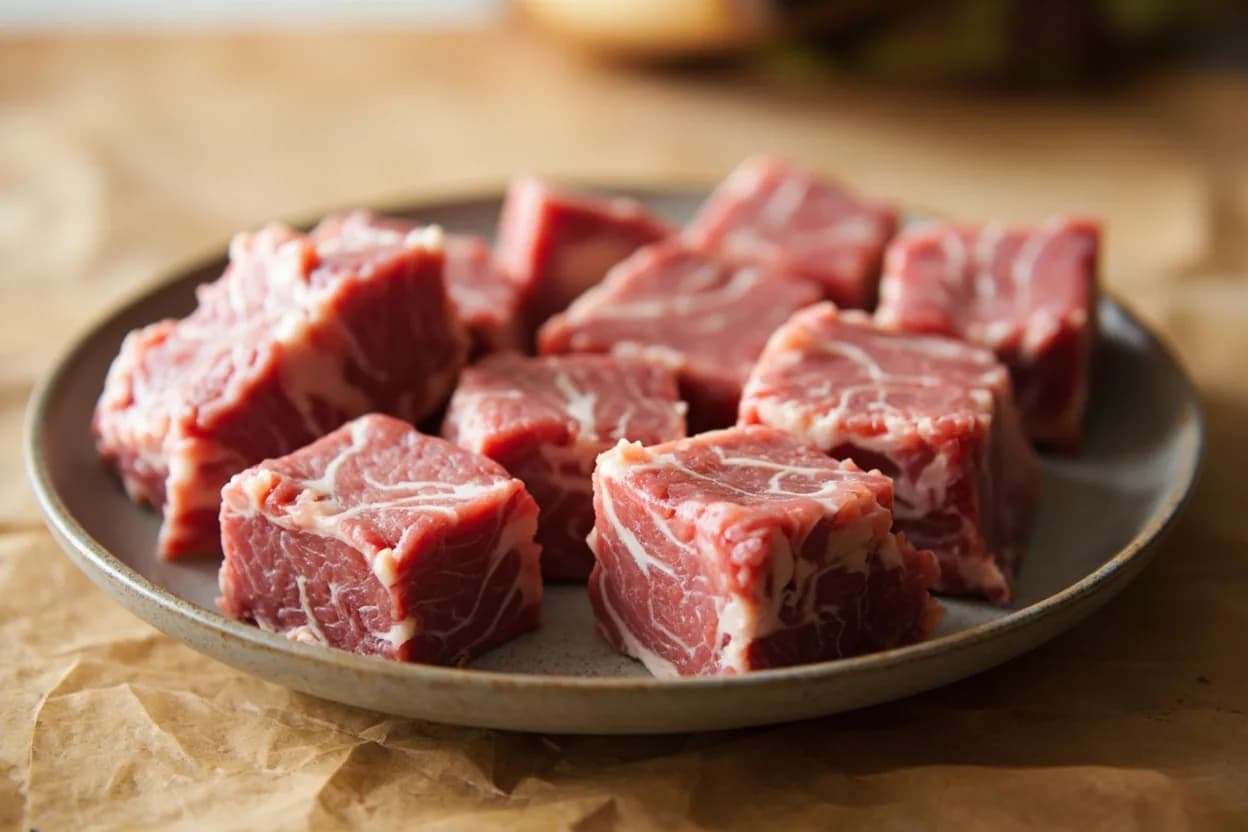
South Asian boneless 3 cm cubes of lamb or goat shoulder or leg, cleaned of sinew and threaded onto skewers for tandoor or charcoal cooking.
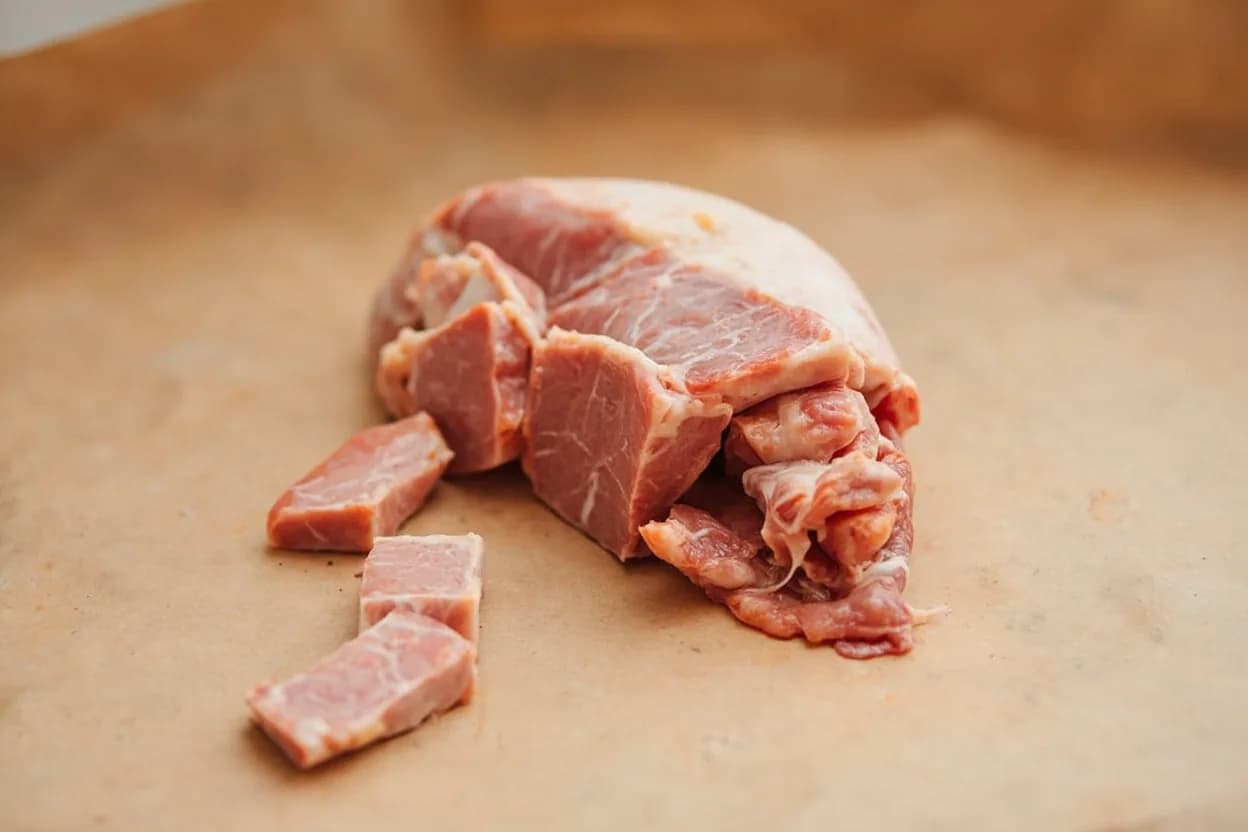
Boti (also boti kebab) is both a cut specification and a preparation format in South Asian culinary tradition. The cut: boneless lamb or goat meat trimmed of all silverskin and hard sinew, cut into uniform cubes of approximately 3 cm (sometimes specified as 'one-inch pieces'). The format: marinated cubes threaded directly onto flat metal skewers (seekh) or bamboo sticks and cooked under intense dry heat. Unlike seekh kebab, which uses ground meat, boti uses intact muscle cubes. The preferred source is shoulder (blade and arm) or hind leg (topside and silverside) — muscles with enough intramuscular fat to survive skewer cooking without drying out.
In photos

Where it comes from
Primarily the shoulder (the blade muscle group and arm) and the hind leg (topside/adductor and silverside/biceps femoris). The shoulder is preferred by many cooks for its slightly higher fat content and more forgiving texture. Leg cubes are leaner and can dry out if overcooked. Loin and rack meat is too expensive and too tender for skewer applications — the delicacy of that cut is wasted at high-heat cube cooking.
Best for
How to cook it
- 1Trim all silverskin and sinew from the muscle groups before cutting — pass each muscle belly through your fingers to locate hard cords, then excise with a sharp boning knife.
- 2Cut across the grain of each muscle into 3 cm cubes. Consistent sizing (weigh a few cubes if needed — target 25–30 g each) ensures uniform cooking.
- 3First marinade layer (tenderiser): coat with raw papaya paste or kachri powder (dried melon) mixed with a pinch of salt. Leave 30–45 minutes at room temperature. Rinse off before applying spice marinade.
- 4Second marinade layer: yogurt, ginger-garlic paste, red chilli powder, coriander-cumin powder, garam masala, mustard oil, and salt. Marinate 4–24 hours refrigerated. Bring to room temperature 30 minutes before cooking.
- 5Thread cubes onto flat metal seekh skewers, leaving 1 cm between each cube to allow hot air circulation — touching cubes steam rather than char.
- 6In a tandoor at 380–420 °C: cook 6–8 minutes, turning once, until char marks appear and the interior reads 71 °C (well-done, the standard for South Asian boti) or 63 °C for medium-rare (less common in traditional contexts).
- 7Serve immediately on the skewer, slid onto naan with raw onion rings, green chutney, and a squeeze of lemon.
Prep & butchery
- Use a sharp boning knife for silverskin removal — a dull blade tears rather than slices, shredding the muscle surface.
- Partially freeze the meat (30 minutes in the freezer) before cubing for cleaner, more uniform cuts.
- Cut each muscle group separately, following the natural seam lines first, then cube — this ensures you are always cutting across the grain of each individual muscle.
- If using leg, separate the topside, silverside, and knuckle at their seams before cubing — each muscle has a different grain direction.
- For restaurant-volume production, a commercial meat slicer set to 3 cm can produce consistent slabs that are then hand-cubed.
Substitutes
- Beef cubes (chuck)
Similar fat content and texture; halal-appropriate; substitute in equal quantity with same marinade.
- Chicken thigh cubes
Much faster cooking (4–5 min); adjust marinade to add more fat (extra oil or cream).
- Lamb leg cubes
Leaner than shoulder; reduce cooking time by 1–2 minutes to prevent drying.
Related cuts
- Seekh kebab meat
Ground version from the same primals — minced rather than cubed.
- Champ (rib cutlets)
Bone-in counterpart from the rack primal; both are tandoor staples.
- Shami kebab meat
Ground and bound with chana dal — a related preparation from the same lamb shoulder source.
- Lamb shoulder
The source primal — whole blade and arm muscle group before cubing.
- Tikka (chicken)
Conceptually parallel preparation using boneless chicken thigh cubes on skewers.
Appears in
References
- 1.Prashad: Cooking with Indian Masters — J. Inder Singh Kalra
- 2.50 Great Curries of India — Camellia Panjabi
- 3.The Complete Indian Regional Cookbook — Mridula Baljekar
- 4.On Food and Cooking — Harold McGee
Confidence: high
Notes
Why sinew removal is non-negotiable
Silverskin (the iridescent white connective tissue sheathing major muscle groups) is composed of elastin, not collagen. Unlike collagen, elastin does not convert to gelatin during cooking — it simply tightens and shortens, constricting the cube around it and producing a rubberband effect at the bite. In a boti kebab cooked for 7 minutes at tandoor temperatures, there is no time for even partial breakdown. The removal step takes 5 minutes per kilo of meat and is the single greatest quality determinant in the finished kebab.
The cube size debate
Traditional tandoor boti calls for 3 cm cubes — small enough to cook through in 6–8 minutes at tandoor temperatures without burning the exterior. Home grill cooks often cut larger (4–5 cm), which means the exterior chars before the centre reaches temperature. The fix is lower heat (180–200 °C oven, or a cooler charcoal zone) with longer cooking time, or a pre-sear then finish method. Restaurant tandoors operate at temperatures home equipment cannot replicate, so the 3 cm cube size should be adjusted down — not up — when cooking at home.