Beef — Primal & Subprimal
Bresaola Source Cut (Eye of Round)
Also: eye of round, magatello, silverside center, girello (Italian), round eye
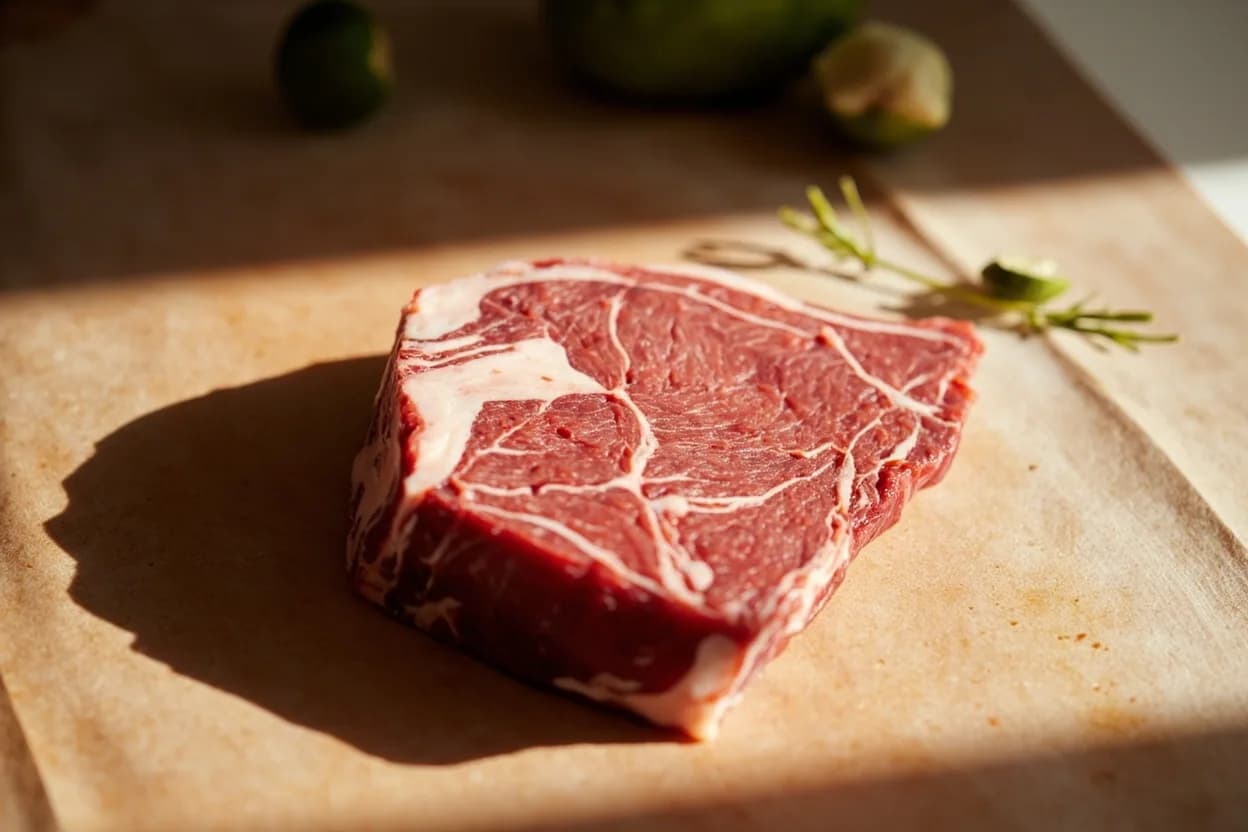
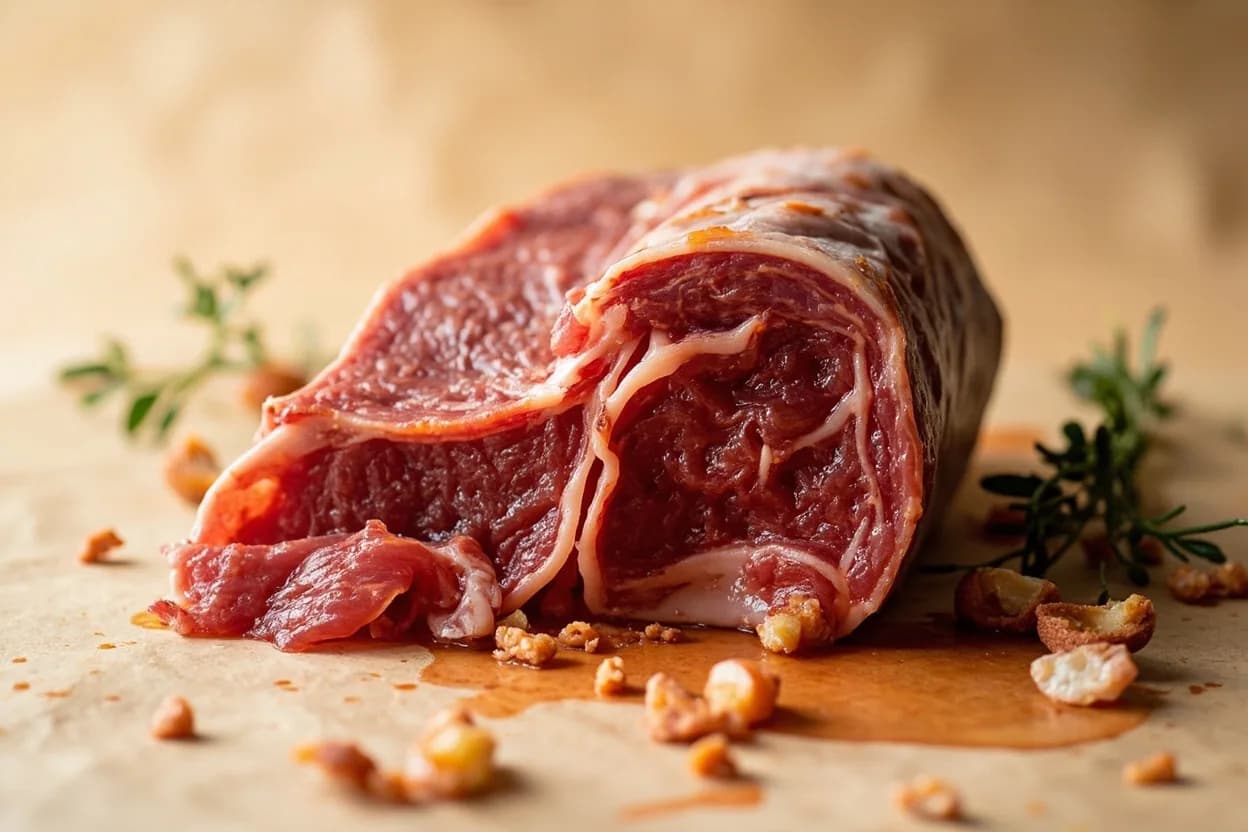
The eye of round — a lean, cylindrical muscle from the beef hindquarter — is the canonical cut for bresaola, chosen for its uniform shape, tight grain, and near-zero intramuscular fat.
The eye of round (M. flexor digitorum superficialis / M. gastrocnemius in some classifications, though anatomically it is the isolated M. semitendinosus complex) is a discrete, nearly cylindrical muscle sitting at the center of the round primal, surrounded by the top round, bottom round, and heel. It is the leanest major muscle in the carcass, with minimal connective tissue sheaths and a long, parallel fiber structure. These qualities — uniformity of shape, consistent diameter (roughly 8–12 cm), exceptionally low fat, and tight grain — make it the Italian curer's first choice for bresaola della Valtellina, the air-dried salted beef of Lombardy's Sondrio province.
In photos
Where it comes from
Hindquarter round primal; specifically the central muscle of the round, positioned medial to the semimembranosus (top round) and lateral to the biceps femoris (bottom round). It runs the full length of the femur and is extracted as a single, clean log after seaming.
Best for
How to cook it
- 1For bresaola: trim all external fat and silverskin completely. Apply a dry cure of kosher salt, sugar, black pepper, juniper berries, rosemary, bay, and cloves. Vacuum-seal or wrap tightly, refrigerate 10–15 days turning daily. Rinse, tie in a cylinder with butcher's twine at 2 cm intervals, and hang in a cool (12–14 °C / 54–57 °F), humid (75–80% RH) curing chamber 4–8 weeks until the exterior is firm and the internal temperature stabilizes around 55 °F / 13 °C.
- 2For roast beef: sear the exterior in a cast-iron pan over high heat 2 minutes per side to build a crust. Transfer to a 250 °F / 121 °C oven and roast to an internal temperature of 130–135 °F / 54–57 °C. Rest 15 minutes before slicing paper-thin against the grain.
- 3Do not cook eye of round beyond medium-rare as a steak — long fibers become unpleasantly tough and chewy without the benefit of collagen to compensate.
Prep & butchery
- Seam the eye of round free from the top and bottom round using a flexible boning knife, following the natural fascial planes.
- Remove all external fat and silverskin — any fat left on the surface will turn rancid during the multi-week curing process.
- Weigh the trimmed muscle and calculate salt at 2.5–3% of weight for a standard bresaola cure.
- Tie a loop of butcher's twine around one end before hanging — this is the hanging knot; additional ties every 2 cm maintain the cylindrical shape as the muscle contracts during drying.
- Mark the seam end (often slightly tapered) so all slices in a batch come from the same orientation.
Substitutes
- Top Round
Also used for bresaola and pastrami; slightly larger, less perfectly cylindrical, and marginally more marbled — results are good but slices are wider and less uniform.
- Bottom Round Flat
Leaner seam can substitute; less uniform shape means uneven curing — requires more careful rotation.
- Venison haunch (semimembranosus)
Deer rear leg provides a comparable lean, cylindrical muscle for game bresaola; adjust cure slightly for lower myoglobin levels.
Related cuts
- Top Round
The semimembranosus; larger adjacent muscle, second choice for bresaola
- Bottom Round
Biceps femoris group; tougher and less uniform, used for lesser-grade cured products
- Knuckle (Sirloin Tip)
Anterior to the round; occasionally used for bresaola in commercial production
Appears in
References
- 1.Salumi: The Craft of Italian Dry Curing — Michael Ruhlman & Brian Polcyn, W. W. Norton & Company
- 2.The Art of Making Fermented Sausages — Stanley Marianski & Adam Marianski
- 3.Denominazione di Origine Protetta specification for Bresaola della Valtellina, European Commission
- 4.NAMP Meat Buyers Guide — Item 1170 (Eye of Round), North American Meat Institute
Confidence: high
Notes
DOP specification
Bresaola della Valtellina holds EU DOP (Protected Designation of Origin) status. The specification mandates Italian-bred or -raised beef (or from a short list of neighboring countries), specific muscle cuts from the hindquarter (including the eye of round, top round, and knuckle, depending on product class), and curing in the Valtellina valley of Sondrio province. Home curers outside Italy can make excellent bresaola-style beef but cannot legally call it Bresaola della Valtellina.
Color retention
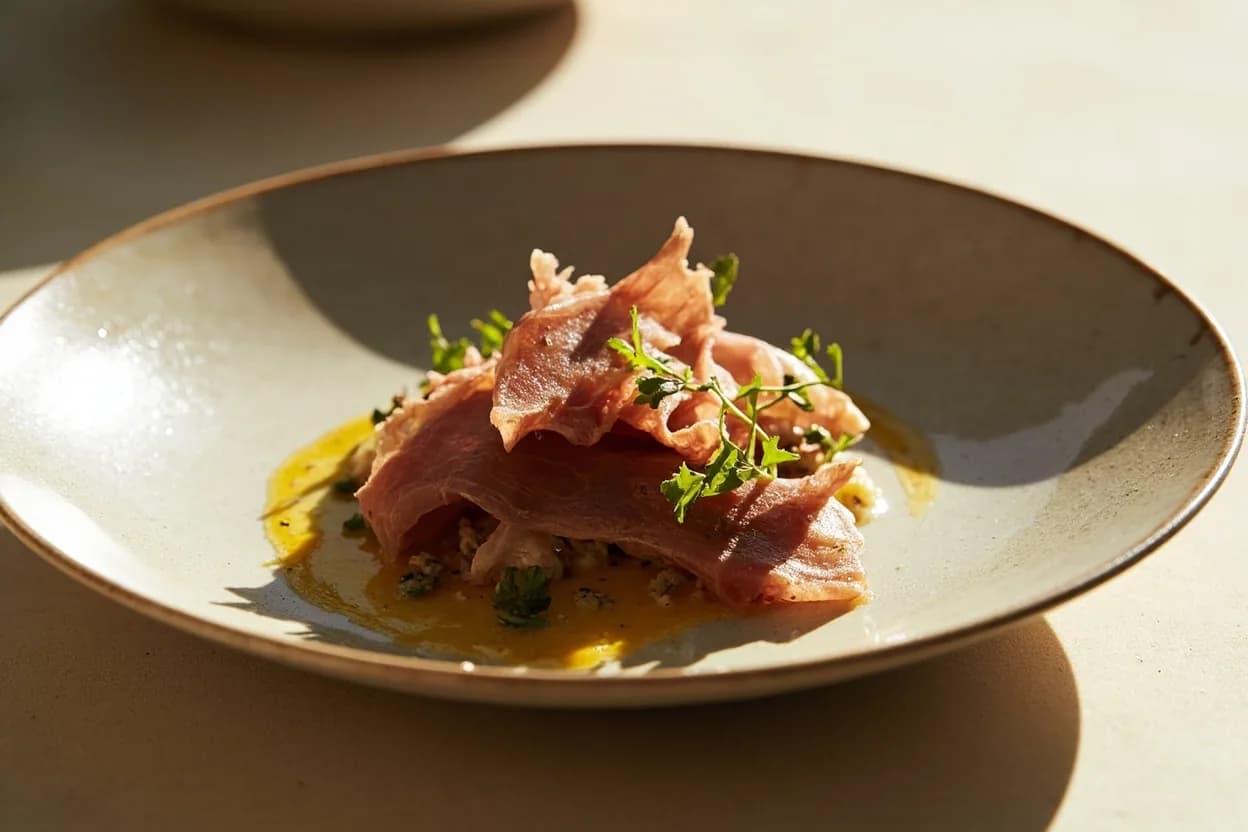
The deep ruby-red color of cured bresaola comes from myoglobin reacted with nitrite (from the cure) forming nitrosomyoglobin. Because the eye of round is so lean, the color is very uniform and vivid — one reason it photographs so dramatically on a plate and commands a premium at the deli counter.