Knife Cuts — Regional & Global
Coconut — Scraped vs. Grated
Also: thenga chutney grate, coconut grater scrape, fresh coconut prep, nariyal grate
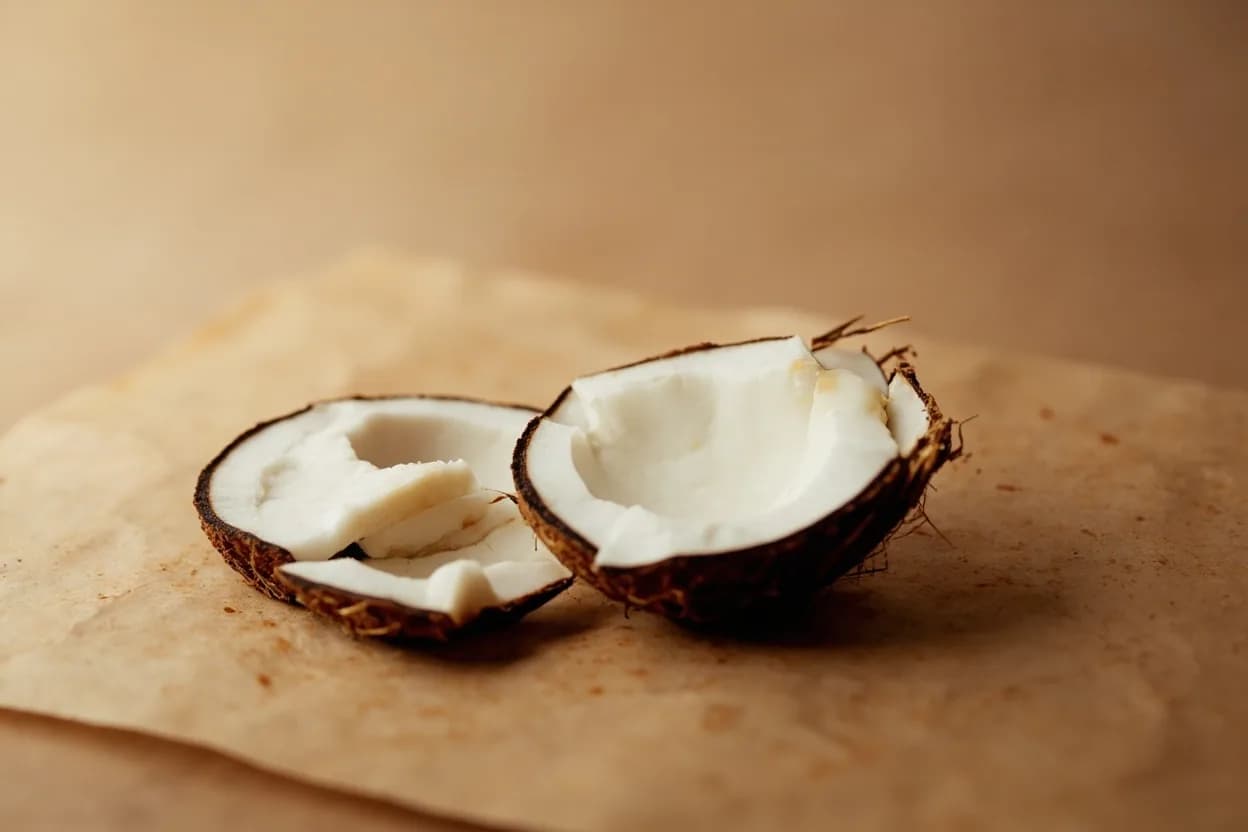
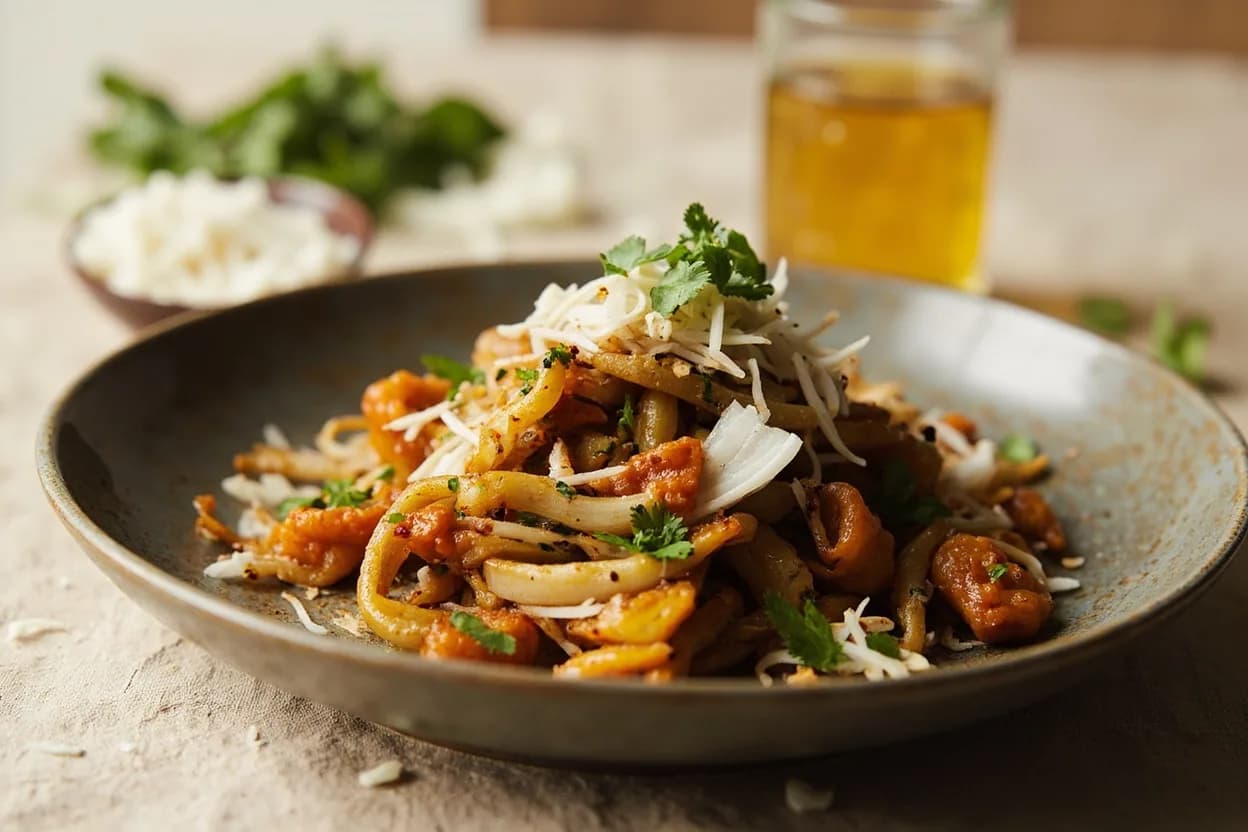
Two approaches to reducing fresh coconut flesh — a serrated grater that produces long, moist shreds for curries, and a box grater that yields fine, fluffy crumbs ideal for chutneys and desserts.
After cracking and halving a fresh mature coconut (Cocos nucifera), the white flesh can be extracted by two contrasting methods. Scraping uses a traditional coconut scraper (arachu, desiccated-style tool, or kerukunai) — a mounted toothed iron disc over which the halved coconut is pressed and turned, producing long, coarse, wet strands that retain more moisture and fiber. Grating uses a fine-toothed box grater, microplane, or electric grater to produce short, fine, dry-textured shreds or near-powder, with less retained water and a fluffier, more uniform texture.
In photos
Where it comes from
The endosperm (flesh/meat) of the mature coconut fruit, the white layer lining the inner shell wall. Thickness varies 8–14 mm in a mature nut; younger nuts have thinner, jelly-like flesh unsuitable for scraping or grating.
Best for
How to cook it
- 1Crack the coconut: hold over a bowl, tap sharply around the equator with the back of a heavy cleaver, rotating after each tap. After 6–8 taps the shell splits and the water drains into the bowl.
- 2Pry the white flesh from the shell halves using a coconut prying tool or a sturdy butter knife inserted between flesh and shell. Alternatively, bake the cracked halves at 180°C (350°F) for 15 minutes — the flesh contracts and releases cleanly.
- 3For scraping: press the cut face of a coconut half onto the spiked disc of a traditional coconut scraper (common throughout South and Southeast Asia and available in South Asian kitchenware shops). Rotate the coconut against the spines with steady downward pressure — long white shreds collect beneath. Work in concentric circles moving inward.
- 4For box grating: peel away any remaining brown skin with a vegetable peeler or small knife if a clean white product is required. Press pieces against the medium or fine holes of a box grater using short, firm downward strokes. For very fine results use a Microplane.
- 5Use freshly scraped or grated coconut within 4 hours at room temperature, or freeze in portions for up to 3 months.
Prep & butchery
- Brown skin on the inner face of the flesh is harmless but can be scraped off with a vegetable peeler for cleaner white presentation.
- A traditional South Asian coconut scraper (fixed to a board and worked on the floor) is the fastest tool for large quantities; electric versions also exist.
- For chutneys, some cooks grate the coconut and then give it one pass in the blender with a tablespoon of water to achieve an ultra-smooth, almost creamy texture.
- The coconut water collected during cracking is not part of the scraping/grating prep but can be added back to curries or used as a cooking liquid.
Substitutes
- Desiccated coconut (unsweetened)
Dried and shredded; can replace grated fresh coconut in chutneys if rehydrated with a little warm water, but lacks fresh milk fat flavor.
- Frozen grated coconut
Widely available in South Asian markets; closest substitute to freshly grated with minimal quality loss after thawing.
- Creamed coconut block
Highly concentrated; can substitute grated coconut in sweets but introduces more fat and less texture.
Related cuts
- Coconut milk extraction (squeeze method)
Scraped coconut is the starting point; flesh is squeezed in warm water to yield first and second press coconut milk.
- Microplane zest (citrus)
The box/microplane grating technique is identical; both aim for fine aromatic particles.
- Daikon — finely grated (oroshi)
Japanese daikon grating on a ceramic oroshi shares the goal of producing ultra-fine, wet-textured shreds that blend into a sauce.
Appears in
References
- 1.The Complete Asian Cookbook — Charmaine Solomon
- 2.Dakshin: Vegetarian Cuisine from South India — Chandra Padmanabhan
- 3.Cradle of Gold: Sri Lankan Cooking — Channa Dassanayaka
- 4.On Food and Cooking: The Science and Lore of the Kitchen — Harold McGee
Confidence: high
Notes
Tool and tradition
The coconut scraper (known as 'aruvamanai' or 'kerukunai' in Tamil, 'chakkizhakki' in Malayalam) is one of the most culturally specific kitchen tools in South and Southeast Asian cooking. It is typically a low wooden stool with a serrated iron wheel mounted at one end; the cook sits on the stool and presses the coconut against the wheel. In Sri Lanka and coastal Karnataka, the tool is used several times daily. The geometry of the wheel produces the characteristic long strands of scraped coconut, which no box grater can replicate.
Texture consequence in dishes
The choice between scraped and grated is not interchangeable in traditional recipes. A thoran with finely grated coconut becomes pasty and clumps around the vegetable rather than coating it. A coconut chutney made with coarsely scraped coconut will be grainy and fail to emulsify the green chili and ginger into a smooth paste. Understanding the target texture of the finished dish is the primary guide for choosing between the two methods.