Seafood & Shellfish Breakdown
Clam Shucking (Raw vs. Steamed)
Also: clam opening, shucking clams, clam knife technique, half-shell clam prep
Opening clams either raw with a clam knife via lip entry and adductor severance, or steamed open with heat, then finishing with knife work for clean presentation on the half shell.
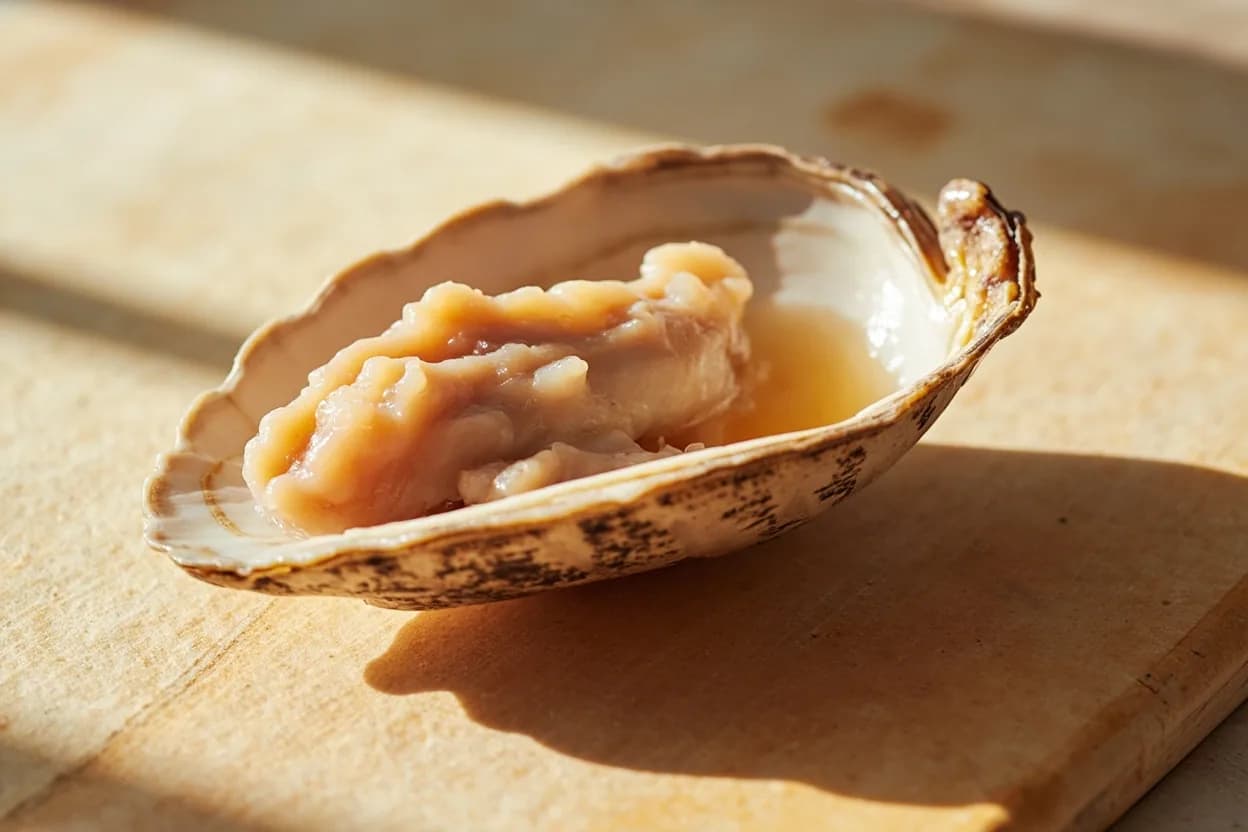
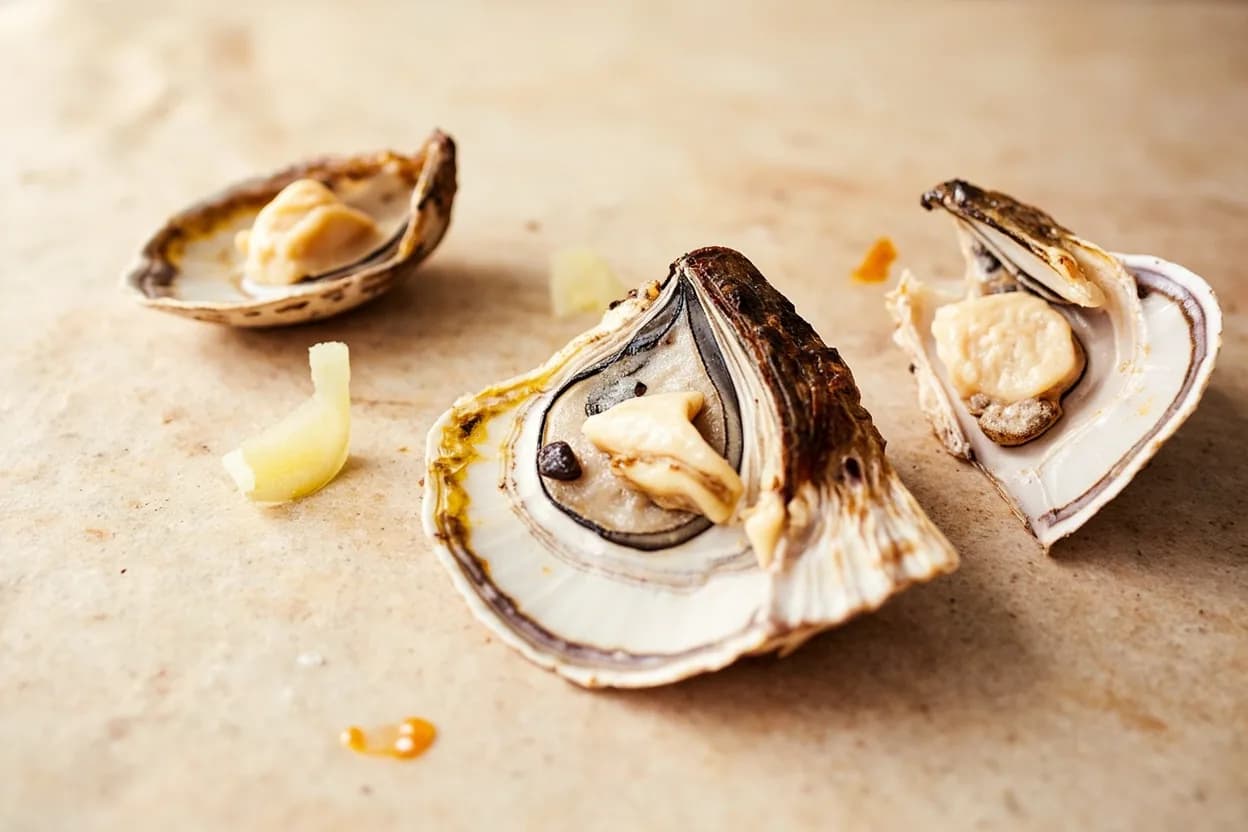
Clam shucking describes the process of separating the two valves of a live bivalve mollusc to access the meat within. Raw shucking uses a clam knife (broader and more flexible than an oyster knife) inserted at the lip — the thin anterior margin of the shell — to sever the anterior and posterior adductor muscles, then prying the shell open. The steamed-open method applies brief heat (steam or a dry pan) just until the valve seal relaxes, then finishes with knife work to separate the meat cleanly. The two methods suit different species and purposes: raw for littlenecks and cherrystones at the raw bar; steamed for larger quahogs, Mahogany clams, and for recipes requiring whole open clams.
In photos
Where it comes from
Primary species shucked raw: Littleneck clam (Mercenaria mercenaria, small — under 5 cm), Cherrystone (M. mercenaria, medium — 5–6.5 cm), Manila clam (Ruditapes philippinarum). Steamed-open method more common for: Quahog / Chowder clam (M. mercenaria large), Razor clam (Ensis spp.), Surf clam (Spisula solidissima). Soft-shell clams (Mya arenaria) are almost always steamed open. Unlike oysters, clams have two adductor muscles — anterior and posterior — both must be cut for the shell to open flat.
Best for
How to cook it
- 1RAW SHUCKING — Scrub clams under cold water with a stiff brush. Refrigerate on ice, hinge-down, until ready to shuck.
- 2Hold the clam in a folded towel, flat side of the shell facing you. Insert the thin blade of the clam knife into the lip — the thin edge on the opposite side from the hinge — and work it along the seam between the two valves with a sawing motion.
- 3Once the blade is inside, angle it against the top flat shell and slide it firmly to the rear of the shell, cutting through the posterior adductor muscle. Then slide forward to sever the anterior adductor.
- 4Lift and remove the top shell. Run the knife under the clam meat to sever it from the cup shell (cut the bottom adductor muscle insertions). The clam should now sit freely in the cup shell in its liquor.
- 5Inspect for shell chips. Tilt to ensure liquor is present. Do not rinse. Set on a bed of crushed ice immediately.
- 6STEAMED OPEN — Place clams in a wide pan with a splash of liquid (water, wine, or stock). Cover tightly and set over high heat.
- 7After 2–4 minutes, check: remove any clams that have opened and set aside. Continue steaming remaining clams in 1-minute intervals. Discard any that remain shut after 8 minutes.
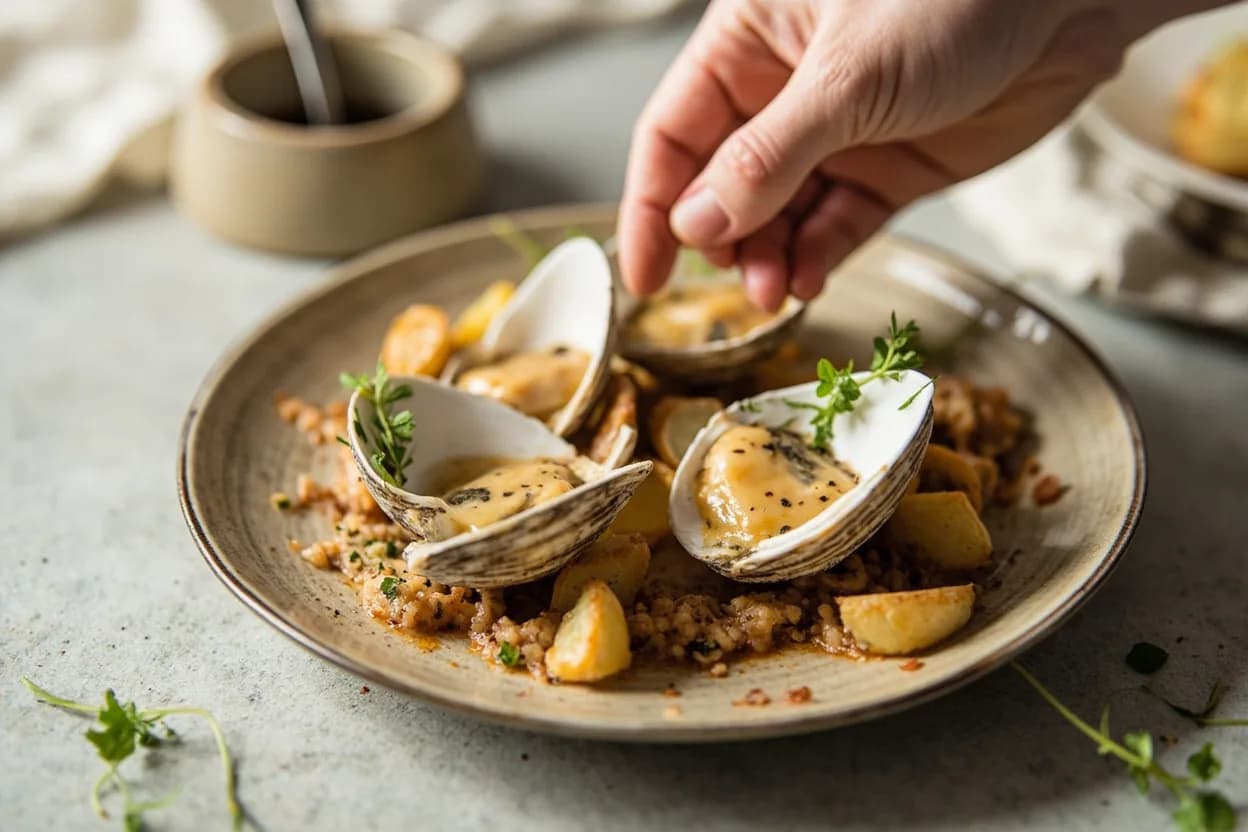
- 8For presentation on the half shell from steamed clams: allow to cool briefly, then use the clam knife to sever the adductor muscles from both shells cleanly, and remove the top shell — the meat will hold its shape better than if prised open raw.
Prep & butchery
- Purge sand: soak hard-shell clams in cold salted water (35 g salt per litre) for 20–30 minutes before shucking; they expel sand. Soft-shell clams need a longer purge (up to 2 hours) as they are burrowers.
- A clam knife with a rounded tip and a slight flex in the blade is the correct tool. A stiff oyster knife will crack shell and damage meat.
- Refrigerate clams at 2–4 °C and use within 2 days of purchase. Any clam that is open raw and does not close when tapped is dead — discard.
- For littlenecks served raw, shucking into a bowl of crushed ice keeps the cup shell cold and stable for service.
- Save all clam liquor — strained through a fine sieve — for pasta sauces, chowder bases, and risottos. It is intensely seasoned and should substitute for added salt in any clam recipe.
Substitutes
- Oyster (raw, hinge-entry)
Single adductor, hinge-entry method; oyster knife not interchangeable with clam knife — blades differ in flex and width
- Cockles (steamed open)
Too small to shuck raw; steam-open method is identical; adductor severance is rarely needed as meat pulls free
- Mussels (steamed open)
Never shucked raw for service; same steam-open protocol; discard any that stay closed
Related cuts
Sister bivalve technique; hinge-entry vs. lip-entry; single vs. dual adductor the key anatomical difference
- Mussel Debearding & Opening
Mussels open by steam only; the byssus (beard) must be pulled free before cooking
Appears in
References
- 1.Fish & Shellfish — James Peterson (William Morrow, 1996)
- 2.The New England Clam Shack Cookbook — Brooke Dojny (Storey, 2003)
- 3.On Food and Cooking — Harold McGee (Scribner, 2004)
- 4.The Professional Chef — Culinary Institute of America (Wiley, 9th ed., 2011)
Confidence: high
Notes
Raw vs. steamed: which to choose
The raw method is the only choice for half-shell service — steaming even slightly cooks the meat and changes its texture from silky-firm to slightly rubbery. Steaming is superior when the clams will be cooked further (in pasta, chowder, or gratins) because it is faster, safer (pasteurises the meat), and allows even large batches to be opened in minutes. The steamed-open method is also better for oversized quahogs whose lip is too thick for comfortable raw shucking.
The lip-entry vs. hinge-entry question for clams
Unlike oysters — where hinge entry is unambiguously correct — clams are almost universally opened via lip entry. The hinge of most clam species is reinforced with a thick, curved ligament (the chondrophore) that makes hinge-entry shucking impractical with a clam knife. Professionals occasionally use a hinge approach on very thin-lipped clams (some Manila varieties) but it remains a niche technique. Lip entry, executed with the correct flexible-blade clam knife, is the standard.