Knife Cuts — Classical French
Ciseler (Fine Shallot / Onion Dice)
Also: ciseler, ciseléed onion, French fine dice, fine shallot dice
The French knife technique for producing ultra-fine, even dice from an onion or shallot without ever moving the bulb on the board.
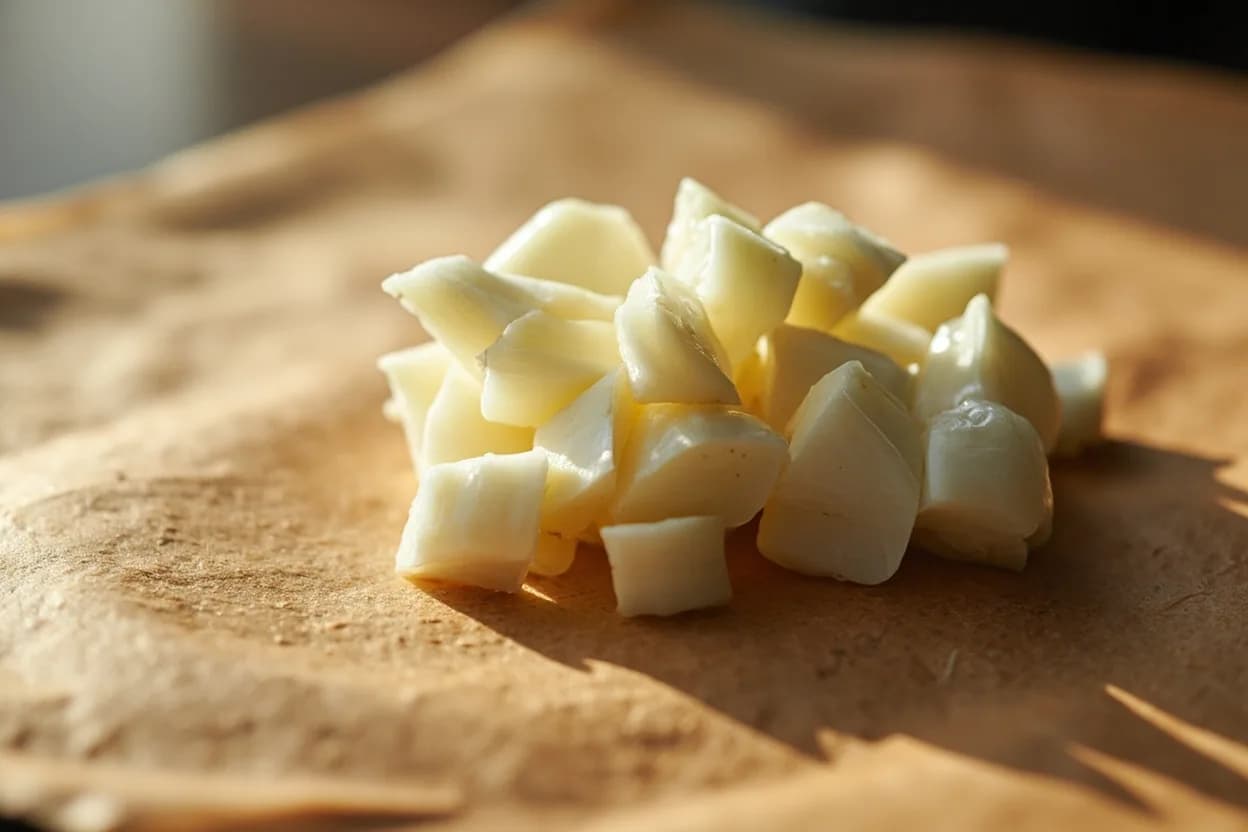
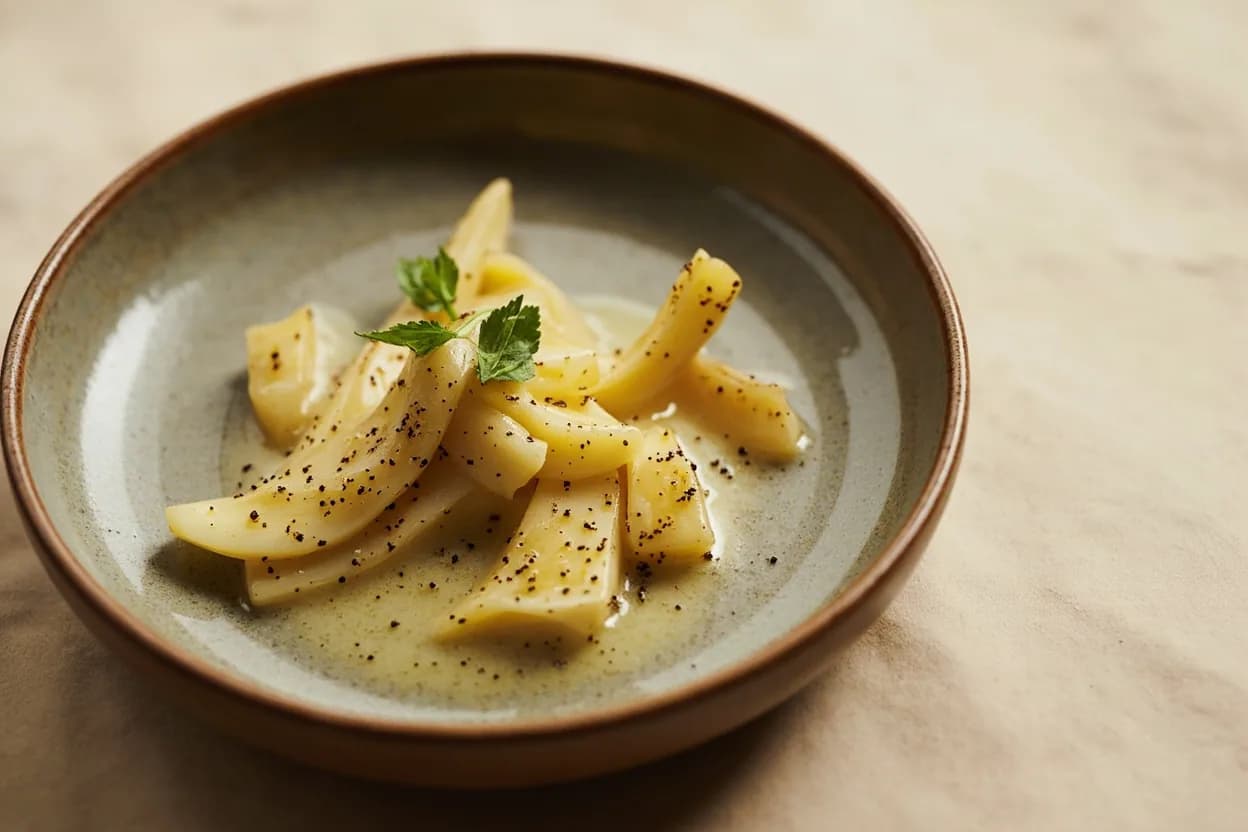
Ciseler — from the French verb 'to chisel' — is the classical technique for cutting onions and shallots into a very fine, uniform dice approaching brunoise size (2–3 mm) while keeping the bulb stationary on the cutting board. The method uses three ordered cuts: a series of horizontal slices parallel to the board, a fan of radial cuts through the root toward the centre, and a final series of downward chops across the grain. Because the root holds the layers together throughout all three passes, no piece shifts, and every cube is identical.
In photos
Where it comes from
Allium bulbs — most commonly shallots (échalotes) or yellow onions. The technique is adapted for any tightly layered bulb including leek whites and red onions.
Best for
How to cook it
- 1Halve the shallot or onion through the root and the tip, leaving the root intact. Peel and lay the flat side down on the board.
- 2Make 2–4 horizontal cuts parallel to the cutting board, slicing toward (but not through) the root. For a shallot, 2 cuts suffice; a large onion may need 4.
- 3Pivot the blade and make a fan of radial cuts angled toward the root end, spacing them 2–3 mm apart. Do not sever the root.
- 4Finally, make a series of downward chops perpendicular to the edge of the board, working from tip to root, spacing 2–3 mm apart. The layers fall away as a fine, even dice.
- 5Discard the root knob — it is the only piece wasted.
- 6For a dry, mild result, rinse the dice under cold water immediately after cutting to remove harsh sulfur compounds, then blot dry before using.
Prep & butchery
- Chill the shallot or onion beforehand — cold alliums release fewer volatile compounds, reducing eye irritation.
- A razor-sharp knife is essential: a dull blade tears cells instead of slicing them, producing a mushy, pungent dice.
- Keep the root intact at all costs during the first two cut sequences; the moment it severs, layers spread and precision is lost.
- When ciseléing shallots for a reduction, cut them just before adding to the pan — cut shallots oxidise and can turn bitter within minutes.
Substitutes
- Brunoise of onion
Identical in size but implies a slightly different sequence (julienne first); the result is indistinguishable in the finished dish.
- Minced onion (rocking chop)
Faster and acceptable for cooked preparations, but less uniform — irregular pieces brown at different rates.
- Pre-chopped frozen shallots
Suitable only for long-cooked sauces where texture is irrelevant; wet and oxidised for raw applications.
Related cuts
The formalised 2 mm square dice; ciseler is the preferred technique for producing brunoise from alliums.
- Small Dice
6 mm square — the American standard closest in method to ciseler but coarser.
- Emincer
French term for thin-slicing onions (rings or half-moons); opposite approach from ciseler.
- Hacher
To mince/chop; looser and less controlled than ciseler, used for parsley and herbs rather than onion.
Appears in
References
- 1.Jacques Pépin: New Complete Techniques — Jacques Pépin (2012)
- 2.Knife Skills Illustrated: A User's Manual — Peter Hertzmann (2007)
- 3.The Professional Chef, 9th ed. — The Culinary Institute of America (2011)
- 4.Le Répertoire de la Cuisine — Louis Saulnier (1914)
Confidence: high
Notes
Why ciseler rather than simply chop?
The controlled three-pass sequence dramatically reduces knife movement and the lateral force applied to the allium layers. This matters most for shallots and sweet onions, whose layers are thin and prone to slipping. A rocking chop on these bulbs produces irregular shards; ciseler yields a true dice that melts uniformly into a reduction without any piece burning before another has softened.
Shallots versus onions
Classical French cuisine overwhelmingly favours the shallot (Allium cepa Aggregatum group) for fine-diced preparations because its multiple cloves are small, tightly layered, and delicate in flavour. The additional cloves within the skin mean the horizontal and radial cuts must account for the natural partitions. Once mastered, ciseléed shallot is the foundation of virtually every classical French pan sauce.