Knife Cuts — Classical French
Chop vs. Mince
Also: rough chop, fine chop, mince, hacher, concasser
A spectrum of cut sizes from rough irregular pieces to near-paste, chosen by how much the ingredient's texture should survive cooking.
Chopping and mincing describe the same back-and-forth rocking motion applied to different degrees of fineness. A rough chop produces irregular 1–2 cm pieces where shape is unimportant; a fine chop reaches 3–5 mm; mincing reduces an ingredient to fragments under 2 mm that nearly dissolve into a dish. The distinction is functional, not ornamental — it controls how quickly an ingredient releases moisture and flavour and whether it retains any textural presence in the finished dish.
In photos
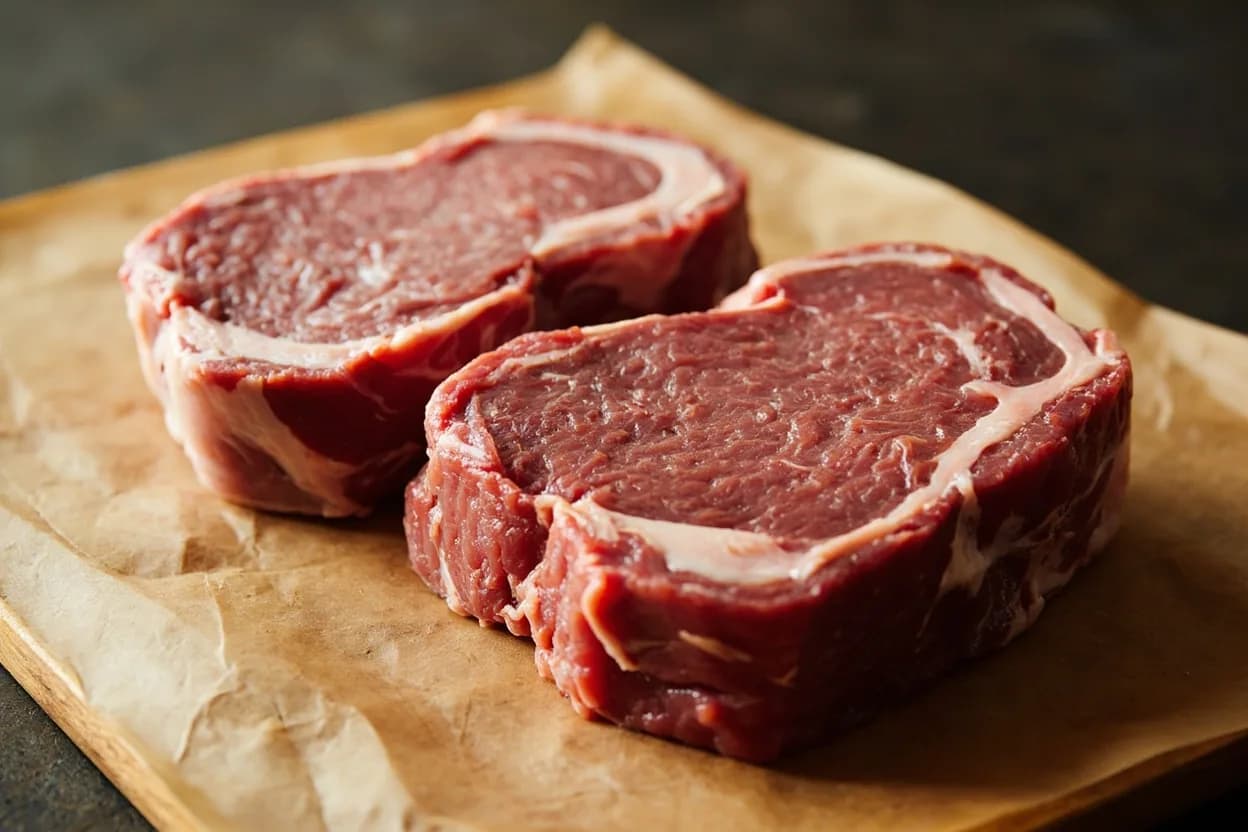
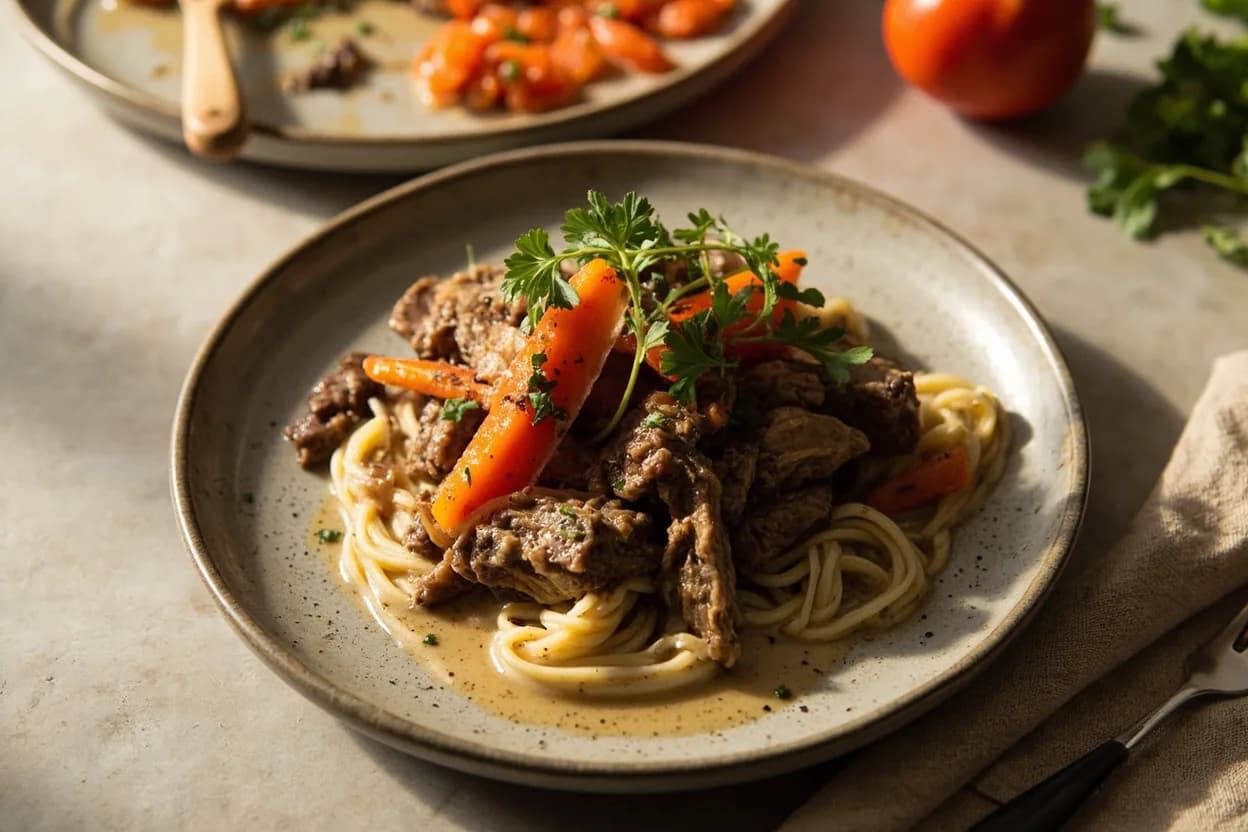
Where it comes from
Technique applied to any ingredient held on a cutting board: aromatics (onion, shallot, garlic, herbs), raw meat, cooked vegetables, nuts, chocolate.
Best for
How to cook it
- 1Stabilise the board with a damp cloth; keep the knife tip anchored on the board as the heel rocks down and forward.
- 2For a rough chop: make 2–3 passes in each direction; stop when pieces are roughly uniform at 1–2 cm.
- 3For a fine chop: gather pieces into a pile and make 4–6 cross-cut passes, rotating the pile 90° between passes.
- 4For mince: pile fine-chopped material, flatten with the side of the blade, chop again; repeat until fragments are < 2 mm and nearly translucent.
- 5A sprinkle of coarse salt on garlic or herbs before mincing acts as an abrasive, helping reduce them to a smooth paste faster.
- 6Keep a dry towel nearby — wet board or wet food causes the knife to skid and cut size becomes inconsistent.
- 7For large quantities of herbs, a mezzaluna (half-moon rocker) in a wooden bowl is faster and less bruising than repeated knife passes.
Prep & butchery
- Keep the blade sharp — a dull knife crushes and bruises rather than cutting cleanly, releasing excess moisture.
- For onions: halve through the root, make horizontal and vertical cuts toward the root (leaving root intact as a hinge) before the final chop — this creates self-guided uniform pieces.
- For herbs: stack leaves, roll into a cylinder (chiffonade roll), then chop or mince across the roll.
- For garlic: crush lightly with the blade flat to loosen skin, peel, then mince; the crush also begins cell rupture, accelerating flavour release.
Substitutes
- food processor pulse
Acceptable for large quantities but risks uneven sizing and can bruise herbs; use only for cooked applications
- mortar and pestle
Produces a true paste for garlic or herb mince without the water-releasing mechanical cutting action
Related cuts
Formal 3 mm cube — the disciplined, uniform version of a fine chop
Fine ribbon cut for leafy herbs and greens, often confused with mince for soft herbs
- Concasser
French term for a rough chop, specifically applied to tomatoes — peel, seed, rough chop
Appears in
References
- 1.Jacques Pépin, La Technique (1976)
- 2.The Culinary Institute of America, The Professional Chef, 9th ed. (2011)
- 3.Jacques Pépin, New Complete Techniques (2012)
Confidence: high
Notes
Rocking vs. push-cut
The French rocking technique (tip anchored, heel pivots down) suits soft aromatics and herbs. A push-cut or pull-cut is preferable for raw meat mince, where you want clean severing rather than compression — the rocking motion can smear protein and change texture.
Why size matters in a braise
A rough chop on aromatics in a three-hour braise is intentional: the pieces need enough mass to contribute flavour gradually without dissolving into mush in the first 20 minutes. Minced garlic in the same braise would scorch and turn bitter before the collagen in the meat begins to soften.