Knife Cuts — Classical French
Concassé (Tomato)
Also: tomate concassée, tomato concasse, concassed tomato
Tomato that has been blanched, peeled, seeded, and diced — the classical prep that removes everything that dilutes flavour or mars texture.
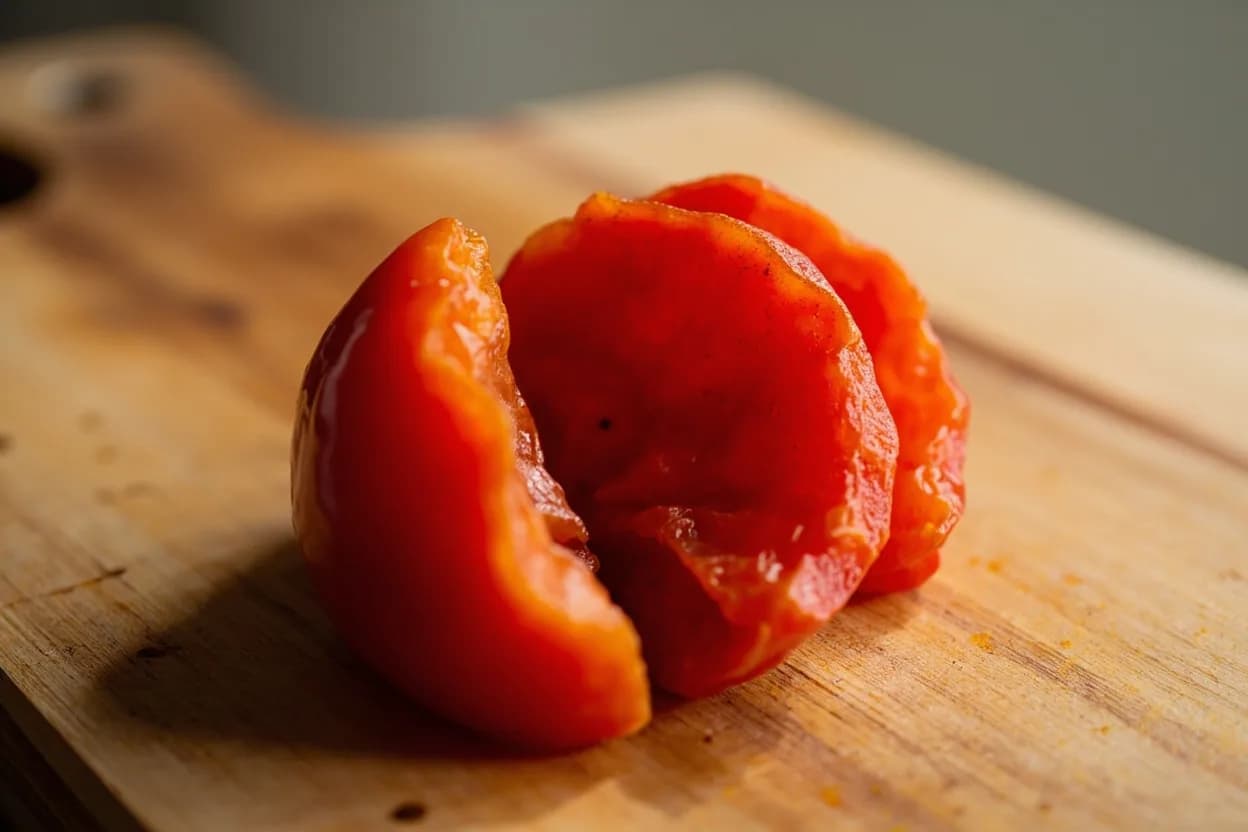
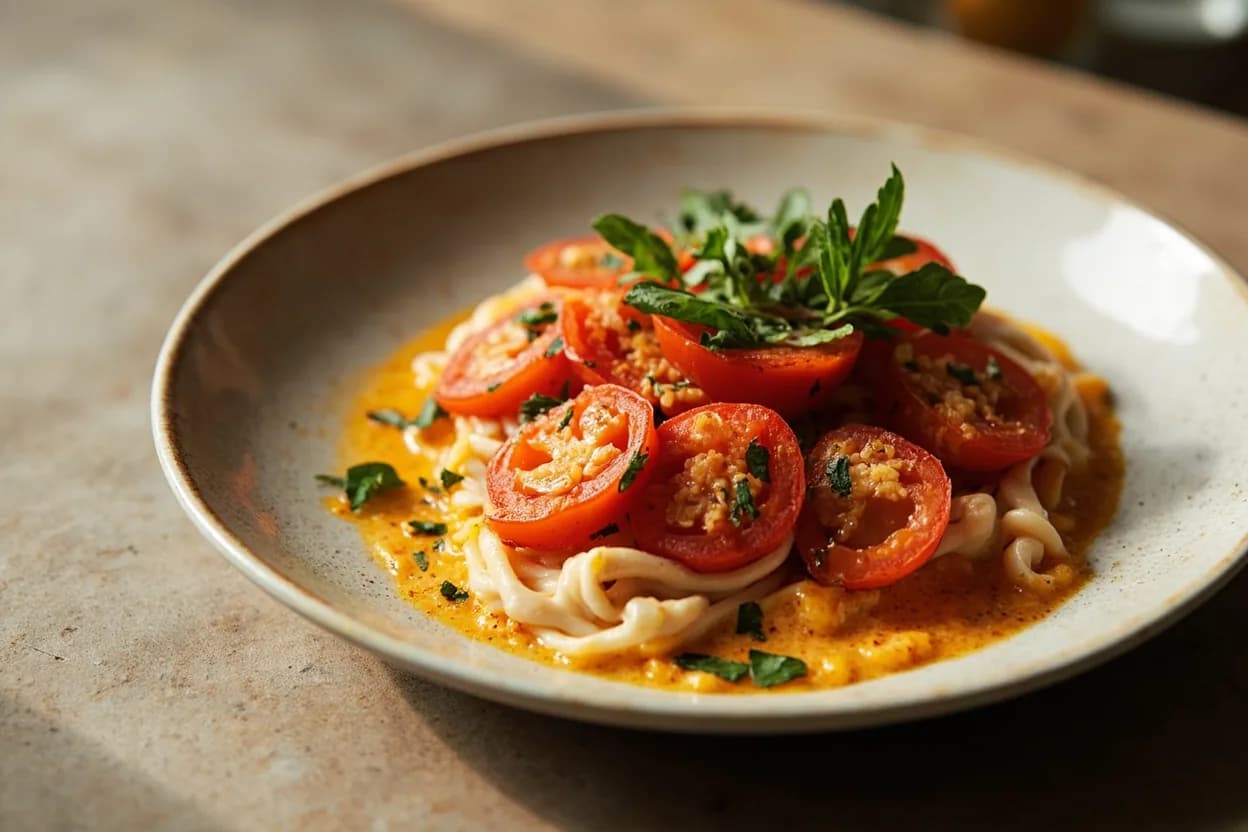
Tomato concassé is the classical French preparation of ripe tomatoes that have been cross-scored, blanched briefly in boiling water, shocked in ice water, peeled, halved, and scraped free of seeds and excess liquid, then diced to the size required by the dish. The word concasser means 'to crush or chop roughly,' but in refined kitchen usage it has come to mean a precisely prepared, clean-flavoured tomato base with no skin, seeds, or watery gel.
In photos
Where it comes from
Whole ripe tomatoes — the flesh only, after skin and seed cavities have been removed.
Best for
How to cook it
- 1Score a shallow X through the skin at the flower end of each tomato using the tip of a paring knife.
- 2Blanch in rapidly boiling salted water for 15–30 seconds, until the skin at the score curls back.
- 3Transfer immediately to an ice-water bath and chill for 1 minute to stop cooking and contract the skin.
- 4Peel the skin away from the score — it should slip off in sheets with no resistance.
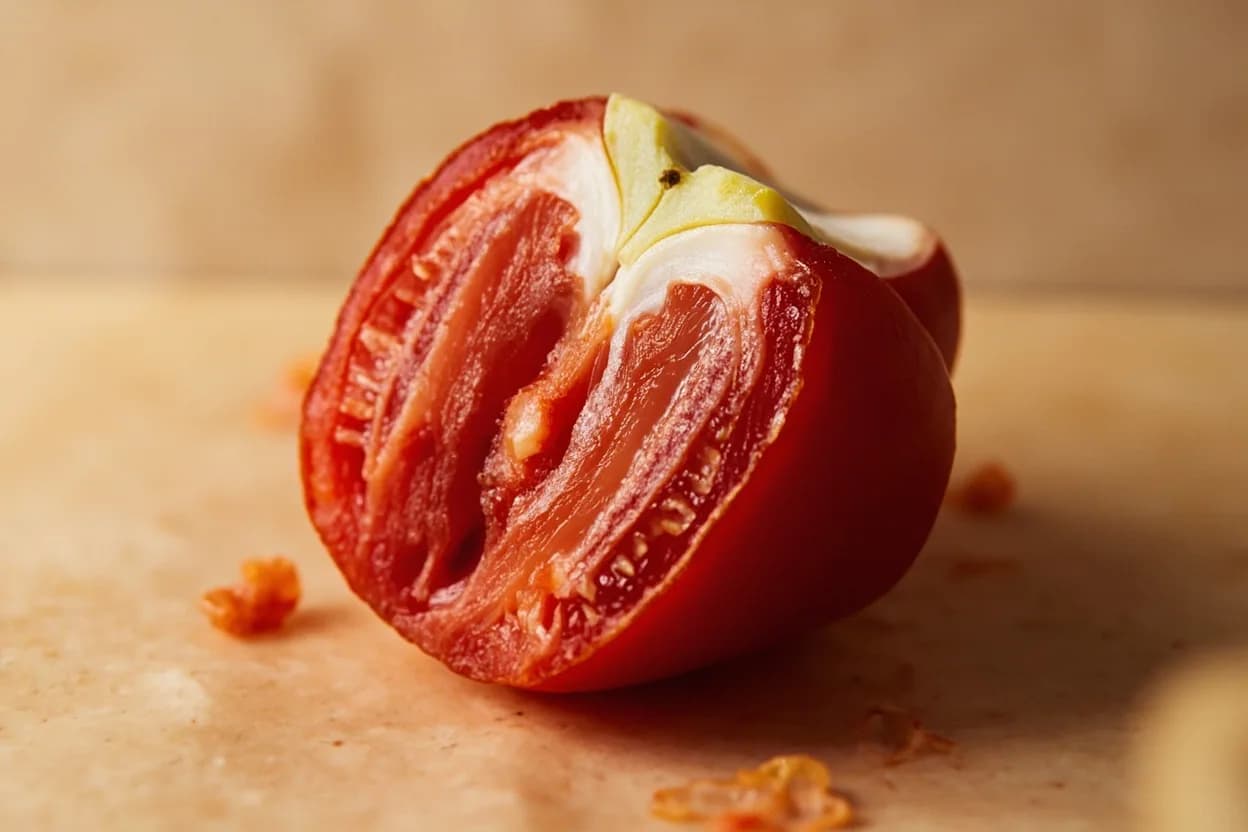
- 5Halve the tomato through the equator and use a finger or small spoon to dislodge seed pockets and watery gel.
- 6Lay the flesh flat on the cutting board and dice to the required size: rough for sauces (1–1.5 cm), medium for garnishes (6–8 mm), fine for platings (4–5 mm).
- 7Season lightly with salt, a grind of pepper, and a thread of extra-virgin olive oil if serving raw or as a warm garnish.
Prep & butchery
- Choose tomatoes that are fully ripe but still firm — mealy overripe fruit collapses during blanching.
- Keep blanching time short (15–20 seconds for ripe summer tomatoes, up to 40 seconds for firm winter varieties) to preserve raw flavour.
- Seed cavities contain pectin-rich gel that dilutes sauces — remove them thoroughly.
- A sharp chef's knife or serrated knife prevents squashing during the dice; blunt knives crush rather than cut.
- For refined garnish work, trim the flesh to an even rectangle before dicing to produce uniform cubes.
Substitutes
- Canned whole San Marzano tomatoes (drained, seeded, chopped)
Acceptable in cooked sauces; skip blanching step but drain well and press out seeds before chopping.
- Fire-roasted canned diced tomatoes
Deeper, smokier flavour; suitable for braises and ragù but not for delicate raw garnishes.
- Fresh cherry tomato halves (seeded)
Skips the blanch-peel step in summer when skins are very thin; flavour is sweeter and more intense.
Related cuts
A concassé taken to its finest extreme — 2 mm dice used for cold sauce-vierge or garnishing consommé.
- Rough Chop
Informal concassé for sauce where texture does not matter and the cook skips peeling.
Thin irregular pieces; occasionally used for quick tomato preparations where a rustic look is acceptable.
Appears in
References
- 1.Escoffier: The Complete Guide to the Art of Modern Cookery — Auguste Escoffier (1903; English trans. H.L. Cracknell & R.J. Kaufmann, 1979)
- 2.Jacques Pépin: New Complete Techniques — Jacques Pépin (2012)
- 3.The Professional Chef, 9th ed. — The Culinary Institute of America (2011)
Confidence: high
Notes
Why remove the seeds?
The jelly around tomato seeds contains water and pectins that thin a sauce and cloud a consommé. In a raw garnish, the gel also oxidises and turns slightly bitter. Removing it concentrates the flavour of the flesh and gives any sauce made from concassé a brighter, cleaner profile.
Rough vs. fine concassé
Classical sources do not strictly specify a single dice size under the term 'concassé' — the size is determined by the dish. A sauce provençale accepts a rough 1 cm chop; a garnish for poached turbot demands a 4–5 mm precision dice. The preparation steps (blanch, peel, seed) are constant; only the final knife work varies.